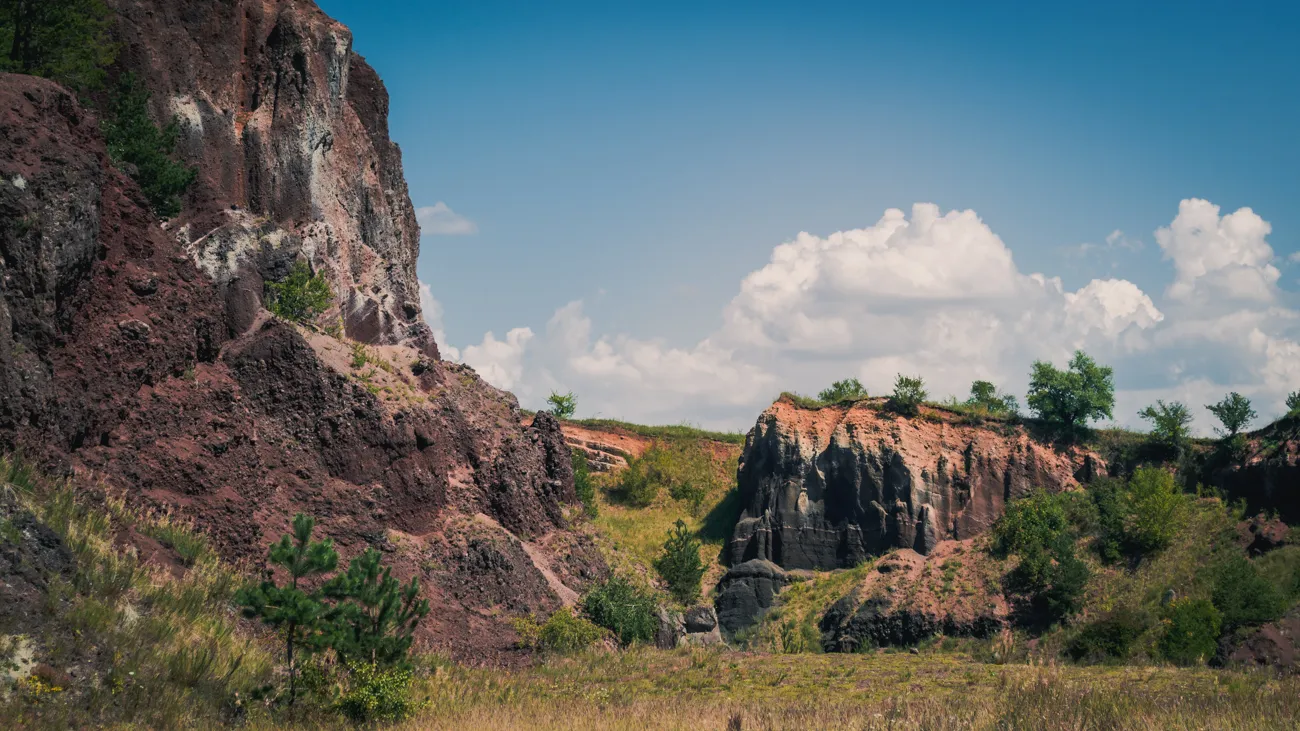
About 20 km from the small town of Rupea lies Racoș, a Transylvanian village known for a rare concentration of geological landmarks within walking distance of each other. In a single stop, you can explore the crater of an extinct volcano, a former basalt quarry filled with vivid green water, and dramatic basalt columns.
Because all three sights sit close together on the outskirts of the commune, you can comfortably visit them in 2 to 3 hours—making Racoș an easy half-day detour on a road trip through Transylvania.
Quick Trip Snapshot
- Location: Racoș commune, Brașov County, Transylvania, Romania (~20 km from Rupea)
- Time Needed: 2–3 hours at a relaxed pace
- Getting Around: Accessible by car up to the main visiting area, followed by short walks on marked trails
- Best For: Landscape photography, geology enthusiasts, and half-day road-trip stops
1. The Extinct Volcano (Vulcanul Racoș)
On the edge of the village stand the remains of a once-active volcano, known locally as Vulcanul Racoș. You can drive right up to the base of the site, which makes it an effortless starting point before heading out on foot.
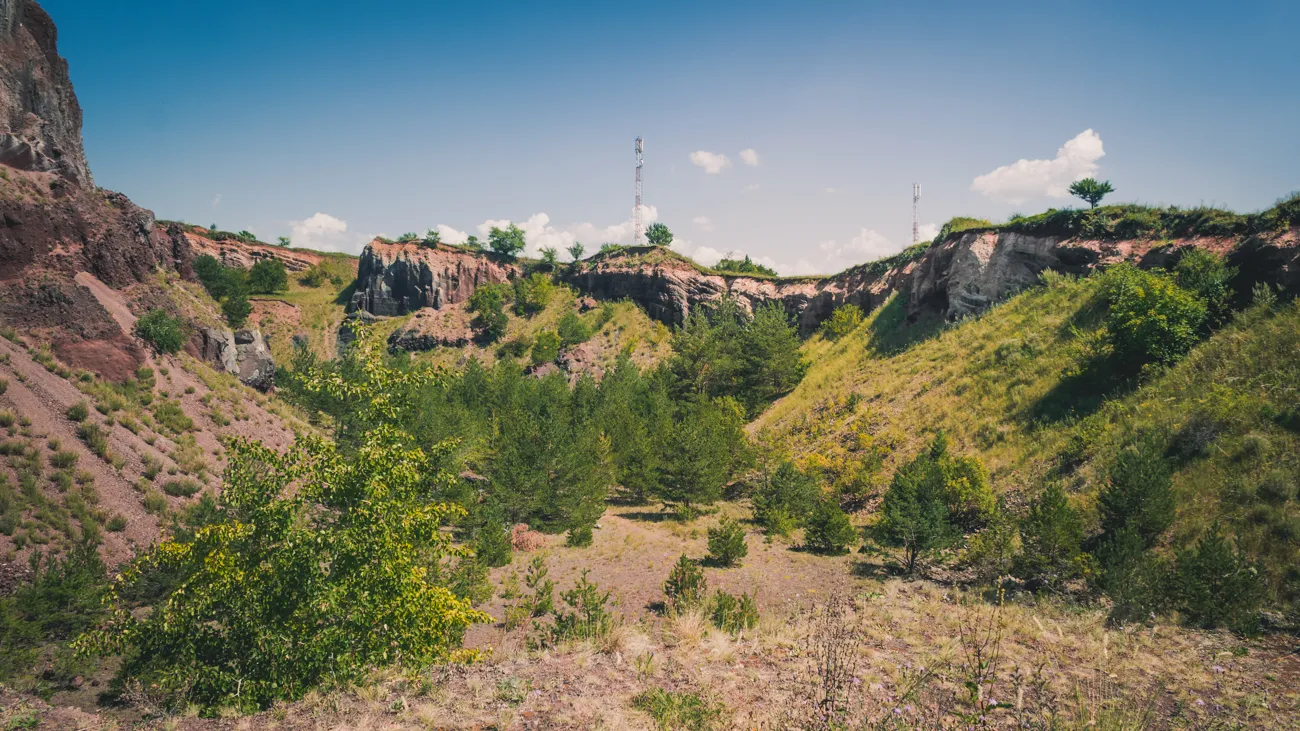
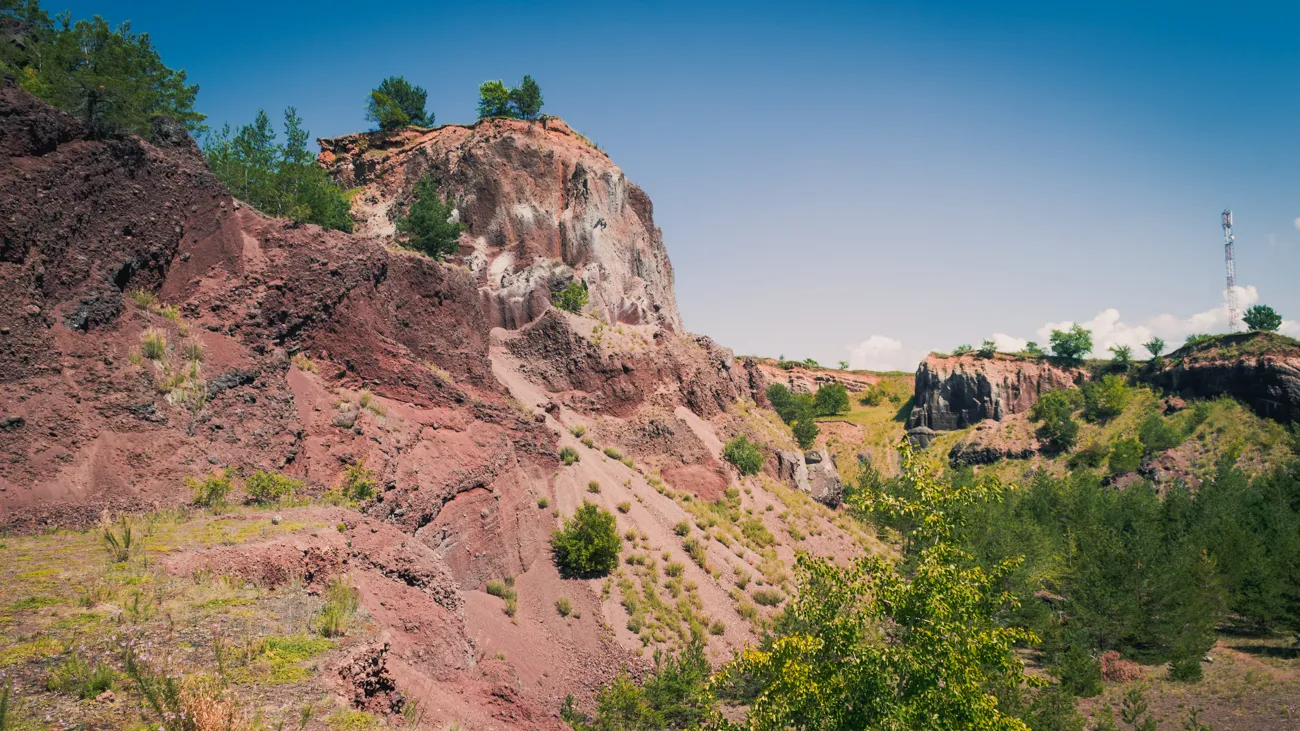
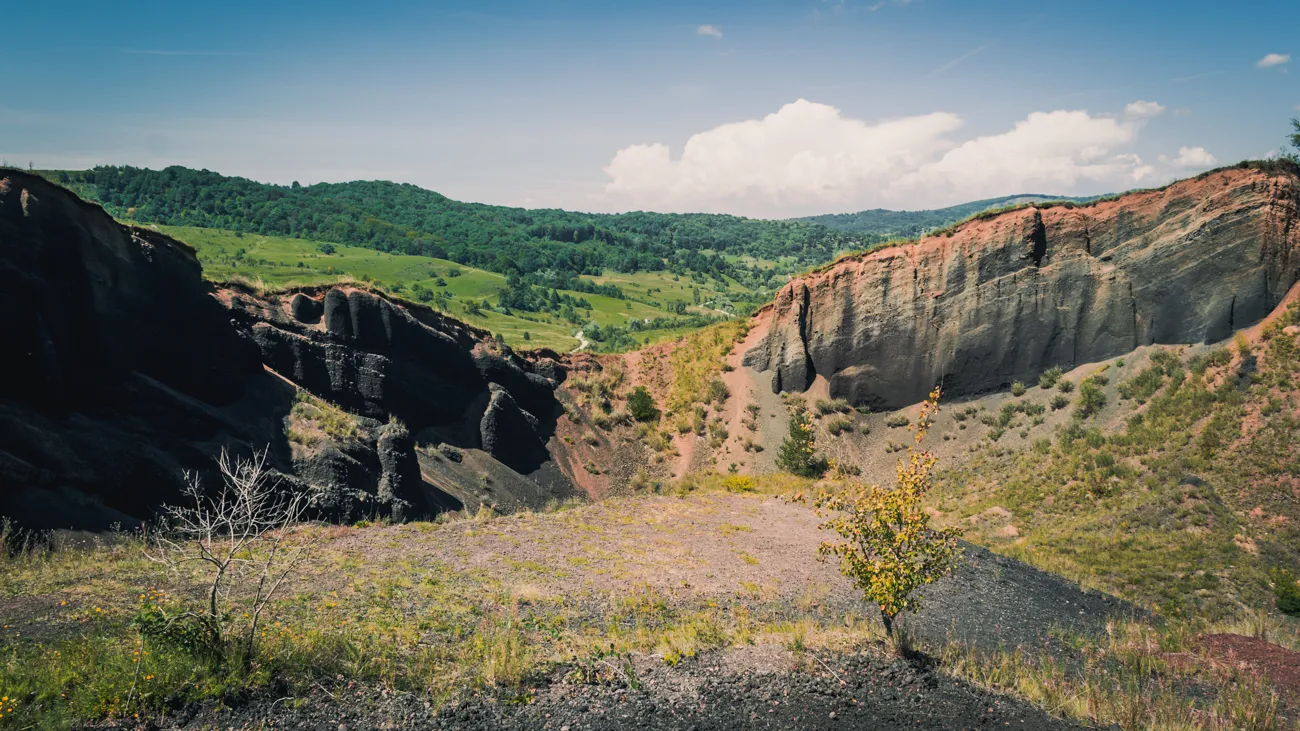
Stepping inside the crater reveals clear traces of the area’s volcanic past. Dark volcanic ash and porous scorched rock cover the slopes and crater floor, contrasting sharply with patches of green grass and shrubs.
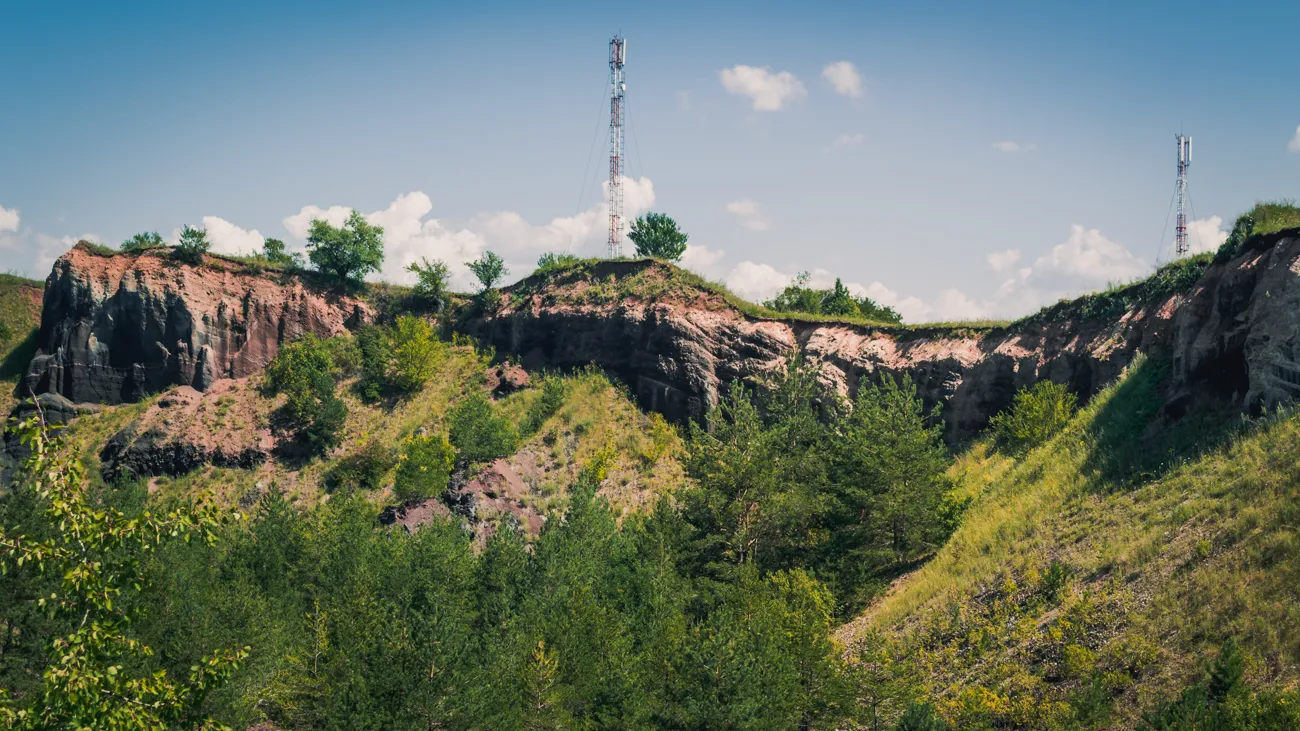
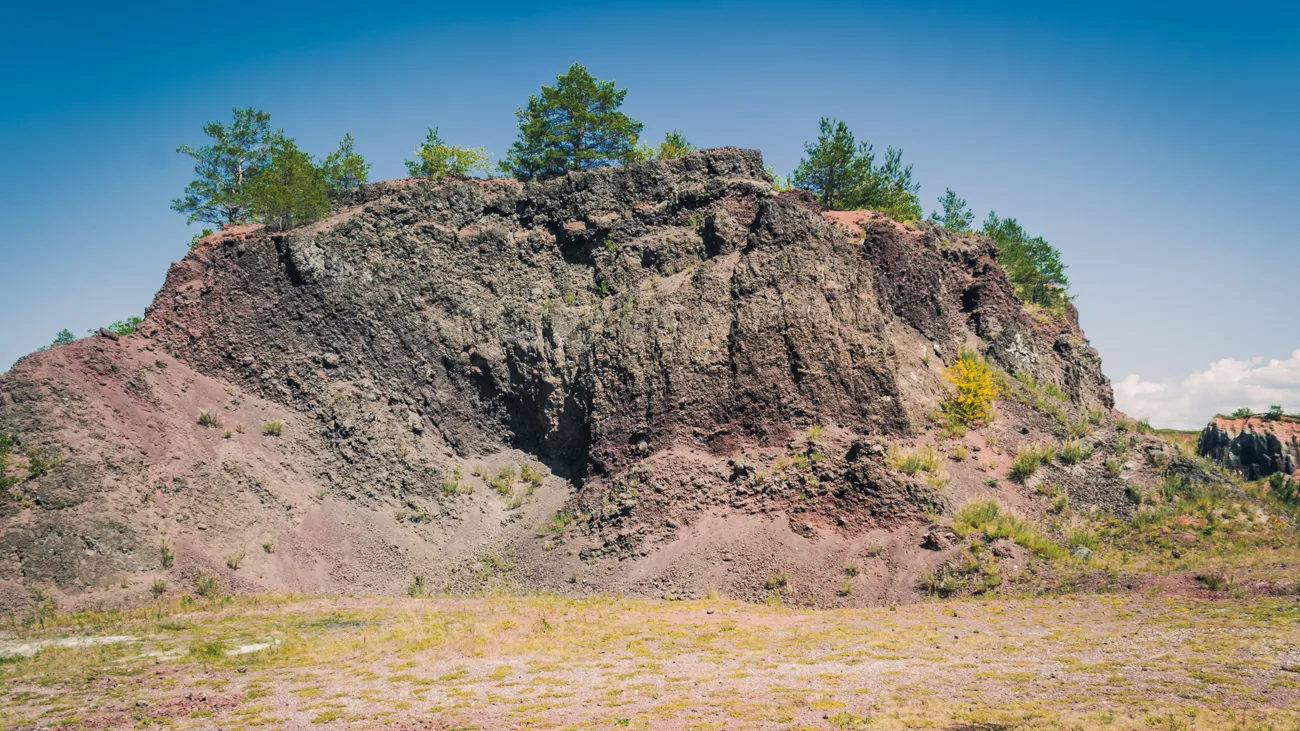
Walking up to the rim rewards you with wide panoramic views across the surrounding Transylvanian countryside—rolling hills, green valleys, and distant mountain ridges that help put the volcano’s scale and geological history into perspective.
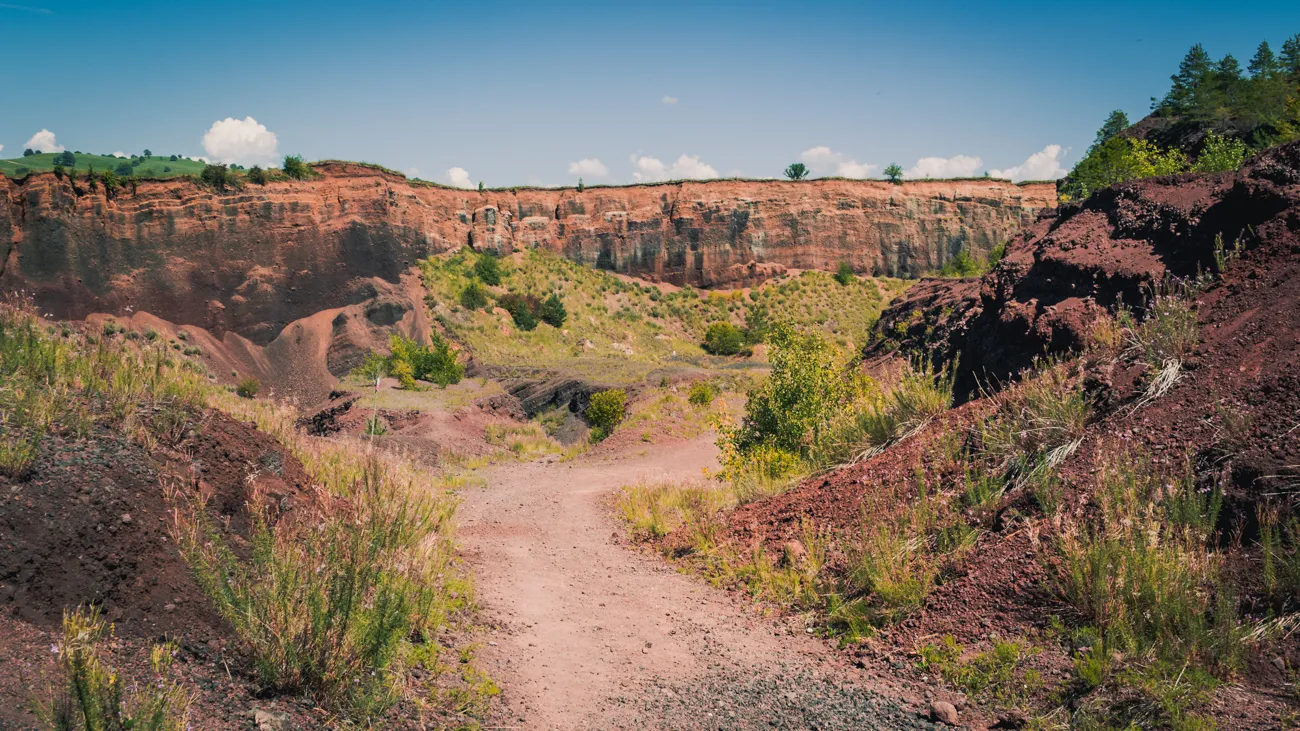
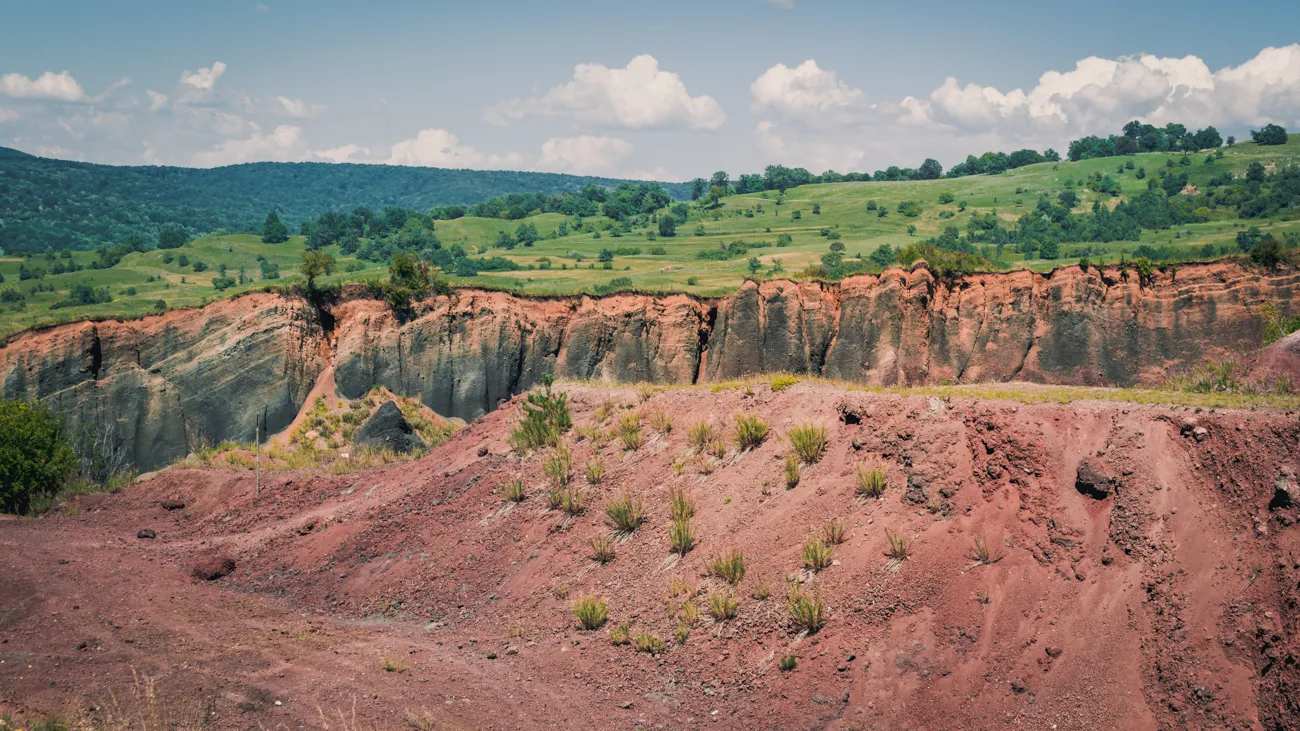
Safety Tip: Stick to the marked visitor paths inside and around the crater. Loose volcanic ash and steep quarry drops along the edges can be unstable.
2. The Emerald Lake (Lacul de Smarald)
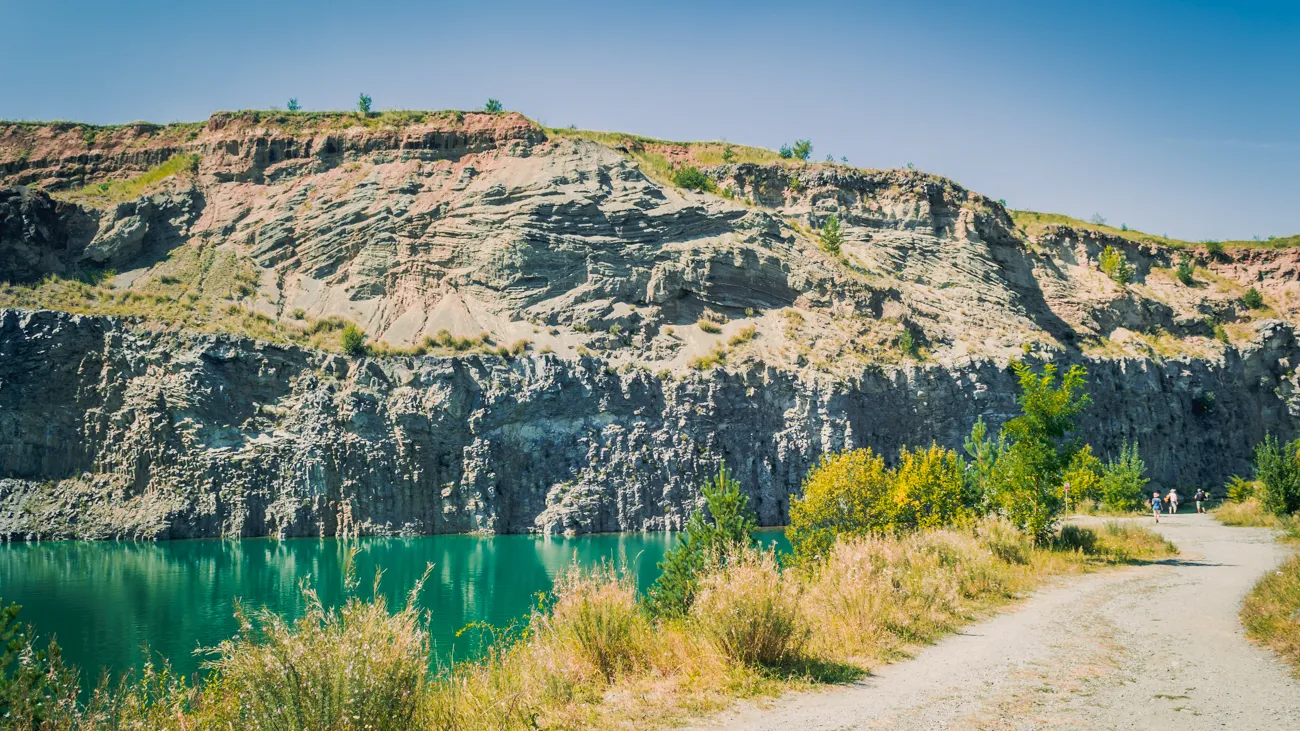
A short walk from the volcano brings you to Lacul de Smarald (the Emerald Lake), a flooded former basalt quarry framed by tall, layered rock walls. Once an active mining site, the quarry has gradually transformed into one of Racoș’s most photogenic landmarks.
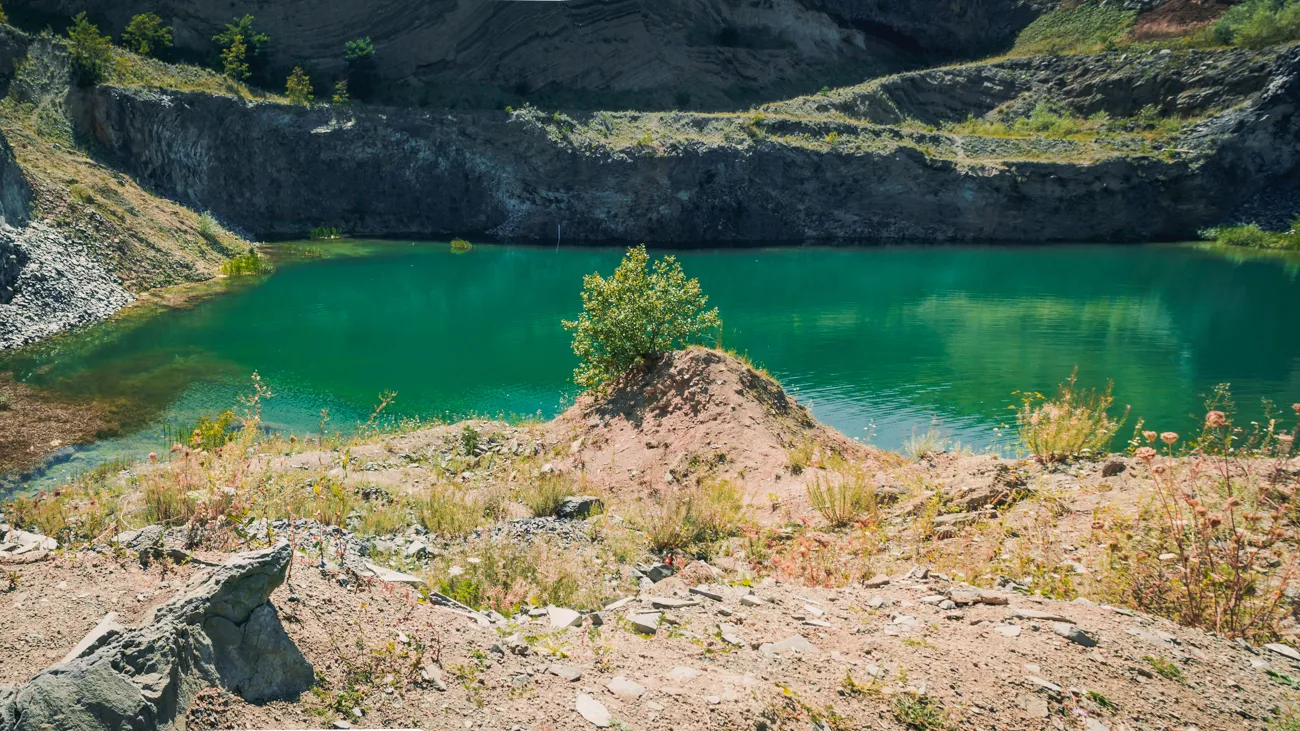
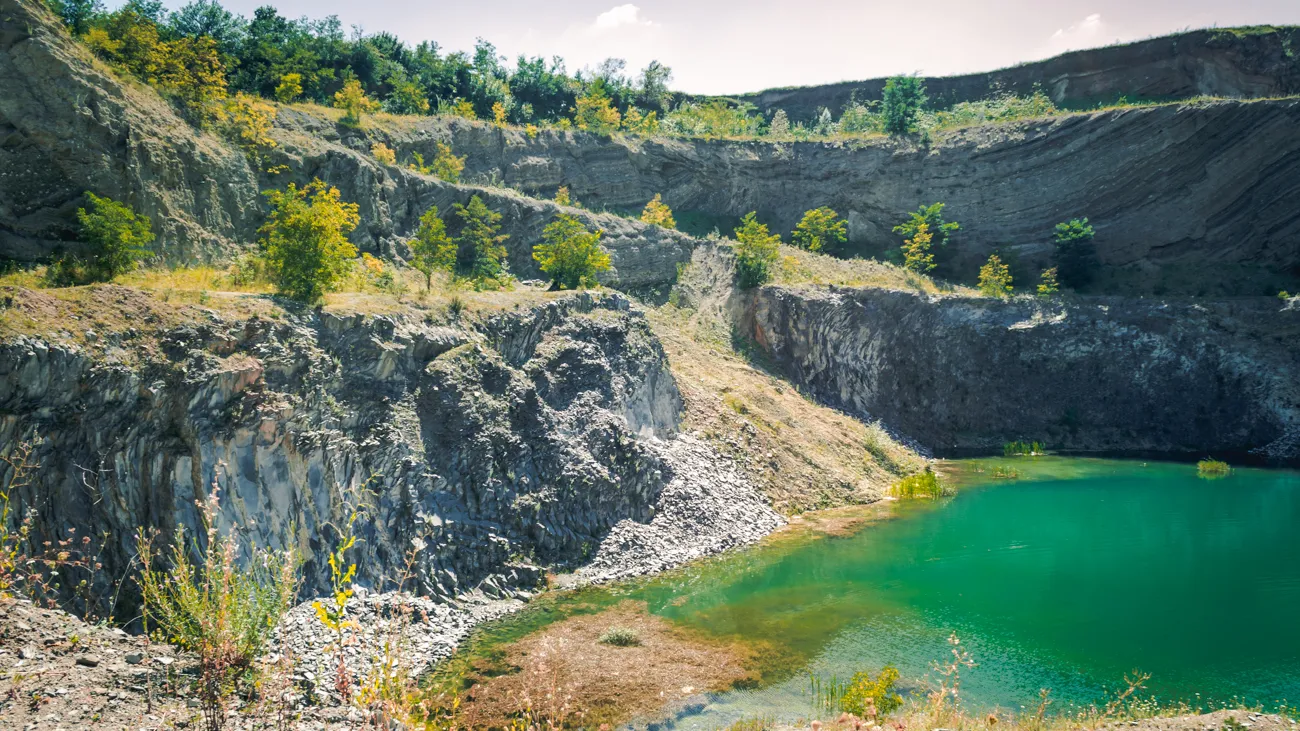
What stands out immediately is the intense green hue of the water, caused by mineral content and sunlight reflecting off the quarry walls. Depending on the angle of the sun and cloud cover, the surface shifts from deep jade to bright emerald — especially striking when viewed from the upper trails looking down into the basin.
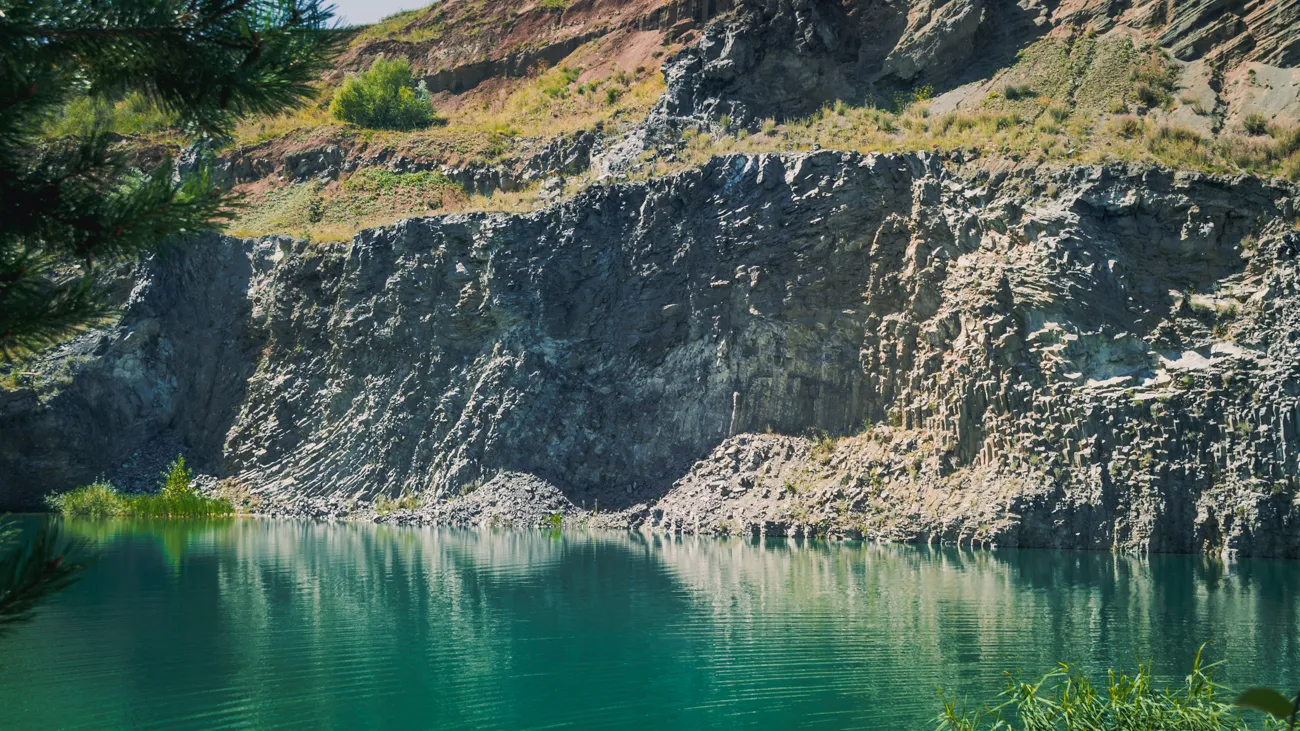
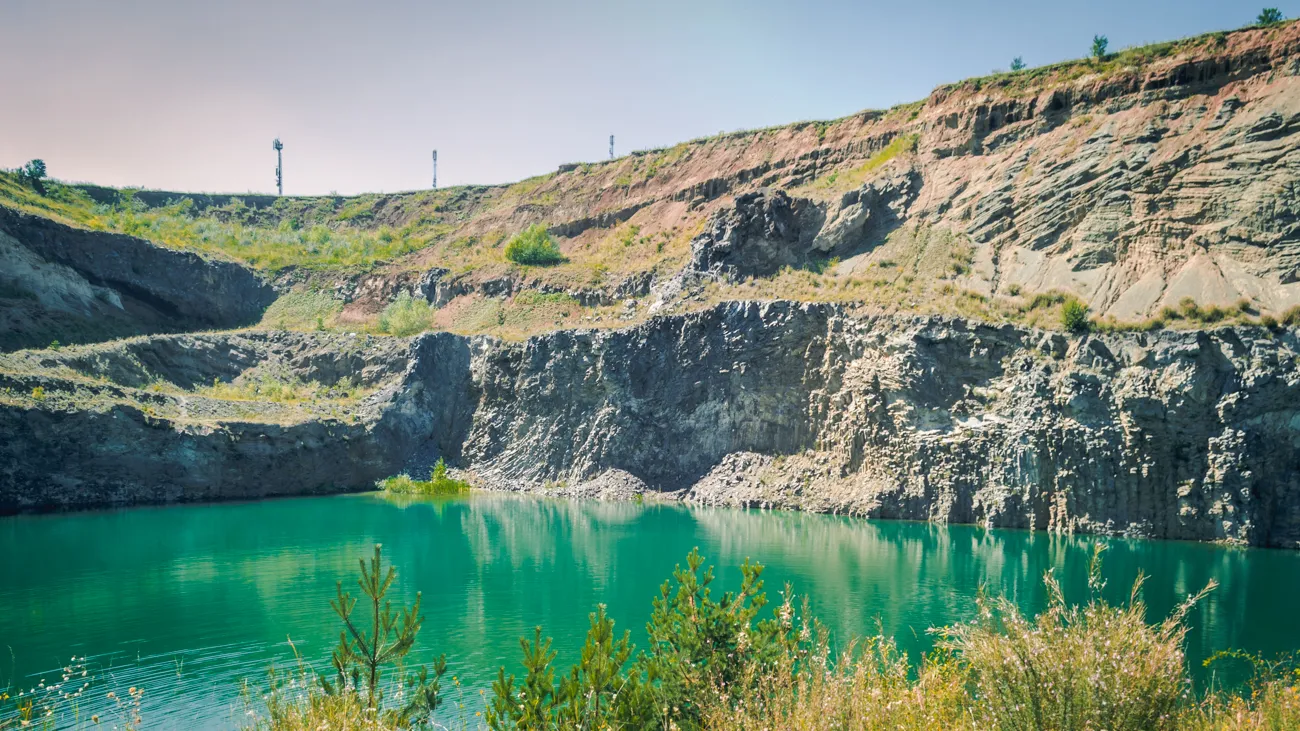
Paths lead both along the upper rim and closer to the water’s edge, giving photographers and walkers multiple perspectives of the cliffs, stone carvings, and reflections below.
3. Basalt Columns (Coloanele de Bazalt)
Right nearby within the same protected geological complex, you can also see towering basalt columns—tall, geometric rock formations shaped as ancient lava cooled and fractured into vertical pillars. Including them in your loop takes very little extra time and completes the story of how volcanic activity shaped Racoș.
Practical Tips for Visiting Racoș
- Wear sturdy shoes: Trails around the crater and quarry include loose gravel, volcanic ash, and uneven stone.
- Time your visit for light: Mid-morning to early afternoon usually brings the brightest sunlight into the quarry basin, highlighting the green color of the Emerald Lake.
- Keep to marked trails: Steep cliff edges around the quarry and crater are unfenced in places.
Other Must-See Attractions Nearby
If you are planning a route through this part of Transylvania, several historic landmarks pair easily with Racoș:
- Rupea Fortress: Just 20 km away, this restored medieval hilltop citadel overlooks the surrounding countryside and makes a natural pairing with Racoș on the same day.
- Viscri: A traditional Saxon village famous for its UNESCO-listed fortified church, painted houses, and quiet rural pace.
- The Fortified Church in Saschiz: Located right beside the main road toward Sighișoara, this impressive 15th-century fortified church is an easy stop on the drive north.