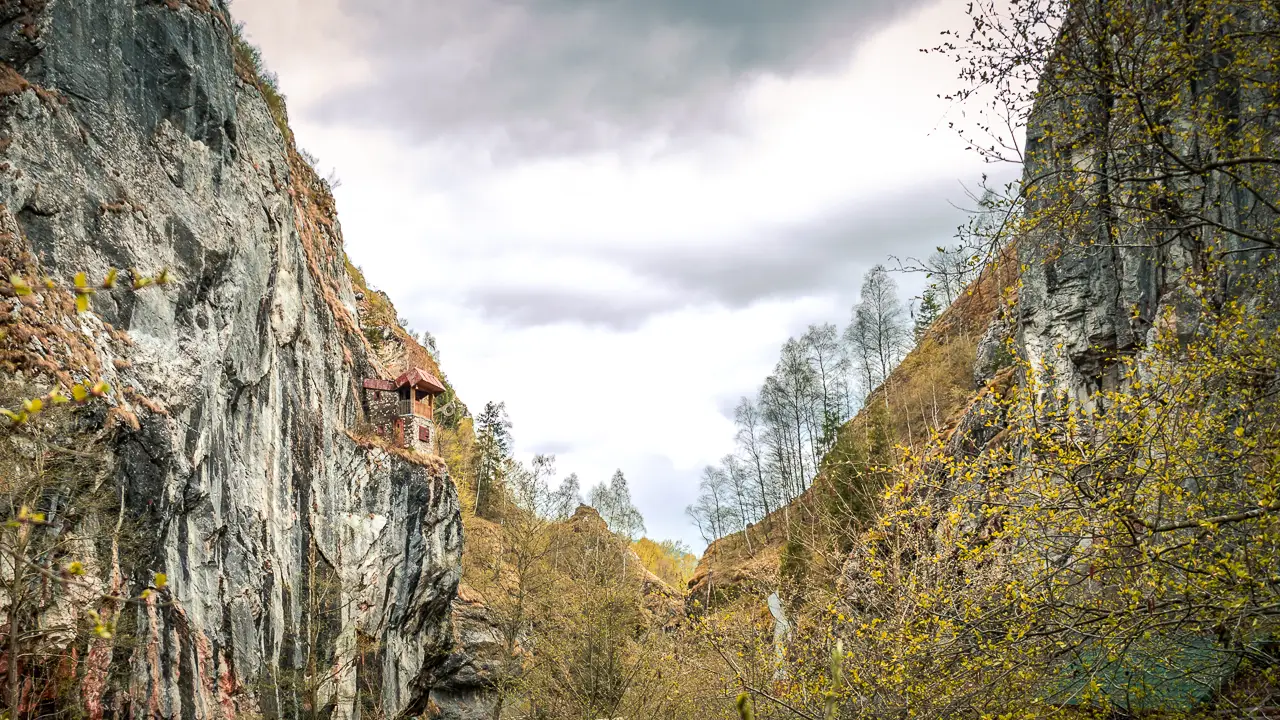
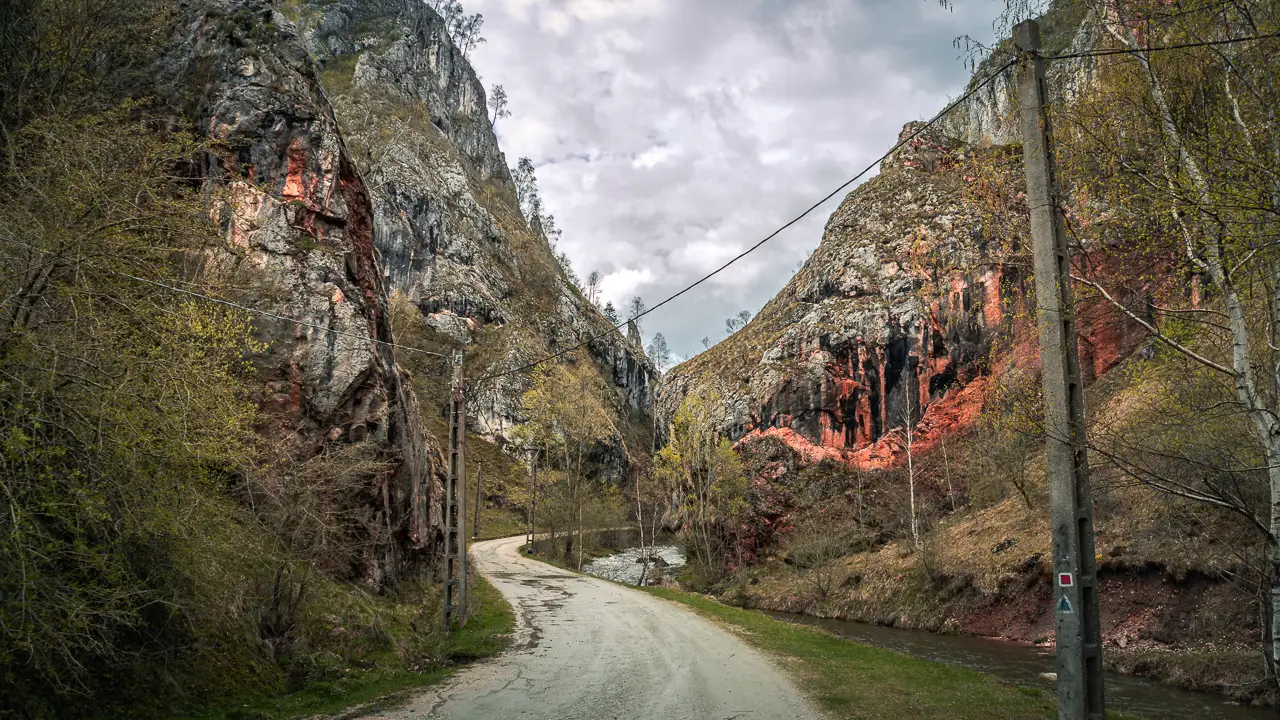
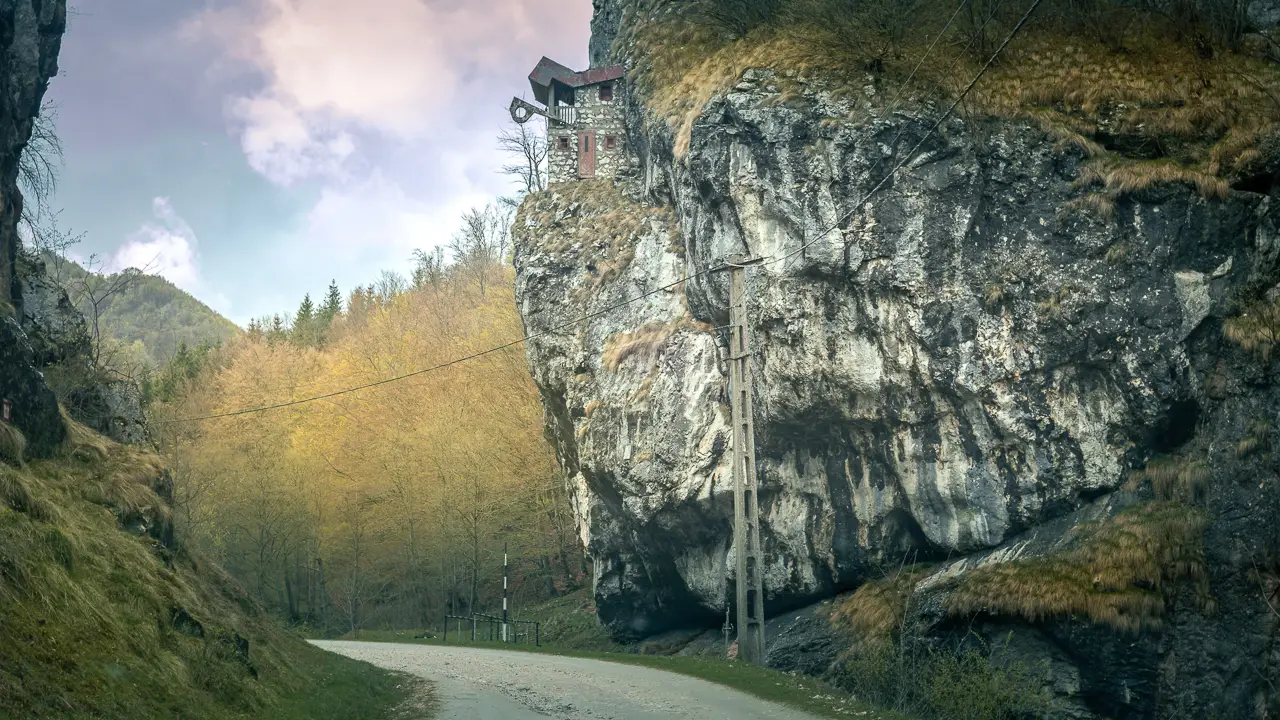
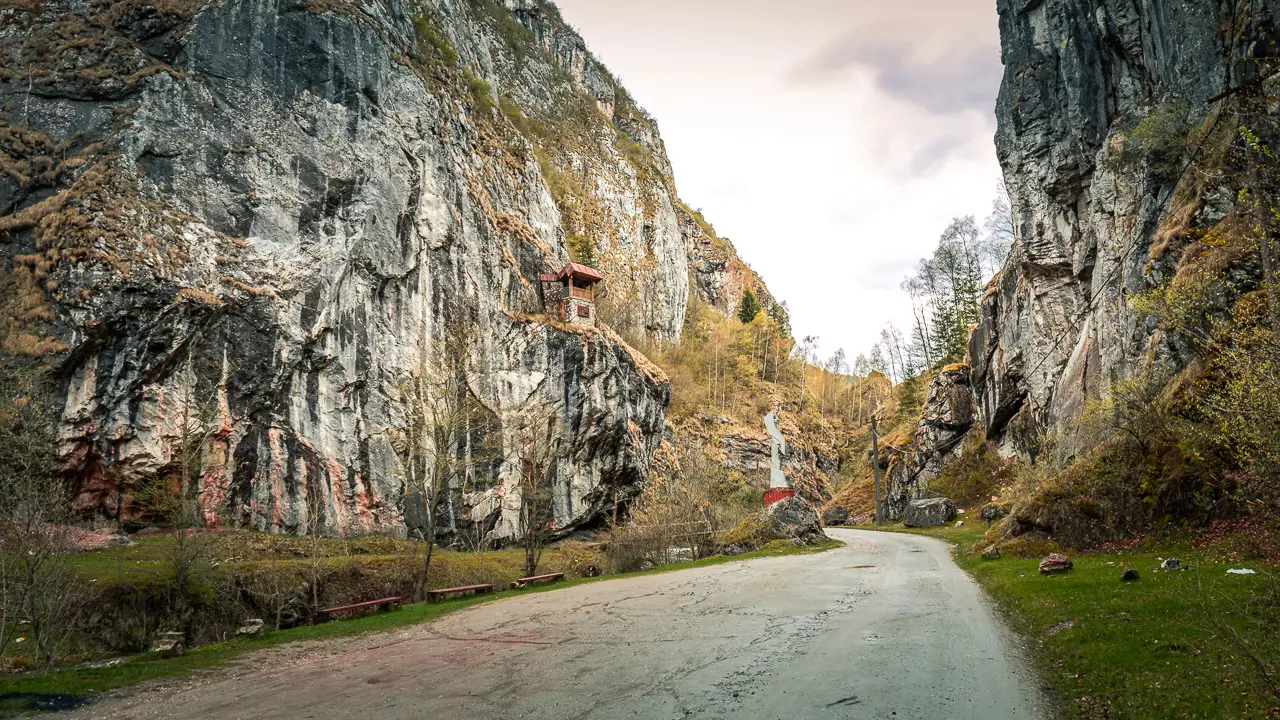
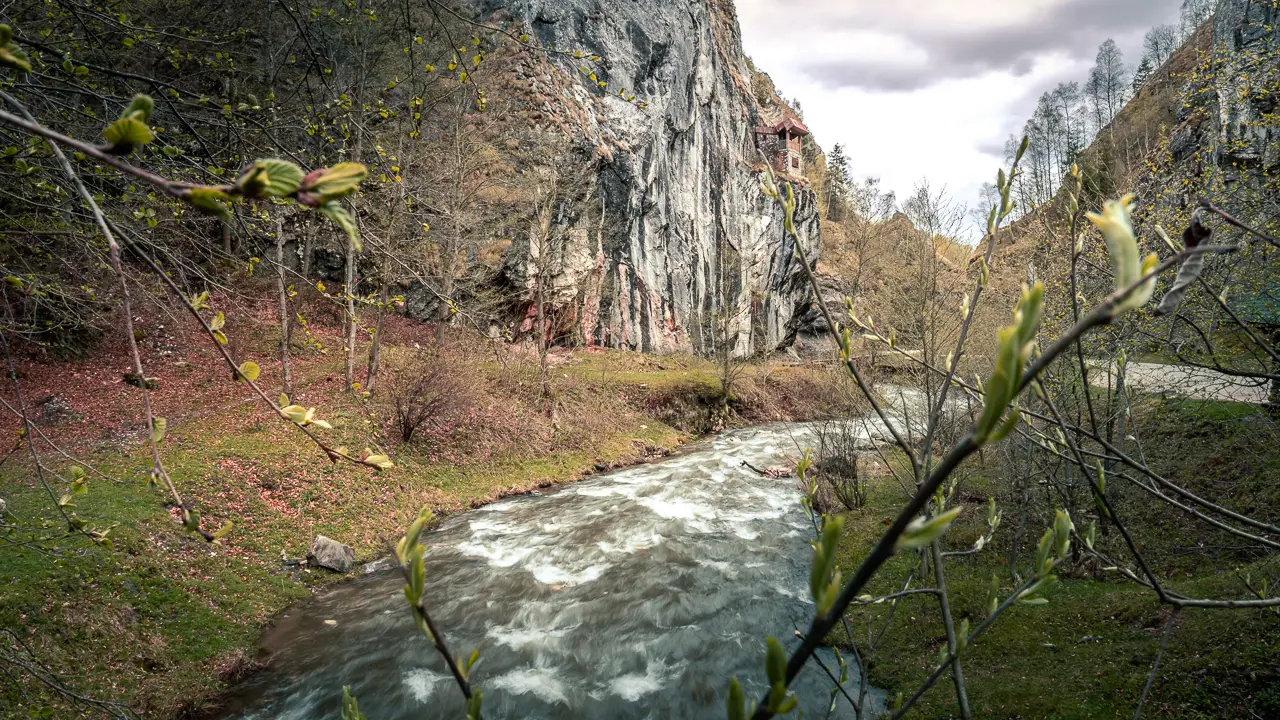
Just outside the former mining city of Petrila, around 5 kilometers from its center, lies the beautiful Tăii Gorge. This scenic spot is perfect for anyone looking to enjoy nature and explore the outdoors.
To get to Tăii Gorge, you need to drive towards the small town of Lonea. As you approach the bridge over the Jiu River, make a left turn right before crossing. From there, simply follow the winding road through the mountains, which will eventually lead you to the entrance of the gorge.
The drive itself is peaceful, with towering mountains on either side. If you continue along this road, it will guide you further to a picturesque area called Lunca Florii, where the landscape opens up beautifully. Keep in mind that road is in a pretty bad condition after Taii Gorge.
The road in the small gorge.Small cabin built on a cliff.Taii Gorge.River flowing between the steep cliffs.Mountains covered with snow.
What else to visit in the area:
The former Petrila coal mine – actually you are allowed to visit only a small part of the mine. Next to the main entrance, you will find a couple of administrative buildings and in one of them you will find a very interesting museum with all sorts of mining equipment which once were used by the miners in rescue operations.
The Parang Mountains – not far from Petrila, there is a beautiful vantage point from where the entire Jiu valley is visible. If you are lucky enough, you can even spot the tips of the Parang Mountains.
The historic center of Sibiu, Romania, stands as a testament to the city’s rich history and cultural heritage. Renowned for its well-preserved medieval architecture and charming cobblestone streets, the historic center is a captivating blend of Germanic, Hungarian, and Romanian influences.
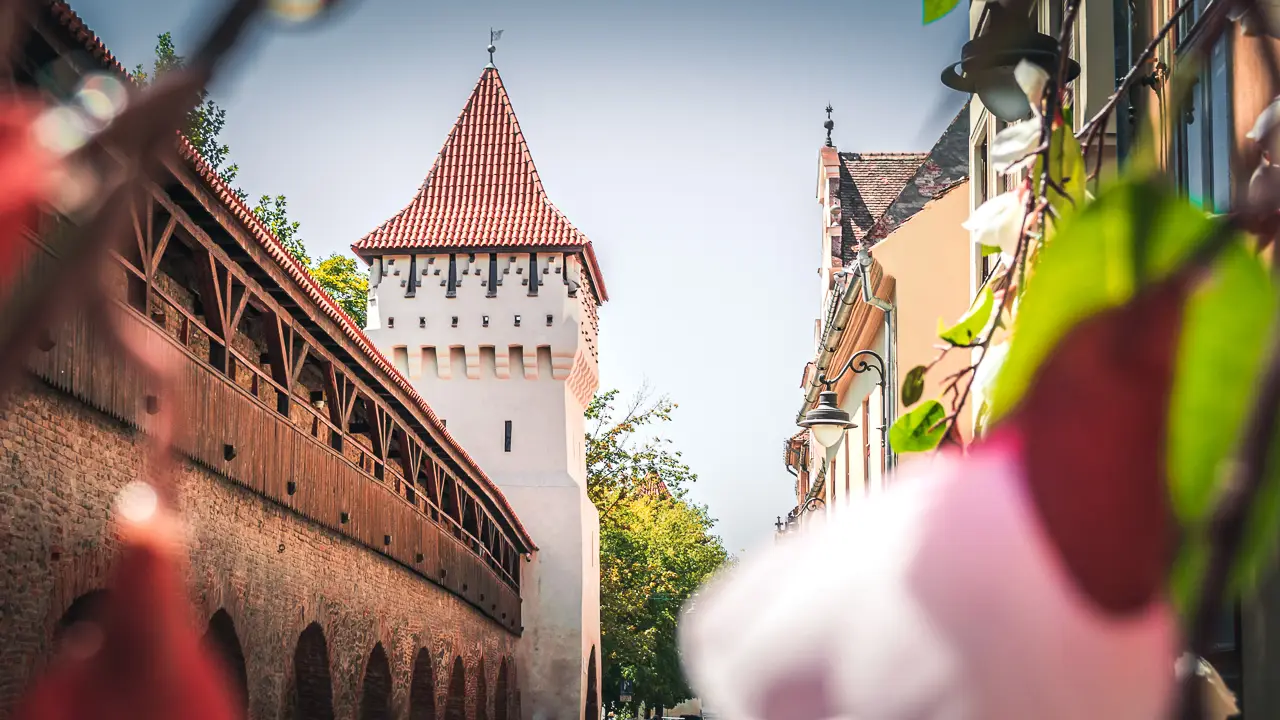
On the Citadel Street (Strada Cetății) you will find a couple of important old landmarks like the Potter’s Tower and the Carpenter’s Tower. You can visit the interior of those towers if you want but you will have to pay for a ticket. Walking along the walls offers visitors a chance to appreciate the strategic planning that went into protecting Sibiu.
These old towers can be found almost at the edge of the historic center of this beautiful Transylvanian city.
The Carpenter’s Tower.The Potter’s Tower
Continuing our walk towards the Large Square in the historic center, I discovered another amazing building. The white building from the image below is the Imparatul Romanilor Hotel.
Imparatul Romanilor Hotel near the Large Square.
The Large Square
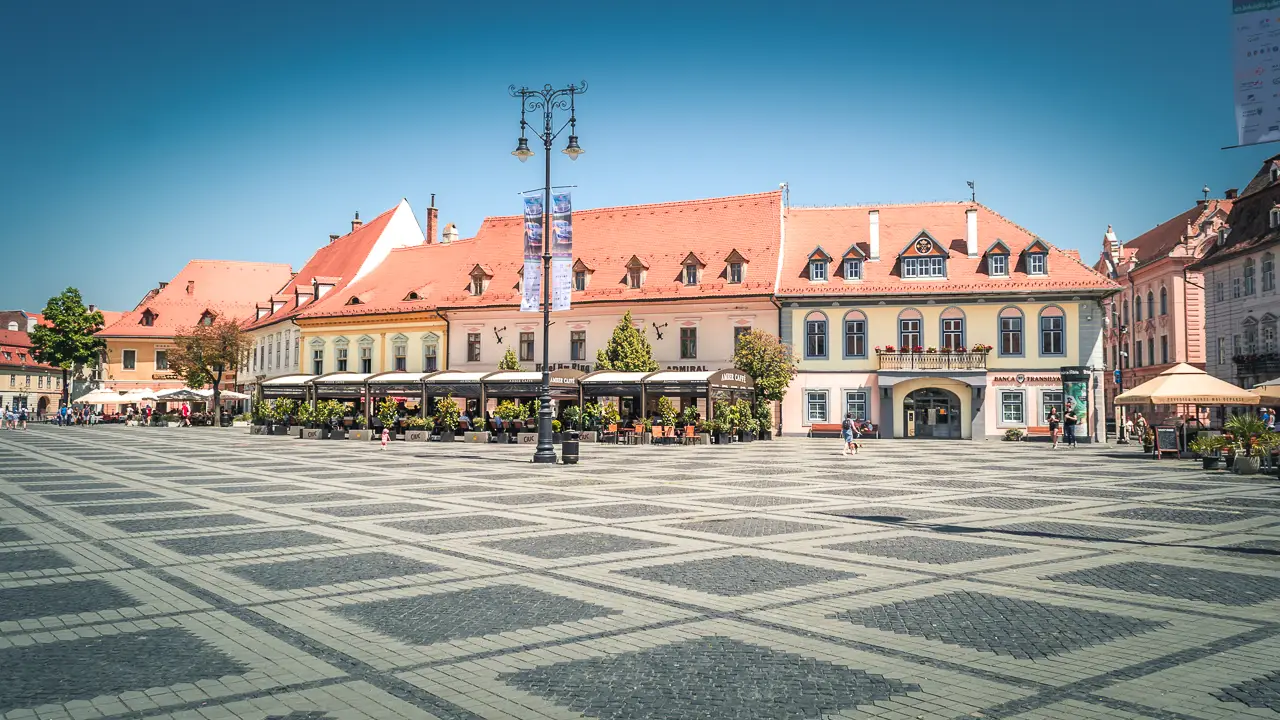
Another popular place in Sibiu is the Large Square where you will find many landmarks to visit. Besides the historical landmarks, you will also find many restaurants with terraces and various shops.
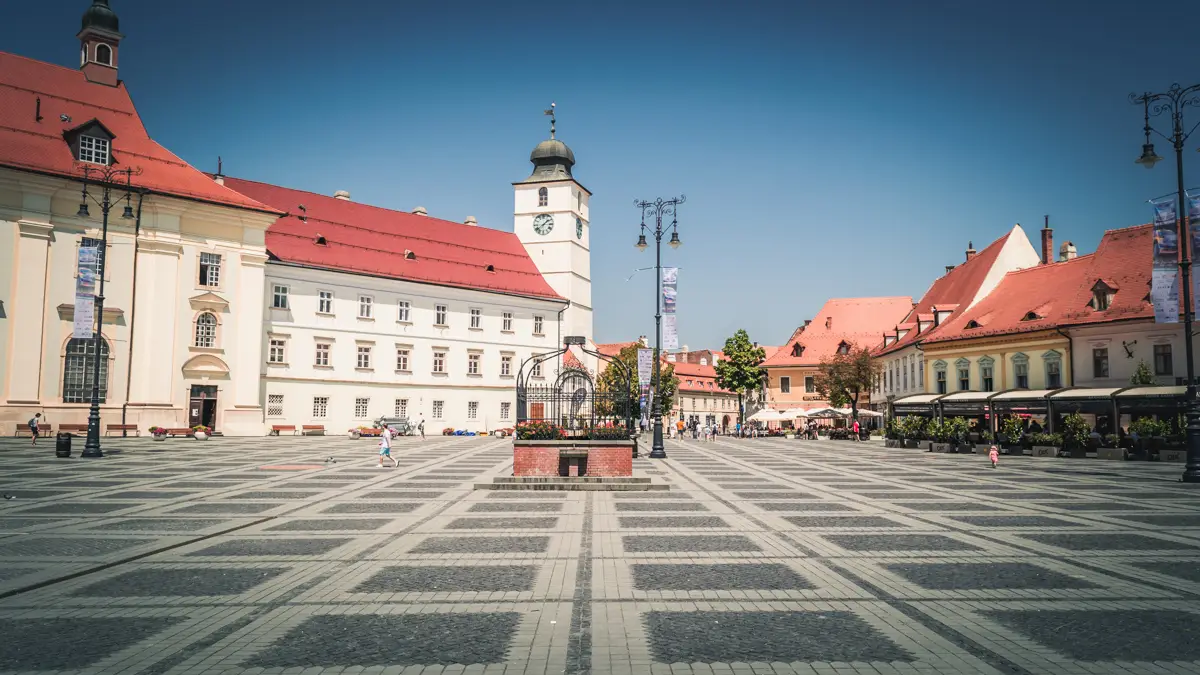
Among those important landmarks that are located in the Great Square, I can mention the Brukenthal National Museum which was the first museum in the region of Transylvania, the Council Tower, and almost in the middle of the square, you will find the Falkenhayn fountain.
The city hall, the Brukenthal Museum and the Roman Catholic Church in the Large Square.Well maintained old Transylvanian buildings in the square.A well in the center of the Large Square.The Falkenhayn well.
The Small Square (Piața Mică)
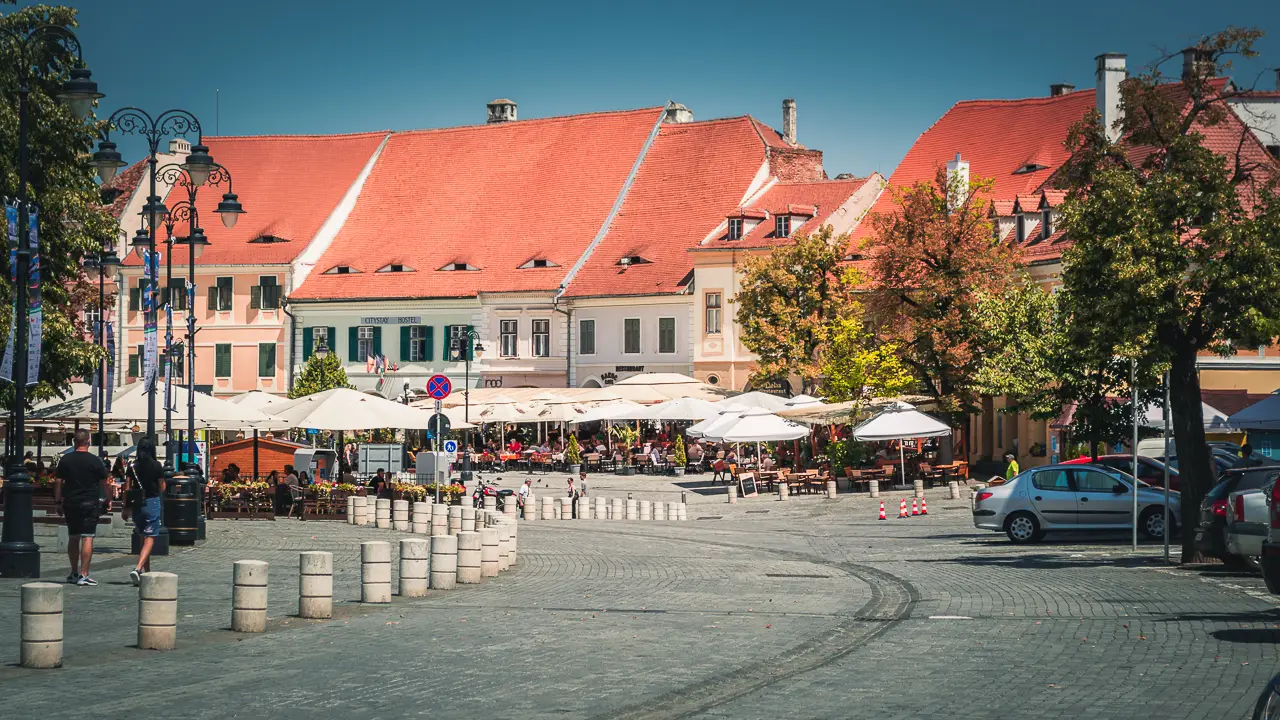
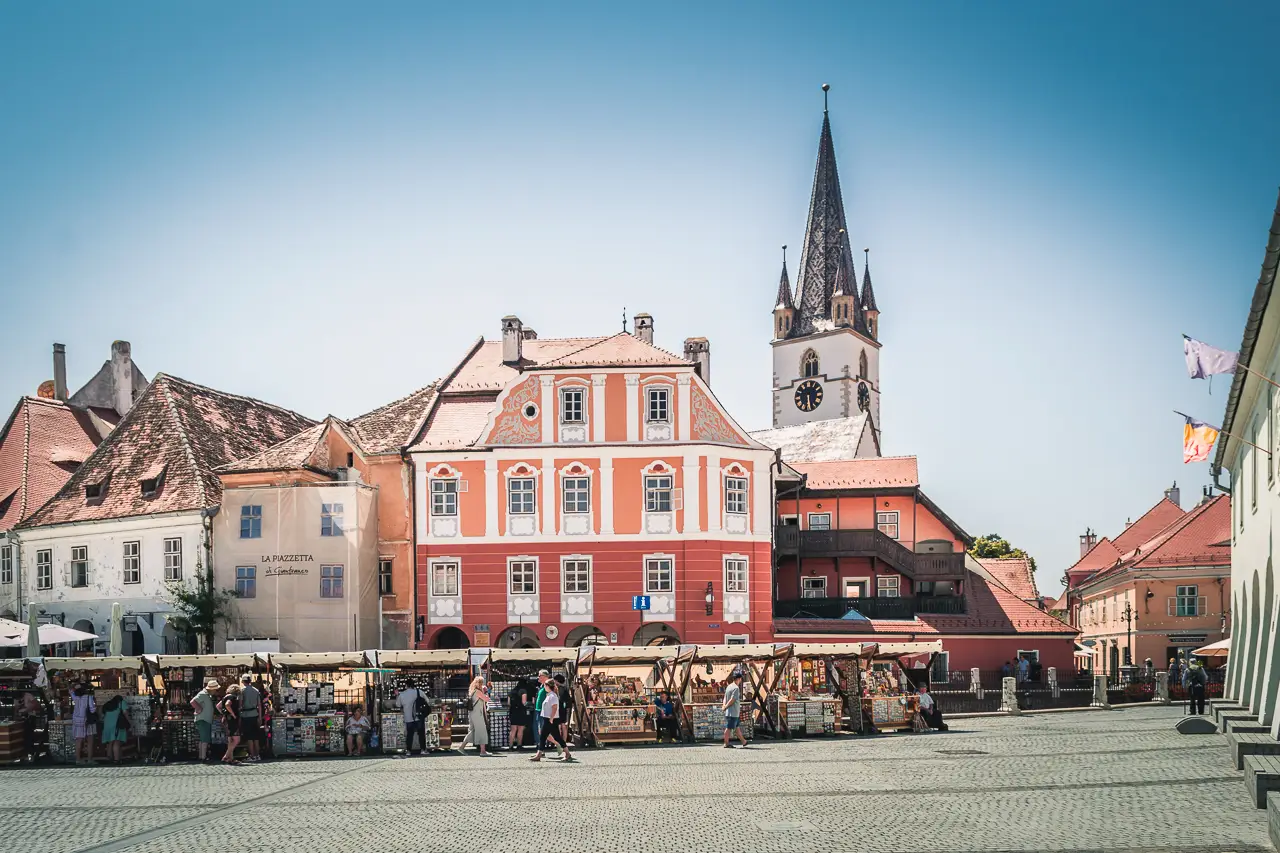
After exploring the Greater Square it was time to head towards the Little Square which is a very short distance away. The Small Square is encircled by colorful baroque-style buildings adorned with arched windows and intricate facades, the square offers a glimpse into Sibiu’s rich past. Cobblestone streets add to the medieval ambiance, inviting visitors to take a leisurely stroll through time.
Colorful baroque-style buildings
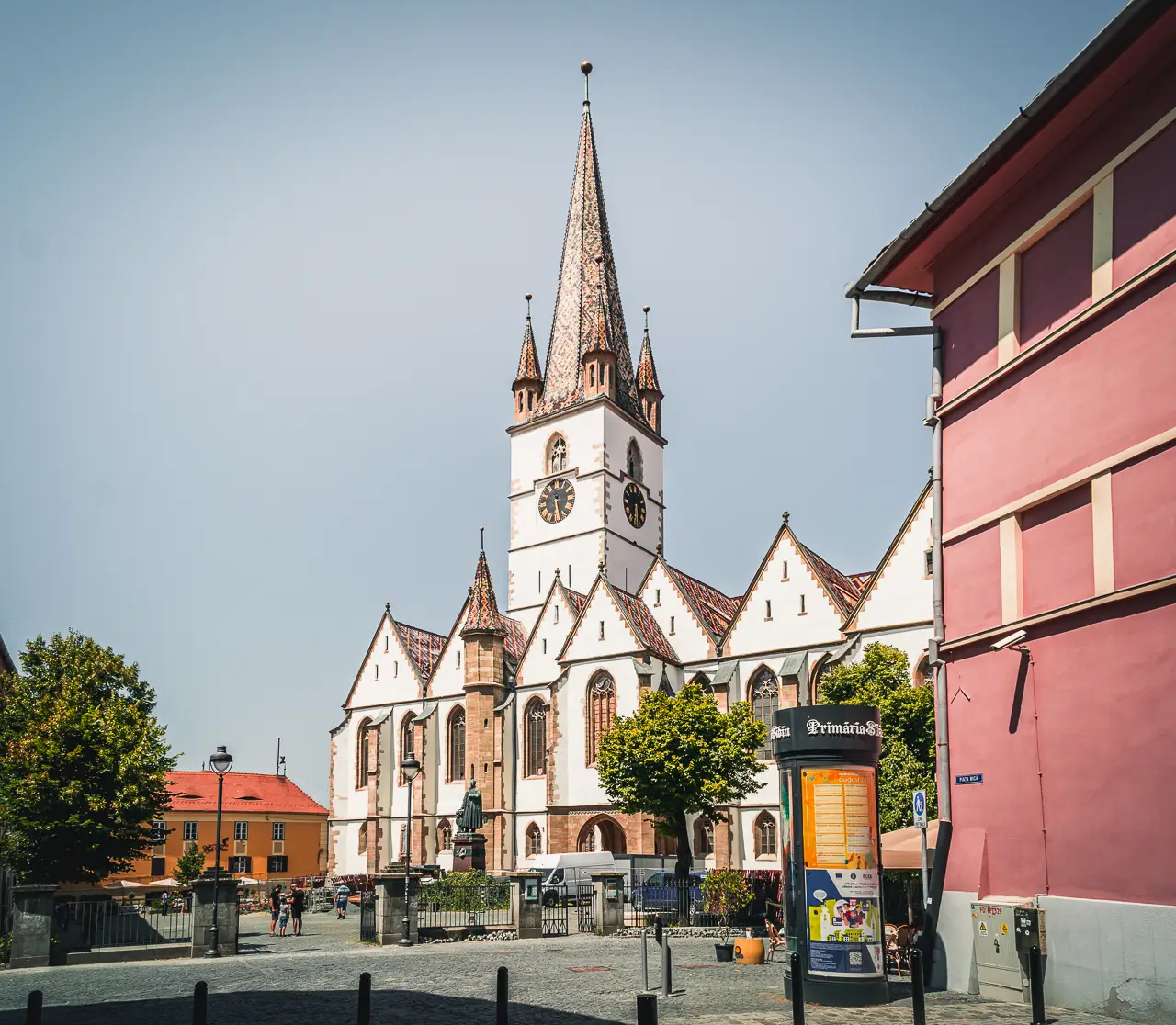
My first stop in the Small Square was at the Lutheran Cathedral of Saint Mary which was recently restored. The Cathedral is a masterpiece of Gothic architecture and a significant landmark with deep historical roots. Often referred to as the “Cathedral of Sibiu,” it stands as a testament to the city’s rich cultural and religious heritage. Construction of the cathedral began in the 14th century, and the building has undergone various modifications and renovations over the centuries.
The impressive Lutheran Cathedral in Small Square.
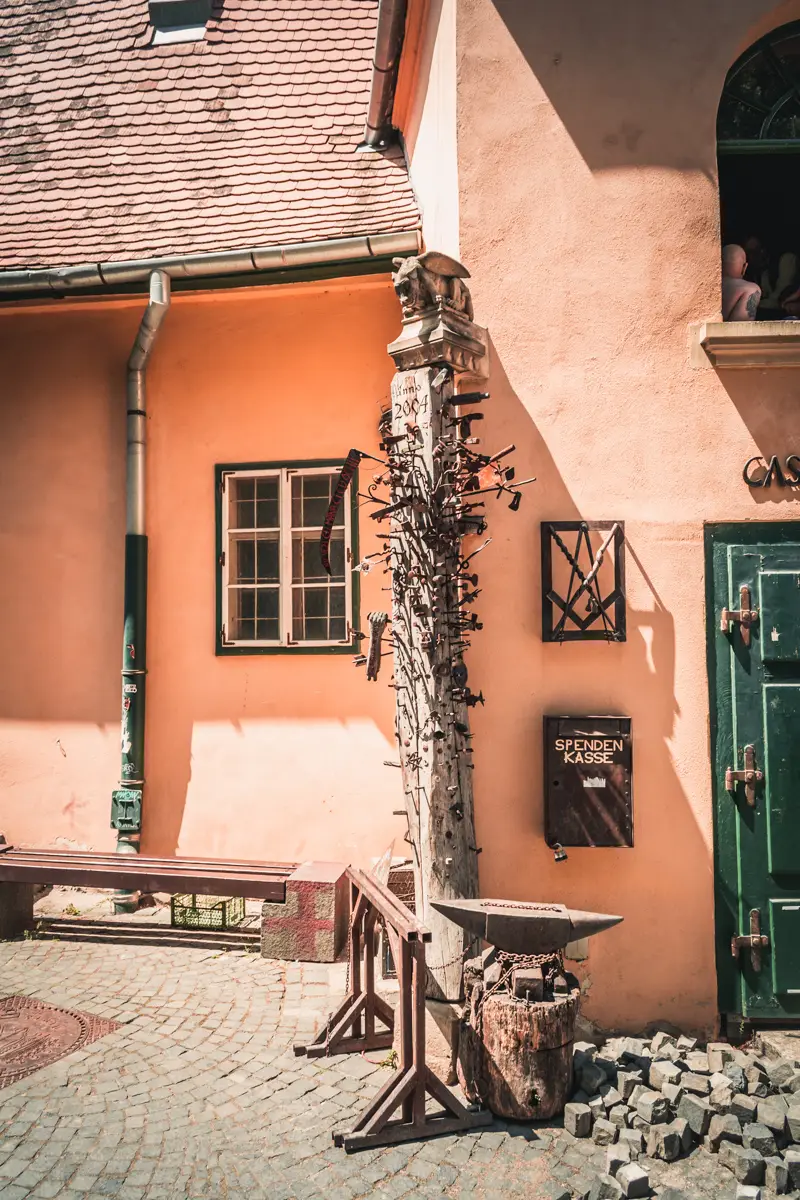
Behind the Lutheran Cathedral, you will find the Guilds Tree and the famous Liars bridge. The Guilds Tree, a symbolic representation of the diverse craft associations that flourished in Sibiu during the 14th century.
The Guilds Tree.The Guilds Tree located behind the Lutheran Cathedral.
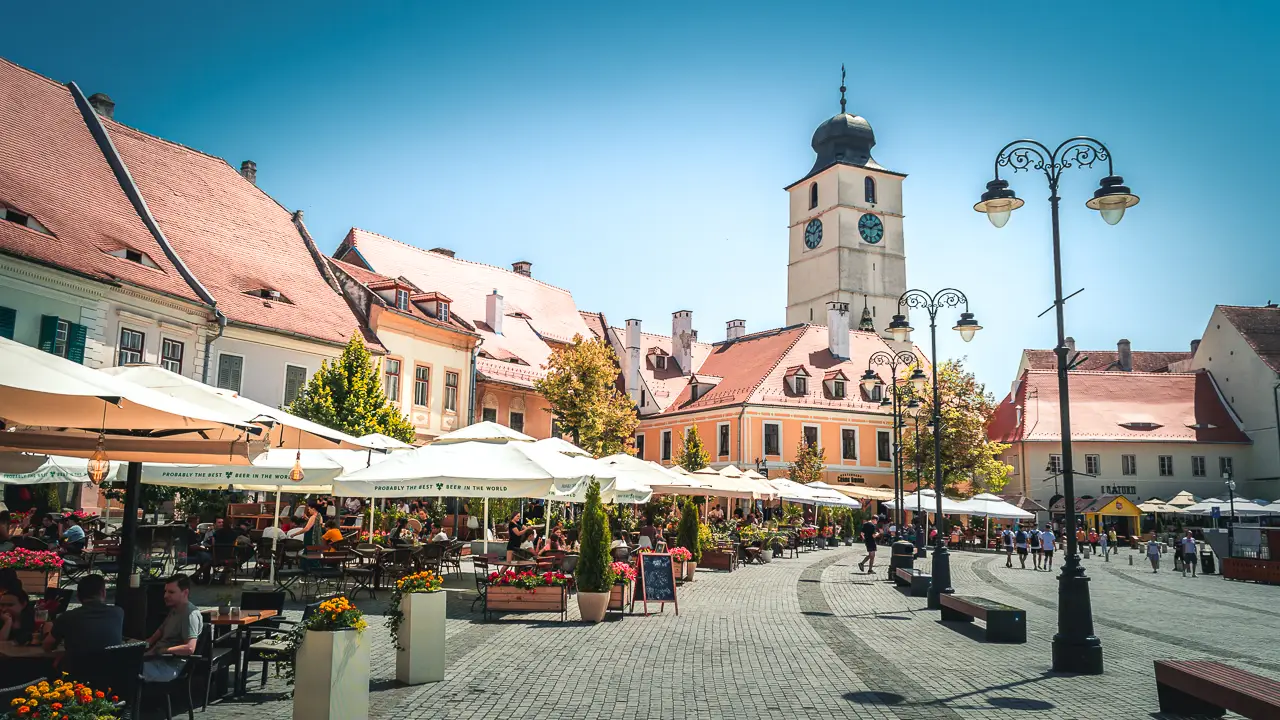
The Council Tower (Turnul Sfatului) is another iconic landmark in Sibiu. Standing at the heart of the city, this medieval tower offers panoramic views of the historic center and the surrounding landscapes. The Council Tower is a reminder of Sibiu’s role as an important medieval trading city.
Multiple restaurants and terraces.The Council Tower.
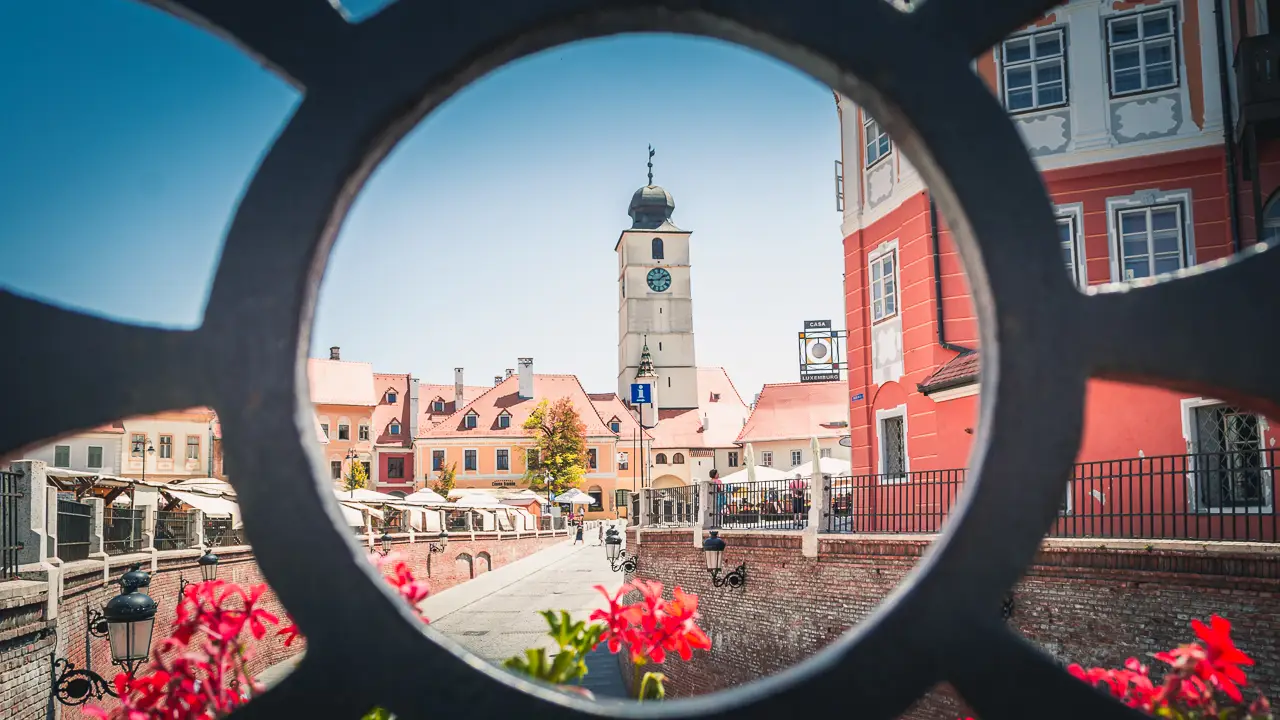
The Bridge of Lies, is a fabled pedestrian bridge situated in the heart of Sibiu. As an interesting fact, it was the first iron-cast bridge built in Romania.
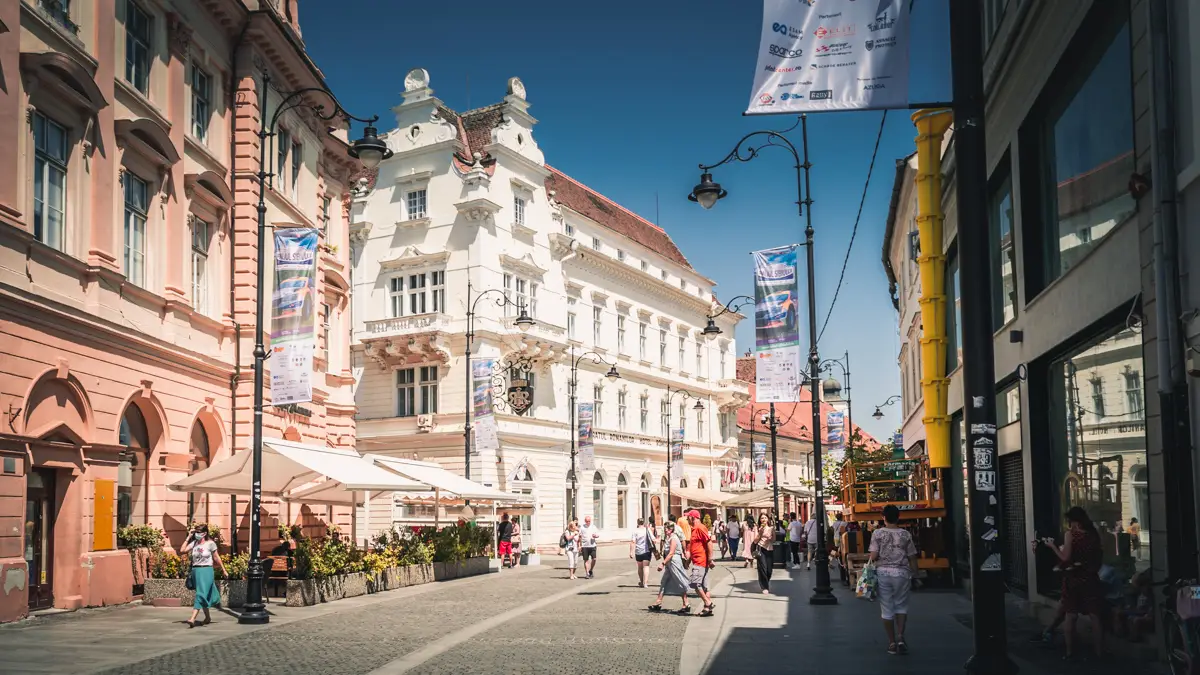
The Small Square in Sibiu as seen from the Bridge of Lies.Old buildings in the Small Square.A street in the city center.
Is there something else to visit in Sibiu?
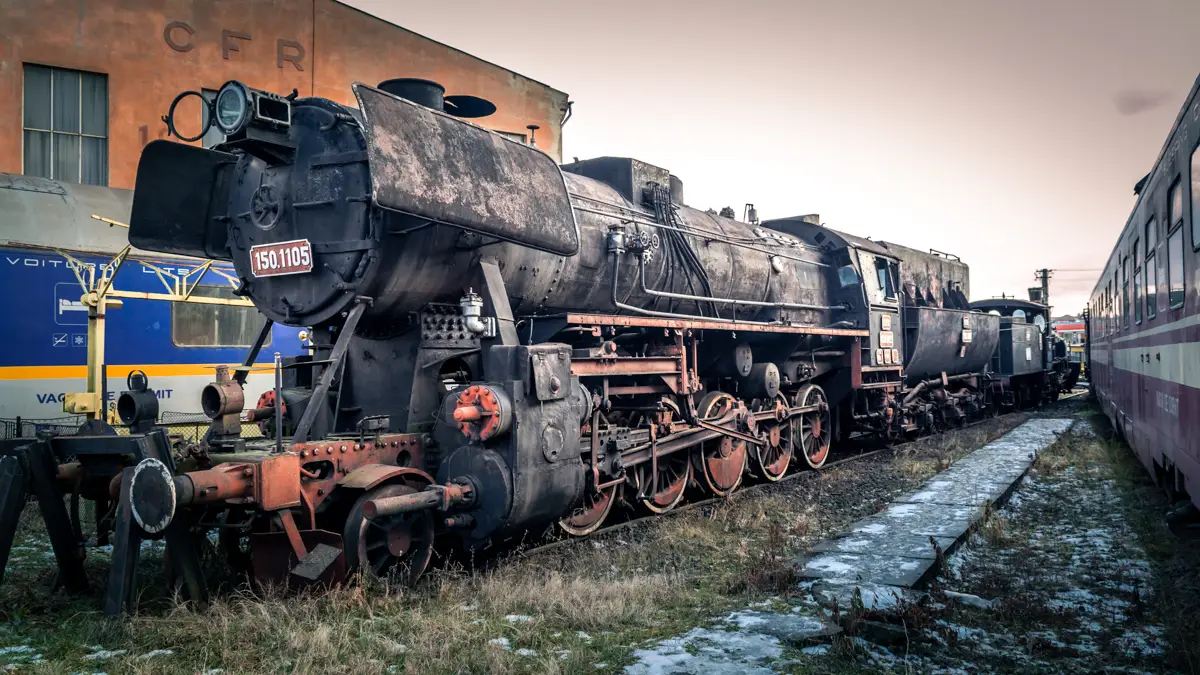
Certainly! Beside the historic center of the city, you can also visit the steam locomotive museum which is located close to Sibiu train station. Over there you will have the chance the discover what type of steam locomotive were used by the Romanian state railway company (C.F.R).
Old steam locomotives in the museum.
What to visit near Sibiu
To be honest, there are many places to visit near Sibiu. Below I’ve shared a couple of them:
The Fortified Church in Cisnădioara – this fortified church is located on the top of a larger hill. You will have to pay for a ticket in order to visit it. This is the closest objective to Sibiu.
Sighișoara medieval citadel – this medieval citadel is among the most popular ones in the historic region of Transylvania.
Cârța Monastery – this is another place to visit especially if you are in the Făgăraș region.
The Biertan Fortified Church – this old church is actually not very far from the medieval citadel of Sighișoara. In case you are in the area, you will have to visit this place as well.
The Clay Castle – This another amazing place to visit in the Făgăraș region.
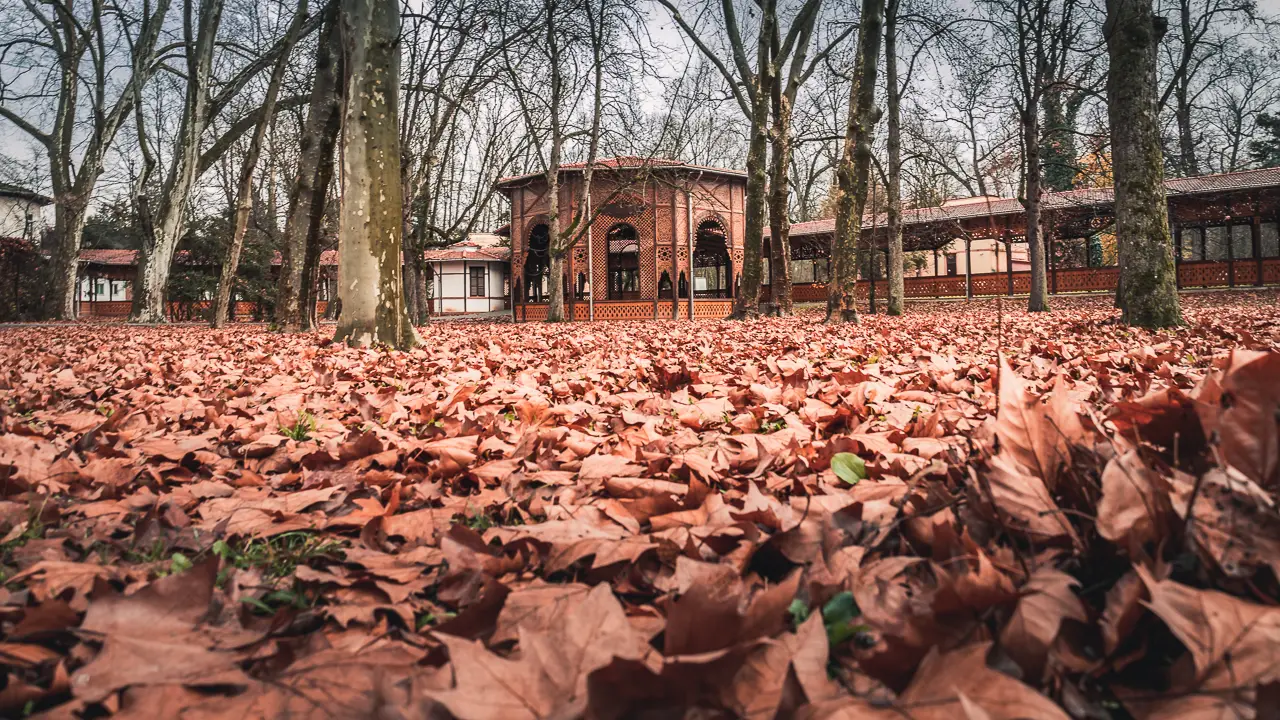
The Dendrological Park can be found in the small town of Buziaș. This town is only about 34 km away from the Romanian city of Timișoara. The dendrological park has a surface of over 20 ha and back in 1839 it was declared a spa due to the mineral springs found in the area.
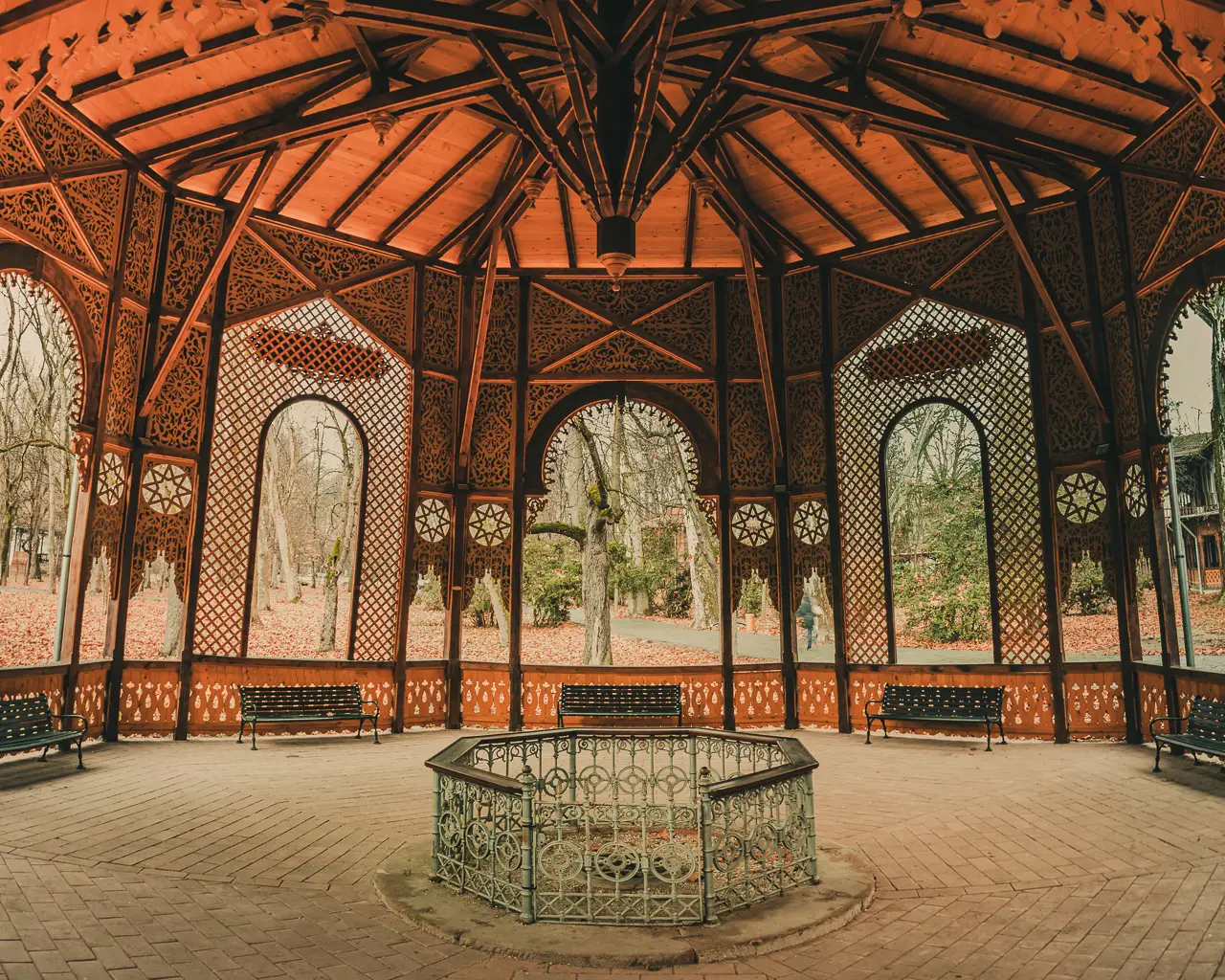
There are a couple of wells from where you can get mineral water. One is located in the park, close to the ruins of Baia 2. The other one, can be found right next to the edge of the park, close to the hotel Timis.
During my last trip to Buziaș, the entire park was under construction. Hopefully in the near future, the park will regain it’s former beauty.
The Covered Colonnades
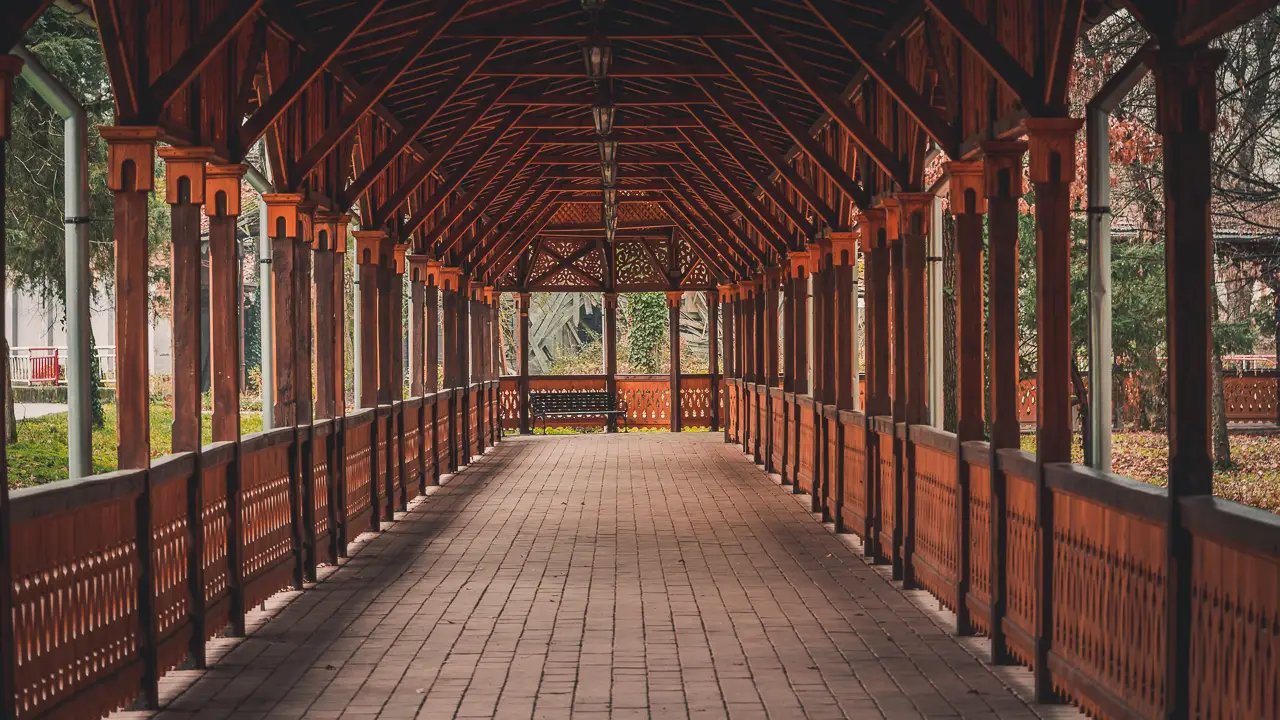
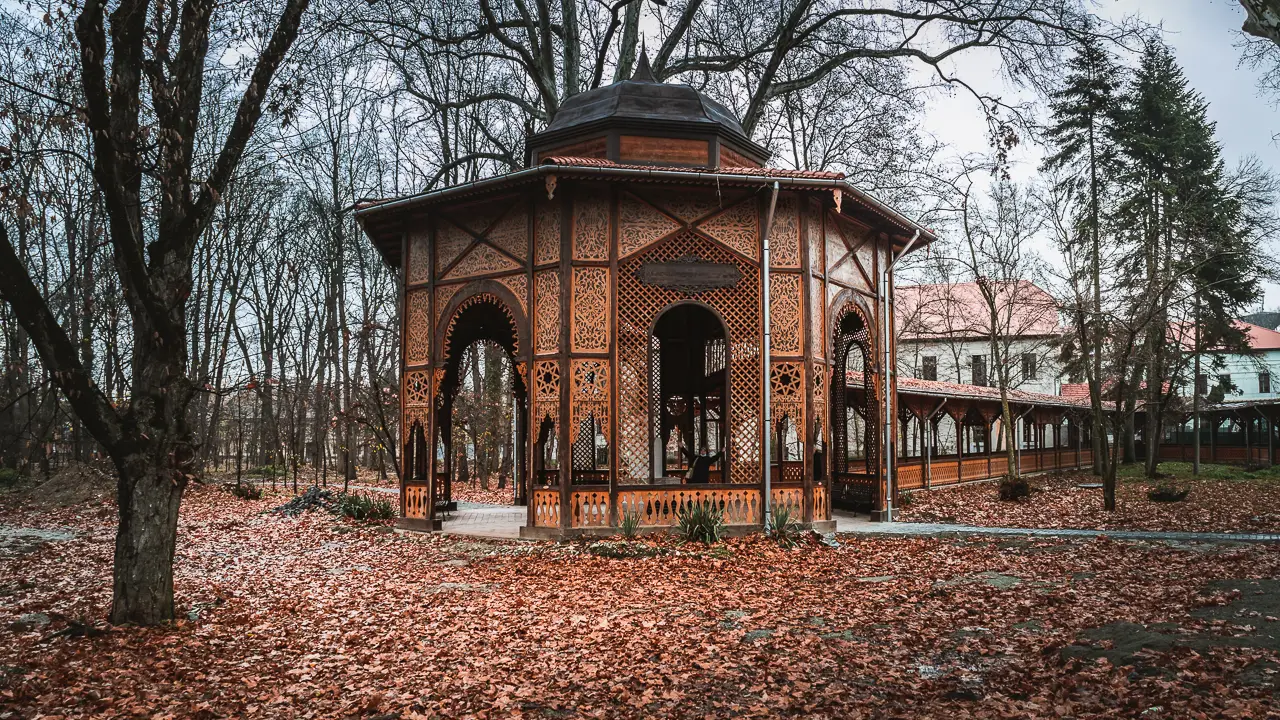
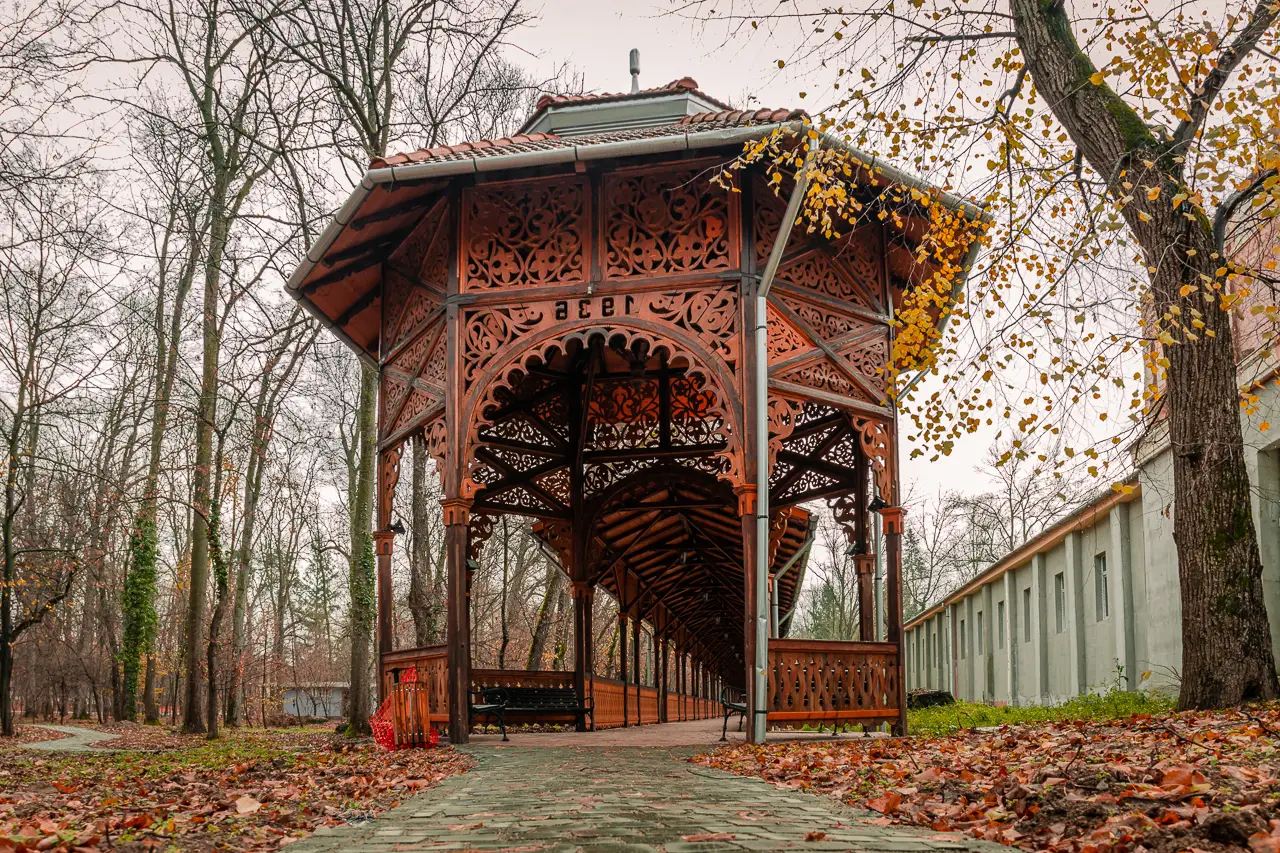
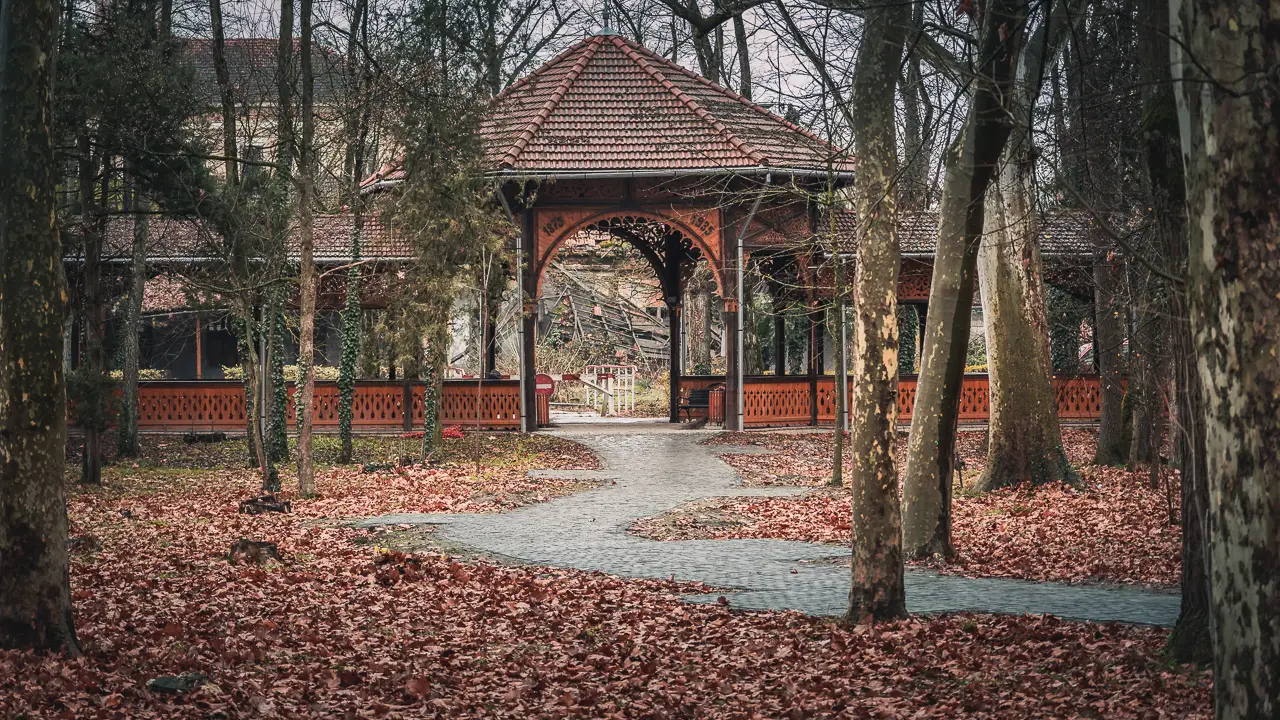
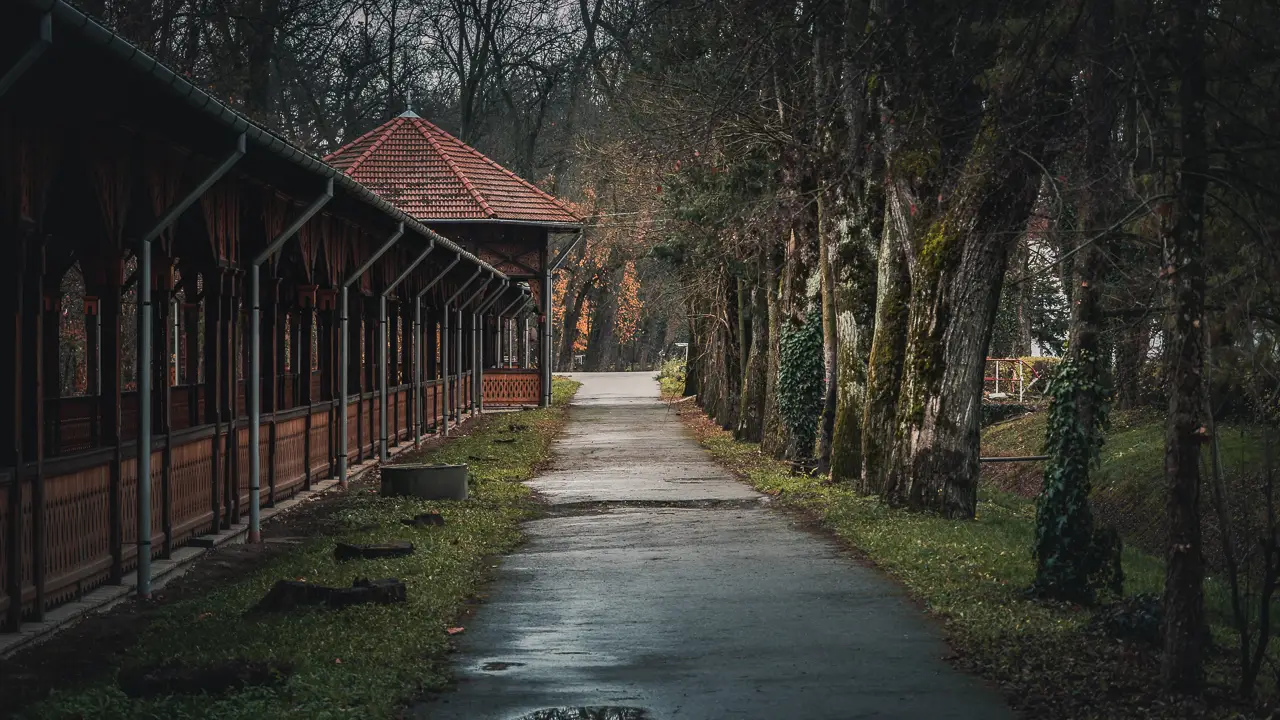
Below you will see some photos which were taken inside the dendrological park where you are able to see some wooden covered colonnades which were built in Turkish-Byzantine style. The original colonnades where actually built on the request of Emperor Franz Joseph I and it’s the main attraction in the park.
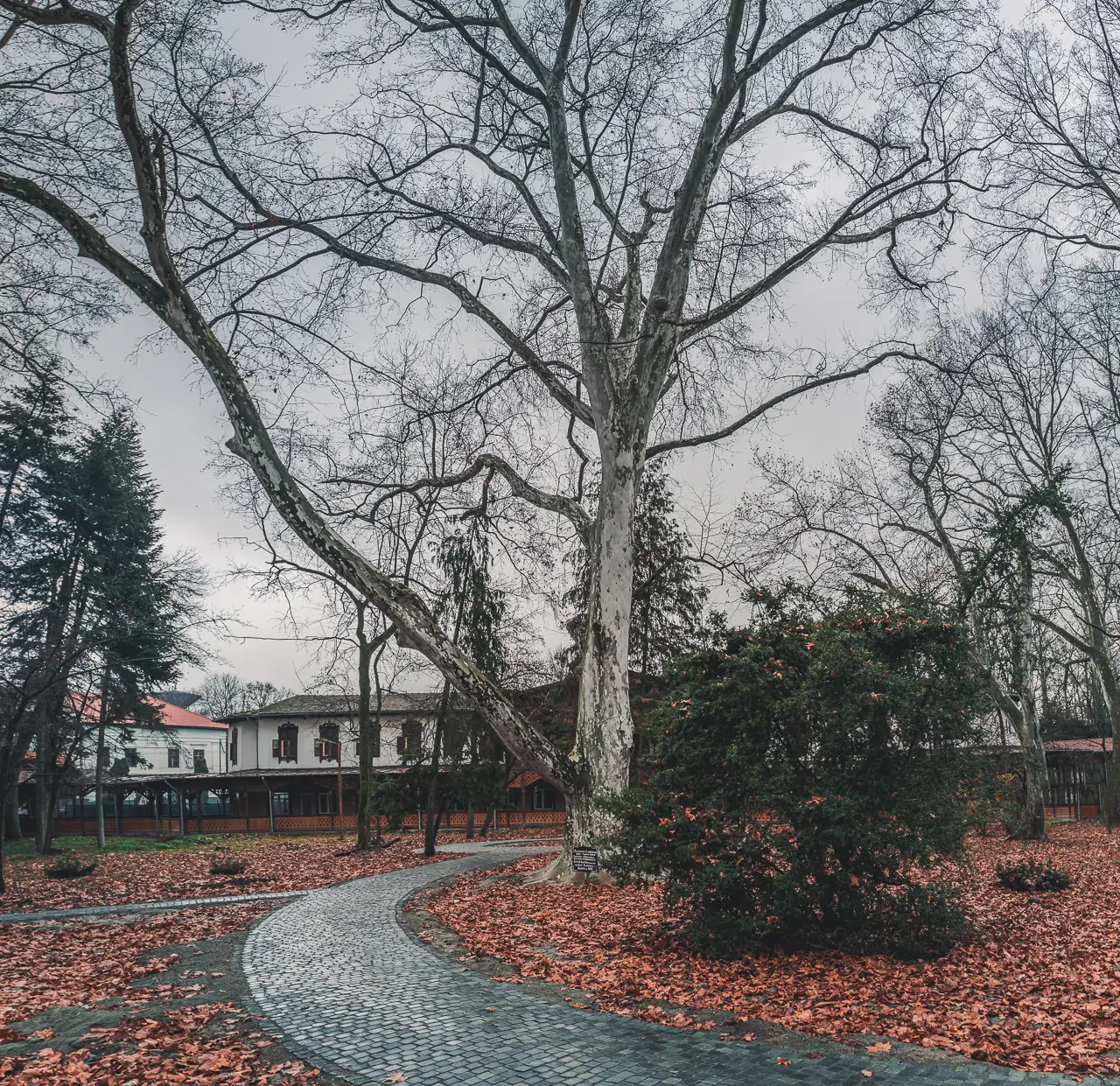
One of the oldest tree in the park
In the dendrological park you will find many species of trees, the most common is the plane tree (Platanus). In the photo below you will find a tree which was planted in 1812.
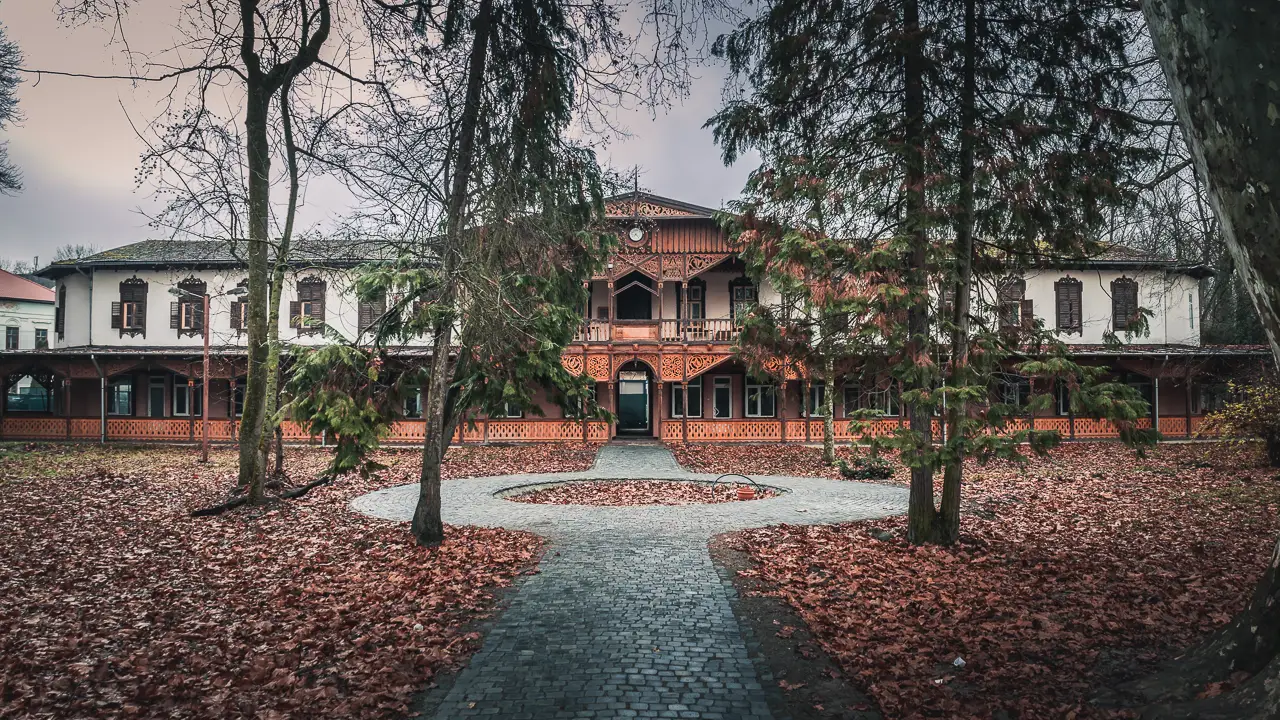
The Bazar Villa
Right behind the oldest plane tree you will find the beautiful Bazar villa which was a spa hotel in the past.
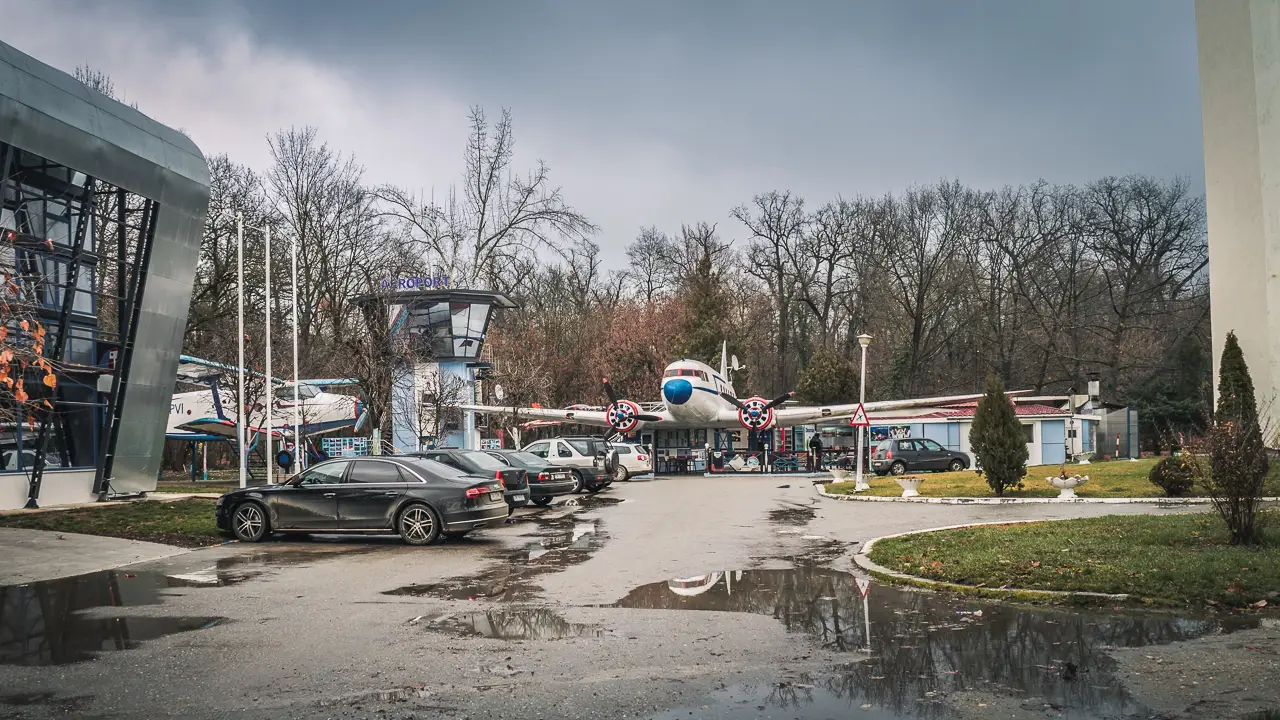
At the Airpot
On the edge of the park you will find a place called the Airport where you will find some examples of old airplanes. The largest plane in a Soviet Lisunov LI-2 which is actually a copy of the famous American Douglas DC3 aka “Dakota”. According to some older stories, the plane has belonged to the former communist president Gheorghiu Dej.
Between those two large planes you will find the control tower.
The second plane is also from the Soviet era, this is actually an Antonov AN-2 bi-plane and it was used as a utility plane in agriculture.
We use cookies on our website to give you the most relevant experience by remembering your preferences and repeat visits. By clicking “Accept All”, you consent to the use of ALL the cookies. However, you may visit "Cookie Settings" to provide a controlled consent.
This website uses cookies to improve your experience while you navigate through the website. Out of these, the cookies that are categorized as necessary are stored on your browser as they are essential for the working of basic functionalities of the website. We also use third-party cookies that help us analyze and understand how you use this website. These cookies will be stored in your browser only with your consent. You also have the option to opt-out of these cookies. But opting out of some of these cookies may affect your browsing experience.
Necessary cookies are absolutely essential for the website to function properly. These cookies ensure basic functionalities and security features of the website, anonymously.
Cookie
Duration
Description
cookielawinfo-checkbox-analytics
11 months
This cookie is set by GDPR Cookie Consent plugin. The cookie is used to store the user consent for the cookies in the category "Analytics".
cookielawinfo-checkbox-functional
11 months
The cookie is set by GDPR cookie consent to record the user consent for the cookies in the category "Functional".
cookielawinfo-checkbox-necessary
11 months
This cookie is set by GDPR Cookie Consent plugin. The cookies is used to store the user consent for the cookies in the category "Necessary".
cookielawinfo-checkbox-others
11 months
This cookie is set by GDPR Cookie Consent plugin. The cookie is used to store the user consent for the cookies in the category "Other.
cookielawinfo-checkbox-performance
11 months
This cookie is set by GDPR Cookie Consent plugin. The cookie is used to store the user consent for the cookies in the category "Performance".
viewed_cookie_policy
11 months
The cookie is set by the GDPR Cookie Consent plugin and is used to store whether or not user has consented to the use of cookies. It does not store any personal data.
Functional cookies help to perform certain functionalities like sharing the content of the website on social media platforms, collect feedbacks, and other third-party features.
Performance cookies are used to understand and analyze the key performance indexes of the website which helps in delivering a better user experience for the visitors.
Analytical cookies are used to understand how visitors interact with the website. These cookies help provide information on metrics the number of visitors, bounce rate, traffic source, etc.
Advertisement cookies are used to provide visitors with relevant ads and marketing campaigns. These cookies track visitors across websites and collect information to provide customized ads.