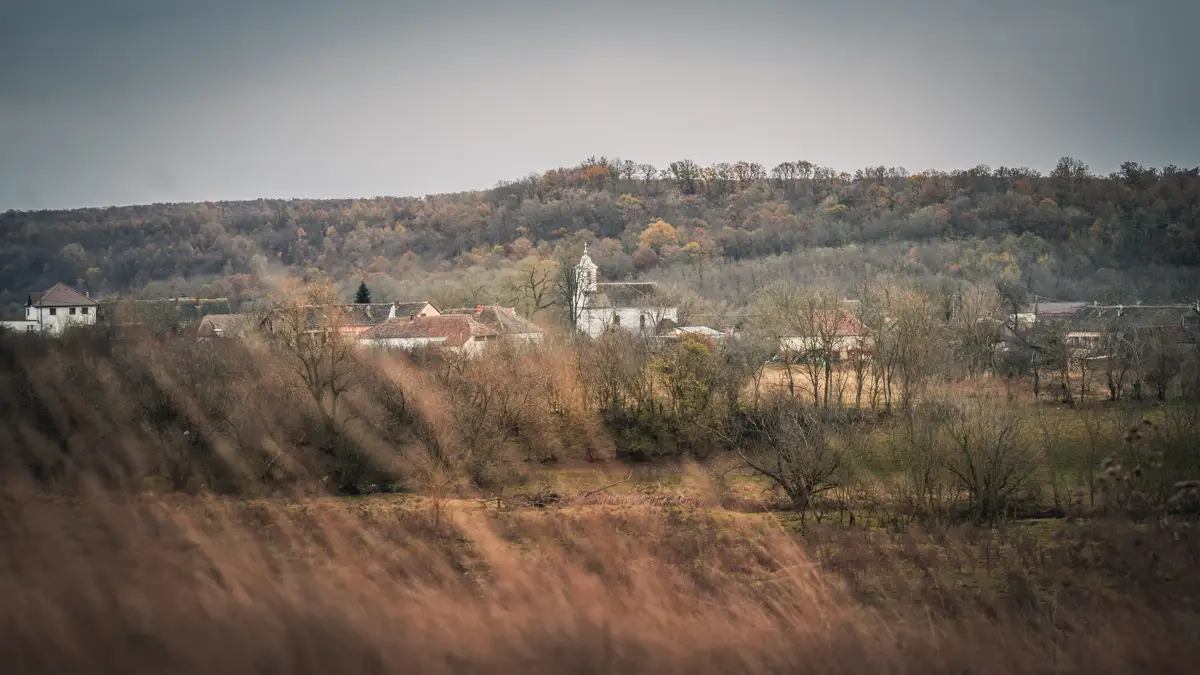
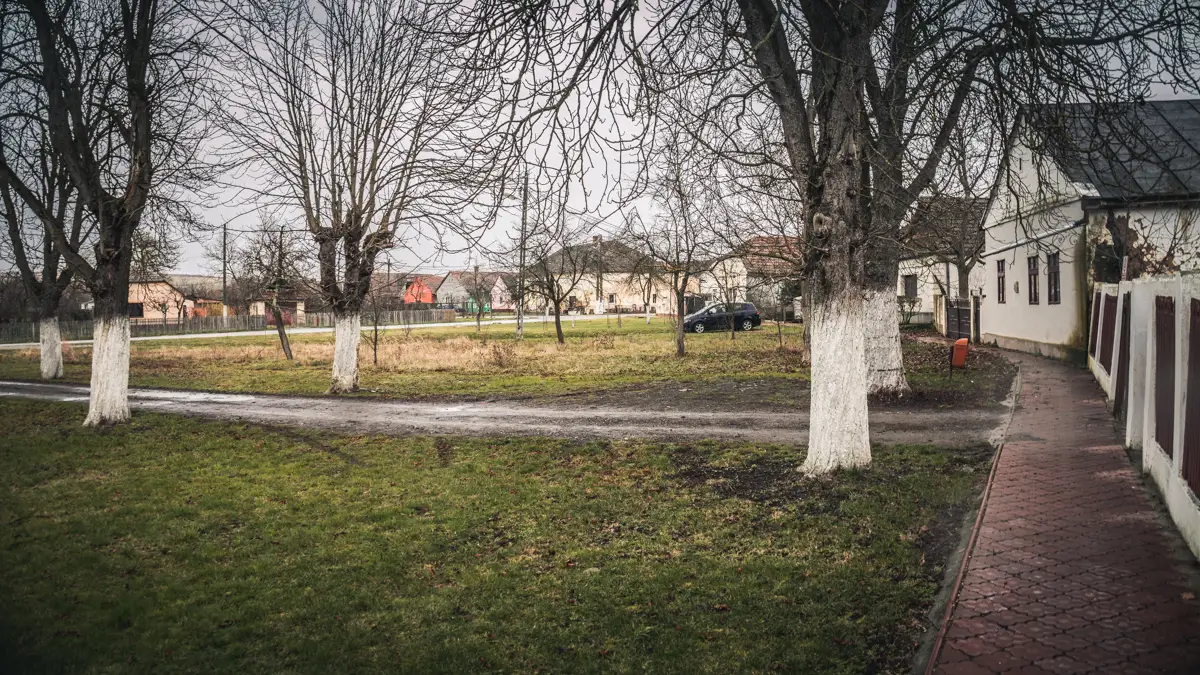
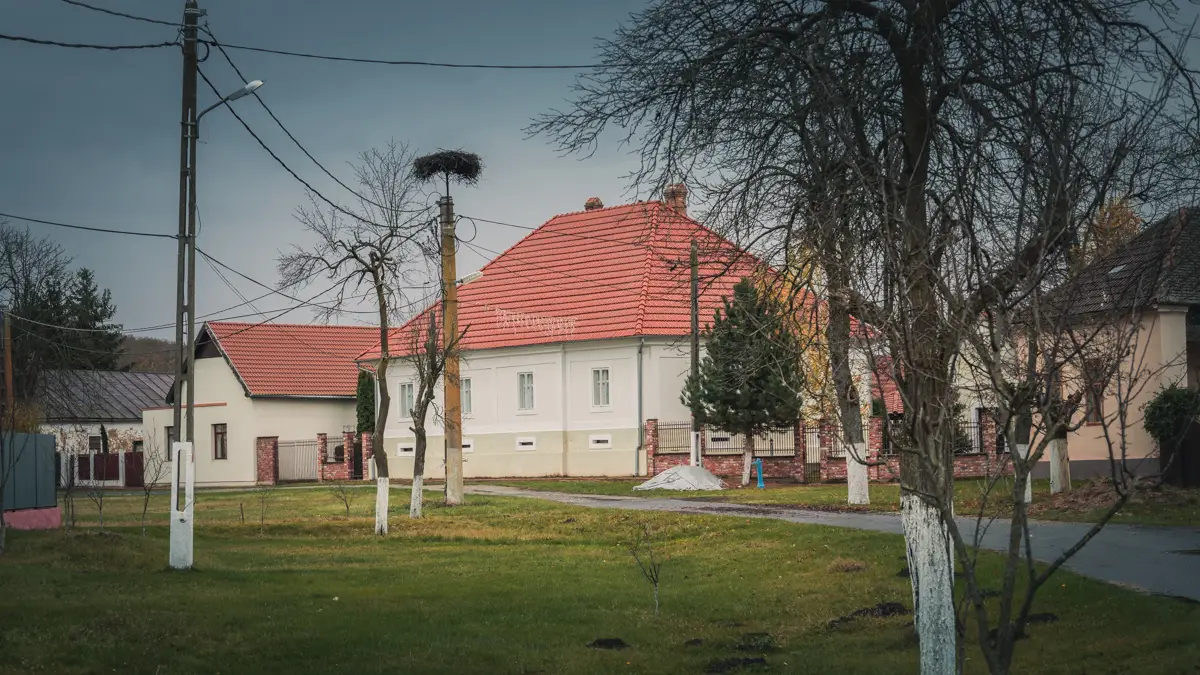
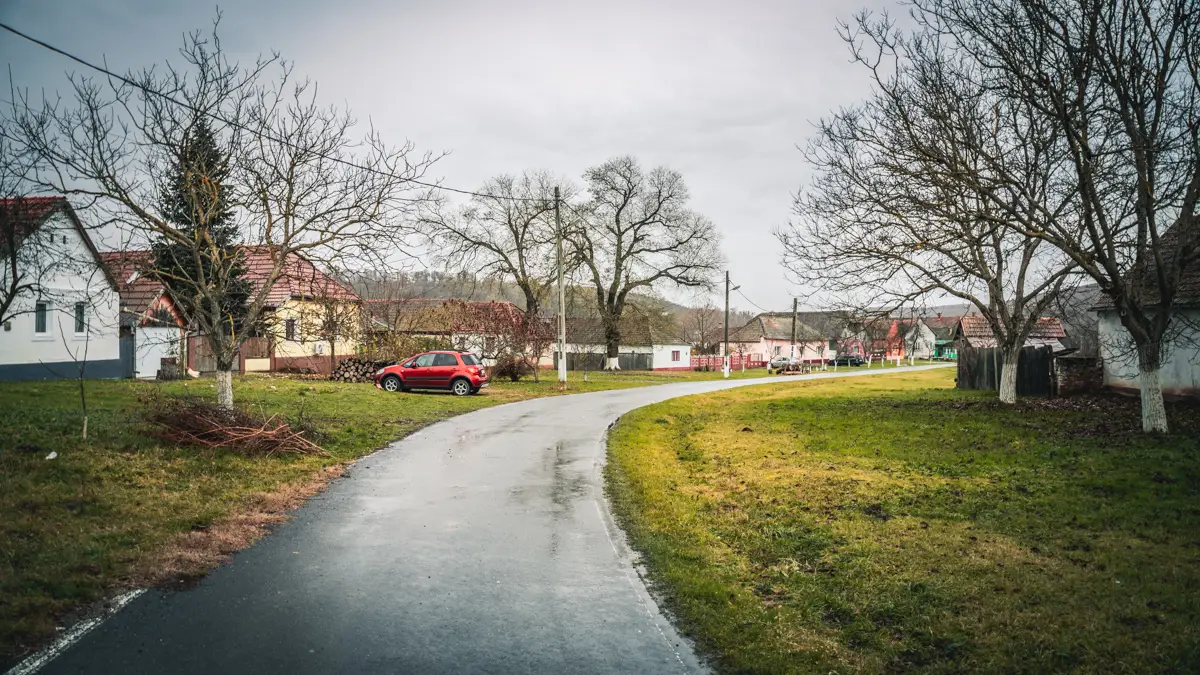
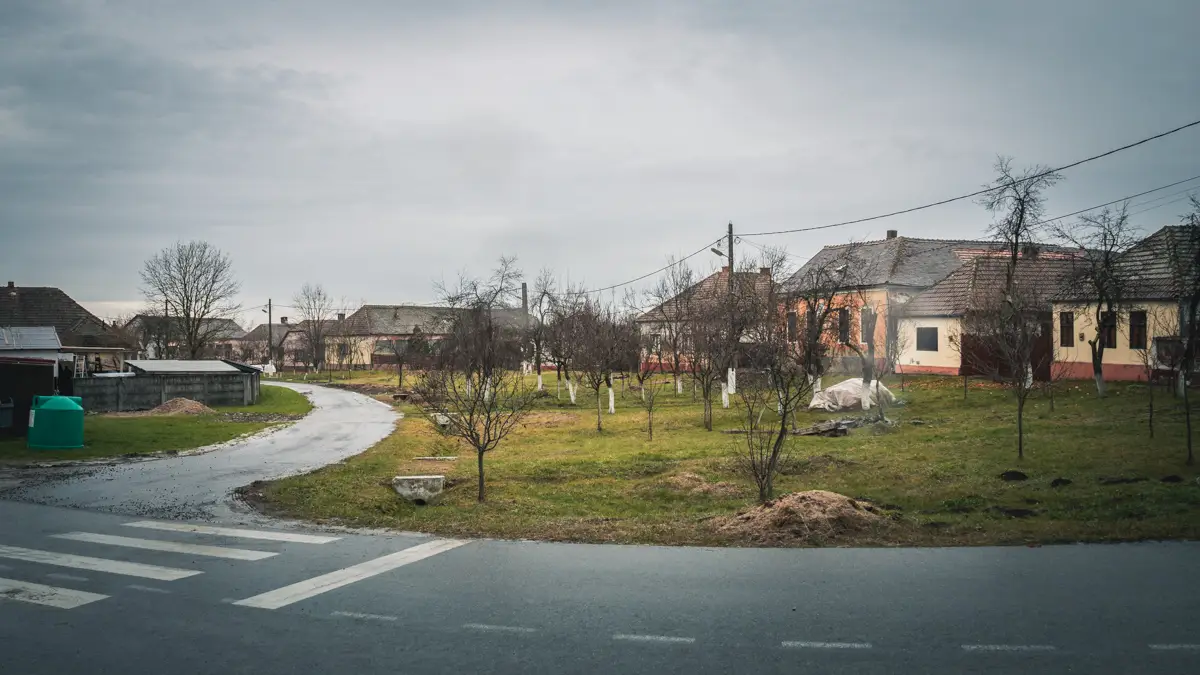
The village of Charlottenburg located in Timis County, also known as Sarlota, is Romania’s only circular village, not far from the major city of Timisoara. Initially, this village was founded by 32 families who immigrated to Banat from the southern part of Germany. In its early days. all the houses in the village had almost the same height. This tradition has not really changed. One of the reasons this village has a circular layout was to protect the count’s estates from damages done by wild animals living in the nearby forests.
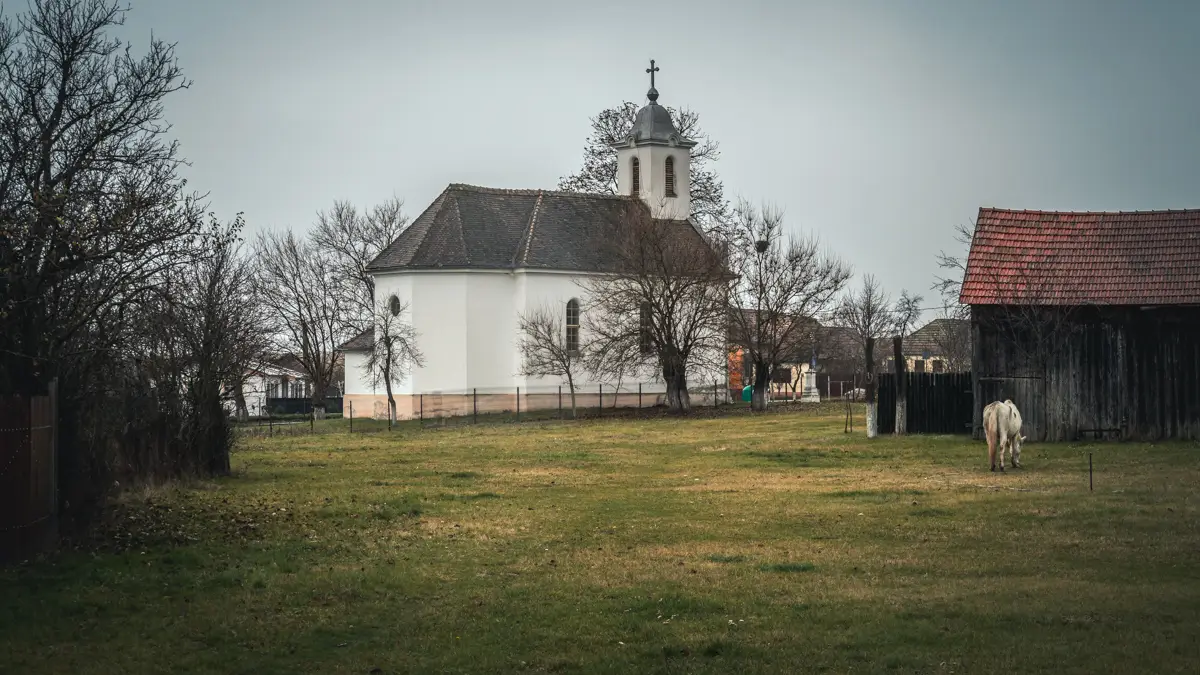
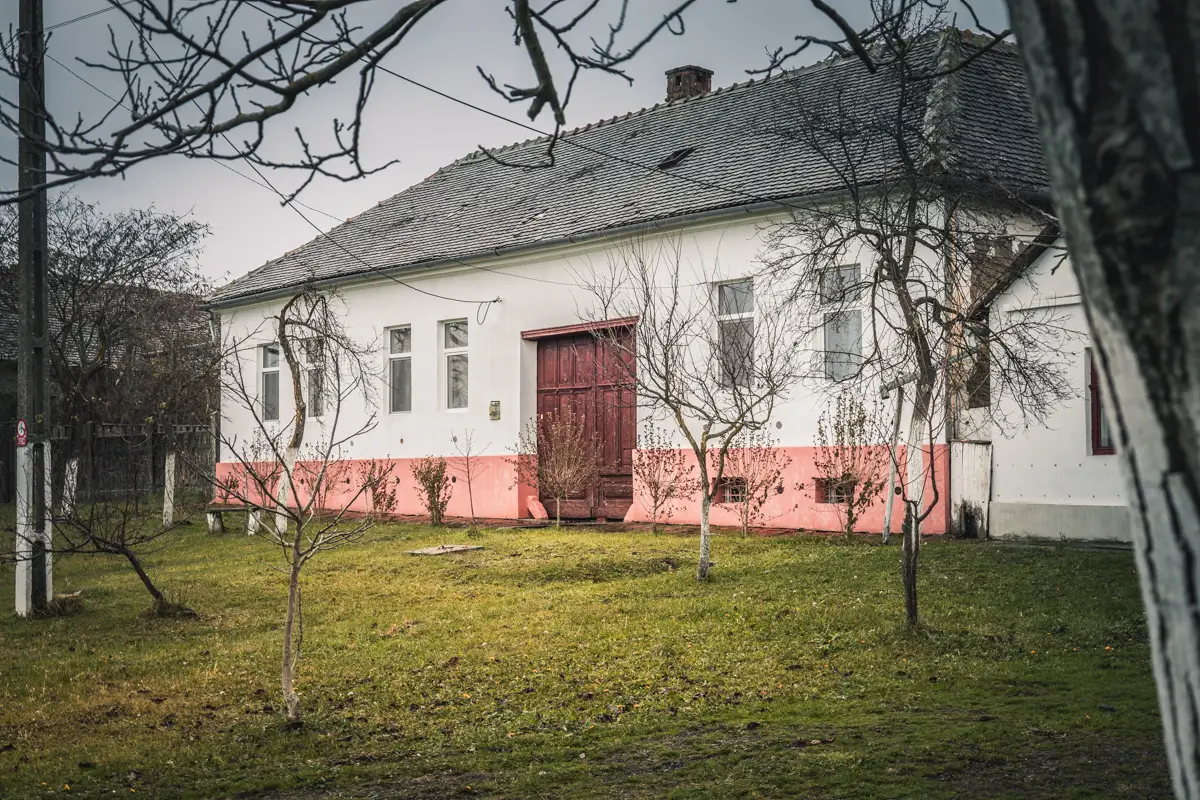
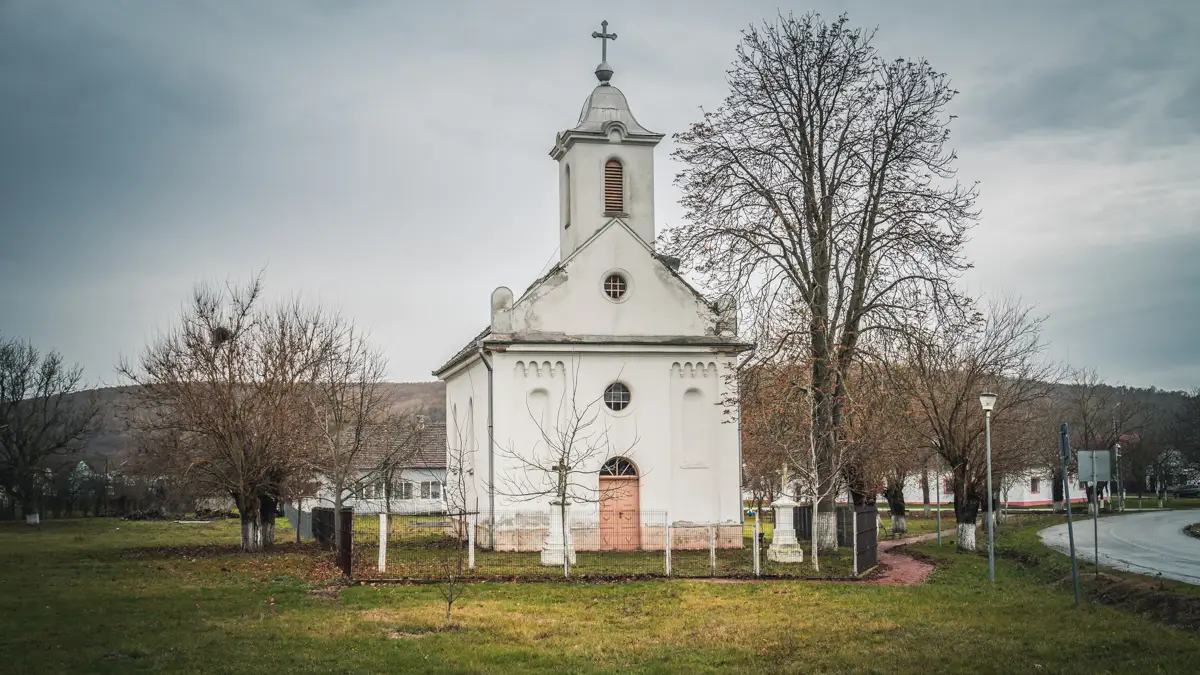
As you enter the village, you can observe the circular shape of the village. Right in the center of Charlottenburg, you will find the local school and a small but beautiful Roman Catholic church which is surrounded by old Swabian-style houses. The circularly shaped village has been designated a historical monument by the Romanian Ministry of Culture.
As an interesting fact, Charlottenburg is 5 km away from 3 villages located nearby. Those villages are Buzad, Masloc, and Bogda.
Large circular street.The Museum of Hunting.Side view of the Roman Catholic church.Old houses in a circular layout.A close-up shot of a Swabian house.The starting point of the circular street.The Roman Catholic church located almost in the center of the village.
After visiting this small village on a rainy December day, I would like to share some insights. Since it is a small village, apart from the Museum of Hunters there are not many attractions to visit in Charlottenburg. However, one of the biggest advantage of this village is that is not very far from Timisoara therefore you can easily reach it by car or by bicycle. In approximately 15 minutes, you can explore the entire circular village by foot. The village may reveal its true beauty and offer a more delightful experience when visited in milder weather.
From Timisoara, which is about 45 km away, you will have to drive towards Masloc on DJ691. Once you will arrive in Masloc you will have to make a right turn toward Remetea Mica. The next village after Remetea Mica will be Charlottenburg.
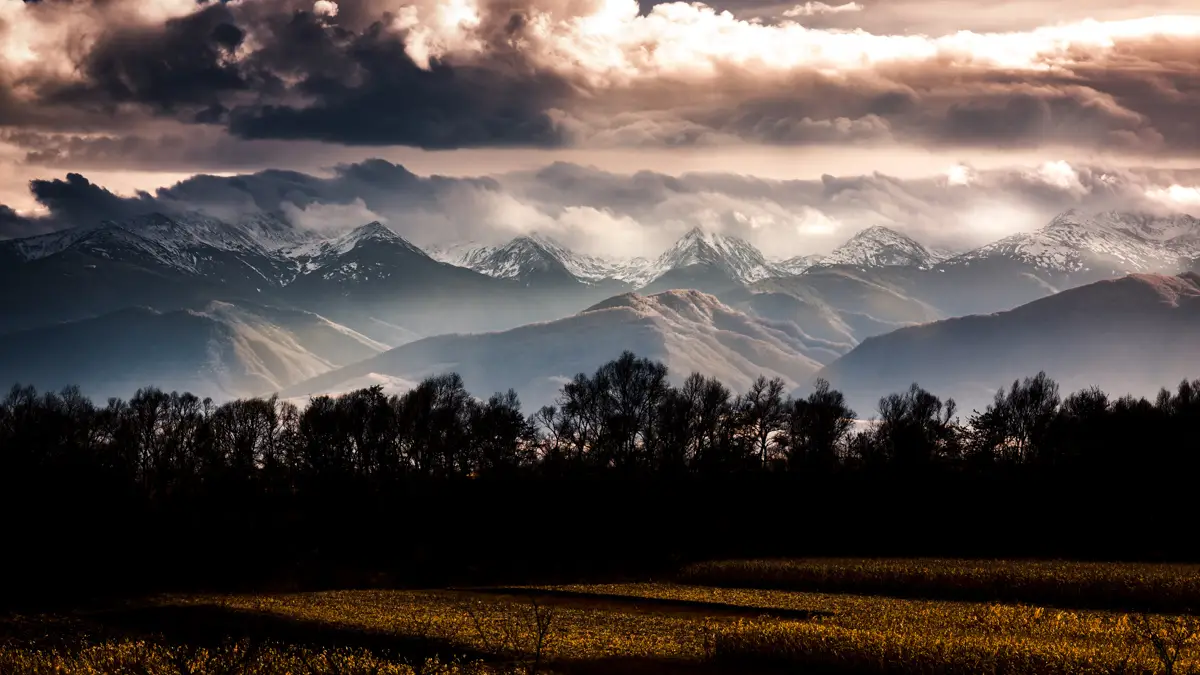
Located in the southwestern part of the historical region of Transylvania, the Land of Hateg offers many things to explore and discover for tourists. Honestly, I found myself captivated by the picturesque landscapes, ancient castles, and warm hospitality. In this article, I will take you on a virtual tour of some of the must-visit destinations in the Land of Hateg, revealing the unique charm that makes it a destination you will never forget. Below I’ve shared a list of 5 amazing places that I’ve visited in the past so join me on a journey as I share my firsthand experience of the must-visit places in this captivating region.
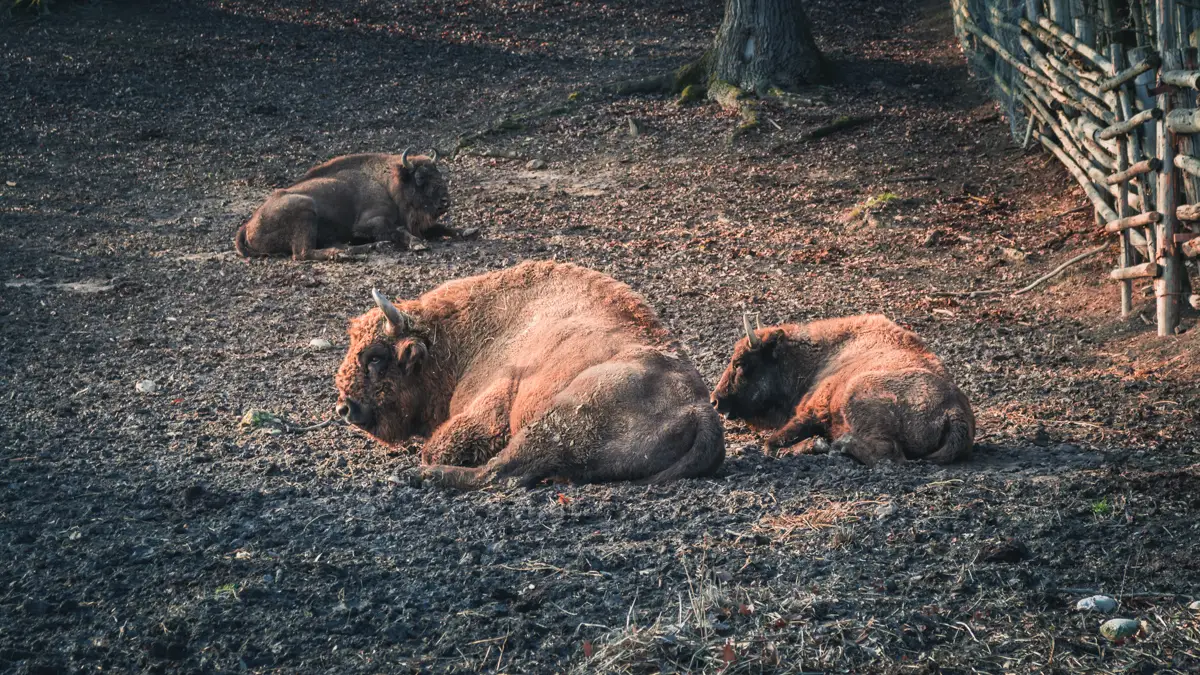
Hateg-Slivut Bison Reserve
Hateg-Slivut Bison Reserve can be found not far from the city of Hateg. This place is highly recommended for wildlife enthusiasts and not just because this place offers a rare opportunity to witness European bison in its natural habitat. The reserve is committed to the protection and preservation of this endangered species, making it a meaningful and educational stop for visitors of all ages
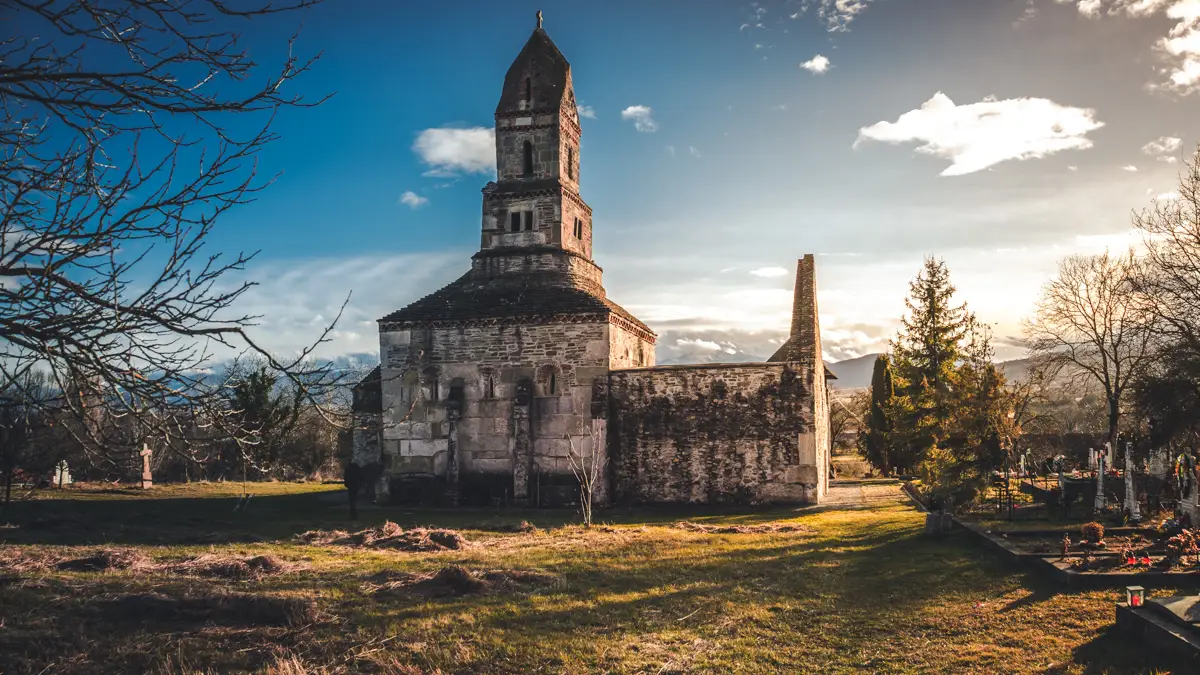
The Densus Church
As you drive from Hateg towards Caransebes on DN68, you can make a small detour and visit the Densus stone church, which by the way is the oldest church in Romania. It can be found in the small and quiet village of Densus, which is about 14 km away from the city of Hateg. The historic stone church dates back to the 13th century and it was built on the site of a former Roman temple.
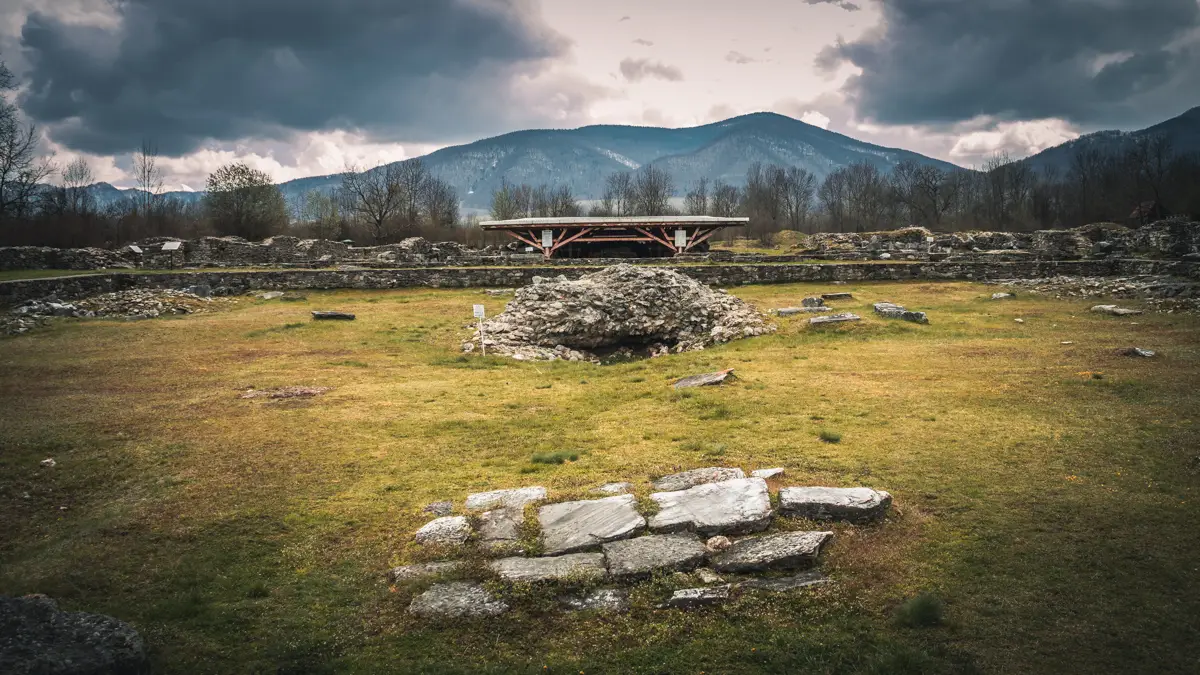
Ulpia Traiana Sarmizegetusa
If you are a history enthusiast, then Ulpia Traiana Sarmizegetusa would be another place that I highly recommend. After the Romans conquered Dacia, they decided to build a city on the territory of Sarmizegetusa. Today you will have the chance to visit the old Roman capital’s ruins. You can visit the ruins of temples, amphitheater, and residential areas that once thrived during the Roman Empire. If you plan to visit this place, you will find the main entrance right next to the main road connecting Caransebes and Hateg.
Malaiesti citadel
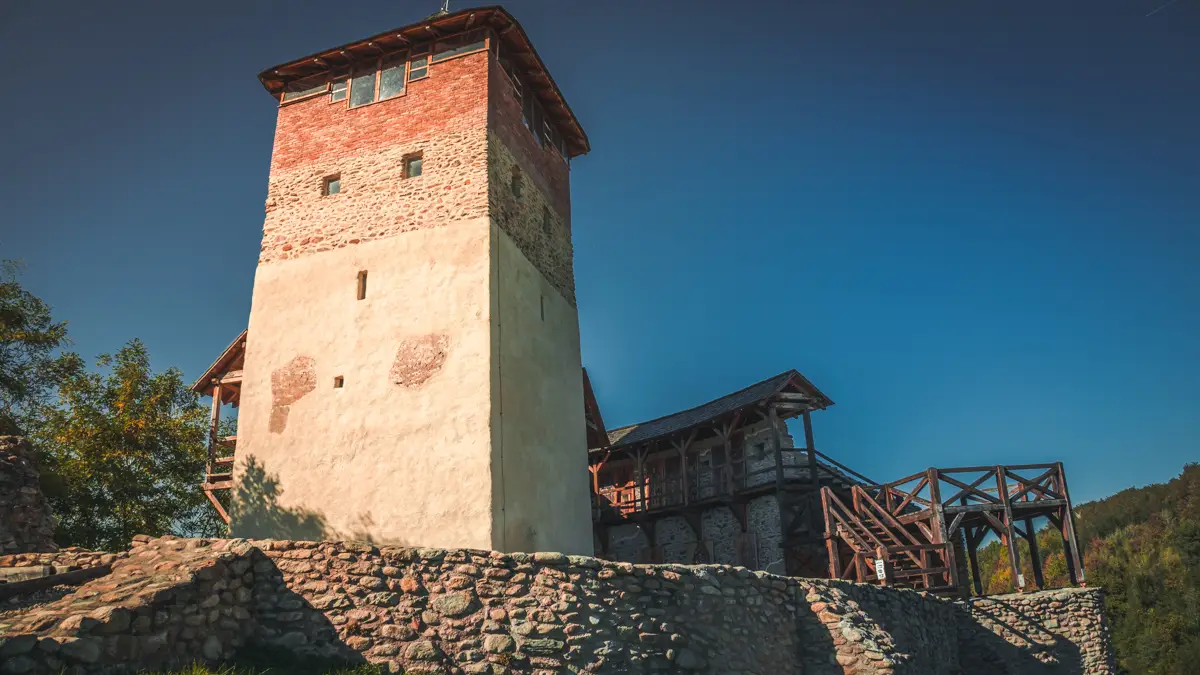
You will find the Malaiesti citadel in the Romanian village which has the same name as the citadel. The citadel consists of a tower which in the past, was surrounded by fortification walls. Today only a small part of the fortification wall remained intact. From there, you will have the chance the admire the beautiful Retezat Mountains which are not very far from the village of Malaiesti.
Lake Gura Apelor
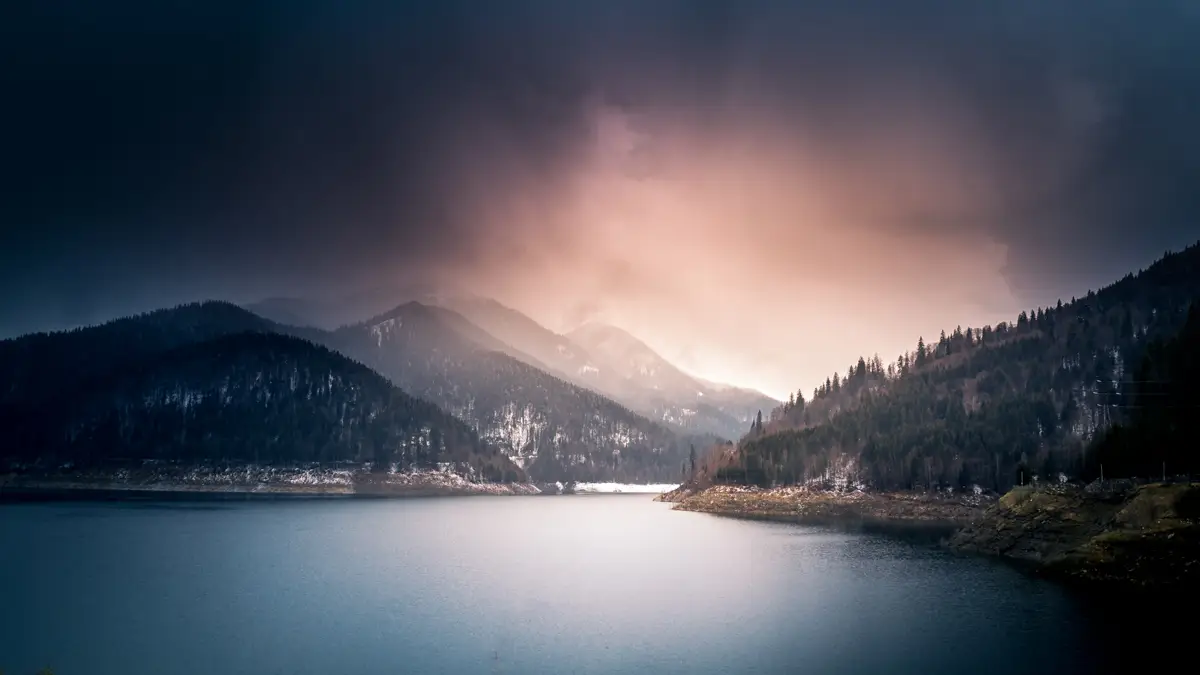
Gura Apelor is an artificial lake located up in the Retezat Mountains. If you plan to visit this place, then you should know that the road up to the lake is asphalted except for a couple of small portions, I can say that is in pretty decent condition. Once you arrive at the dam, you are surrounded by the beautiful Retezat Mountains and you will find a couple of trails that actually start from the Lake Gura Apelor.
Locations on the map
In the map below you will find the exact locations of the important places shared in this post. The starting point for all the important objectives in the Land of Hateg is the small Romanian city of Hateg. In addition to pinpointing these locations on the map, the corresponding routes necessary to reach each objective are also highlighted for your convenience.
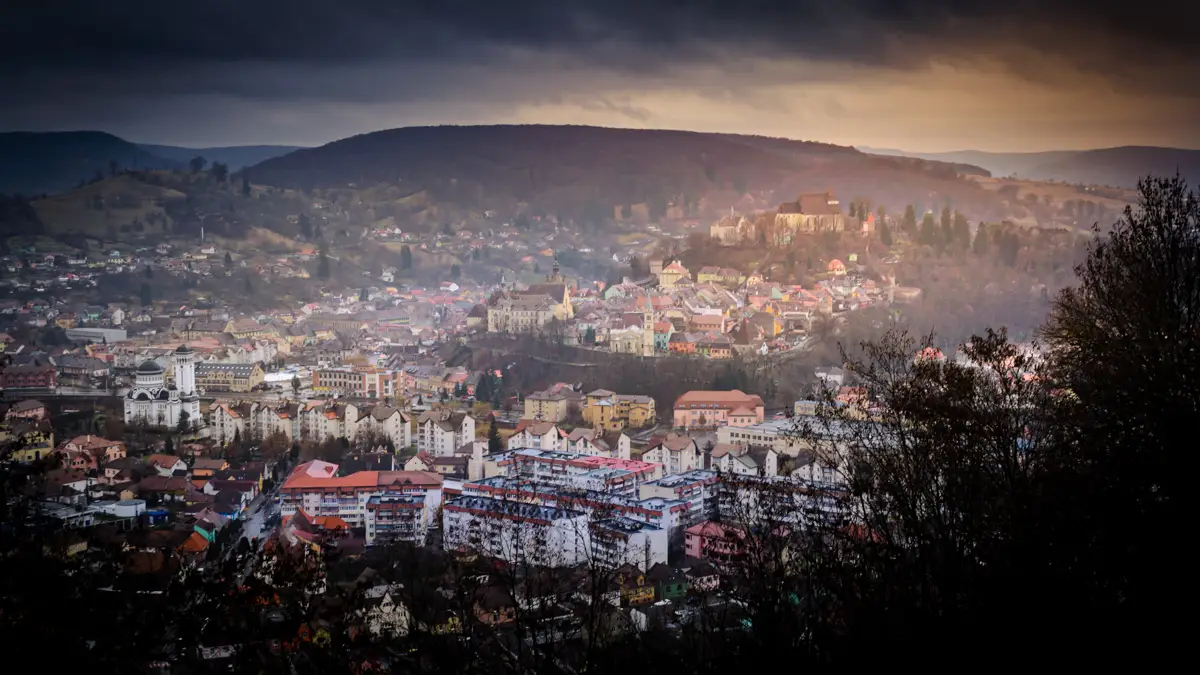
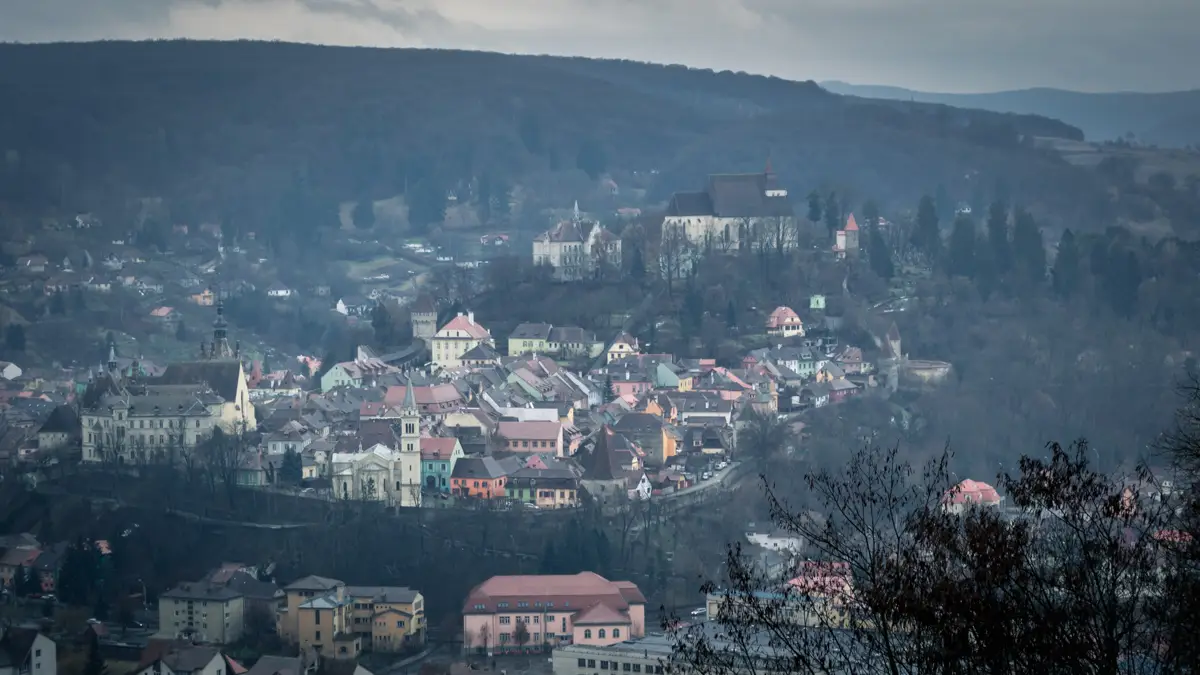
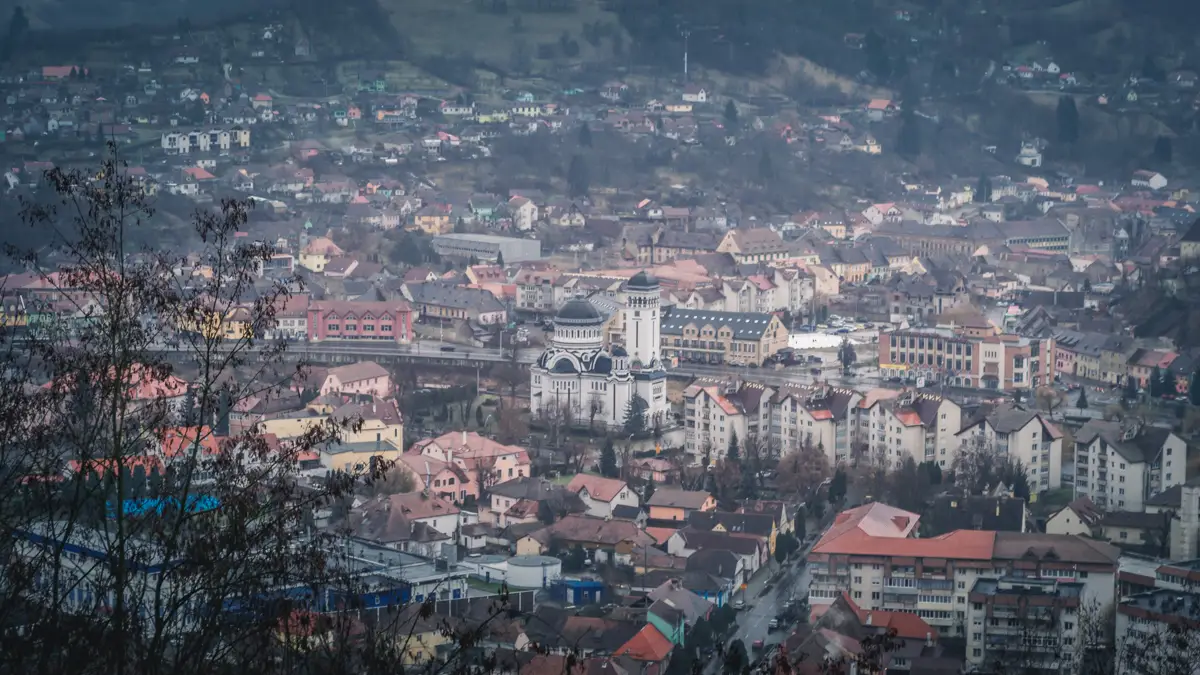
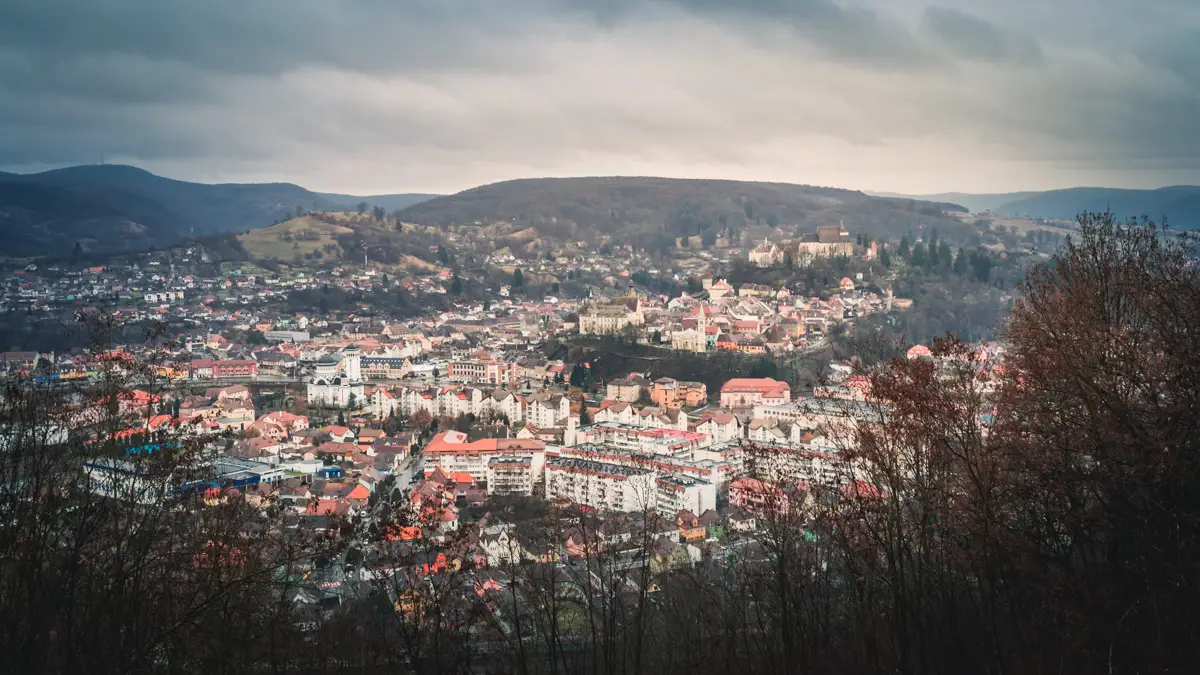
The medieval citadel of Sighișoara is an inhabited citadel located in the historical region of Transylvania. To be more precise, it’s located almost in the center of Romania. Sighisoara is a must-visit destination for travelers seeking a unique and enchanting experience. This charming town offers a journey back in medieval times, where every corner is steeped in history and every building tells a story.
Sighisoara was founded in the 12th century when German settlers, known as Saxons, came to this region. The city was built on a hill and it was surrounded by a fortification wall with many towers to protect the inhabitants from various dangers.
The inhabited medieval citadel is a popular tourist attraction in the region. Tourists from all over the world visit this place.
Let me take you through my experience exploring this charming and historical gem.
The Clock Tower is the landmark of the city. Inside you will find a museum where you can see many interesting items from the medieval era. Also, up in the tower, you can see the clock mechanism as well. On the top floor, you will find an open balcony from where you can admire the entire medieval citadel and the rest of the city of Sighisoara. Right under the Clock Tower, you will find the torture chamber.
Below, you will find the visiting hours of the museum:
Summer Schedule: May 15 – September 15
Monday – Closed Tuesday to Friday – 09:00 AM – 5:30 PM Saturday to Sunday – 10:00 AM – 5:30 PM
Winter Schedule: September 16 – May 14
Monday – Closed Tuesday to Friday – 09:00 AM – 3:30 PM Saturday to Sunday – 10:00 AM – 3:30 PM
The ticket price is 12 lei for adults and 4 lei for children.
The Clock Tower; the most emblematic building in Sighisoara.The Clock Tower from a different angle.
Vlad the Impaler’s birthplace (Casa Dracula)
According to the legends, the building painted in yellow was the birthplace of Vlad the Impaler aka Dracula. Today inside this building you will find a nice restaurant.
Vlad the Impaler’s birthplace.Narrow street next to Vlad Impaler’s birthplace.
The Monastery’s Church (Biserica Manastirii)
This large Gothic church in the past was part of an old monastery destroyed in the 19th century. If you would like to visit it, then you will find it very easily because it’s located to the right side of the Clock Tower.
The front side of the Monastery Church.The right side of the old Monastery Church.
Sighisoara Town Hall
If you are walking from the Clock Tower towards the Roman Catholic Church on Piata Muzeului street, then after the Monastery’s Church the next big building is the Town Hall.
Sighisoara Town Hall.
St. Joseph’s Roman Catholic Church
The St. Joseph’s Roman Catholic Church can be found on the northeastern side of the medieval citadel, close to Shoemaker’s Tower. This church was built between 1894 and 1896 by the Hungarians.
The Roman Catholic Church.
Georgius Krauss Guest House
Next to the Roman Catholic Church there you will find the Georgius Krauss guest house. This beautiful house was built in the 16th century and there the notary Gregorius Krauss lived. If you looking for an accommodation in the inhabited medieval citadel than this could be one option.
The Georgius Krauss Guest House located next to the Roman Catholic Church.
The Shoemaker’s Tower (Turnul Cizmarilor)
The Shoemaker’s Tower is located very close to the Roman Catholic Church.
The Shoemaker’s Tower.
Colorful houses in the medieval citadel
The cheerful hues range from warm yellows and soft pinks to rich blues and greens, creating a visually stunning panorama against the backdrop of the medieval architecture. The vibrant atmosphere of Sighisoara’s colorful houses is further accentuated by the lively street markets, artisan shops, and cozy cafes that line the winding streets. It’s a place where the past seamlessly blends with the present, offering a unique and immersive experience for those who are fortunate enough to explore its enchanting streets.
Colorful houses in Sighisoara.Beautiful orange house.A purple house near the Scholars’ Stairway.Another narrow street leading the the Monastery’s Church.
Tailors’ Tower (Turnul Croitorilor)
The Tailor’s Tower is the second entrance into the medieval citadel. This is the only road on which the cars can enter or leave the citadel. Keep in mind that only the locals who are living in the citadel are allowed to drive up in the citadel. This tower is renowned for its imposing massiveness and elegant simplicity. If you are going under the tower then you will have the chance to see the ancient railings that slides vertically.
The Citadel Square (Piata Cetatii)
The square is an excellent place to savor local delicacies, shop for souvenirs, and soak in the lively atmosphere that characterizes this enchanting town. Surrounded by cobblestone streets and surrounded by well-preserved medieval architecture, the Citadel Square is a captivating blend of old-world charm and a lively present, making it a must-visit destination in Sighisoara.
If you are planning to stay here for a few nights, you will find many comfortable places to stay. There are plenty of accommodations available to suit your needs, whether you want a cozy hotel, a budget-friendly option, or a more luxurious stay. Below, I’ve shared a couple of them that I found near Citadel Square during my visit to the citadel:
Train car waiting for tourists.A part of the Citadel Square on a rainy day.The Citadel Square with the Clock Tower in the background and the Stag House on the right side.A close up photo of the stag located on the building’s corner.
Towards the upper part of the medieval citadel
If you would like to visit the upper part of the citadel, one option is the walk on School Street (Strada Scolii) to the Scholars’ Stairs which is a covered wooden stairway connecting the lower part of the citadel with the upper part. The second option to reach the upper part of the citadel is the continue to walk up on Stair Street (Strada Scarii). The street starts near the Scholars’ Stairs.
Old buildings in the School Street.A pretty house on Stair Street.
The upper part of the medieval citadel
After a not-very-long walk from Citadel Square, the remaining attractions will unfold before you.
The Scholar Stairway
Constructed in 1654 by the initiative of Mayor Johann Both, this staircase stands as both a testament to historical foresight and a practical solution for students traversing the challenging weather of heavy winters or rain to reach the school located near the Church on the Hill.
Originally comprised of 300 steps, the wooden stairway underwent a modification in 1849, reducing its count to 175 steps. The stairway, reminiscent of a tunnel, showcases a remarkable architectural marvel. As the sun’s rays delicately pierce through the wooden slats, it creates an enchanting play of light and shadow, guiding the way to the hill’s summit.
The wooden Scholar Stairway connects the lower with the upper part of the citadel.
Joseph Haltrich High School
Established in 1522, this high school is among the oldest educational institutions in Transylvania. During the years, the high school underwent several renovations and extensions. The school is also know as the School on the Heal because it was built on a smaller hill.
The Joseph Haltrich High School in Sighisoara.
Church on the Hill (Biserica din Deal)
The Church on the Hill in Sighisoara is a captivating testament to the town’s medieval legacy. Perched on a hill overlooking the historic center, this Lutheran church dates back to the 14th century. Ascending the stone steps to reach the church, visitors are rewarded with panoramic views of Sighisoara and its charming red-roofed houses. Today has several architectural styles, including Gothic, Renaissance and Baroque elements.
If you visit the interior of the church then you can see many valuable sculptures, wall paintings, and old frescoes.
The Church on the Hill located on the upper part of the citadel.
The Ropemakers’ Tower (Turnul Franghierilor)
Currently, this tower was turned into a guard house for the old cemetery which is right behind the tower.
The Ropemakers Tower.
The old Lutheran cemetery
Next to the Church on the Hill and the Ropemakers’ Tower, you will find the old Lutheran cemetery.
The Lutheran cemetery.
Umbrella Street in Sighisoara
Perhaps after a long walk in the medieval citadel, you would like to hang out or perhaps you would like to eat or drink something. A pretty nice place is Octavian Goga Street which can be found on the foothill of the citadel.
A part of Octavian Goga Street.
Festivities and Events
If you’re lucky, your visit might coincide with one of Sighisoara’s many festivals. The Medieval Festival, held every summer, brings the citadel to life with knights, street performers, and traditional music. I’ve heard it’s an incredible experience that immerses you even deeper into the town’s medieval roots.
Final Thoughts
Sighisoara’s medieval citadel is a place that stays with you long after you’ve left. Its rich history, vibrant culture, and enchanting atmosphere make it a must-visit destination. Whether you’re a history buff, a lover of architecture, or simply someone who enjoys exploring charming towns, Sighisoara has something for everyone. I left feeling inspired and grateful for the chance to step back in time, even if just for a little while.
Map with the attractions in the medieval citadel
What else you can visit near Sighisoara?
The historical region of Transylvania is renowned for the old Traditional Saxon villages, medieval fortresses, and citadels, let’s not forget about the fortified churches as well. Not very far from Sighișoara, you will find the following destinations to visit. You can reach them very easily by car.
Viscri – this Romanian village was made very popular by His Royal Highness, the Prnice of Wales. In my opinion, this village is one of the best preserved traditional Transylvanian village. I highly encourage you to check out this place.
Rupea fortress – This fortress is not very far from the village of Viscri. So if you are in the area you can visit this place as well.
Saschiz – I would like to add Saschiz to the list as well, if you are driving from Sighișoara towards Brasov, then at some point, you will drive through Saschiz were you will find an interesting fortified church. The church tower is almost in the middle of the village, next to the main road.
Biertan – Here you will find an old fortified church that is included in UNESCO World Heritage Sites. From Sighisoara by car, you will reach this commune in approximately 30 minutes.
Sibiu – Another possibility is to explore the old historical center of Sibiu. The distance from Sighisoara to Sibiu is approximately 90 km.
We use cookies on our website to give you the most relevant experience by remembering your preferences and repeat visits. By clicking “Accept All”, you consent to the use of ALL the cookies. However, you may visit "Cookie Settings" to provide a controlled consent.
This website uses cookies to improve your experience while you navigate through the website. Out of these, the cookies that are categorized as necessary are stored on your browser as they are essential for the working of basic functionalities of the website. We also use third-party cookies that help us analyze and understand how you use this website. These cookies will be stored in your browser only with your consent. You also have the option to opt-out of these cookies. But opting out of some of these cookies may affect your browsing experience.
Necessary cookies are absolutely essential for the website to function properly. These cookies ensure basic functionalities and security features of the website, anonymously.
Cookie
Duration
Description
cookielawinfo-checkbox-analytics
11 months
This cookie is set by GDPR Cookie Consent plugin. The cookie is used to store the user consent for the cookies in the category "Analytics".
cookielawinfo-checkbox-functional
11 months
The cookie is set by GDPR cookie consent to record the user consent for the cookies in the category "Functional".
cookielawinfo-checkbox-necessary
11 months
This cookie is set by GDPR Cookie Consent plugin. The cookies is used to store the user consent for the cookies in the category "Necessary".
cookielawinfo-checkbox-others
11 months
This cookie is set by GDPR Cookie Consent plugin. The cookie is used to store the user consent for the cookies in the category "Other.
cookielawinfo-checkbox-performance
11 months
This cookie is set by GDPR Cookie Consent plugin. The cookie is used to store the user consent for the cookies in the category "Performance".
viewed_cookie_policy
11 months
The cookie is set by the GDPR Cookie Consent plugin and is used to store whether or not user has consented to the use of cookies. It does not store any personal data.
Functional cookies help to perform certain functionalities like sharing the content of the website on social media platforms, collect feedbacks, and other third-party features.
Performance cookies are used to understand and analyze the key performance indexes of the website which helps in delivering a better user experience for the visitors.
Analytical cookies are used to understand how visitors interact with the website. These cookies help provide information on metrics the number of visitors, bounce rate, traffic source, etc.
Advertisement cookies are used to provide visitors with relevant ads and marketing campaigns. These cookies track visitors across websites and collect information to provide customized ads.