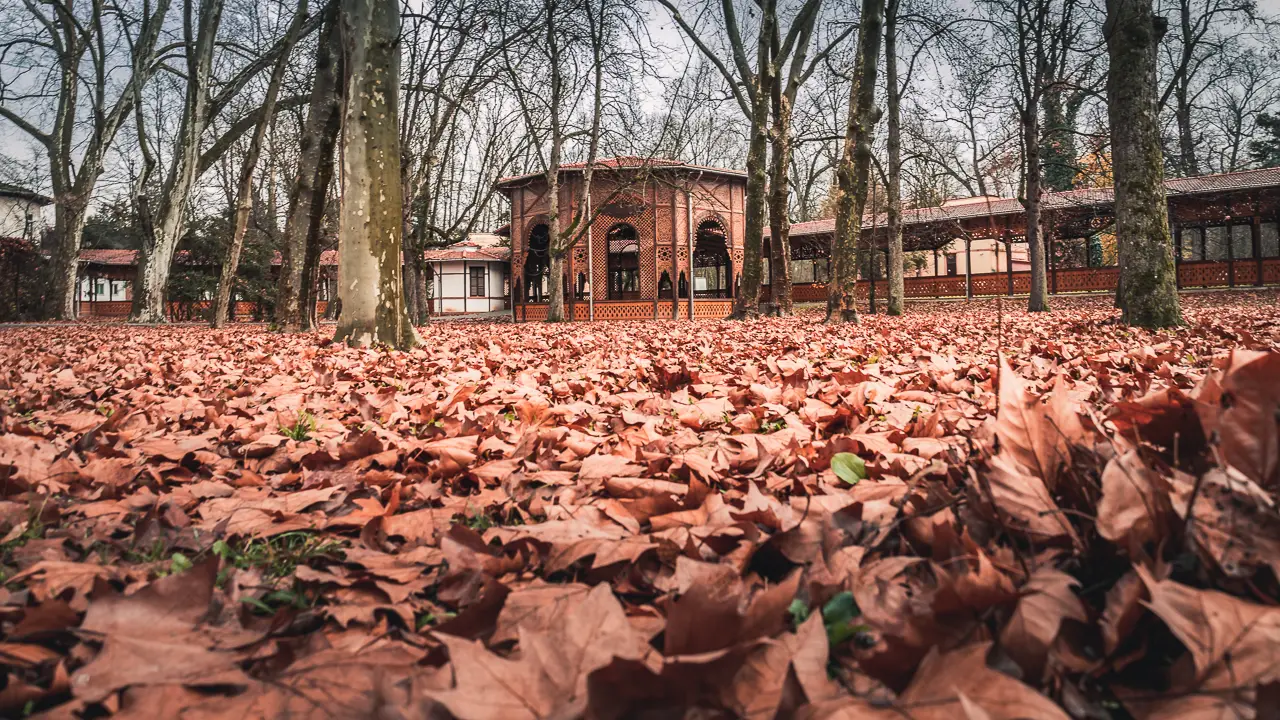
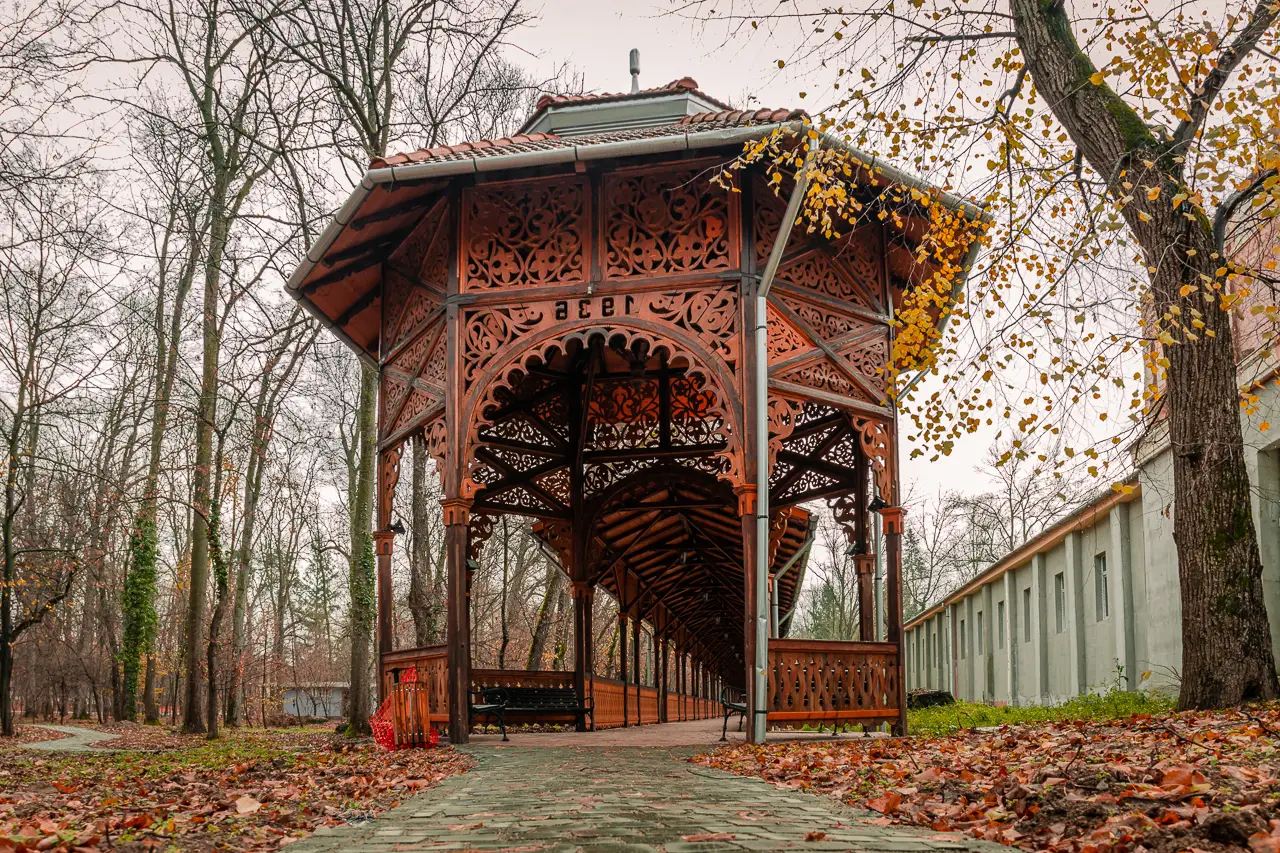
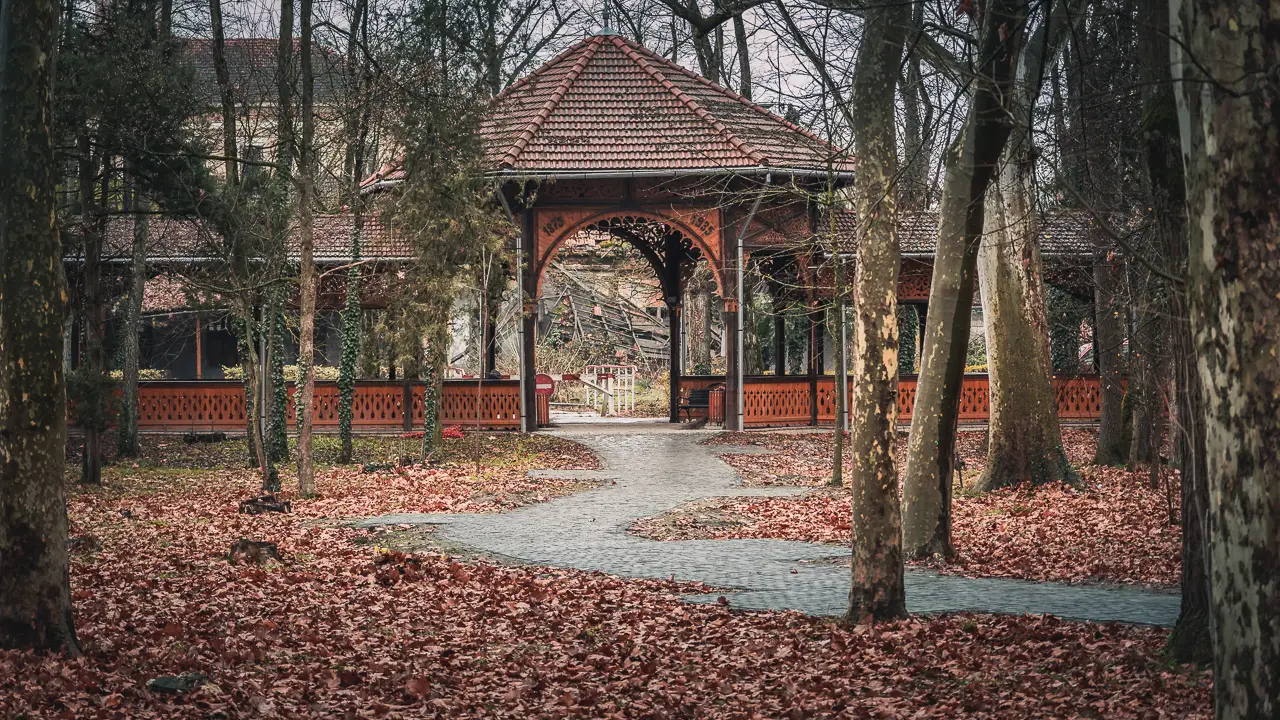
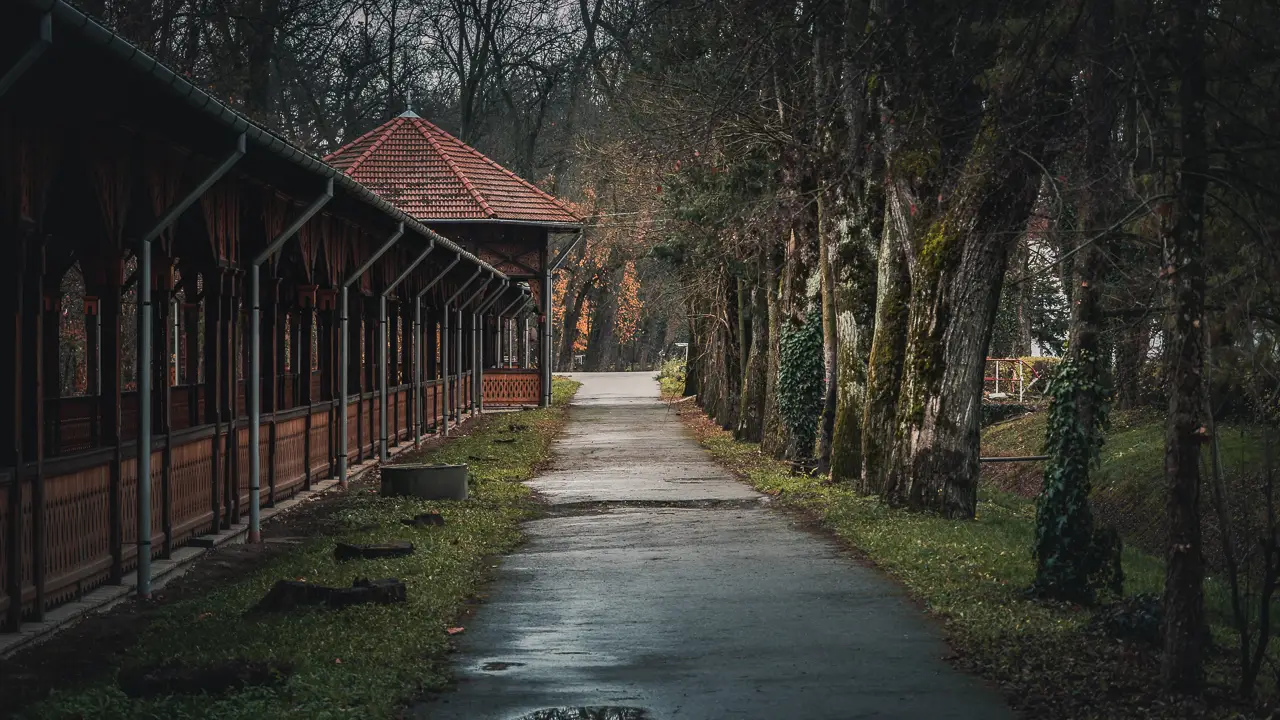
The Dendrological Park can be found in the small town of Buziaș. This town is only about 34 km away from the Romanian city of Timișoara. The dendrological park has a surface of over 20 ha and back in 1839 it was declared a spa due to the mineral springs found in the area.
There are a couple of wells from where you can get mineral water. One is located in the park, close to the ruins of Baia 2. The other one, can be found right next to the edge of the park, close to the hotel Timis.
During my last trip to Buziaș, the entire park was under construction. Hopefully in the near future, the park will regain it’s former beauty.
The Covered Colonnades
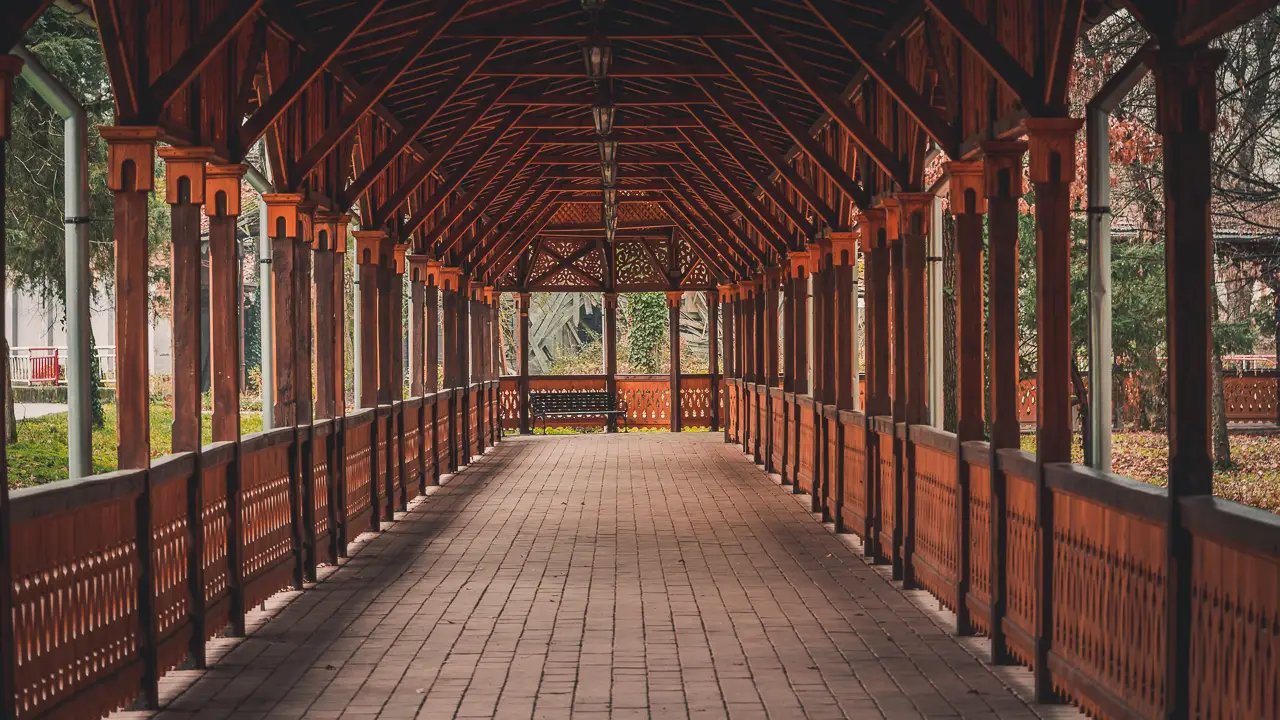
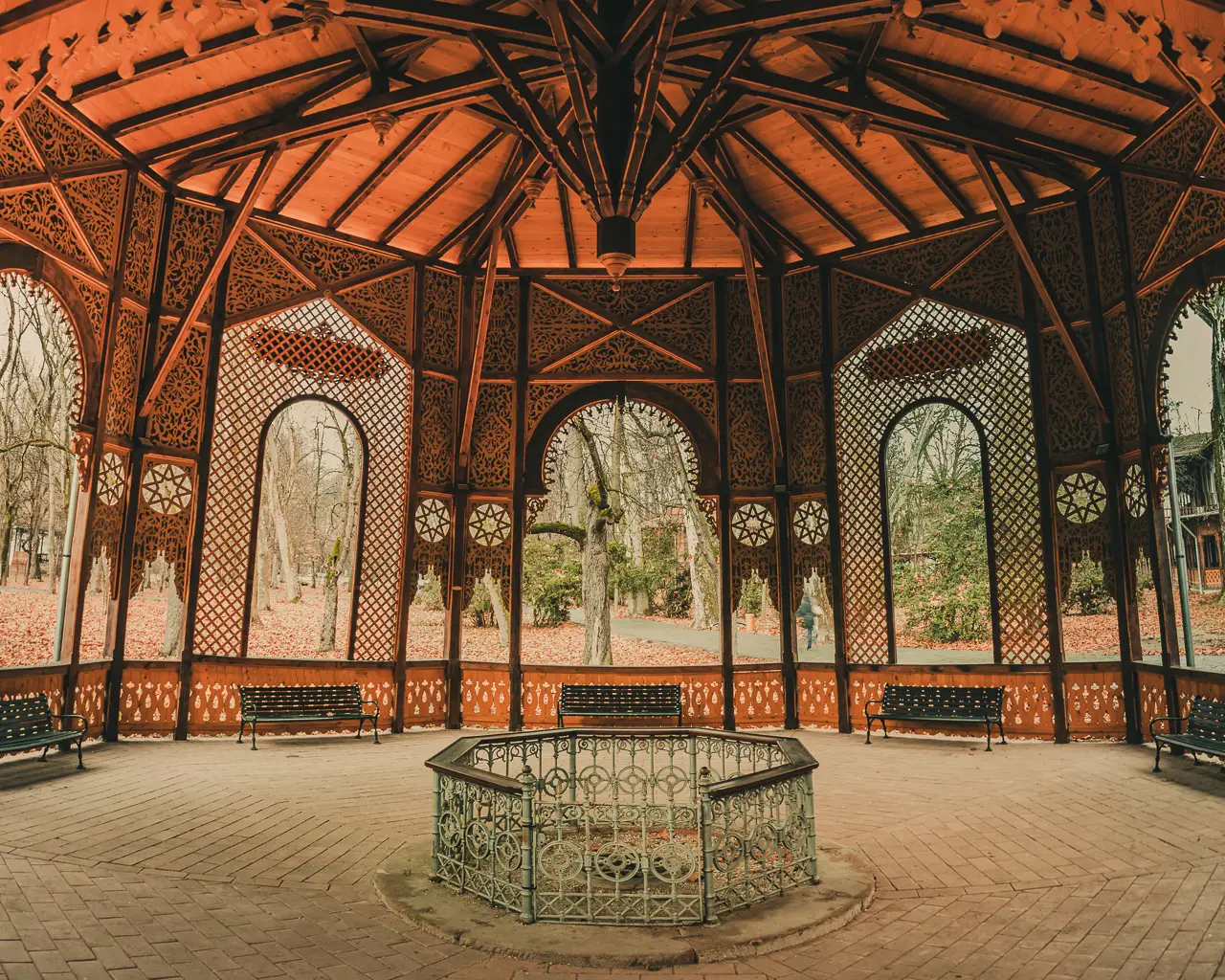
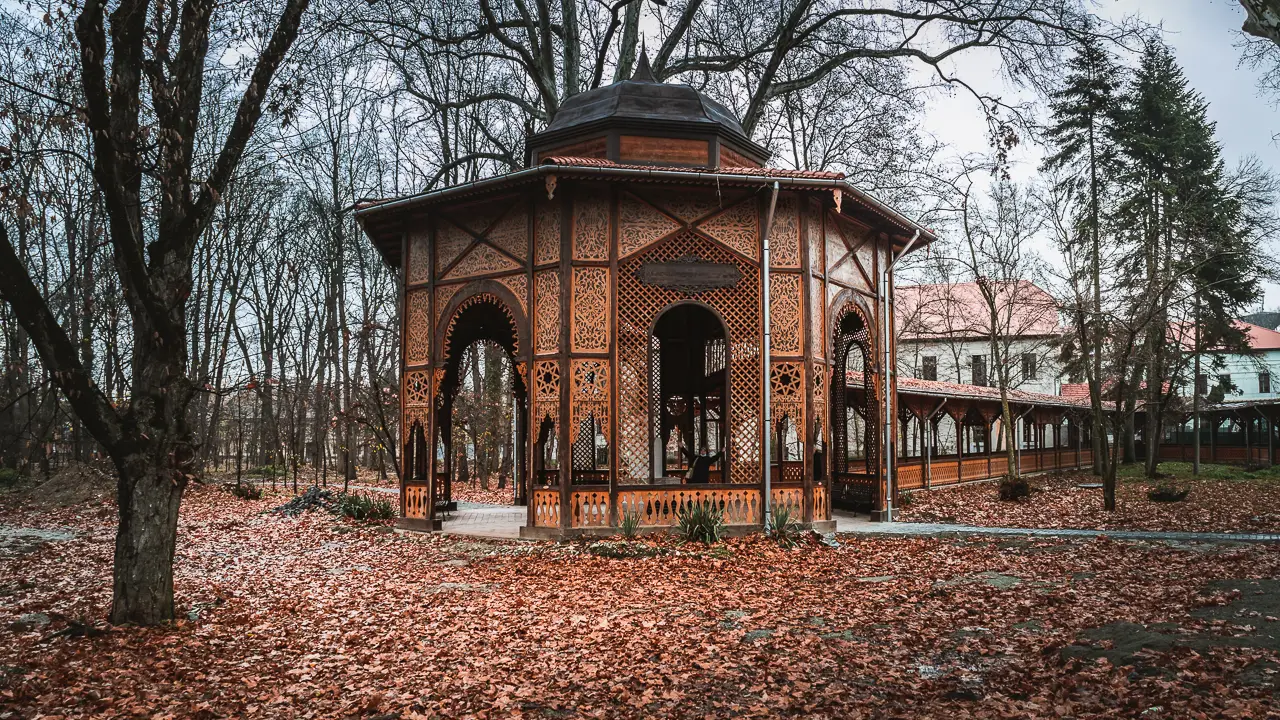
Below you will see some photos which were taken inside the dendrological park where you are able to see some wooden covered colonnades which were built in Turkish-Byzantine style. The original colonnades where actually built on the request of Emperor Franz Joseph I and it’s the main attraction in the park.
One of the oldest tree in the park
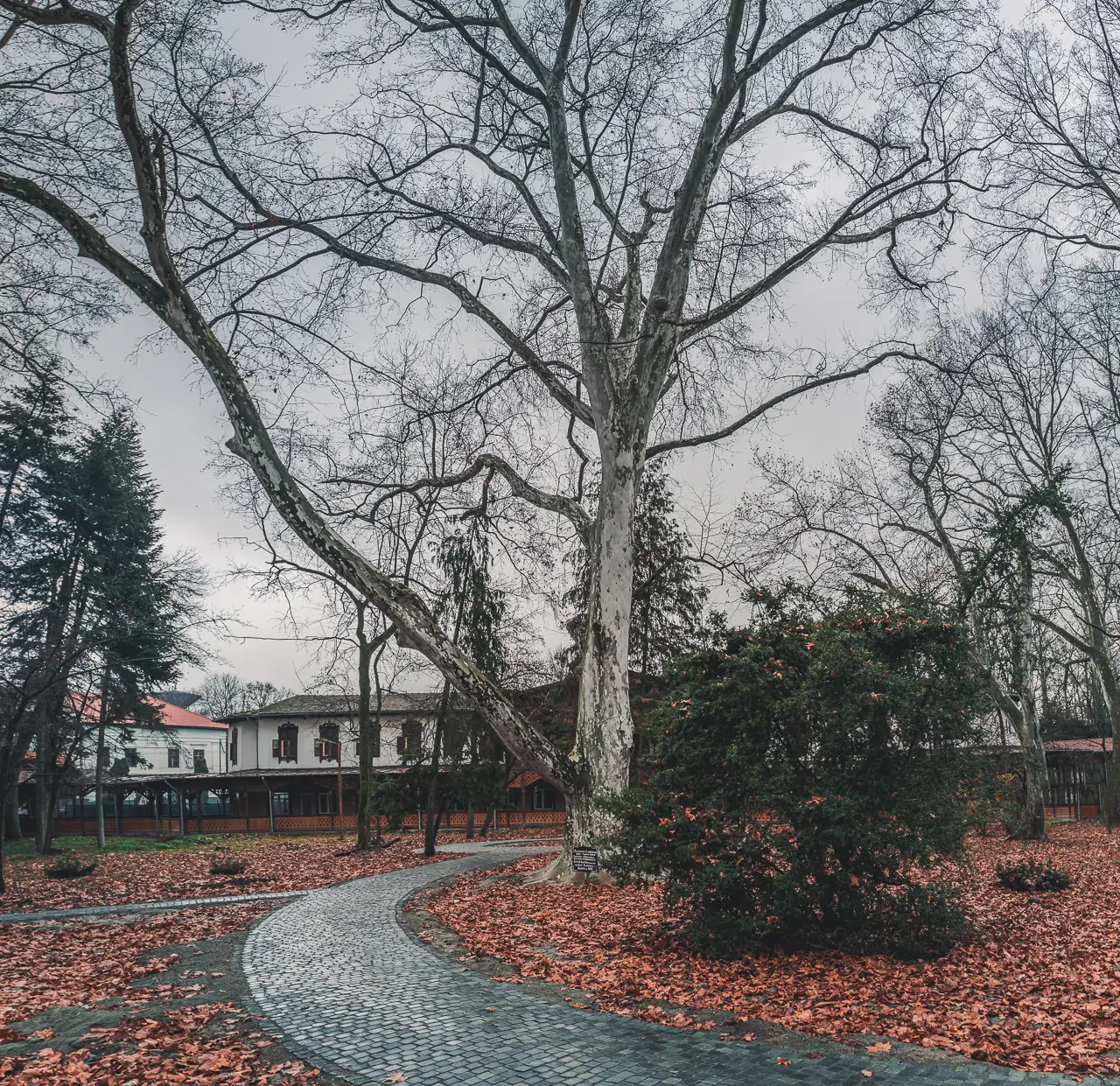
In the dendrological park you will find many species of trees, the most common is the plane tree (Platanus). In the photo below you will find a tree which was planted in 1812.
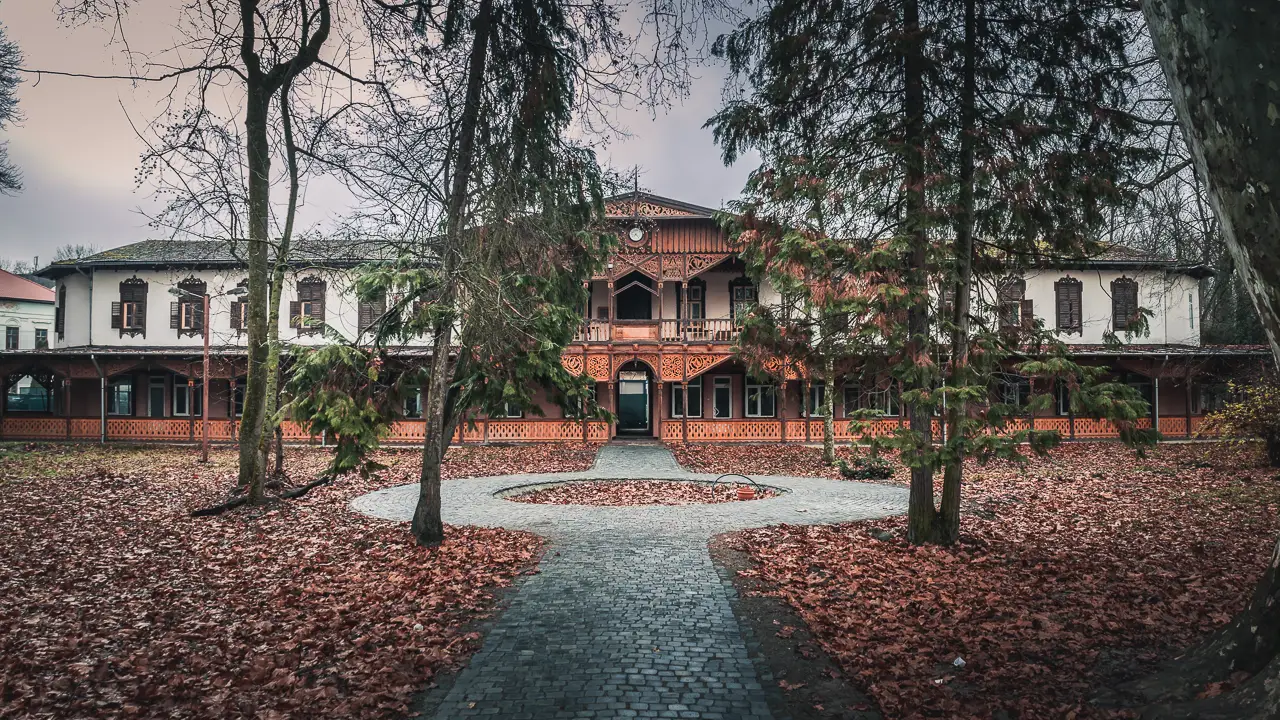
The Bazar Villa
Right behind the oldest plane tree you will find the beautiful Bazar villa which was a spa hotel in the past.
At the Airpot
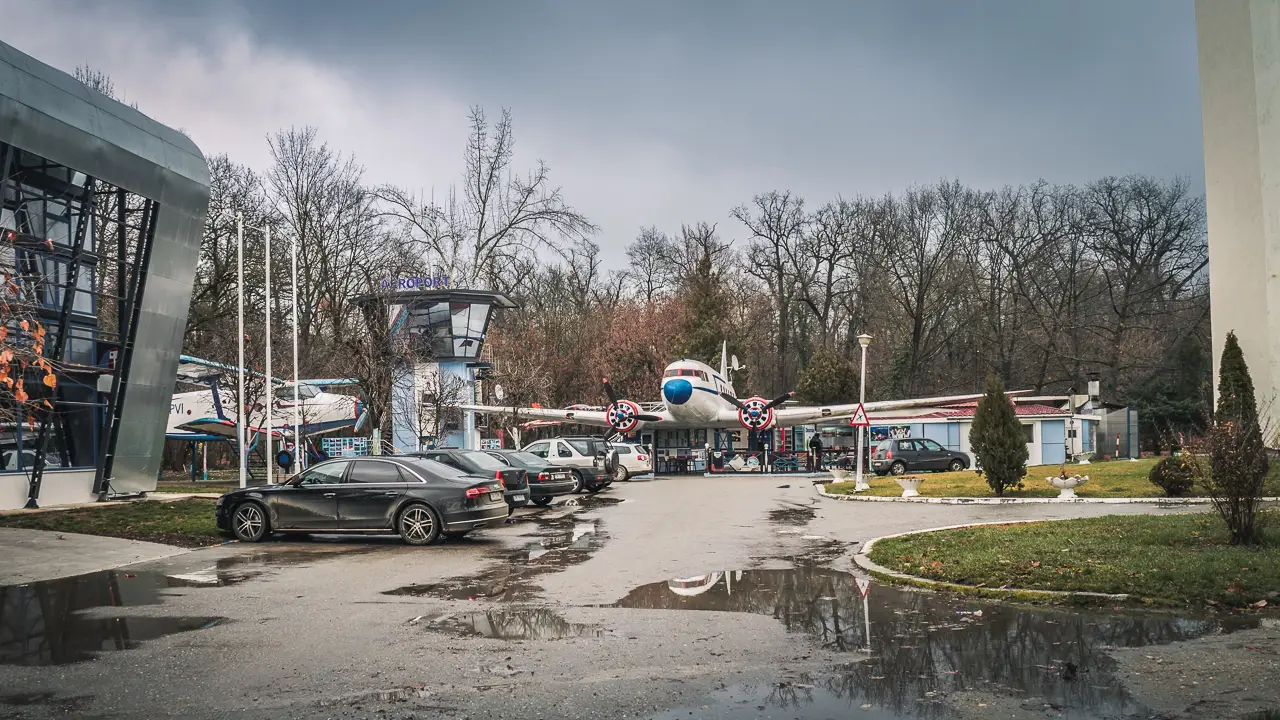
On the edge of the park you will find a place called the Airport where you will find some examples of old airplanes. The largest plane in a Soviet Lisunov LI-2 which is actually a copy of the famous American Douglas DC3 aka “Dakota”. According to some older stories, the plane has belonged to the former communist president Gheorghiu Dej.
Between those two large planes you will find the control tower.
The second plane is also from the Soviet era, this is actually an Antonov AN-2 bi-plane and it was used as a utility plane in agriculture.
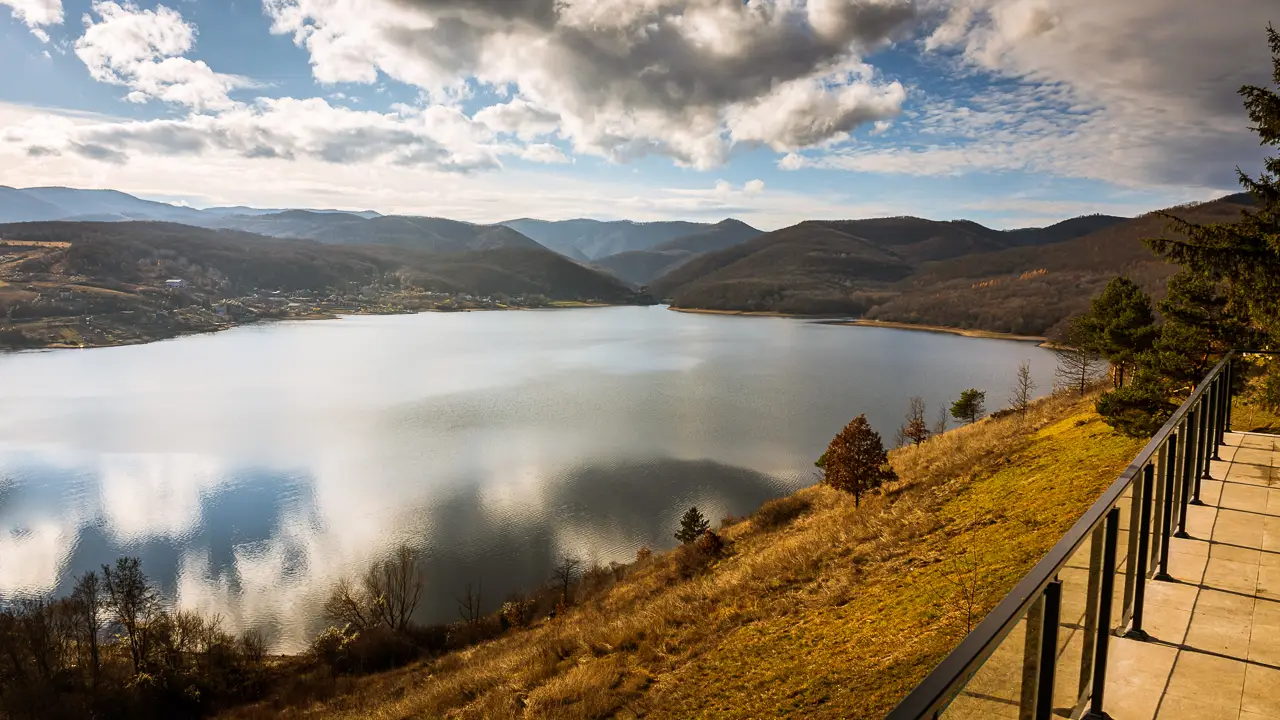
After exploring the beautiful Corvin Castle located in the city of Hunedoara, our next objective in the area was lake Cincis located in the Poiana Rusca Mountains The distance between the Corvin Castle and the lake is about 13 km.
Short history of the lake
In 1962 the entire village of Cinciș, which currently lies under the lake’s water, was evacuated. Back then, around 800 families had to be displaced. After the completion of the dam, in 1964, the lake supplied with water the city of Hunedoara and the former steelworks from the city.
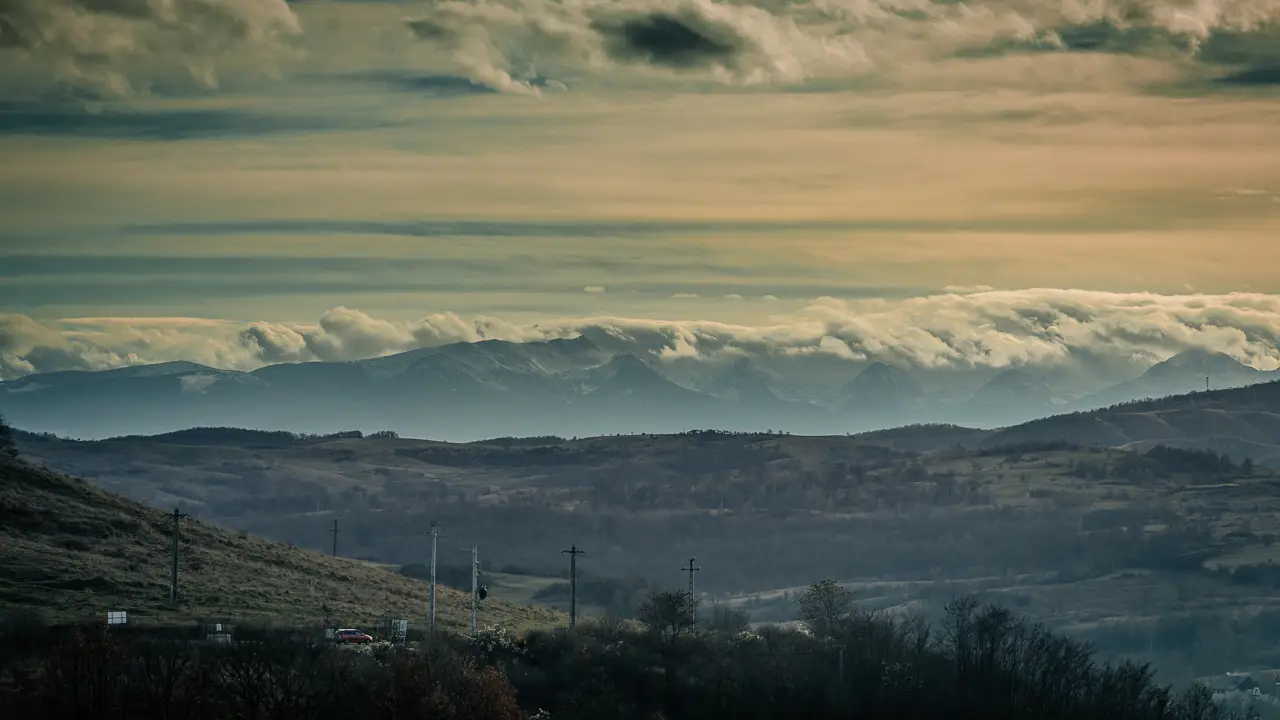
If you plan to stay for a longer time near the lake, then you will find many hotels and pensions close to the lake. To be honest the scenery is really beautiful. On clear days you will have the chance to admire the distant Retezat Mountains as well.
This place is very popular in the summer season when many tourists come to lake Cinciș to relax or swim.
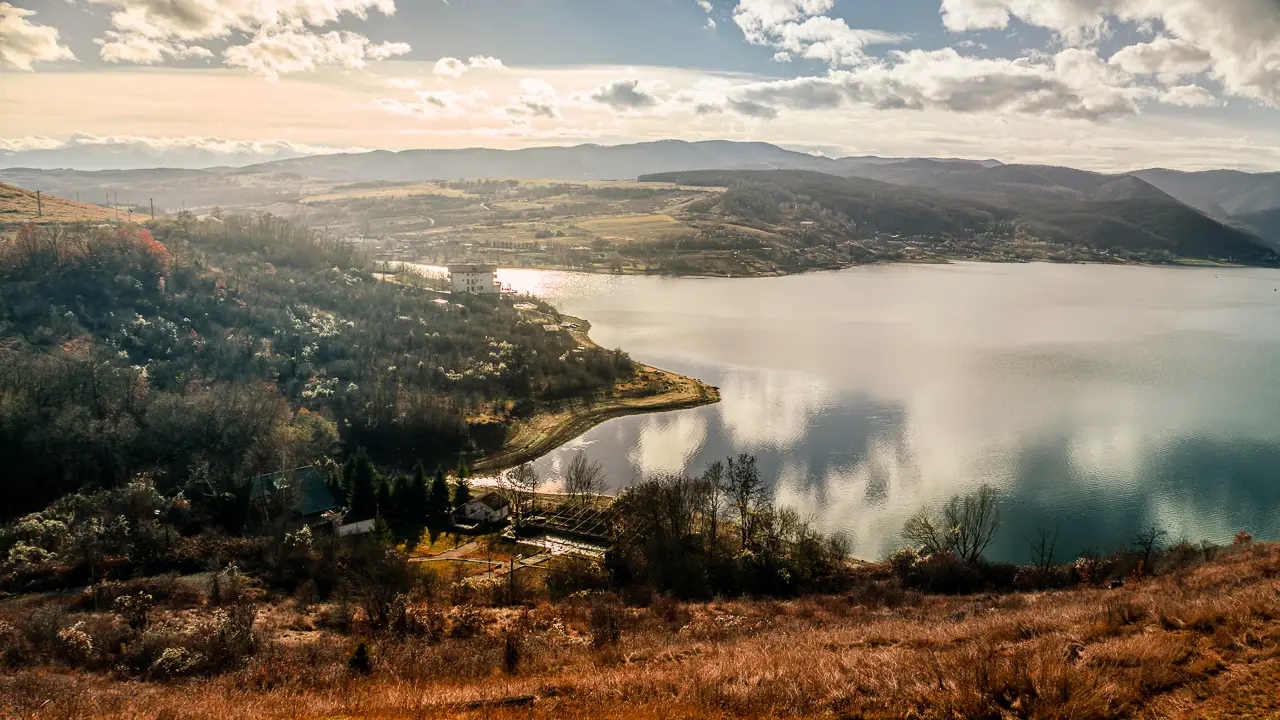
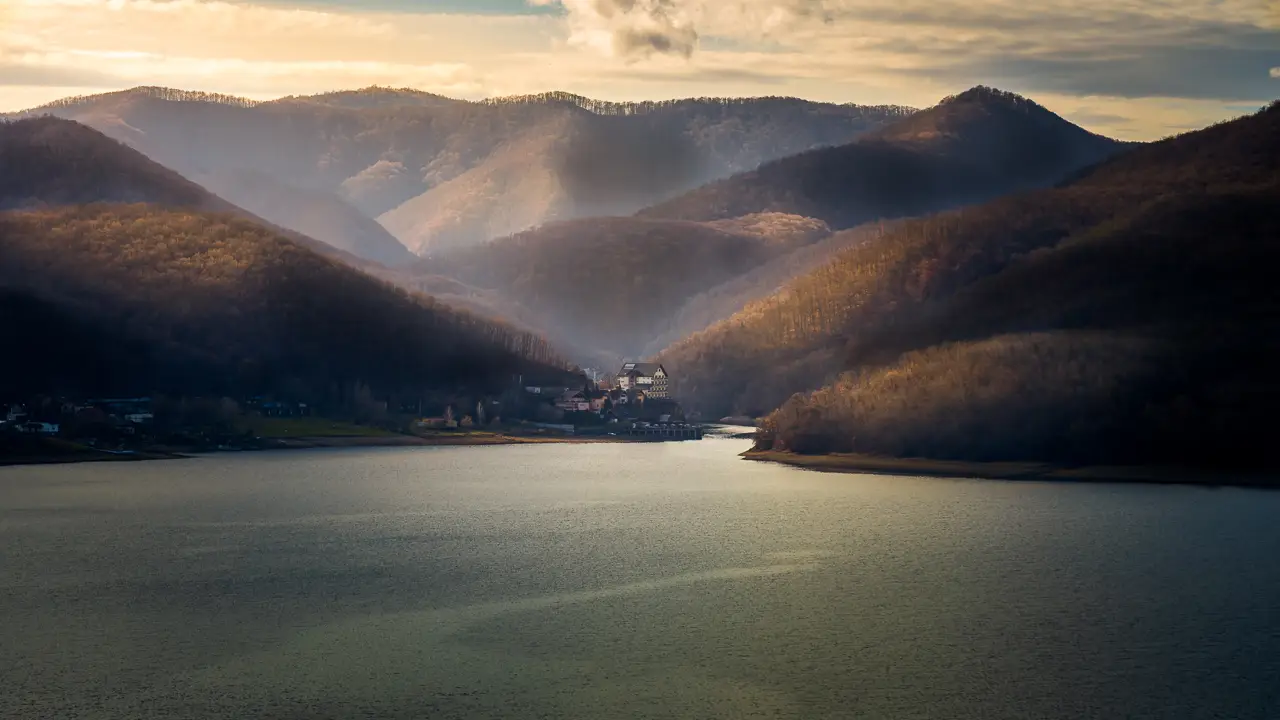
Lake Cincis with the Poiana Rusca Mountains in the background.Panoramic view of the lake in late autumn.The lake on a beautiful autumn day.The Retezat Mountains covered by clouds.
We spent a couple of hours at a restaurant with a view of the lake, and I have to say, this place is truly incredible. It was definitely worth the short detour we took on our way from Hunedoara to Densus. To my surprise, there were a lot of visitors at the restaurant where we enjoyed a delicious traditional Romanian dinner. What is important to mention, if you are driving from Hunedoara, the road is in a good condition and you can arrive here very fast. In my opinion, the road that was built on the left side of the lake was built on higher elevation, as you drive from Hunedoara as I did, the views are even more stunning.
In case you are visiting the Land of Hateg or perhaps you are visiting Deva or Hunedoara you should add this place to your bucket list as well. I strongly believe you won’t be disappointed.
Other places to visit not far from lake Cincis
The closest objective to this place is the Corvin Castle which is located in the city of Hunedoara.
Not far from Hunedoara, you can visit the Deva fortress as well. This is another popular attraction in the area.
You can visit the old stone church in the village of Densuș.
Located in the heart of the historical region of Transylvania, Romania, Deva Fortress is a magnificent testament to the region’s rich history and breathtaking landscapes. The fortress, located atop a steep hill overlooking the city of Deva, dates back to the Middle Ages and has seen numerous rulers, battles, and cultural changes throughout its history. Today, it stands as one of the most popular tourist attractions in the area, attracting visitors from all over the world who come to explore its fascinating past and capture its stunning beauty through their lenses. As a fun fact, the fortress was built on the top of a former volcano.
The entrance into the citadel is free but keep in mind that you can visit it only between the visiting hours mentioned below:
From 1st of May to 30th of September – Everyday from 09:00 – 21:00.
From 1st of October to 30th of April – Everyday from 08:00 – 20:00.
A short history of Deva Fortress
Deva Fortress was built in the 13th century by the Hungarian King Béla IV as a strategic military stronghold. The fortress was part of a network of castles and fortresses that were built along the borders of the Hungarian Kingdom, to protect it from invading armies. Deva Fortress was built on a hill that was difficult to access, which made it an ideal location for a military stronghold.
Over the centuries, Deva Fortress played an important role in the region’s history, witnessing numerous battles and events that shaped the destiny of the area. During the 16th and 17th centuries, the fortress was occupied by the Ottoman Empire.
Let’s explore the fortress!
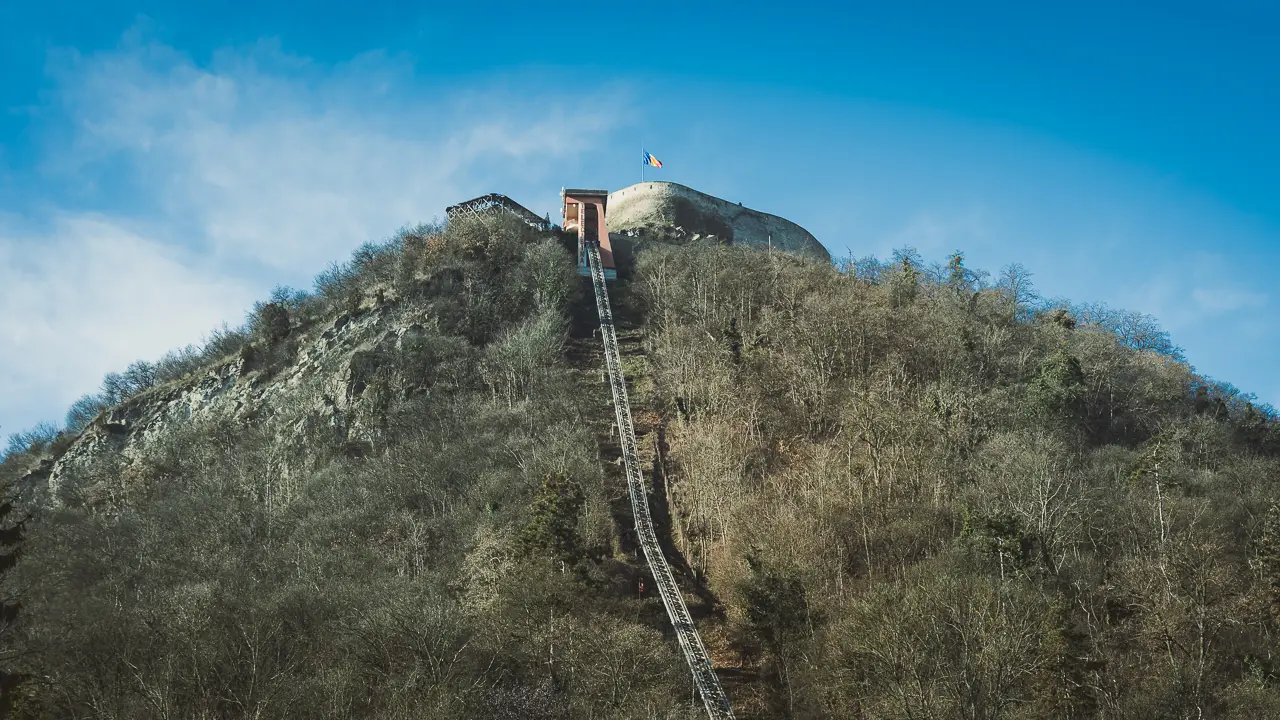
Unfortunately the inclined lift for some reason didn’t work when we traveled to Deva. So our second option to reach the fortress was to drive up on some steep streets to a smaller parking lot on the Cetăţii street. This parking lot is actually very close to the main entrance into the Deva Fortress.
After approximately 10 minutes, we arrived next main entrance. To our luck, we managed to find a parking place. Keep in mind that the parking lot is not that large.
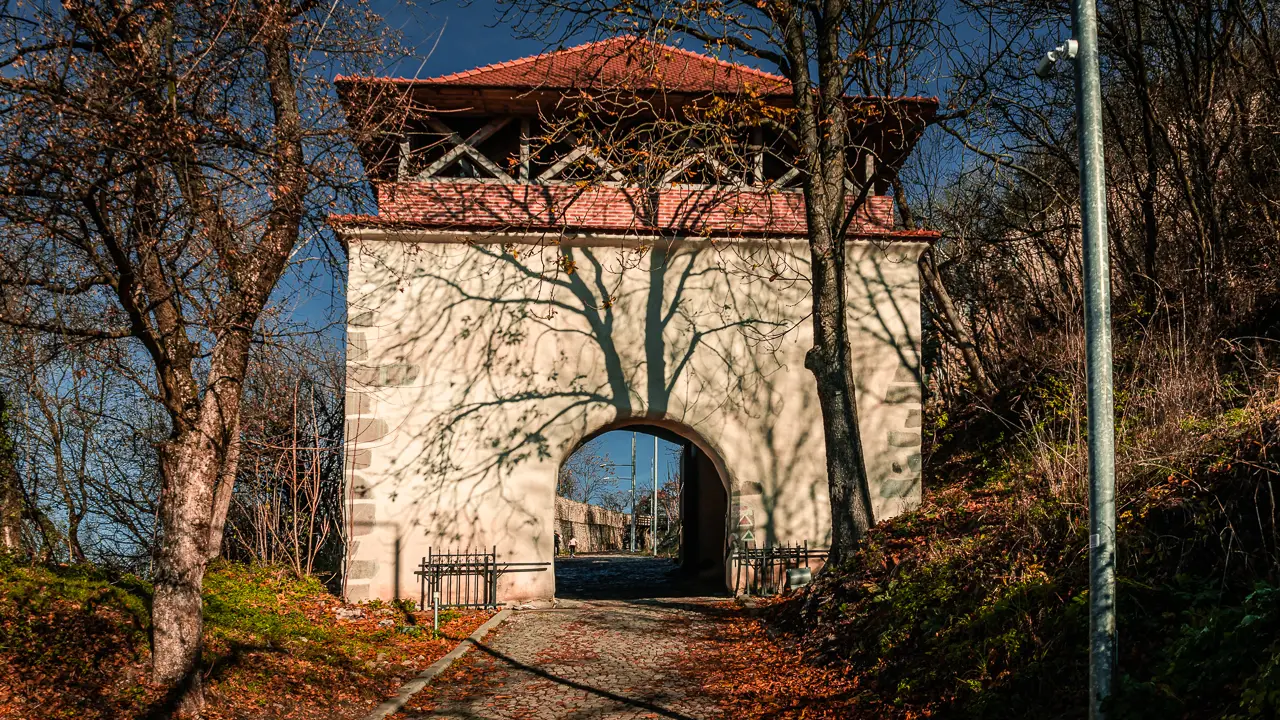
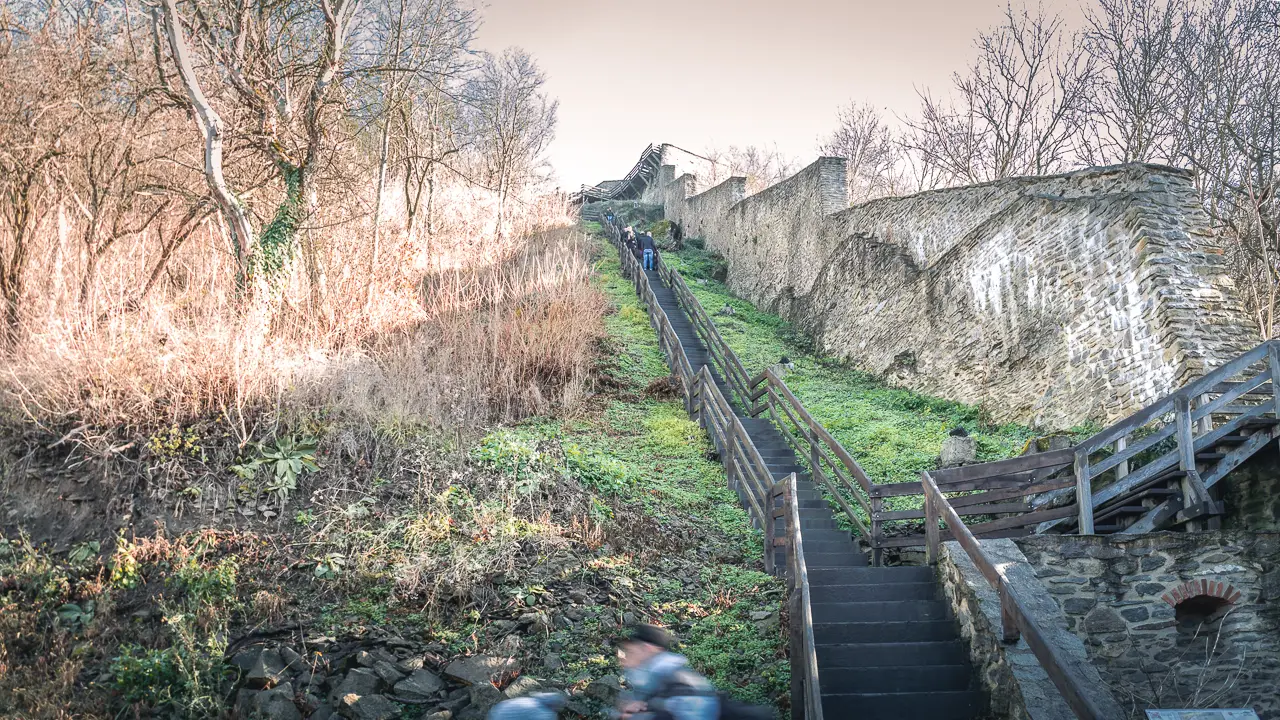
As you pass the main gate, on the right side you will find the wooden stairway which actually helps you to reach the upper levels of the citadel. These stairs can be considered as a shortcut as well.
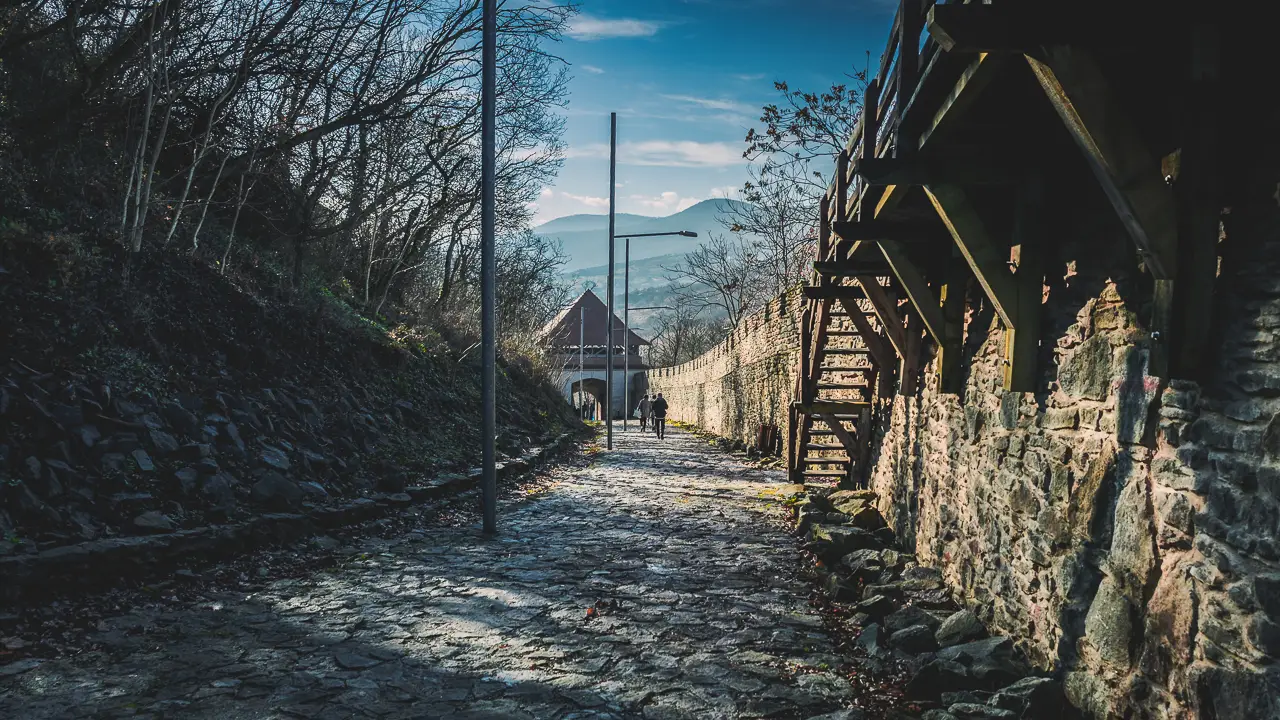
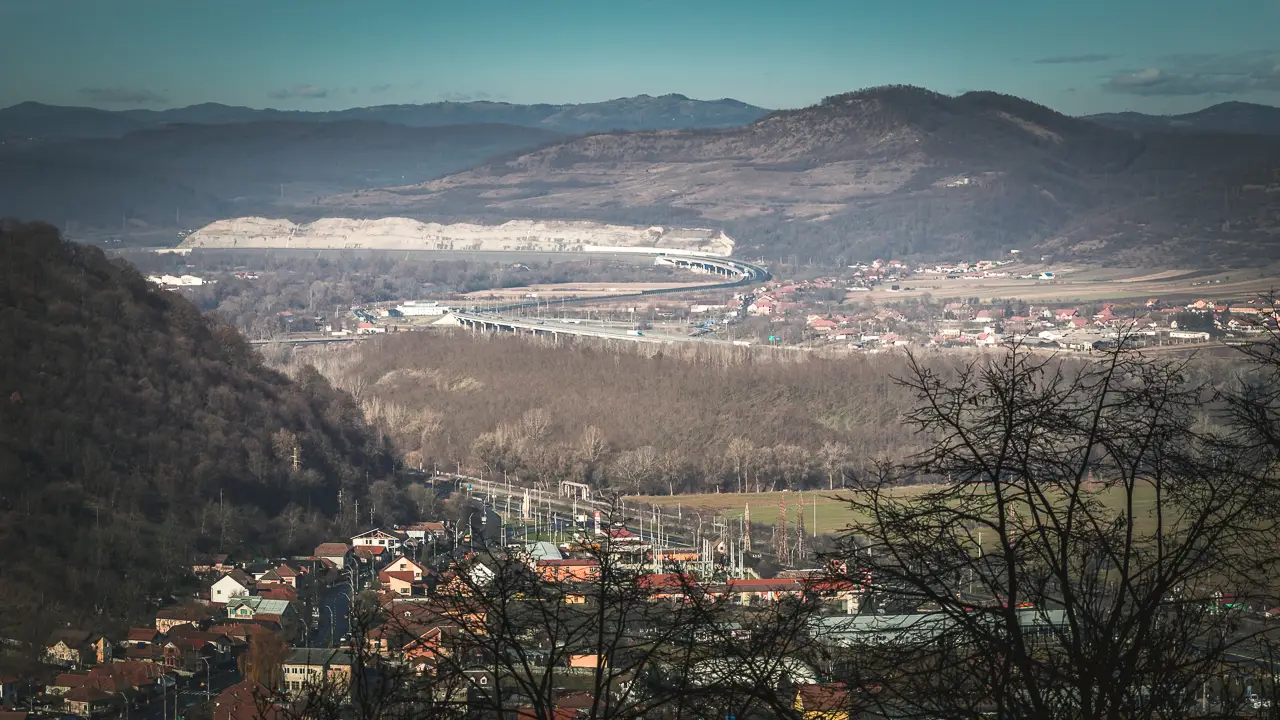
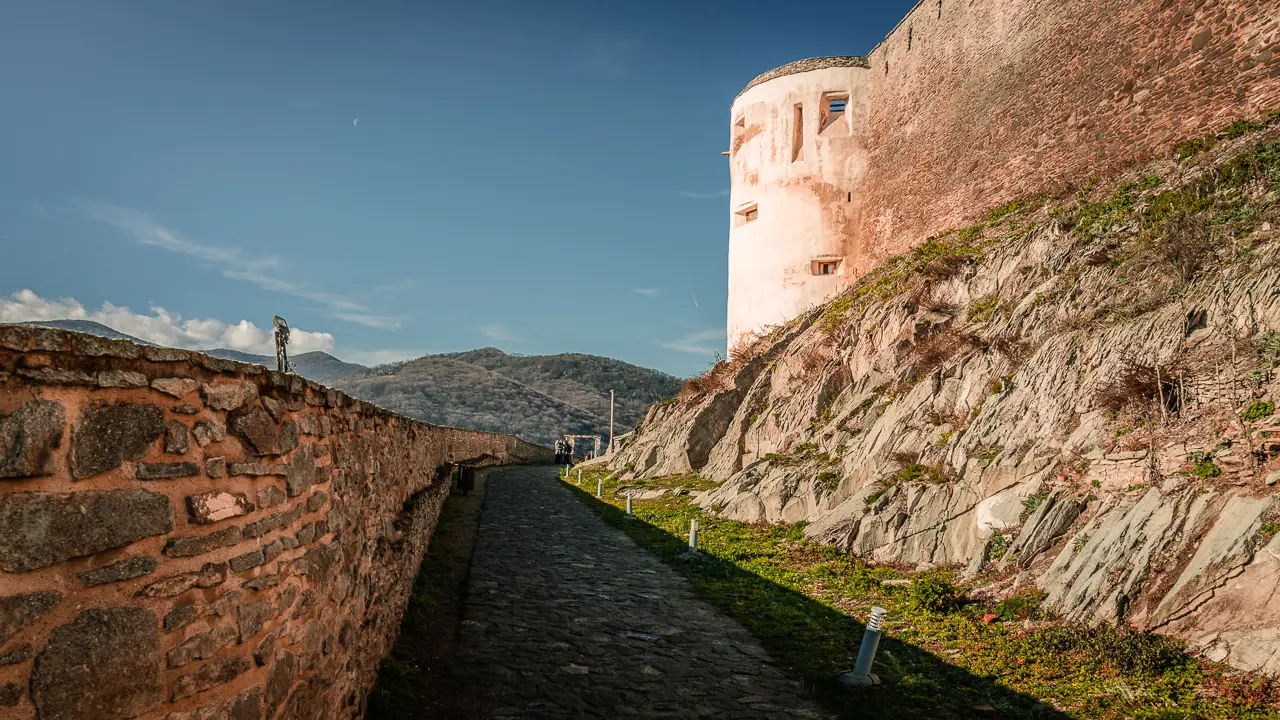
The other option to reach the upper levels of the citadel is to walk on a paved road near the defense wall. Not far from the main gate you will come across Gate II. This gate has a rectangular plan and initially it was built out of local rock and bricks. From there you have the chance to admire the beautiful Mureș Valley and the surrounding mountains.
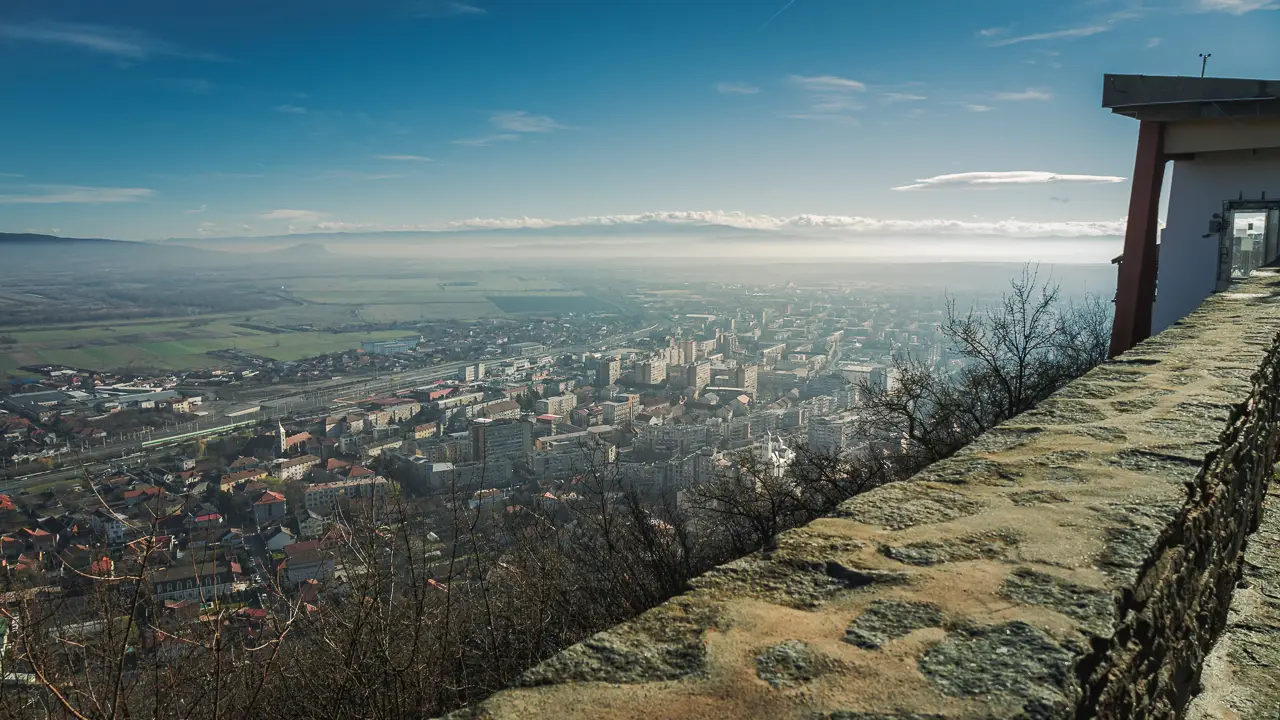
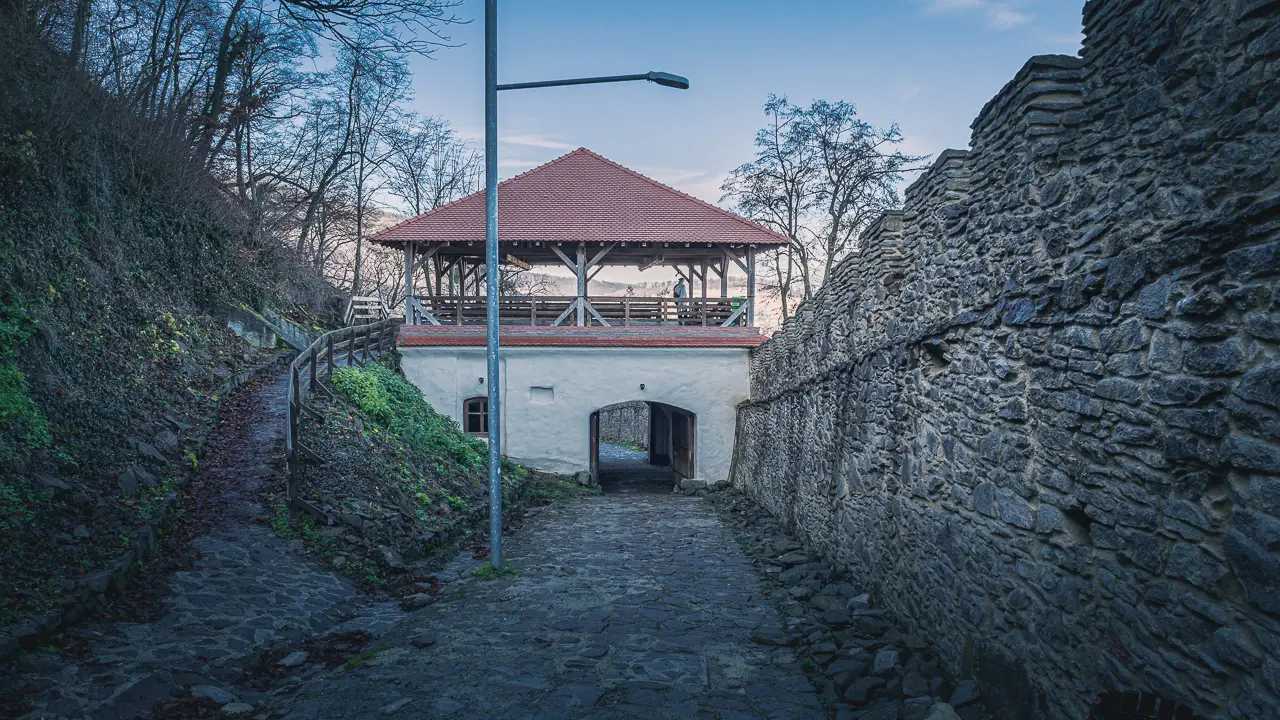
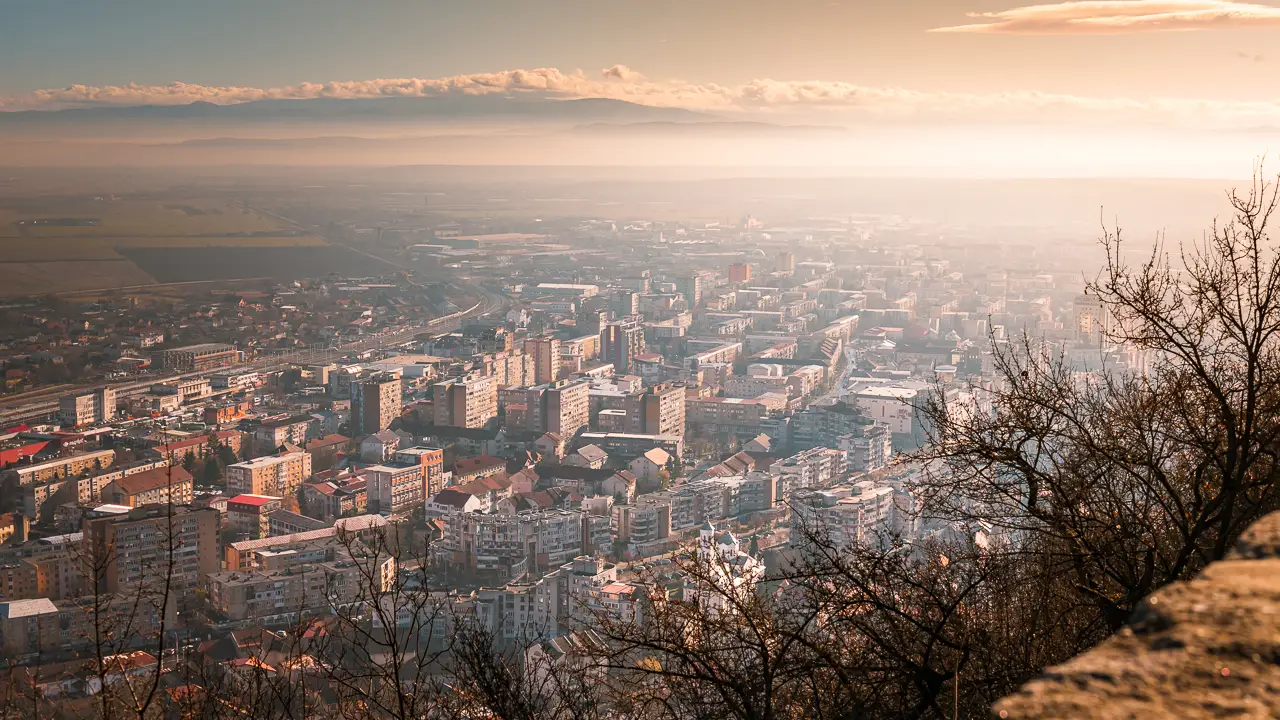
Continuing our walk towards the upper levels of the fortress, we arrived at the inclined lift station. From there the scenery is even more amazing. The entire city of Deva is visible. To be honest, it is a very beautiful vantage point over this charming Transylvanian city.
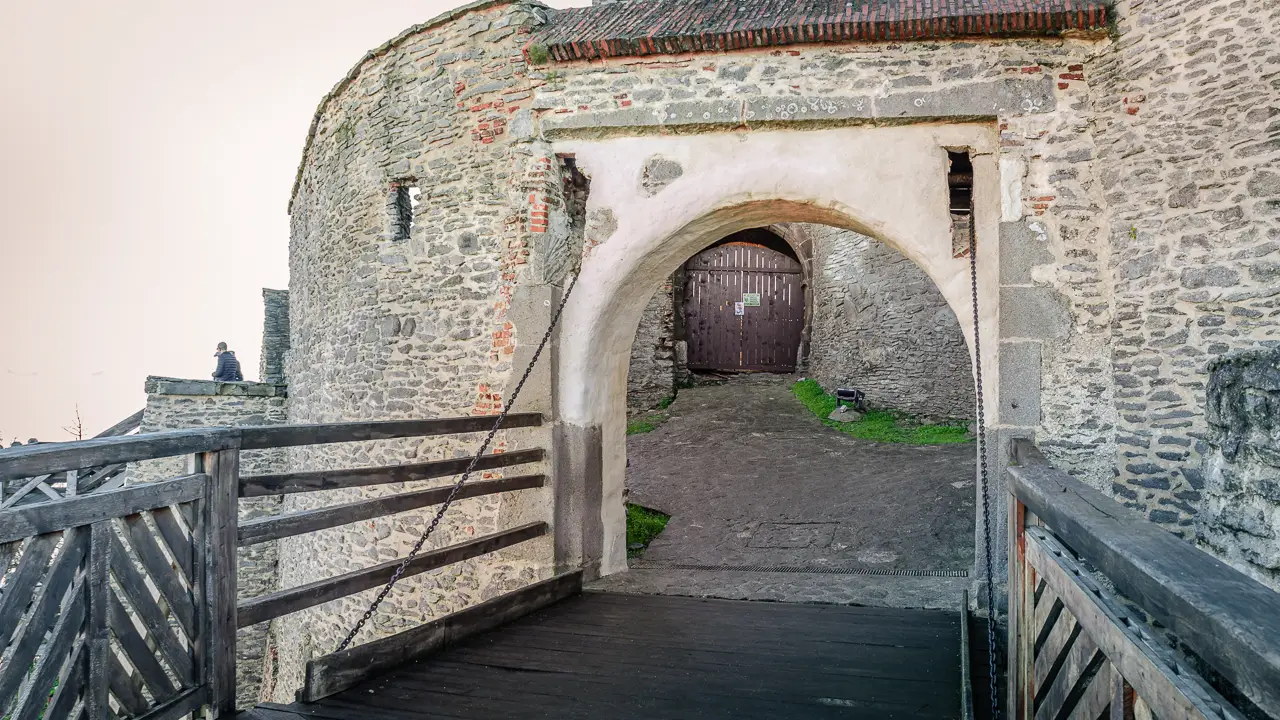
After you cross this small wooden bridge and walk through the Caesar Gate, you basically reached the highest point of the Deva fortress. Over here you can only follow the path next to the defense walls. When we visited this place, the ruins located in the Enclosure III were not opened to the public.
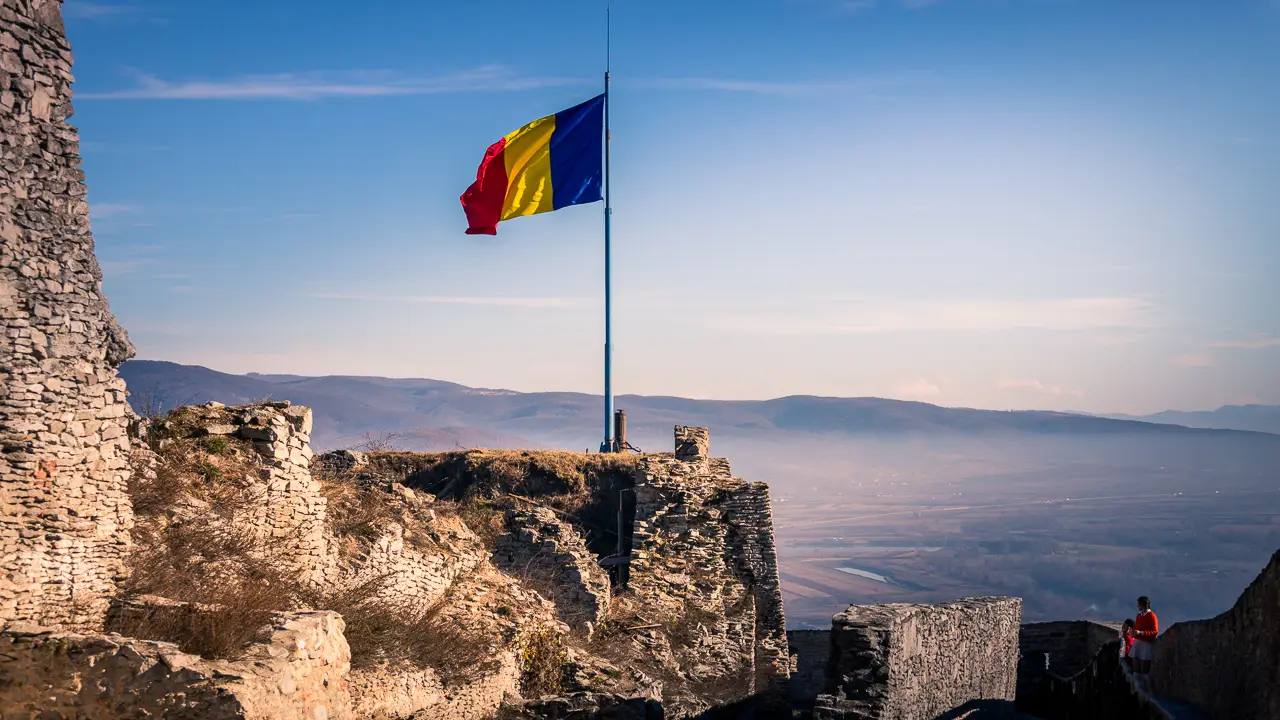
After a long walk we finally reached the large Romanian flag which is visible from the city as well.
From Enclosure III to Enclosure II you can take a shortcut using the semicircular ladder.
Getting to Deva Fortress
The easiest way to reach it is by car, as there are several major roads that connect the city to other parts of Romania. If you’re coming from Bucharest, you can take the A1 motorway, which is a well-maintained road that will take you to Deva in around five hours. There are also buses and trains that connect Deva to other major cities in Romania, but the journey can be longer and less comfortable.
Once you reach Deva, you can park your car near the fortress or take a taxi to the top of the hill. The fortress is located on a hill that overlooks the city, and the climb to the top can be quite steep and challenging, especially if you’re not used to hiking. However, the effort is worth it, as the views from the top are simply breathtaking.
Things to do near Deva:
I would like to add below 5 important things to do near the city of Deva:
Explore the famous Corvin Castle which can be found in the city of Hunedoara. This city is only 17 km away from Deva.
[Update 2025] In early May 2025, the Praid Salt Mine was closed following severe flooding triggered by unusually heavy rainfall and the swelling of the nearby Corund stream. This incident, considered the worst in over three decades, caused significant damage to both the tourist and operational sections of the mine. Despite ongoing recovery efforts, the site remains indefinitely closed as of July 2025.
However, you can still view below a selection of photos from my last visit to the Praid Salt Mine, offering a glimpse into its unique underground landscape before the closure.
This salt mine can be found in the small Transylvanian commune of Praid, Harghita county. Due to the large quantities of salt found in the area, it was named the Land of Salt or Ținutul Sării în Romanian.
This place is ideally to visit especially in the hot summer season. The temperature down in the mine is around 16 degrees Celsius.
Inside the Praid salt mine, at a depth of 120 meters, you will find a speleology and air therapy center for patients with respiratory conditions.
How do you reach the Praid Salt Mine?
Unfortunately you cannot travel to Praid by train anymore. A couple of years ago, the private operator suspended its passenger services between Bălăușeri and Praid. So the last stop on the Blaj to Praid railway line is Bălăușeri. Hopefully one day the passenger services will be resumed on the suspended railway segment.
Even though Praid has a charming train station, the last options to reach this place are either by car or bus. Depending on where you are coming from, the most important roads are passing through Praid.
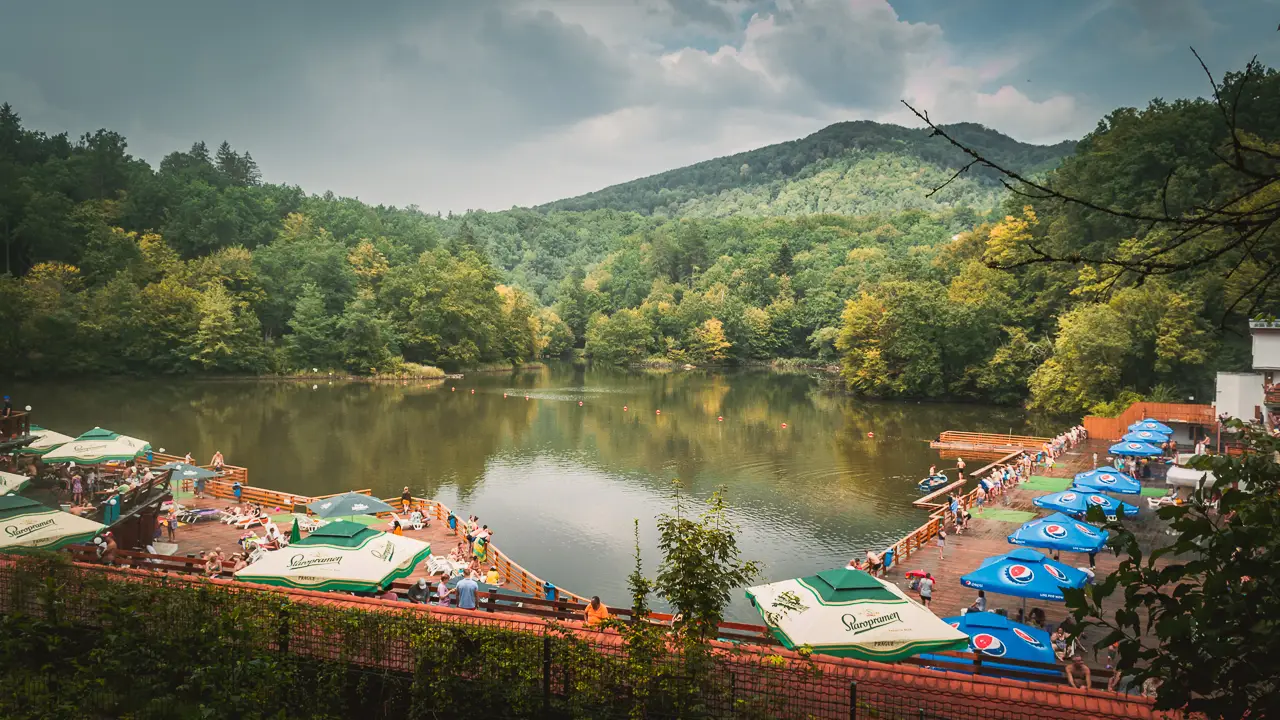
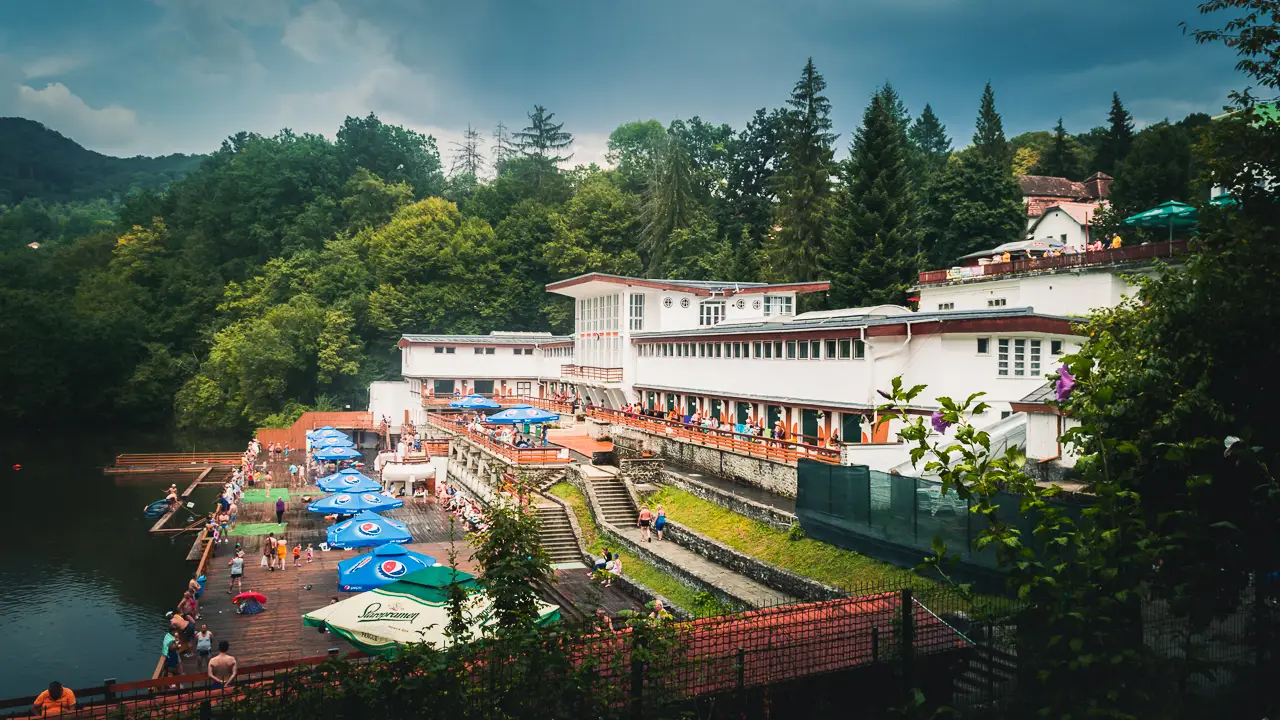
If you arrive by car, then you will have an option to park your car close to mine. The parking lot is a paid one and you will find on the opposite side of the swimming pool.
The main entrance into the salt mine
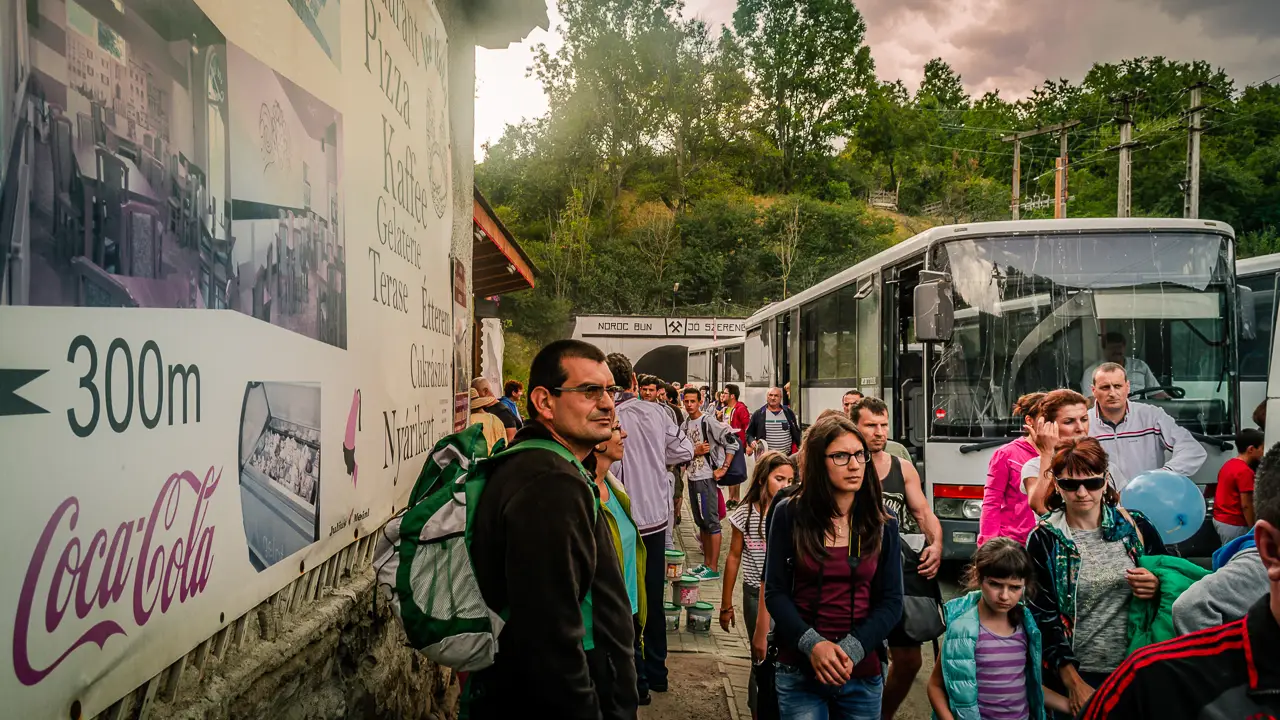
This is the main entrance into the Praid Salt Mine. All the buses that take the tourists inside the mine are using the entrance from the photo below. As you can see, it’s illegal for the tourists to enter the mine.
If you stay close to the mine entrance then you will feel the cold air coming out from the depths of the mine. Along with the cold air, a very strong salt smell comes out too.
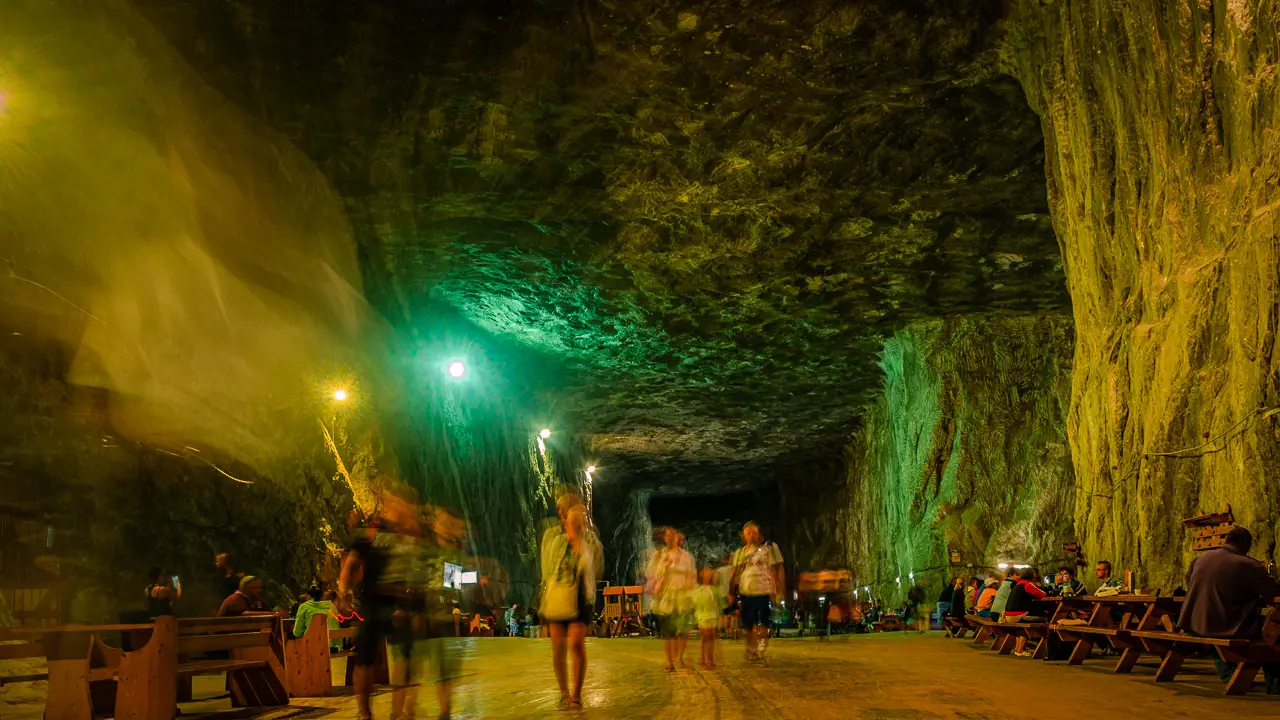
Inside the salt mine
The entire bus ride from the surface until the final station in the mine takes approximately 10 minutes. The tunnel is 1250 meter long.
Once the bus reaches its final stop in the mine, all the tourists have to disembark. After that you will have to walk down the stairs in the section which is reserved for the tourists. After walking down the stairs, you will enter a very large chamber from where you can go to other larger chambers.
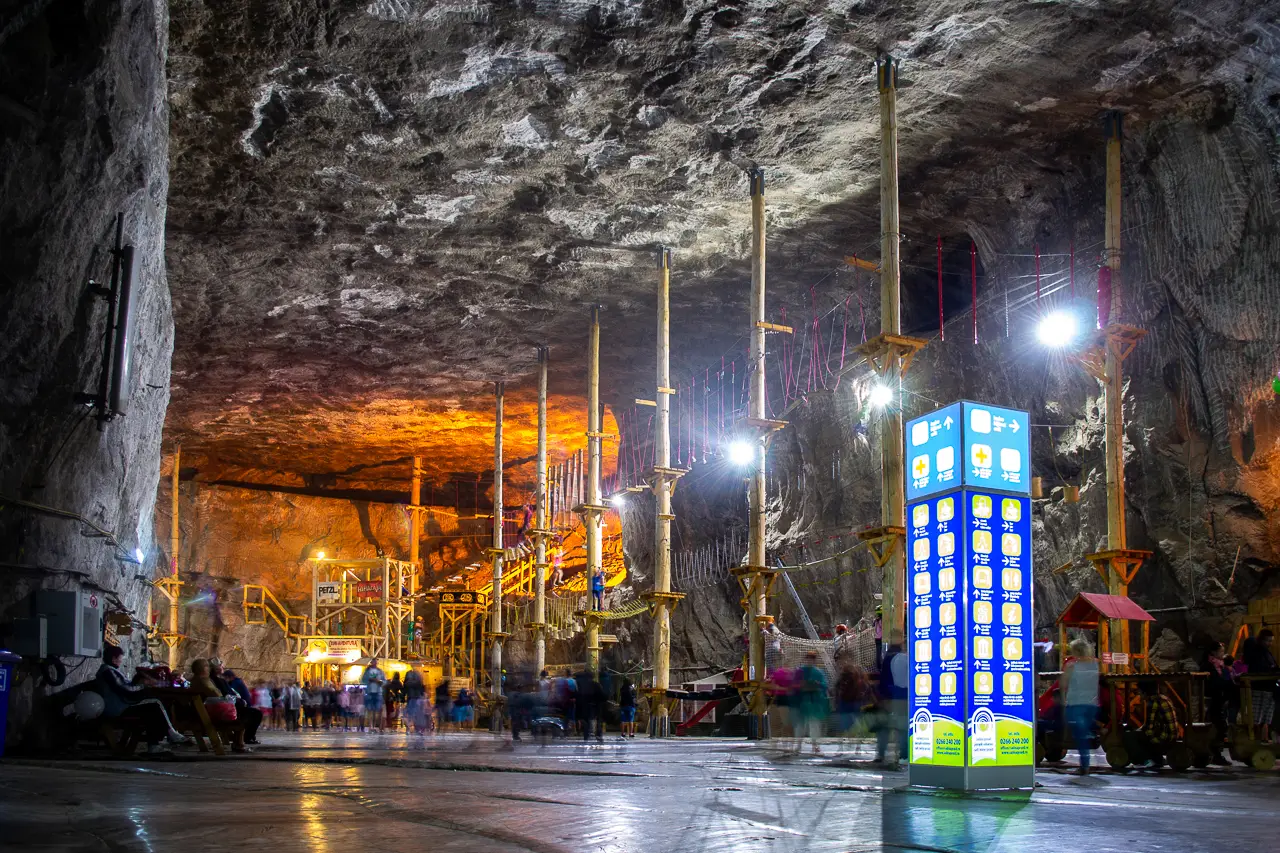
In the mine you will find many attractions, for example there are playing grounds for children, climbing possibilities, 3D cinema and amusement places. You will even find Wi-Fi connections as well.
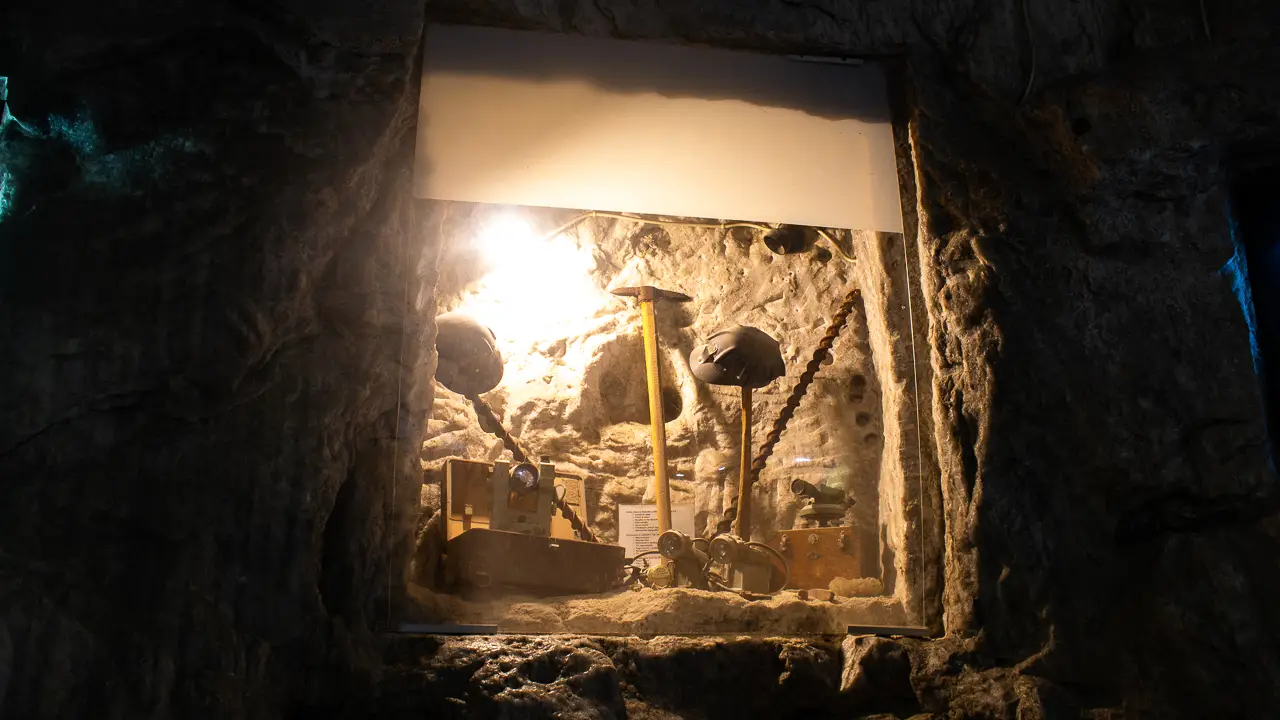
In one of the salt mine’s chamber you will find a smaller museum where you can discover many interesting things about the history of the entire mine. Also there are displayed some mining tools and equipment which once were used by the miners to extract this natural resource.
For example, you will see some equipment from the 19th century like carving picks, acetylene lamp and iron wedge.
Also you will find some mining tools from the 20th century like topographical instrument and many other smaller tools.
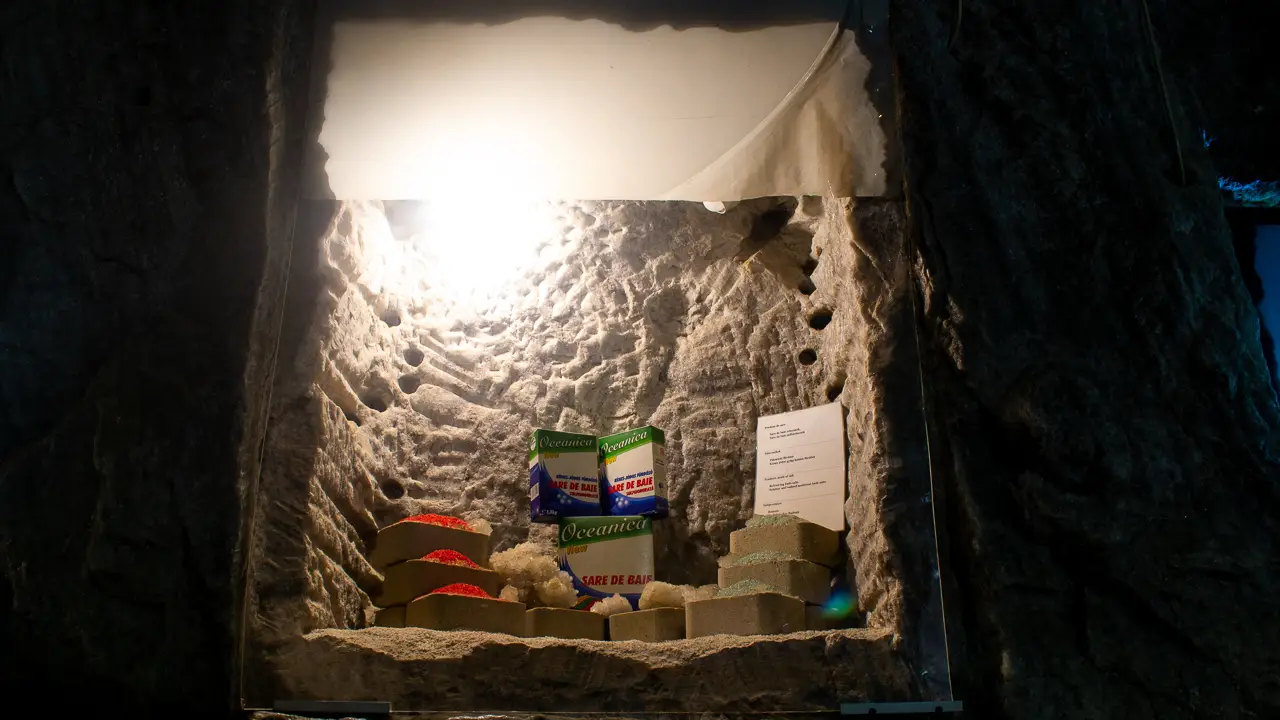
Besides the mining tools, you can also check out some of the products which were made of the salt extracted from Praid.
Some examples of products are: refreshing bath salts, Sulphur and iodized medicinal bath-salts, salt tablets, industrial salt and many other products.
The Chapel
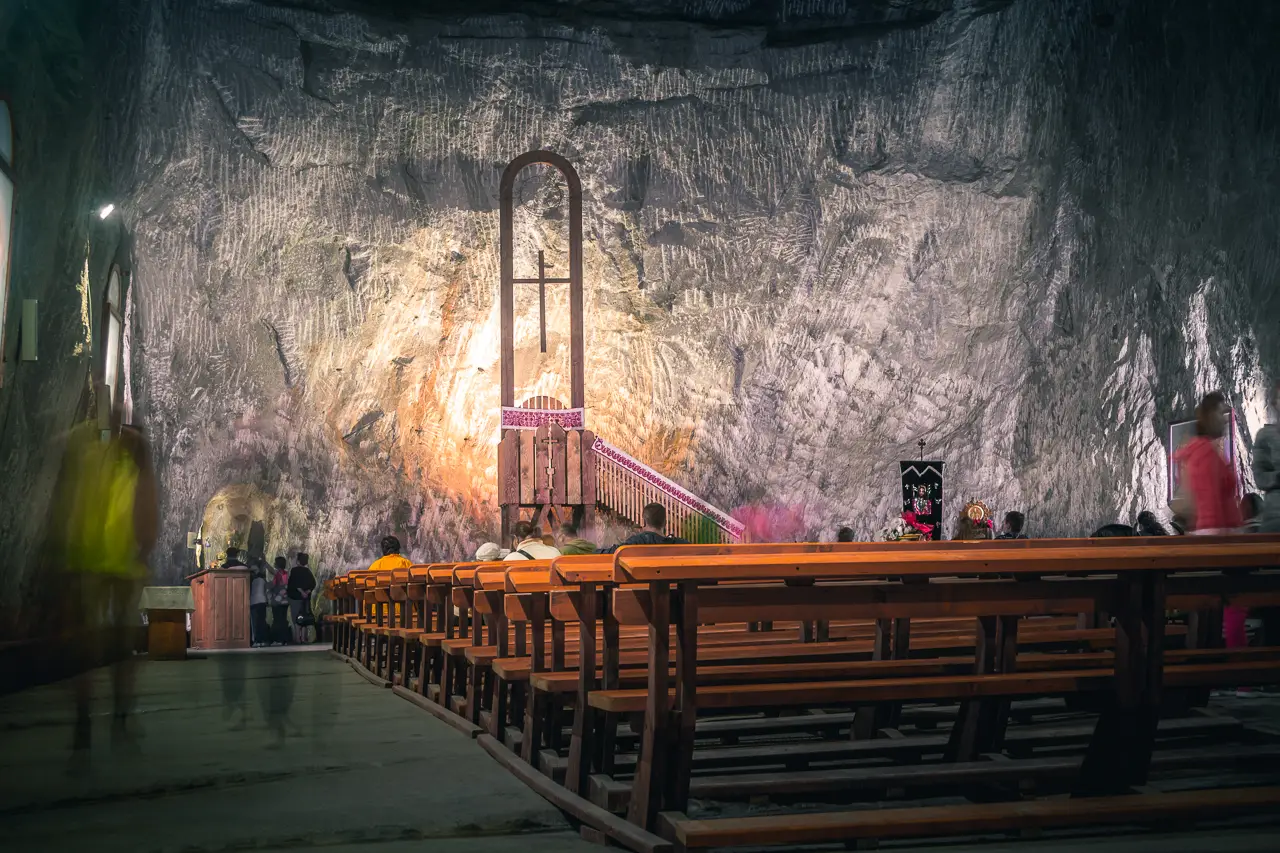
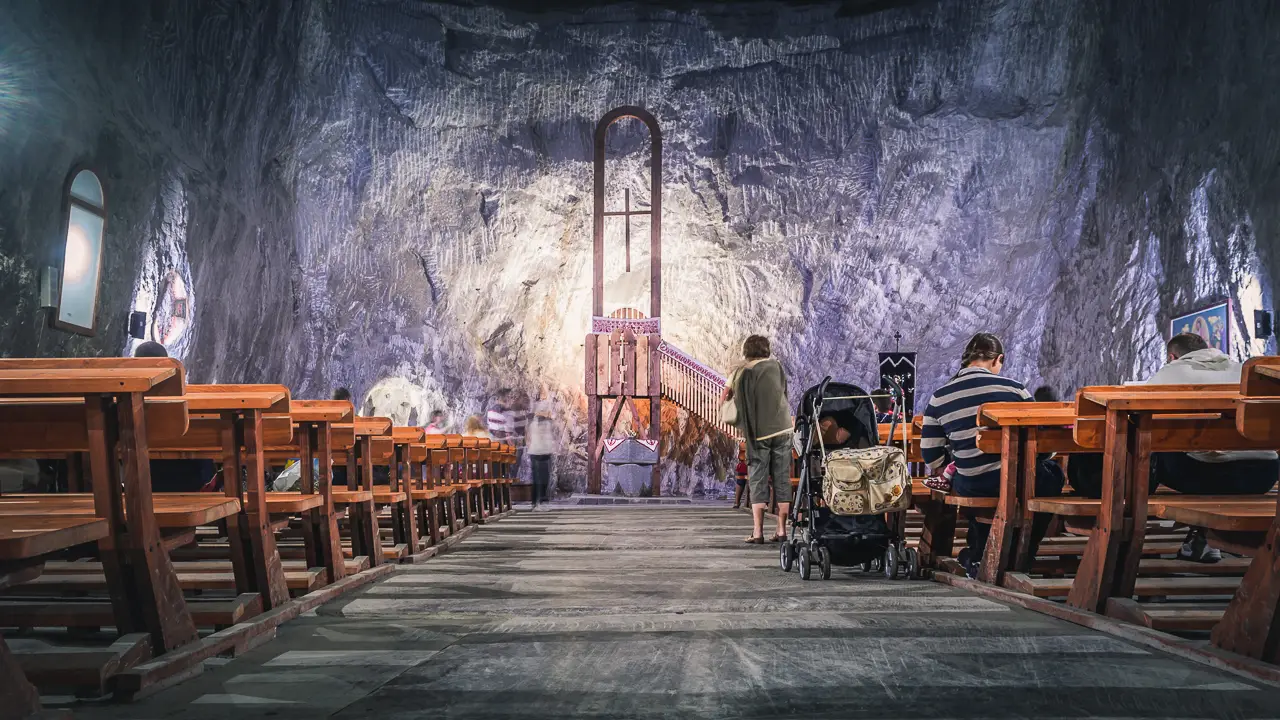
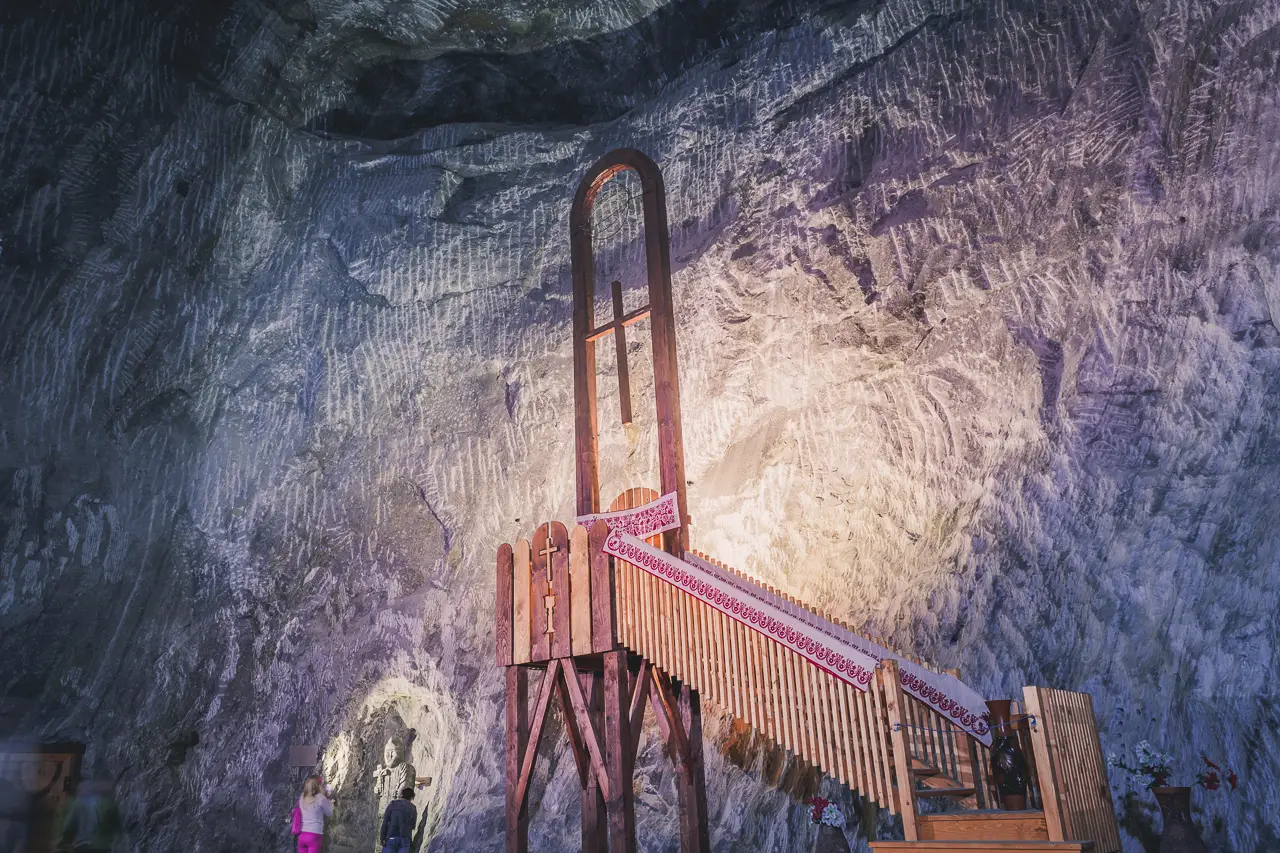
Inside the mine you will also find a smaller ecumenical chapel which was consecrated in 1993.
The restaurant
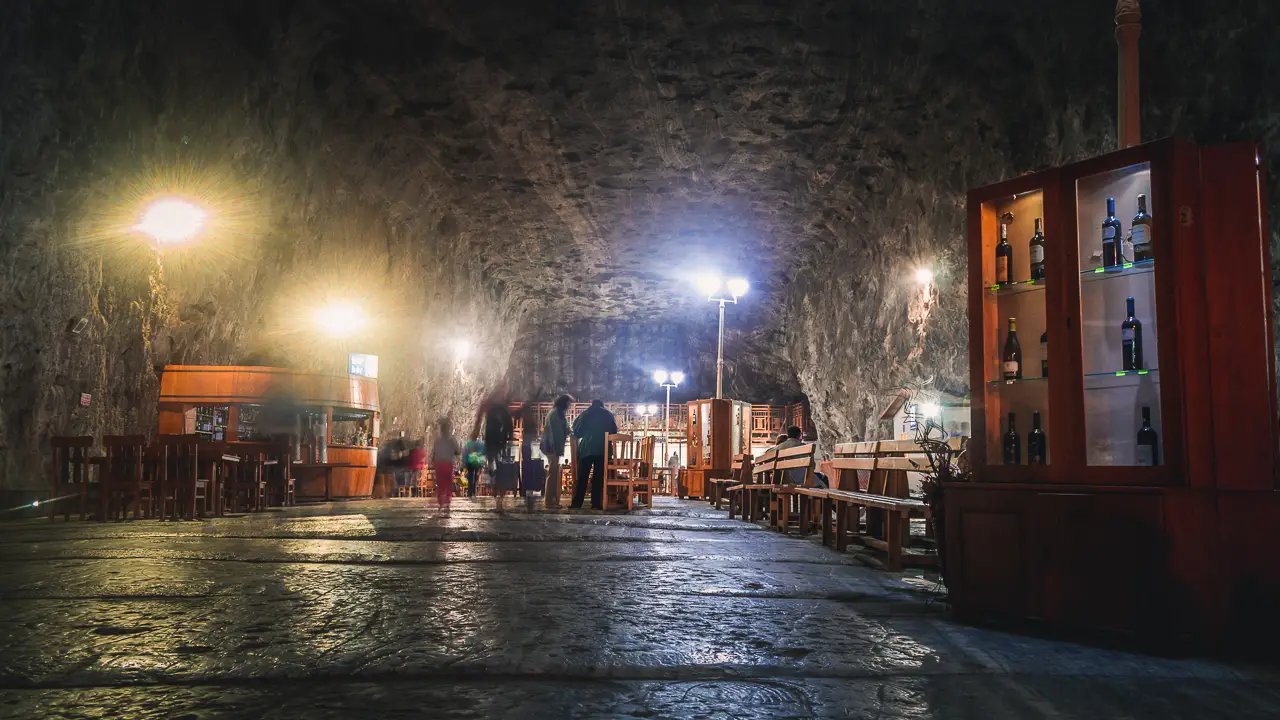
Deep in the mine there is a restaurant as well where you can serve a tasty meal.
Other touristic attractions to visit in the area:
The closest objective would be the small narrow gauge steam train or Mocănița Sovata in Romania which runs between the city of Sovata and Câmpu Cetății. Usually this trip will last approximately 2 hours. At Câmpu Cetății, where the locomotive is detached from the front of the train and attached the the back of the train.
The Red Lake – this lake can be found 75 km away from Praid, in the Hășmaș Mountains.
The Bicaz Gorge – one of the most popular gorges in Romania. The road which goes through the Bicaz gorge is actually the passageway between the regions of Transylvania and Moldova.
Another attraction in the area is the Bear Lake in Sovata.
The Bear Lake from the small city of Sovata is the largest heliothermic lake in Romania. This lake is popular in Transylvania especially in the summer season because of its salty water with healing powers which helps to cure diseases like rheumatism.
One day, after returning back to Sovata from our trip onboard the narrow gauge steam train Mocaniţa Sovata, we decided to check out our last objective, the Bear Lake. After a short drive from the narrow gauge train station, called Gara Mică in Romania, we arrived next to the lake.
This lake was formed in 1875 after a salt mine collapsed and water from the nearby streams filled the former mine with water. In the summer the water can reach a temperature of 35 degrees because the sun heats the layer of freshwater which ultimately warms up the saltwater layer found under the layer of freshwater.
The lake has a depth of 18 meters and it has a salinity of 100 g/l.
The main reason why the tourists are allowed to swim in the Bear Lake only at certain intervals is to preserve the heliothermic effect.
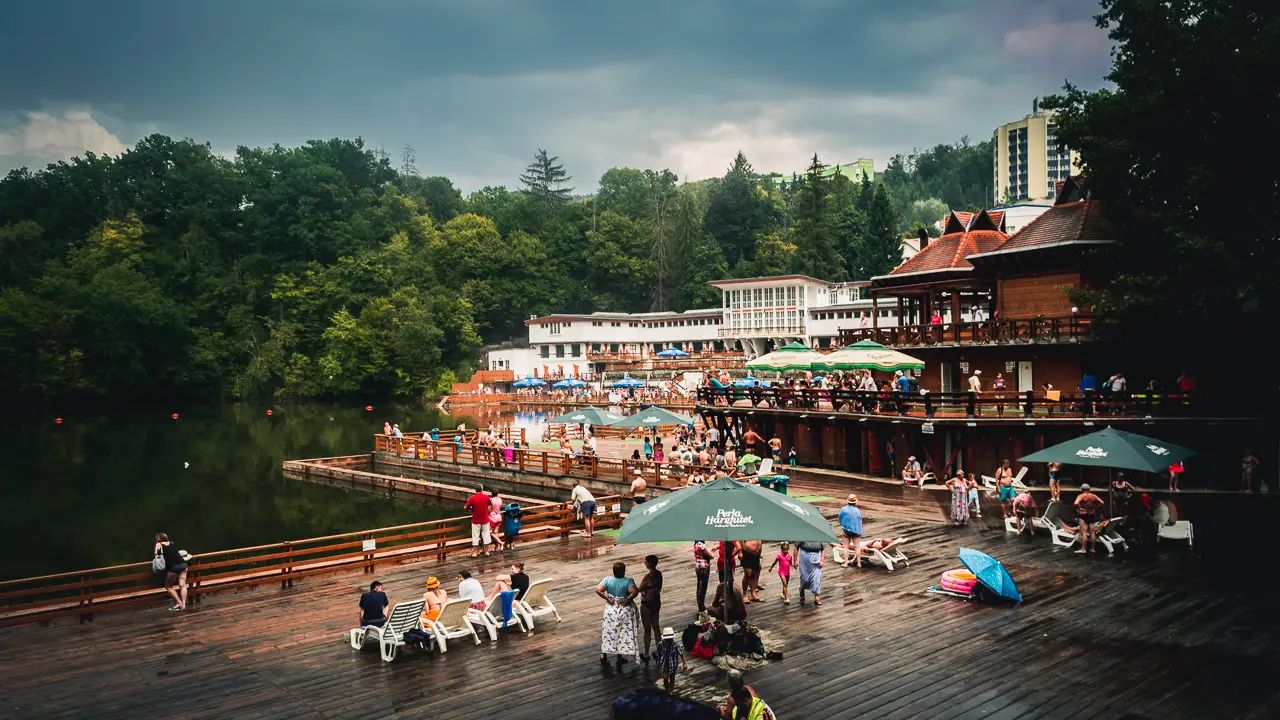
Tourists next to the lake after a short summer stormThe Bear Lake in Sovata
Other objectives in the area:
In the forest behind the Bear Lake, you will find other smaller lakes. If you got tired of swimming or sunbathing you can take a longer walk and explore those lakes as well. Next to the Red Lake, you will have the chance to check out the Salt Mountain, which is basically a smaller hill of salt.
You can take a ride on the Sovata Steam Train or Mocaniţa Sovata in Romanian. It runs between Sovata and Câmpu Cetății. Usually, the entire ride will take almost 2 hours.
We use cookies on our website to give you the most relevant experience by remembering your preferences and repeat visits. By clicking “Accept All”, you consent to the use of ALL the cookies. However, you may visit "Cookie Settings" to provide a controlled consent.
This website uses cookies to improve your experience while you navigate through the website. Out of these, the cookies that are categorized as necessary are stored on your browser as they are essential for the working of basic functionalities of the website. We also use third-party cookies that help us analyze and understand how you use this website. These cookies will be stored in your browser only with your consent. You also have the option to opt-out of these cookies. But opting out of some of these cookies may affect your browsing experience.
Necessary cookies are absolutely essential for the website to function properly. These cookies ensure basic functionalities and security features of the website, anonymously.
Cookie
Duration
Description
cookielawinfo-checkbox-analytics
11 months
This cookie is set by GDPR Cookie Consent plugin. The cookie is used to store the user consent for the cookies in the category "Analytics".
cookielawinfo-checkbox-functional
11 months
The cookie is set by GDPR cookie consent to record the user consent for the cookies in the category "Functional".
cookielawinfo-checkbox-necessary
11 months
This cookie is set by GDPR Cookie Consent plugin. The cookies is used to store the user consent for the cookies in the category "Necessary".
cookielawinfo-checkbox-others
11 months
This cookie is set by GDPR Cookie Consent plugin. The cookie is used to store the user consent for the cookies in the category "Other.
cookielawinfo-checkbox-performance
11 months
This cookie is set by GDPR Cookie Consent plugin. The cookie is used to store the user consent for the cookies in the category "Performance".
viewed_cookie_policy
11 months
The cookie is set by the GDPR Cookie Consent plugin and is used to store whether or not user has consented to the use of cookies. It does not store any personal data.
Functional cookies help to perform certain functionalities like sharing the content of the website on social media platforms, collect feedbacks, and other third-party features.
Performance cookies are used to understand and analyze the key performance indexes of the website which helps in delivering a better user experience for the visitors.
Analytical cookies are used to understand how visitors interact with the website. These cookies help provide information on metrics the number of visitors, bounce rate, traffic source, etc.
Advertisement cookies are used to provide visitors with relevant ads and marketing campaigns. These cookies track visitors across websites and collect information to provide customized ads.