• Explore The Transylvanian Village of Biertan

    Explore The Transylvanian Village of Biertan

    Share this:

    The village of Biertan is another important objective located in the heart of the historical region of Transylvania. Almost in the middle of the village you will find the old medieval fortified church. Also it’s important to mention that this village it’s closely tied to the Transylvanian Saxons, a group of German people who settled in the area in the 12th century. They brought their skills and a strong sense of community with them, and this helped Biertan to grow.

    The village is one of the most picturesque villages in Transylvania, proudly holding a place in UNESCO’s National Heritage, yearly it is visited by thousands of tourists from all over the world.

    How to reach Biertan?

    If you are driving from the small city of Medias on DN14, you will have to make a right turn in the village of Saros pe Tarnave and after that you will have to continue driving on DJ141 until you reach Biertan. From Medias to Biertan by car you will make approximately 30 minutes.

    Let’s explore this Saxon village

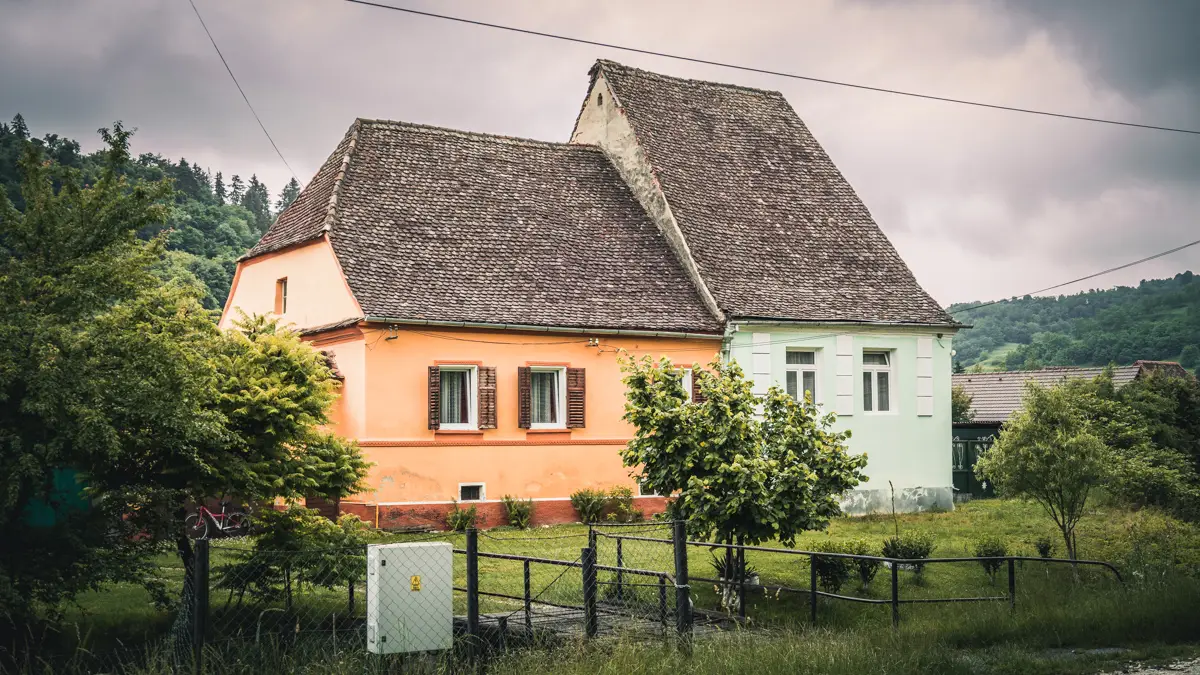
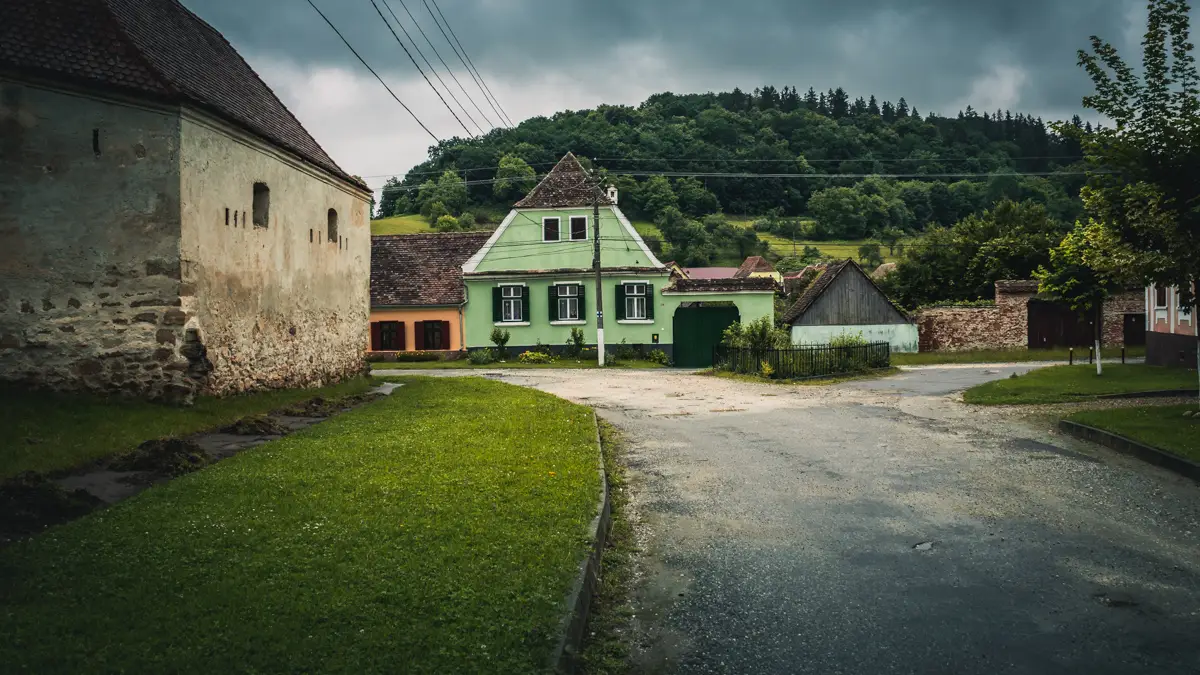
    Once you will arrive in Biertan, you can leave your car in a paid parking place located close to the fortified church while you visit the village. Besides the old medieval fortified church, you can visit the beautiful Saxon houses in the village with their unique architecture.
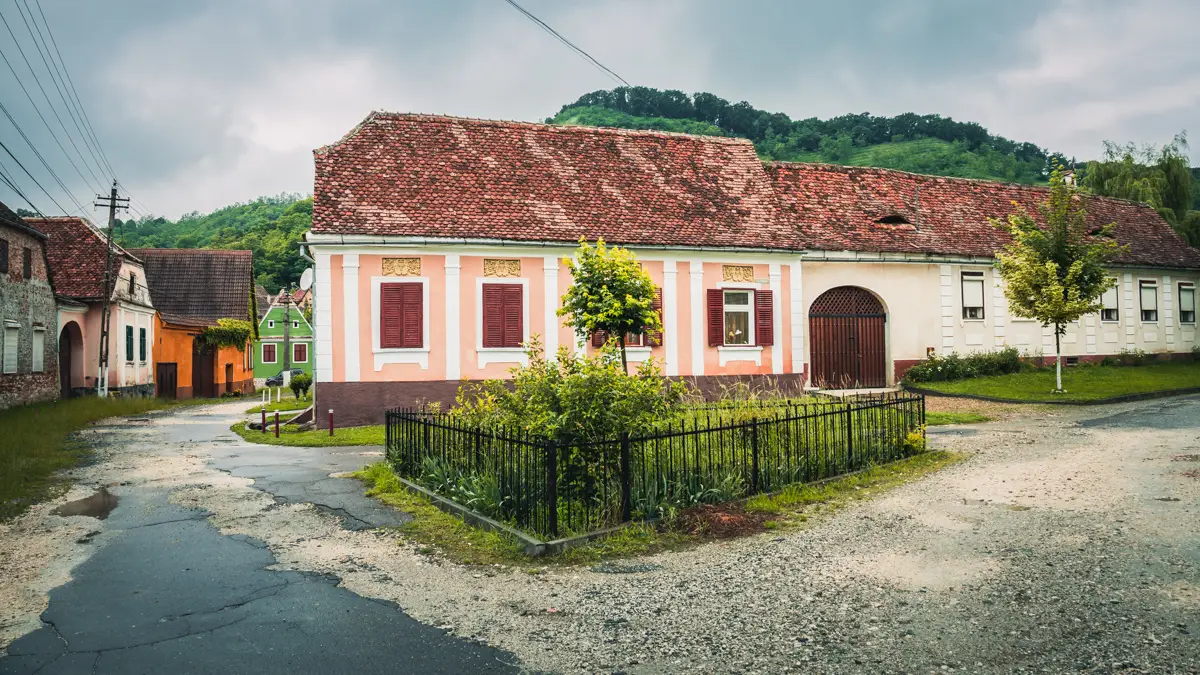
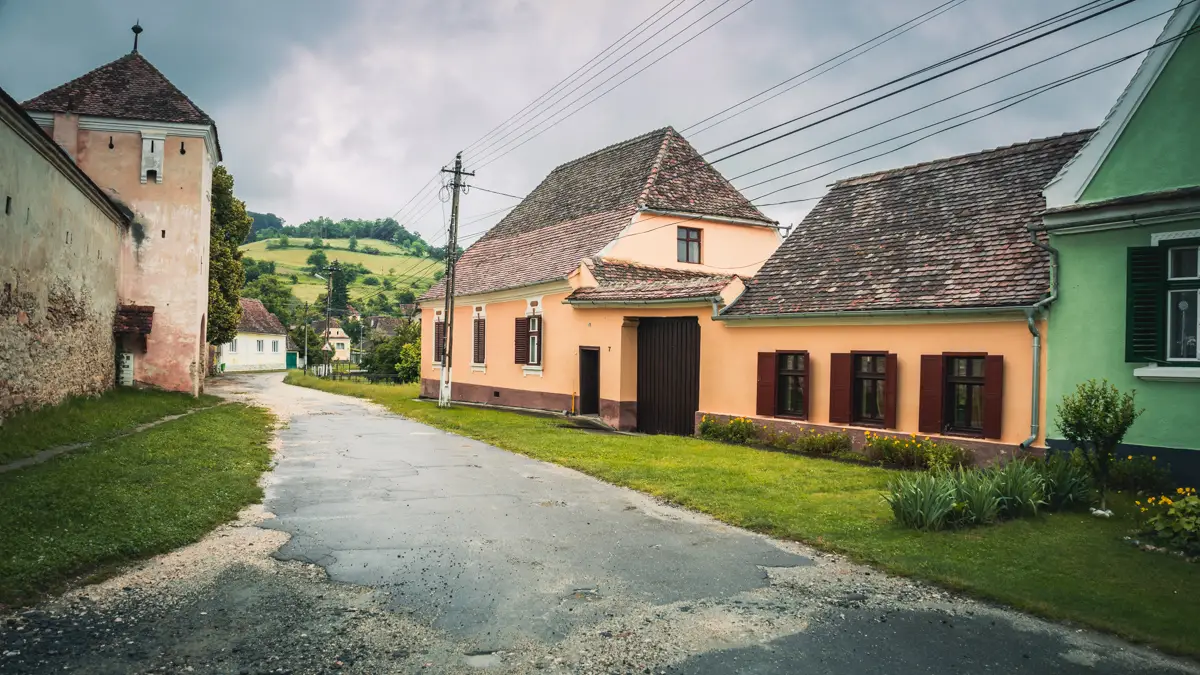
    Saxon house in the village.
    Old traditional Saxon houses in Biertan
    Another beautiful examples of traditional houses.
    Another example of traditional Saxon house next to the Gate Tower.
    Two houses with different roof heights.
    A smaller and a taller house.
    Green house next the fortified church.
    Green house with a large wooden gate.

    If you decided to make a shorter walk around the fortified church then you can easily spot the 3 different fortification walls which surrounds the entire church.
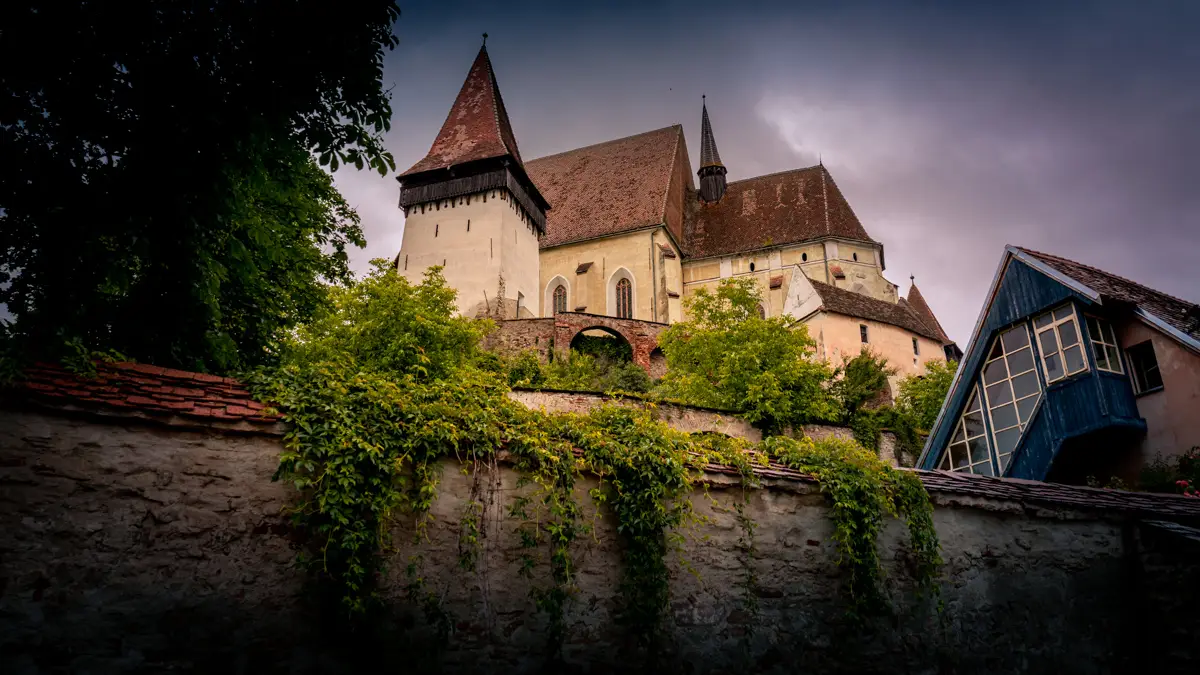
    The fortification walls which surrounds the church.
    3 fortification walls with the old church in the background on the photo.

    Let’s explore the fortified church

    Very close to the Unglerus restaurant you will find the main entrance, don’t forget that you will have to pay for a ticket in order to visit the place. After that you can go directly to the upper part of the fortified church under the covered wooden stairway.
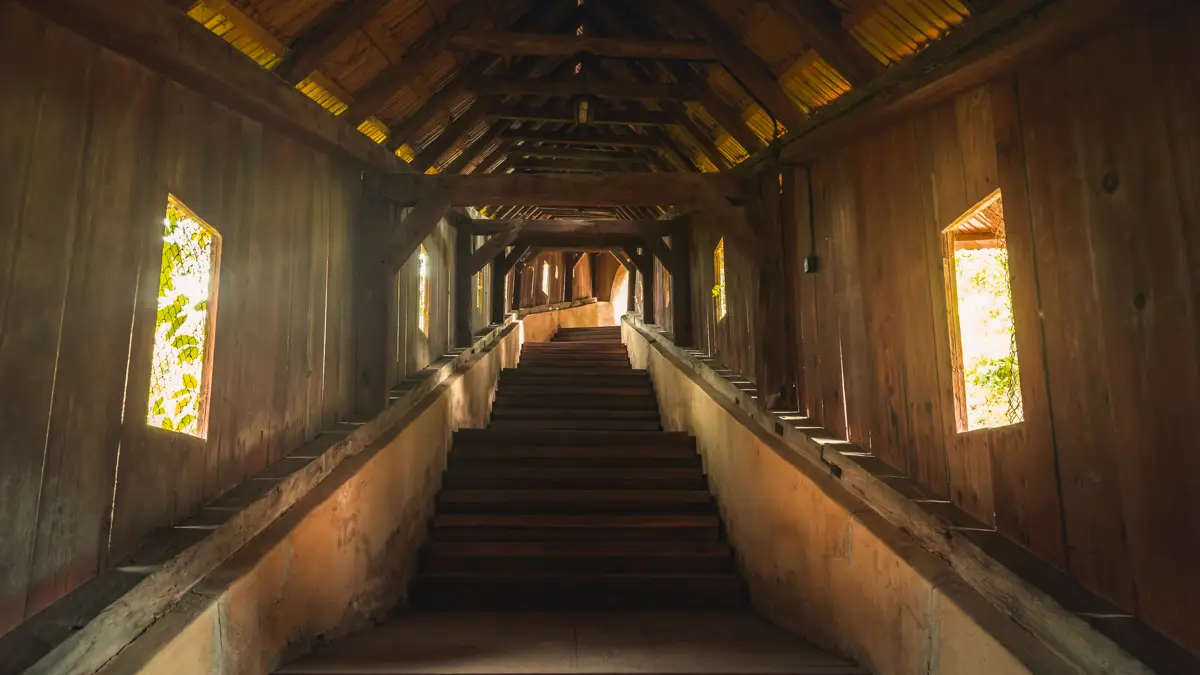
    The covered stairway.
    The covered stairway will take you up to the church.

    One of the most important things to see in Biertan, is the fortified church, which is a prime example of Transylvanian Saxon architecture. This big building was constructed in the 14th century. The fortified church is not only a place of worship but also a fortress which used to protect the villagers from dangers and attackers. The fortified church has 3 fortification walls with medieval towers and bastions which helped to increase the protection. In the center of the fortified church, built on a smaller hill, you will find the old gothic Lutheran church.
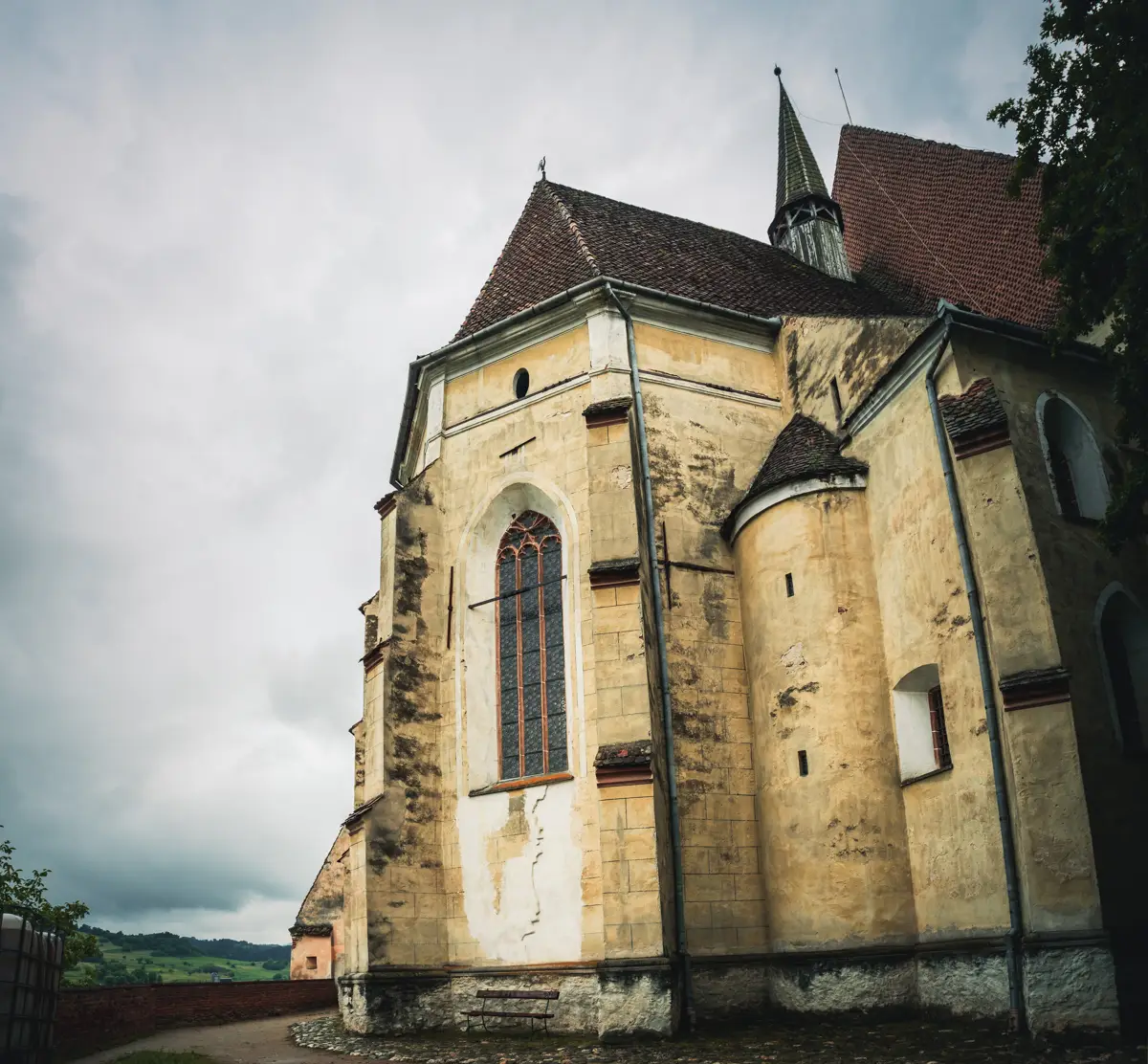
    Exterior photo of the old church.
    The exterior of the old church.

    The Catholic Tower is located in the southern part of the fortifications. In the tower’s lower level, there used to be a chapel that was painted with frescoes. This chapel was used by people who didn’t want to change to the new Protestant beliefs during the Reformation.
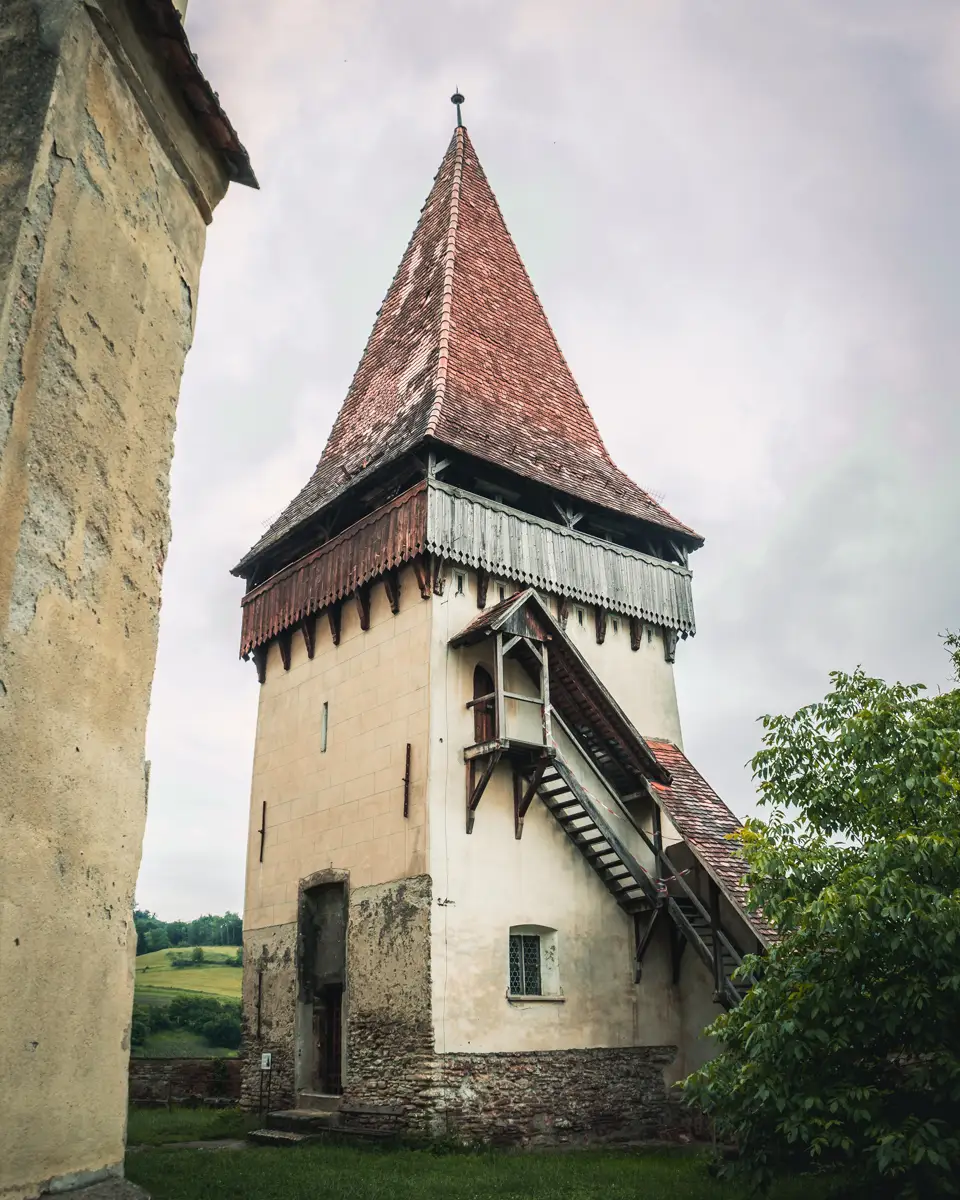
    The Catholic Tower.
    The Catholic Tower

    A long time ago, In the Eastern Bastion there was a so called “prison” for married couples who don’t get along each other. The story goes that the couples where locked in the prison until they resolved their issues and get along each other.
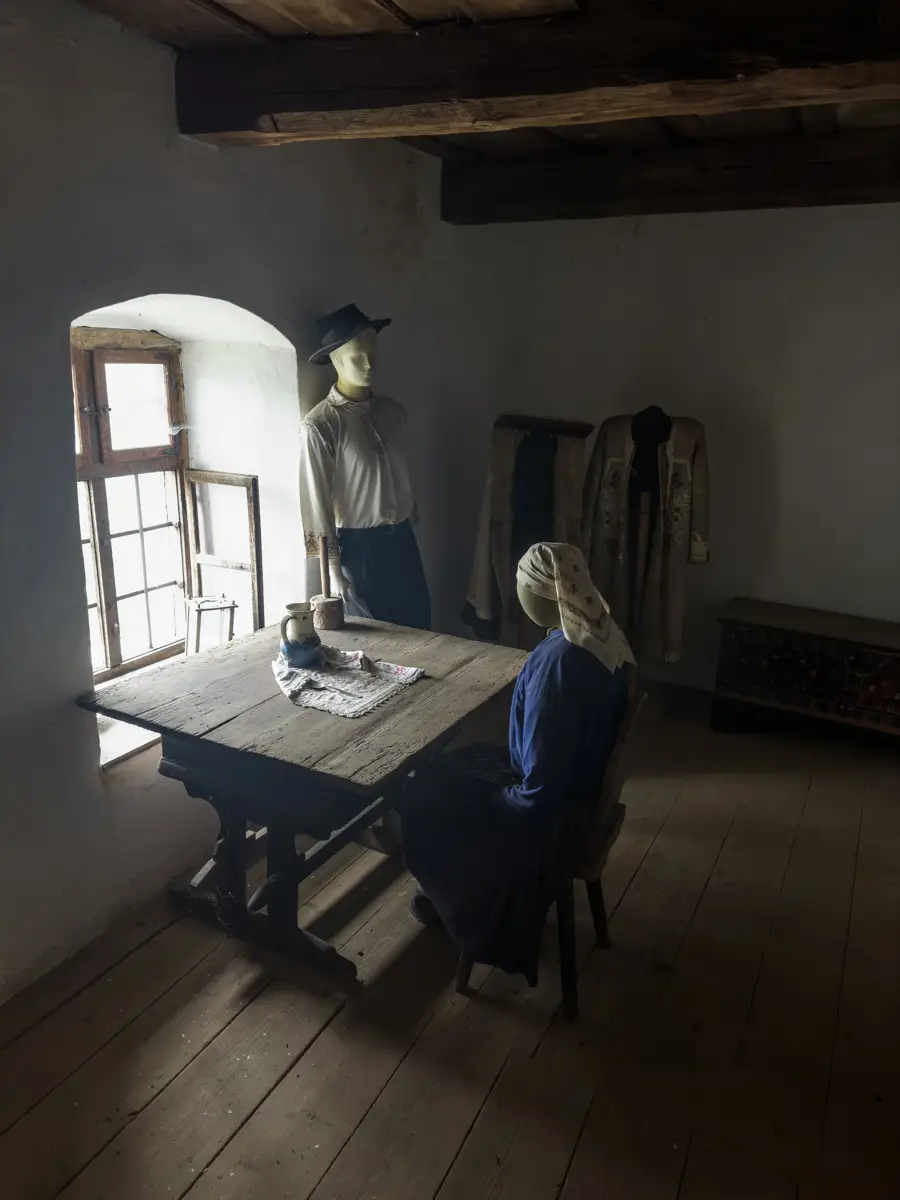
    The matrimonial prison in the fortified church.
    The matrimonial prison located in the Eastern Bastion.

    Close to the Eastern Bastion, you will find the Mausoleum Tower where you will find the headstones of the priests who built the church.
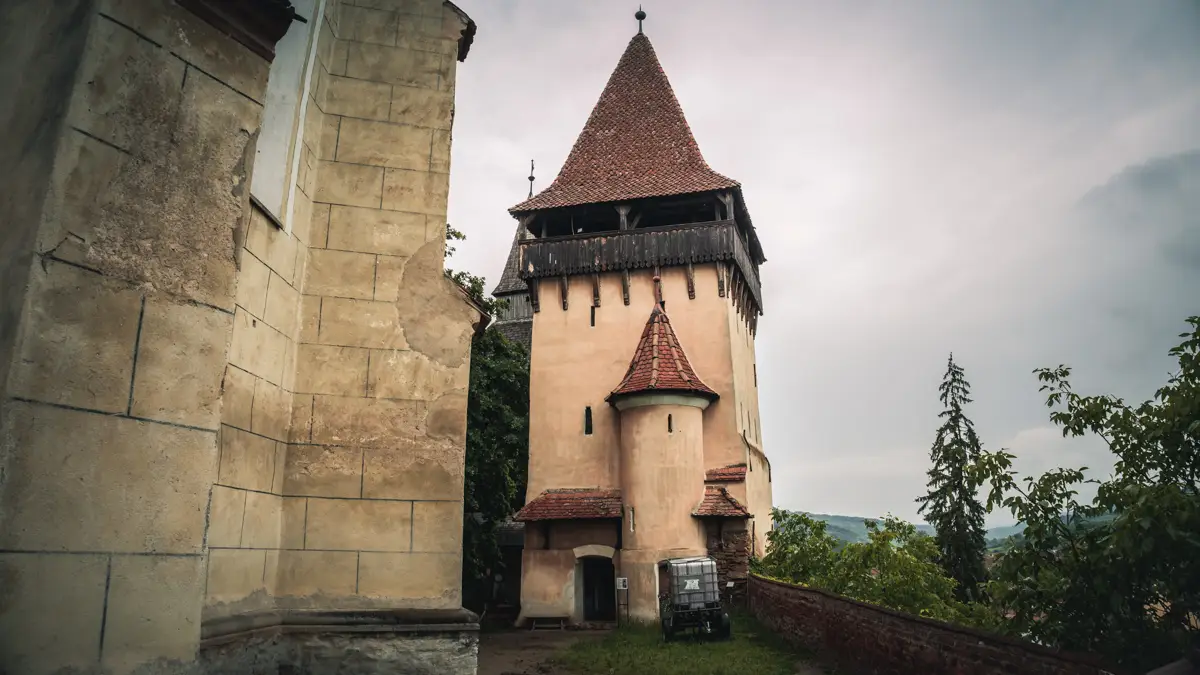
    The Mausoleum Tower.
    The Mausoleum Tower.

    Inside the church

    The Biertan Church boasts Transylvania’s largest and most breathtaking Polyptych altarpiece. This magnificent altar comprises many panels with exquisite depictions of key moments in the lives of Jesus.
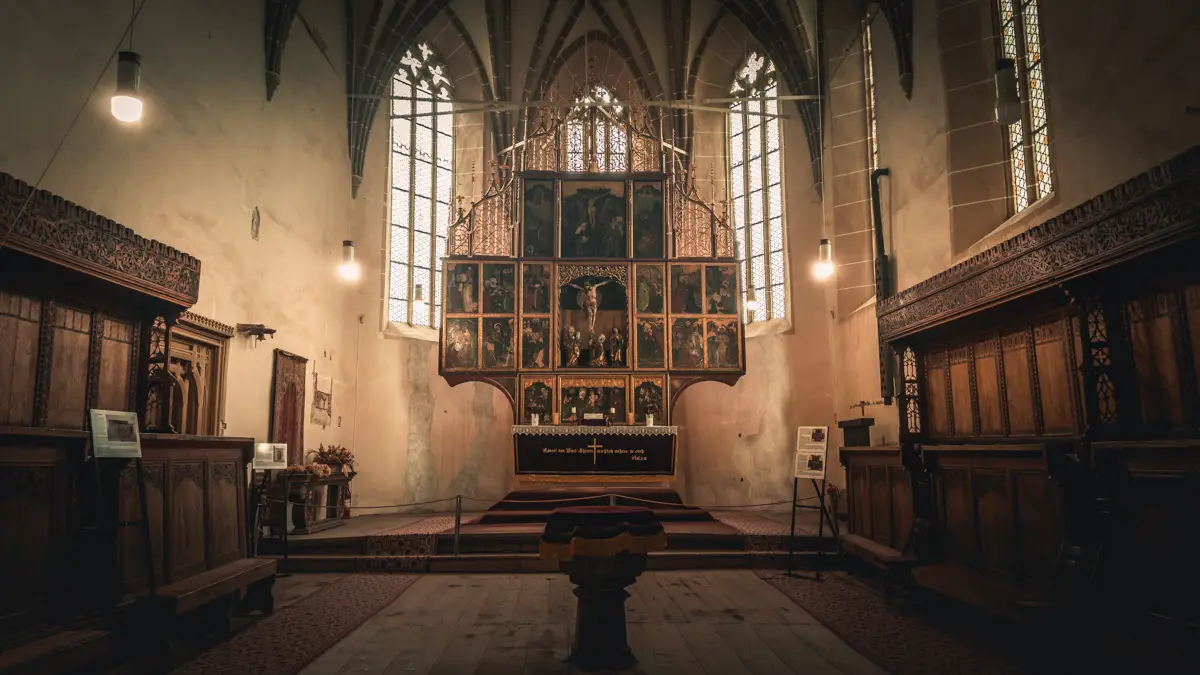
    The altar inside to old church.
    The altar.

    Admire the village from the fortified church

    If you take a walk around the old church, you will have many opportunities to admire the old traditional houses and of course the surrounding landscape as well.
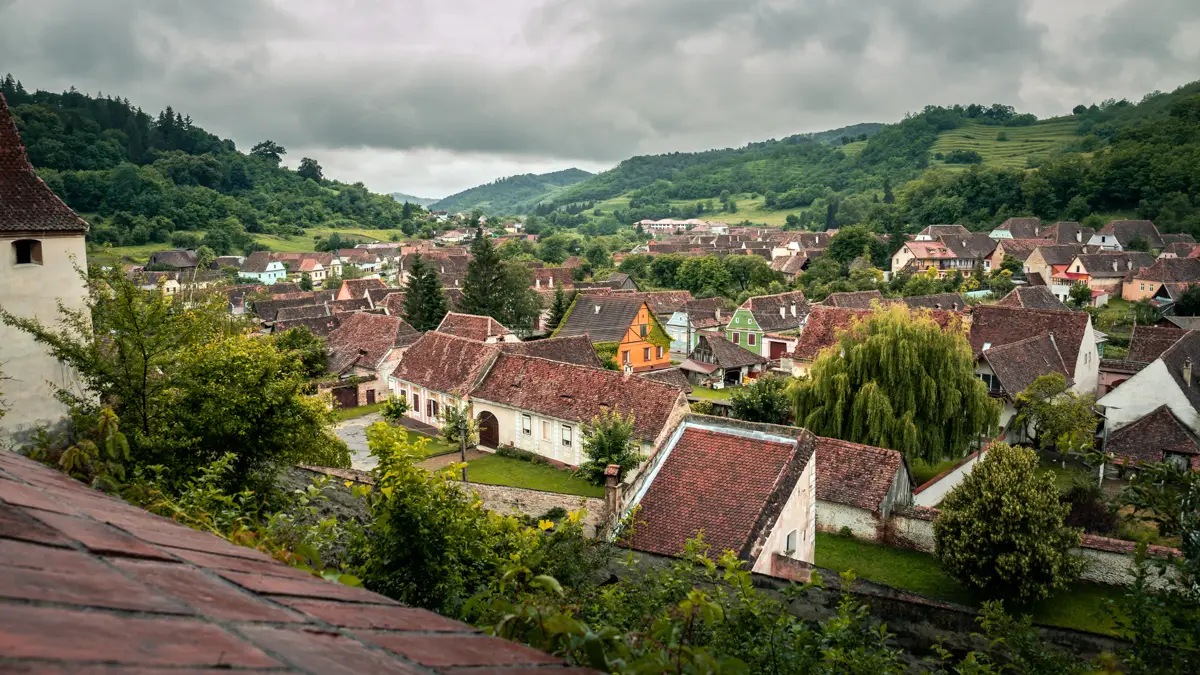
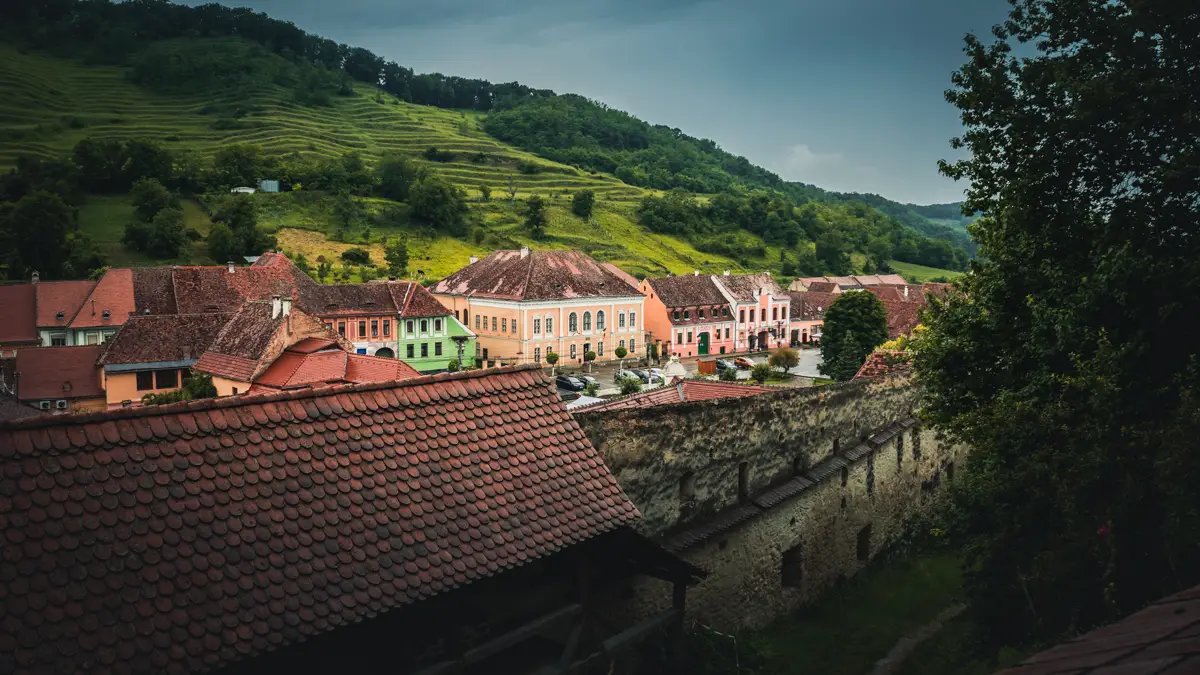
    A part of the village of Biertan.
    A part of the village including the green hills which surrounds Biertan.
    The school.
    The school and other buildings near the main square.

    After exploring the upper part of the fortified church, it was time to head down to the lower part on a path which starts right under the Clock Tower. A part of the path was made between the fortification walls.
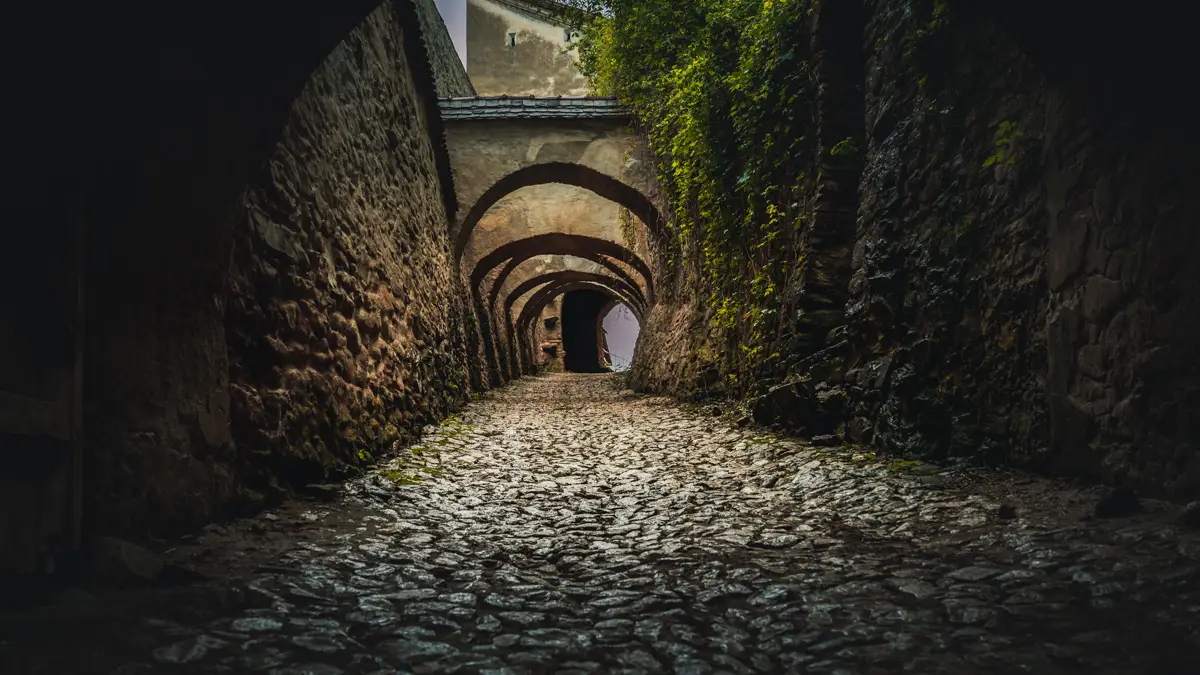
    Paved path between the fortification walls.
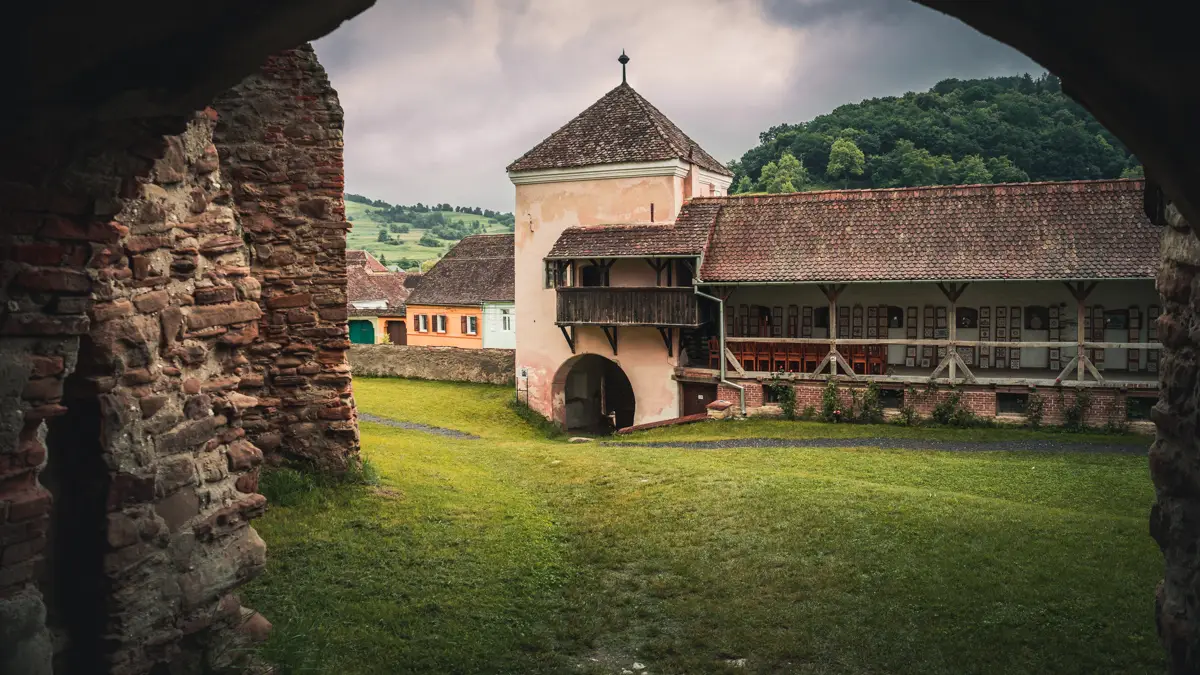
    A paved path between the fortification walls which will take you to the Gate Tower.
    The Gate Tower.
    The Gate Tower.

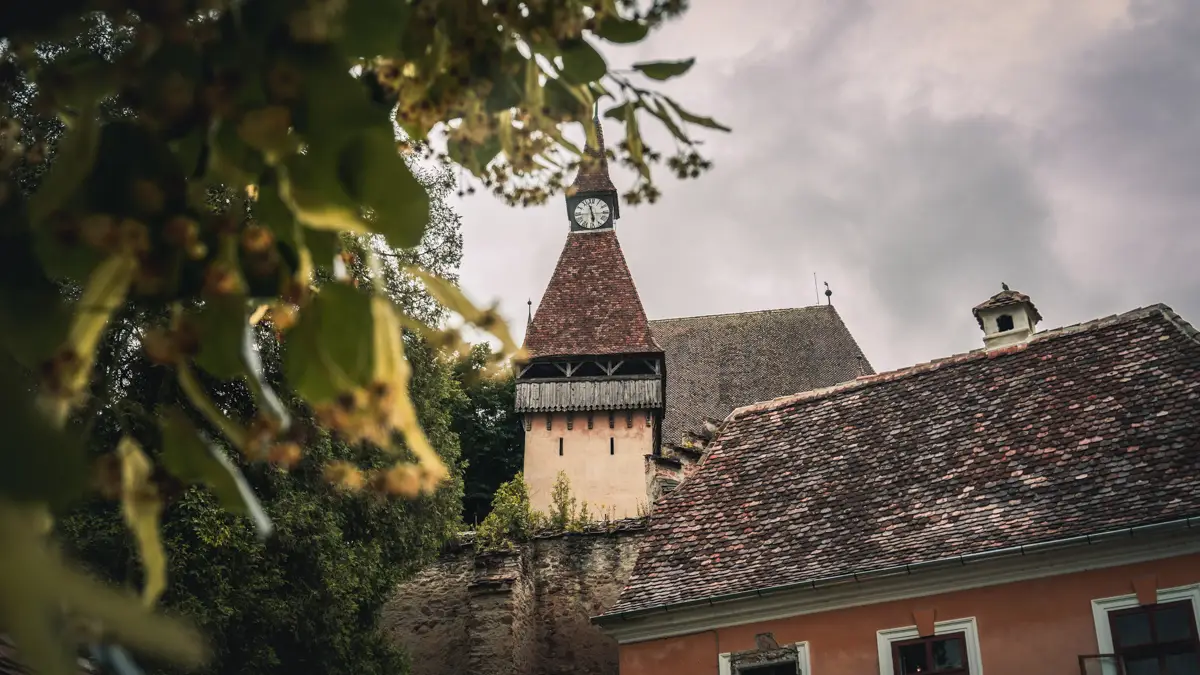
    On my way back from the Gate Tower, the path will take you right next to the Clock Tower, so it was the perfect opportunity to capture this iconic tower.
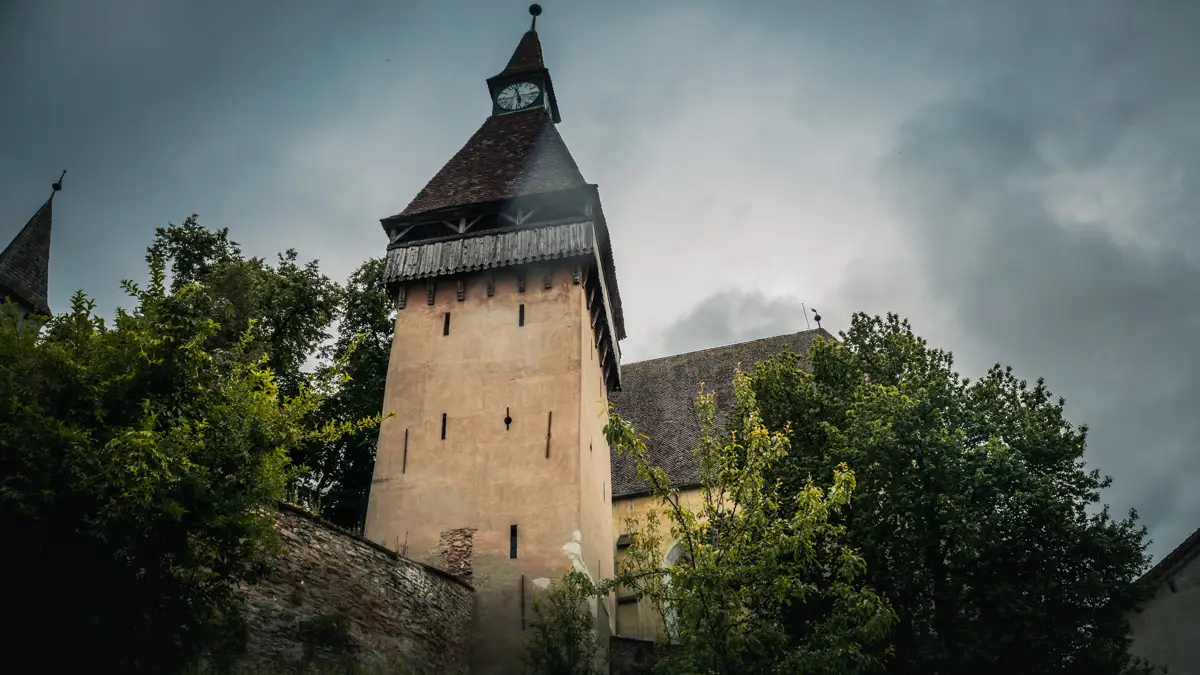
    The Clock Tower.
    The Clock Tower in Biertan.

    Serving a coffee before leaving

    Before leaving the village of Biertan, in order to recharge your batteries you can drink a very good coffee at Unglerus Medieval Restaurant which is right near the main entrance into the fortified church. So if are searching for a good place to drink a coffee or the eat a tasty traditional food than I highly recommend this restaurant.
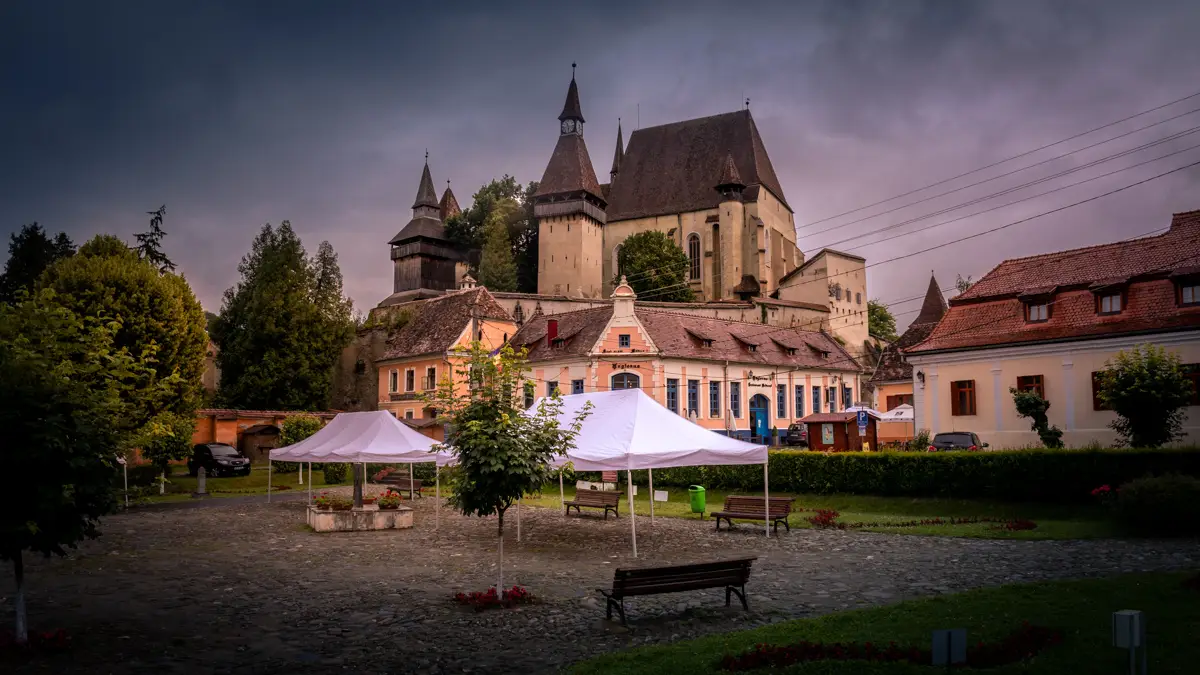
    The fortified church and the Unglerus medieval restaurant.
    The fortified church with the Unglerus medieval restaurant next to the Clock Tower.

    What can you explore nearby?

    The village of Biertan is a great starting point for exploring other important attractions around it. Nearby, you can find:

    Sibiu: This city is famous for its well-preserved medieval buildings and lively cultural scene.

    Sighisoara: This medieval town is where Vlad the Impaler (the inspiration for Count Dracula) was born. It’s a fascinating place with a historic citadel. The objective is actually the closest one to Biertan.

    Viscri: Another village with a fortified church, Viscri is known for its rustic beauty and traditional feel. It’s also a UNESCO World Heritage Site.

    Malancrav: In this village you can visit the Lutheran church and the Apafi manor.
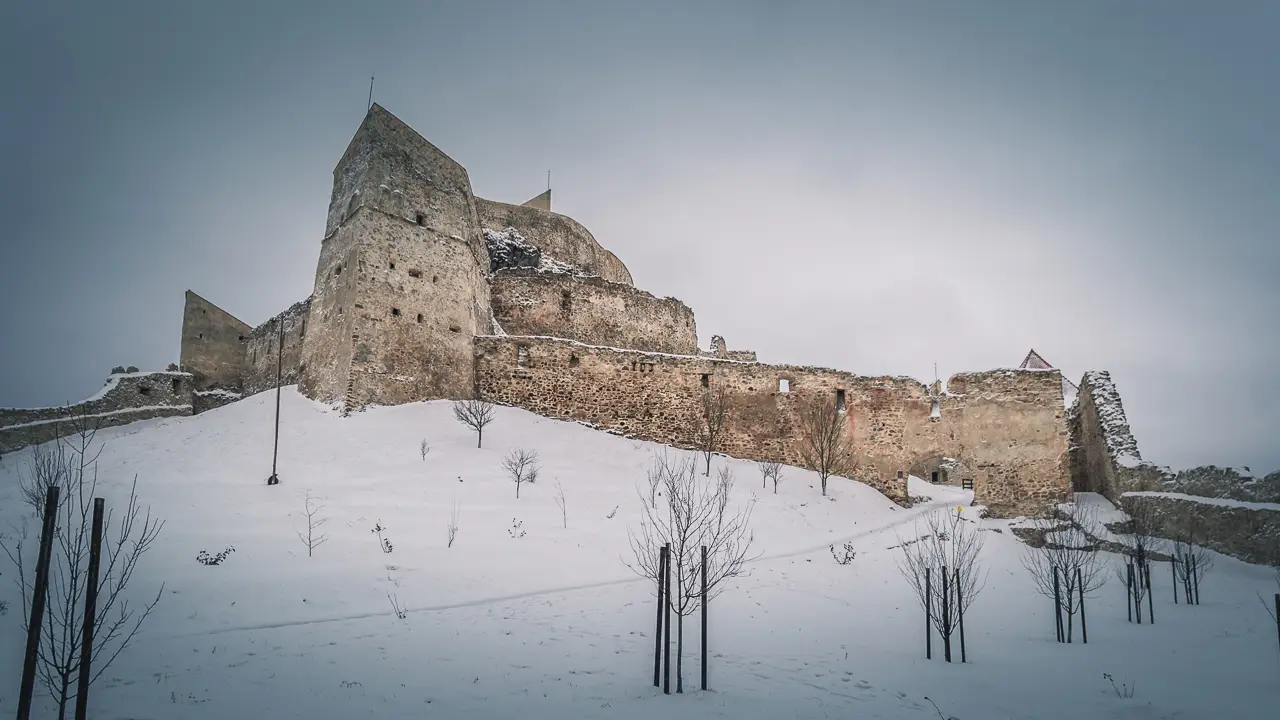
  • The Rupea Fortress In Romania

    The Rupea Fortress In Romania

    Share this:

    The Rupea fortress is located in the heart of the historical region of Transylvania, Romania. Since it was built on a larger cliff close to the city of Rupea, it is visible from every direction and you cannot miss it if you plan to visit it. There is even a larger parking lot next to entrance where you can leave your car while you are visiting this place.

    After you enter into the citadel, then you should know that this medieval citadel is actually divided into three so fortresses. The lower part where the entrance is can be found is called the Lower fortress, the middle part is called the Middle fortress and lastly, the upper part of the Rupea fortress is called the Upper fortress.

    Rupea Fortress finds its roots in the 13th century and it was ultimately left deserted in 1790 following a destructive storm that wreaked havoc on the building’s roofs. During the centuries, it offered multiple times refuge and protection for the people living nearby. Today the buildings give us a peek into what life was like inside the fortress many years ago.

    Getting There

    Rupea is easily accessible from major Romanian cities like Brasov, Sibiu, and Cluj-Napoca. Once you arrive in Rupea, a short drive up the hill will lead you to this historical gem. It’s actually very close to E60 which is the main road coming from Brasov and going towards the medieval city of Sighisoara.

    The Lower Fortress

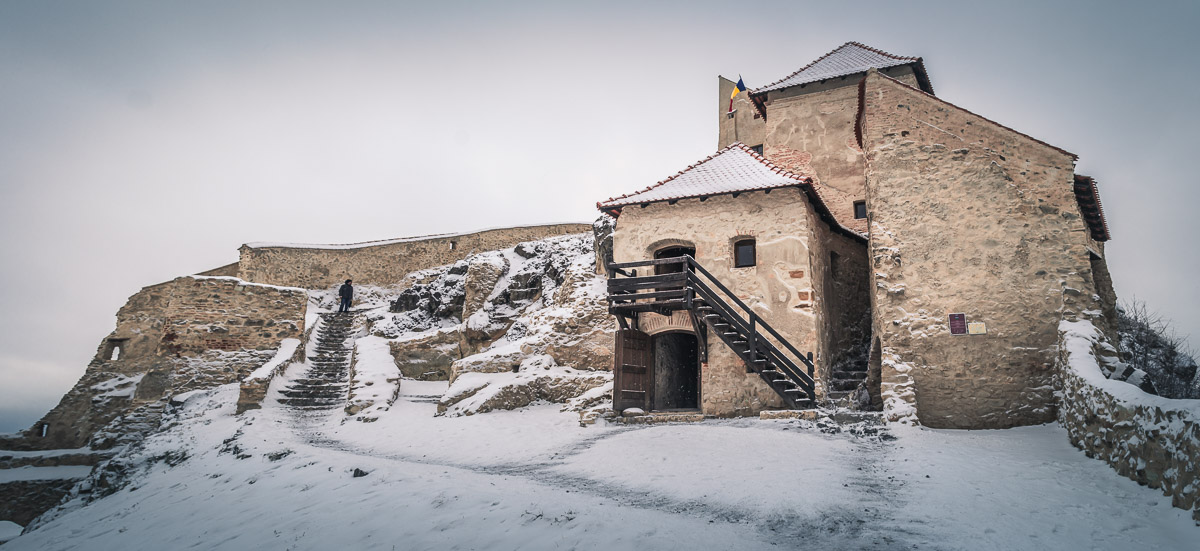
    After you entered through the main gate, the courtyard of the Lower fortress awaits you.

    The entrance into Rupea citadel.
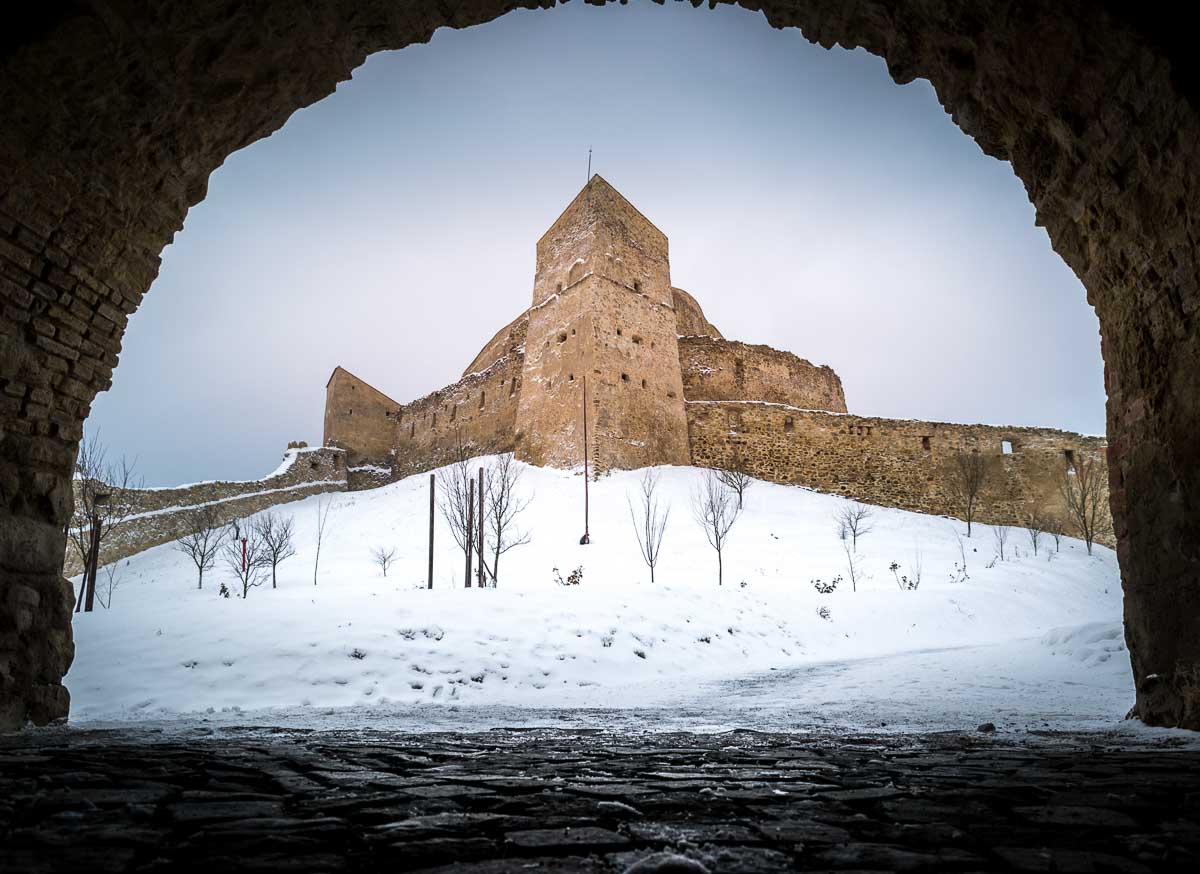
    The Rupea fortress as it is seen from under the Gate Tower.
    The Dawn fortress and a path which leads to the Upper fortress.
    The path towards the Middle fortress

    The Middle Fortress

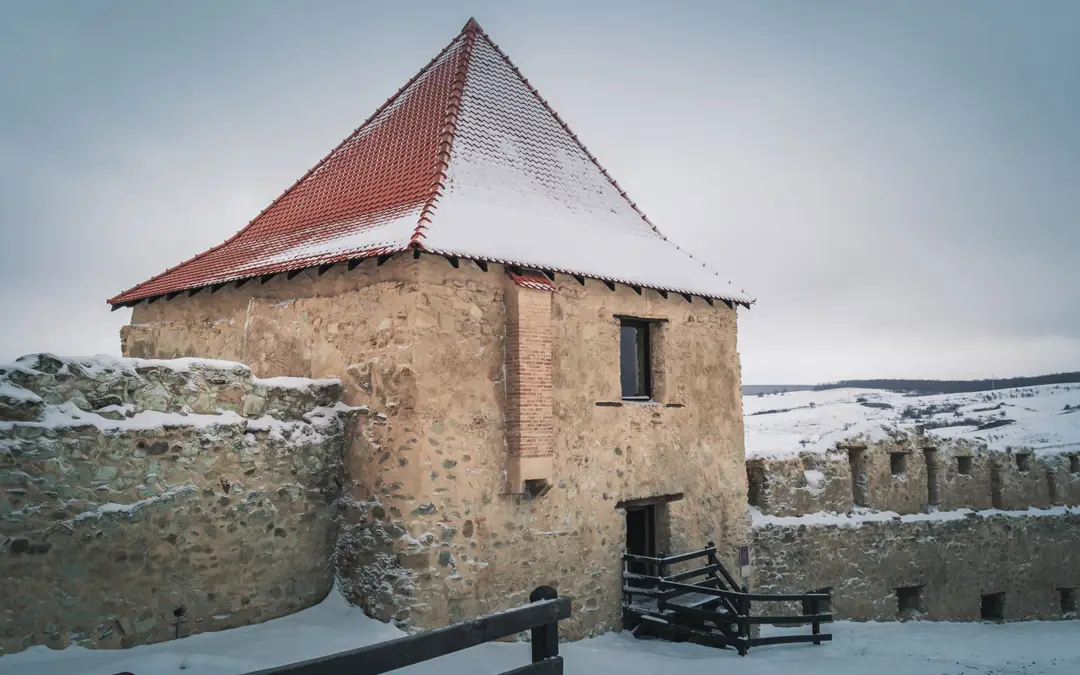
    While visting the Middle fortress, we decided to explore the Scouts Tower which was built in the 15th century. This building has loopholes on all the three sides of the building.

    The Scouts Tower.
    The Scouts Tower in the Middle fortress

    The Upper Fortress

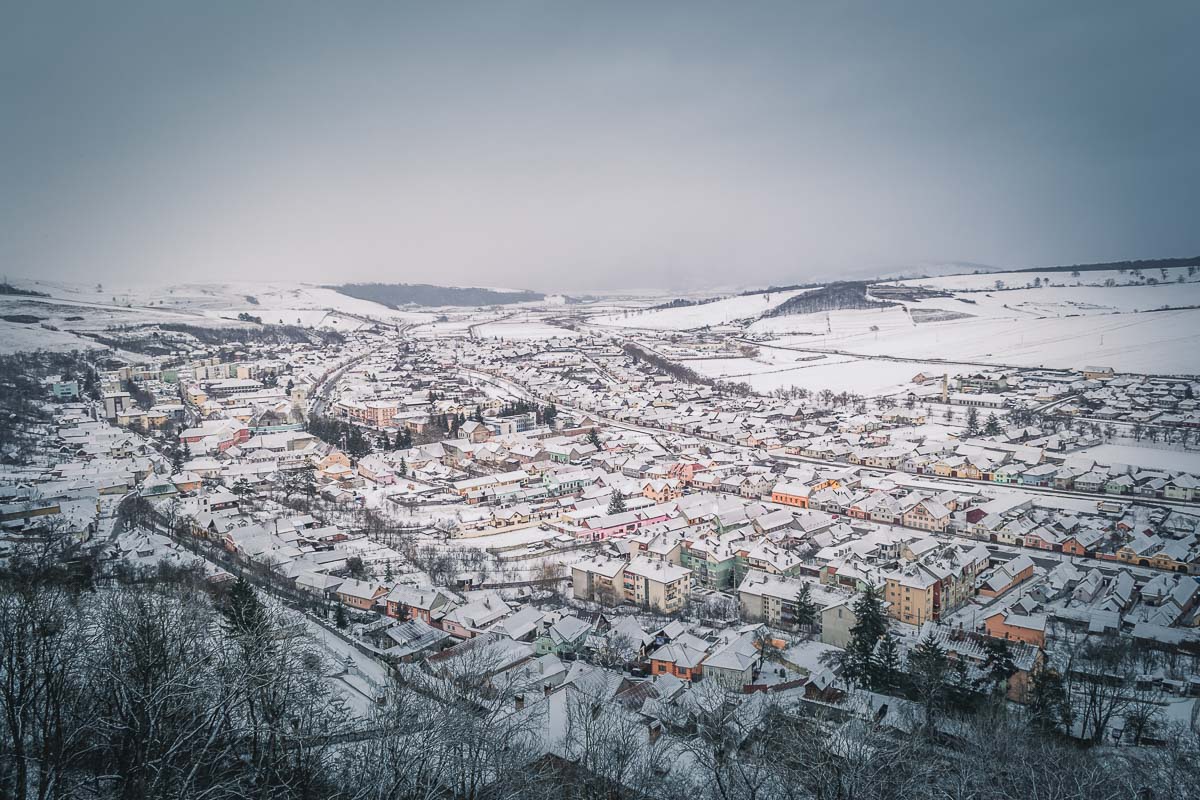
    Rupea Fortress has really big stone walls that show off how people built things in medieval times. The walls and towers are still in great shape, and they’re amazing examples of engineering. Plus, you can see the beautiful countryside from up there, including the entire city of Rupea as well. The view is breathtaking.

    Old buildings in the Upper fortress.
    Buildings in the Upper fortress.
    The city of Rupea in the winter captured from the highest point in the citadel.
    The city of Rupea.
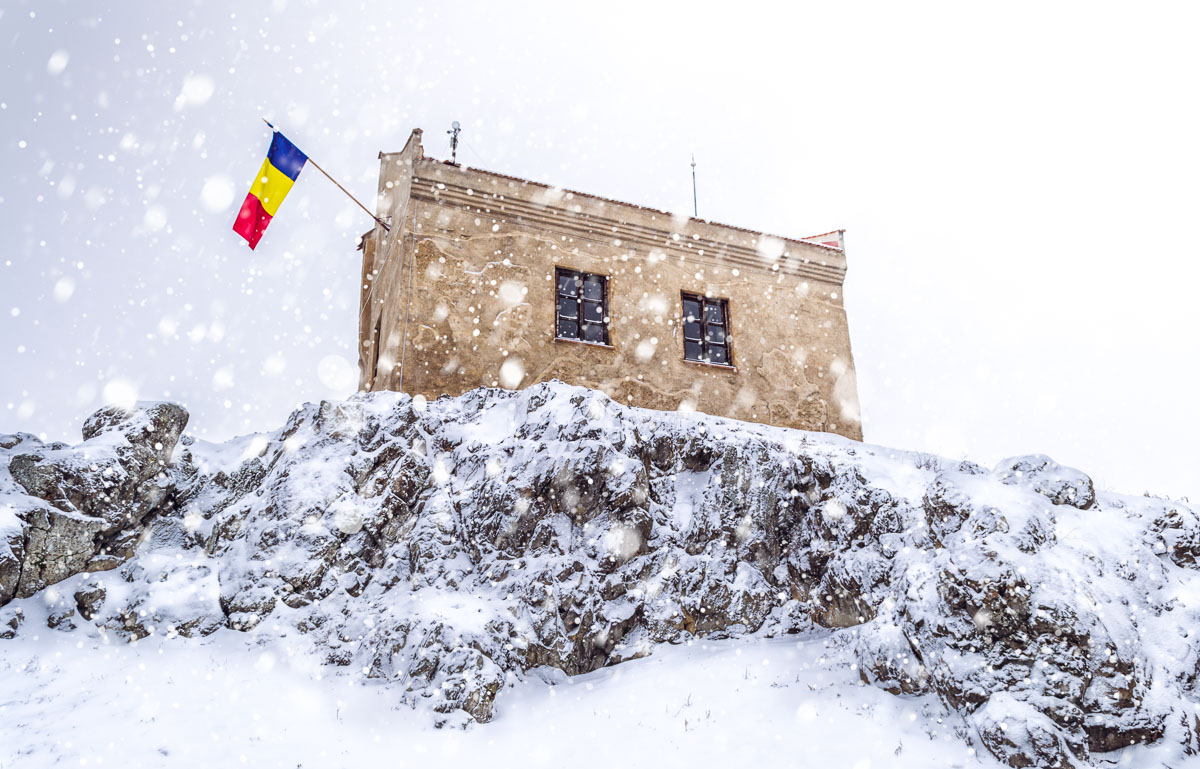
    The Romanian flag hanging on the highest building in the citadel.
    Small building on the highest point of the fortress.
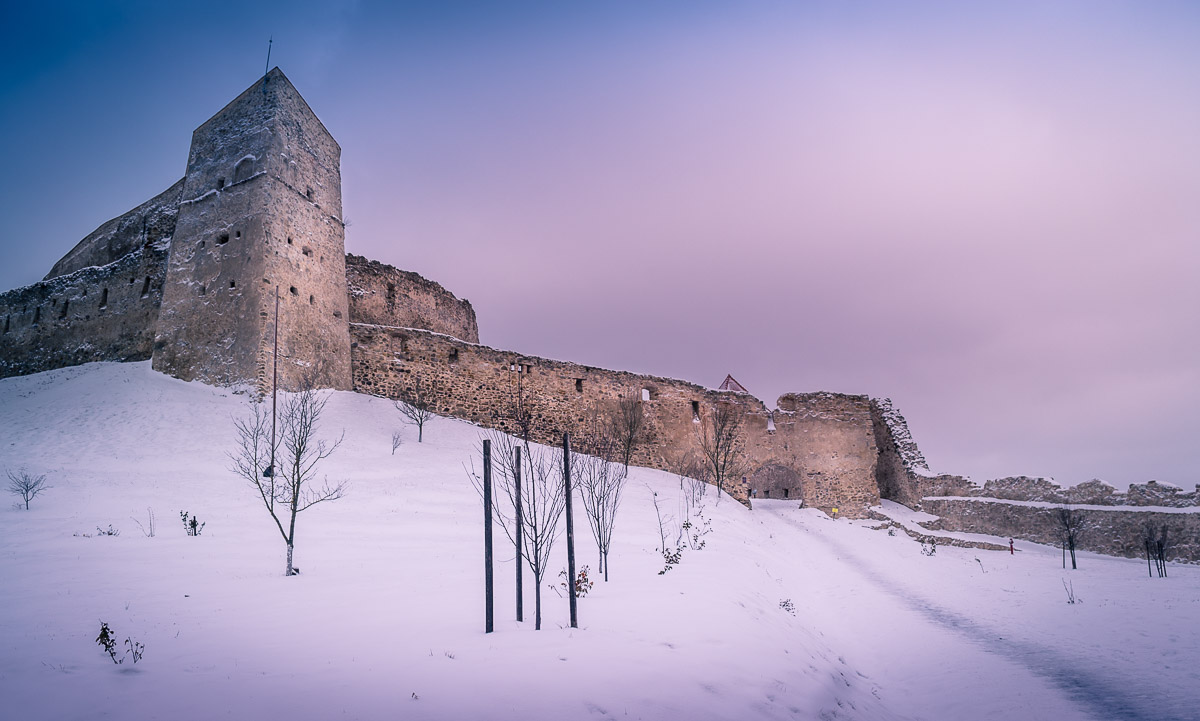
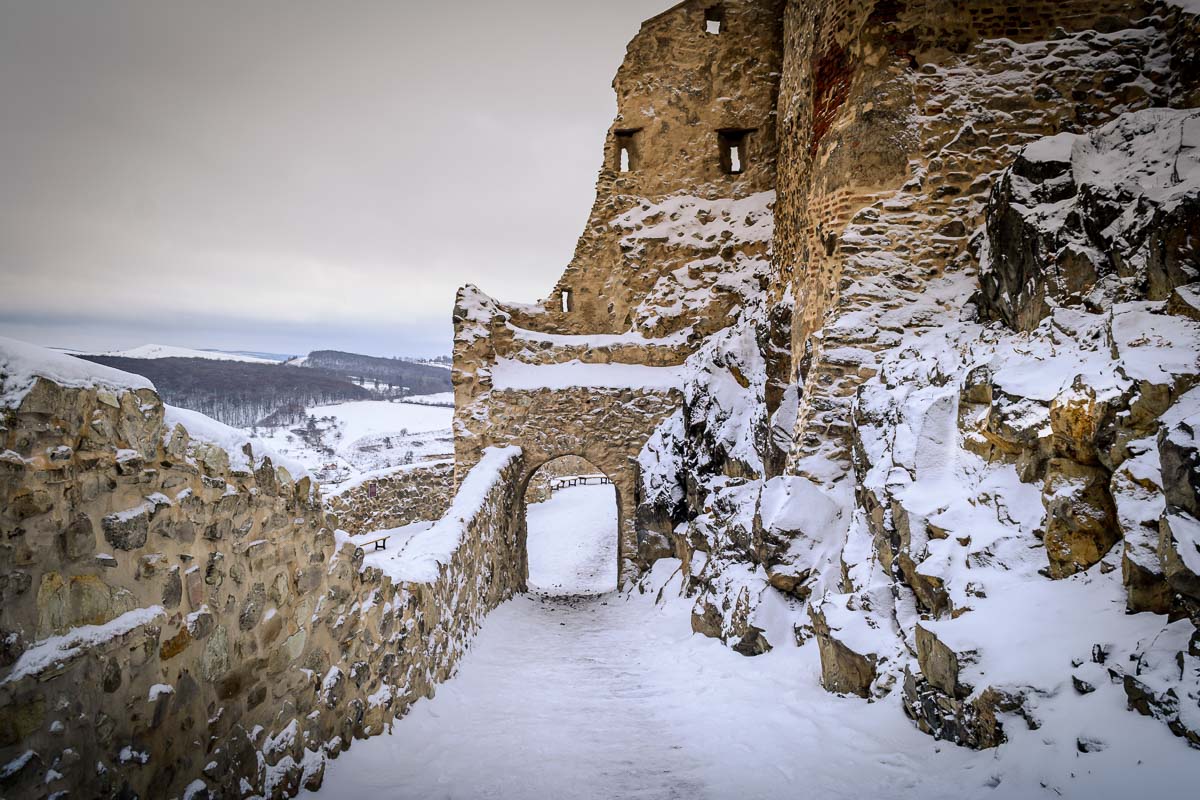
    Path covered with snow within the ruins of the fortress.
    A path leading towards the Middle fortress next to the fortification walls
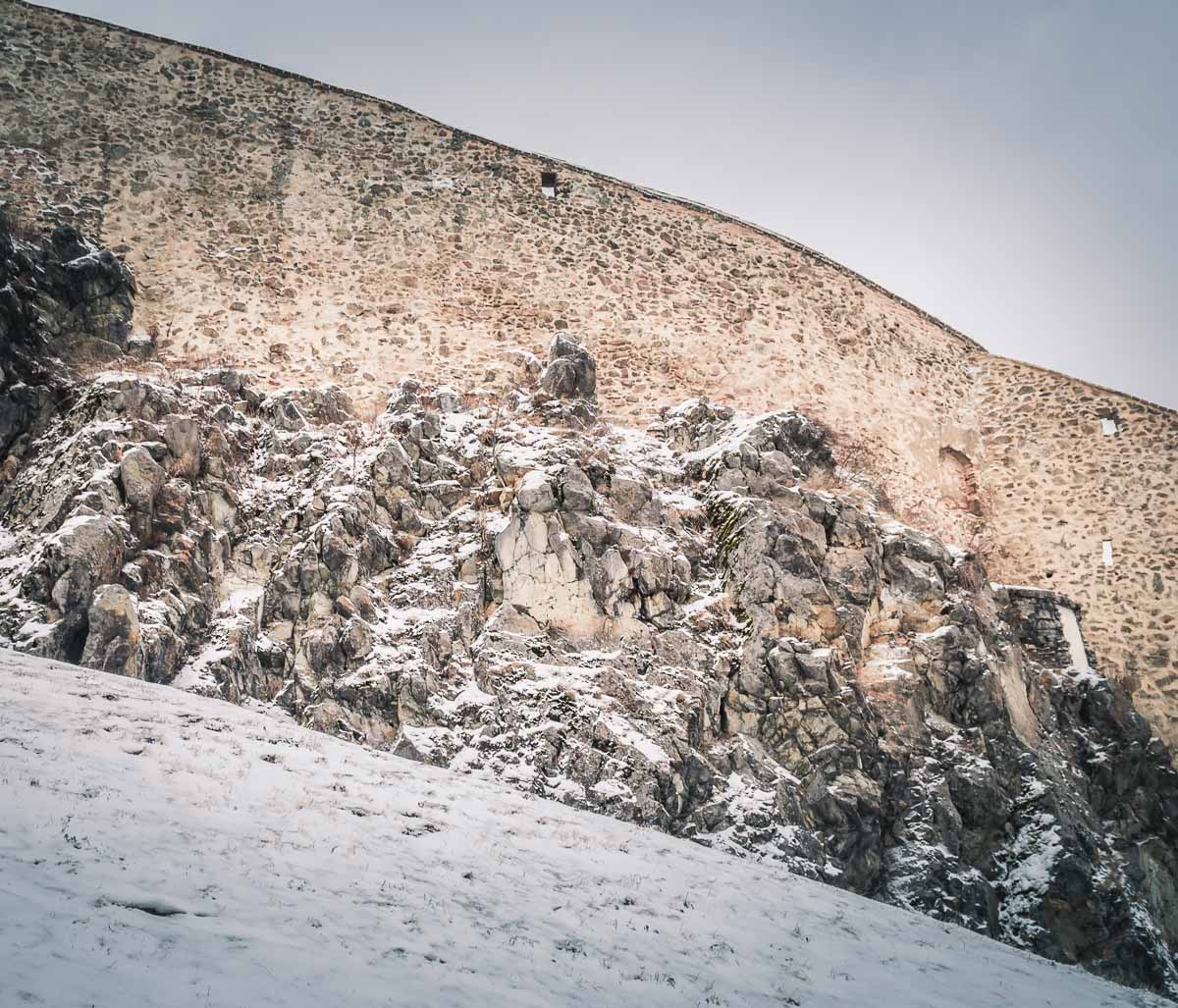
    Large rocks and the defense wall.
    Fortification walls built on the cliff.

    The road towards Rupea Fortress

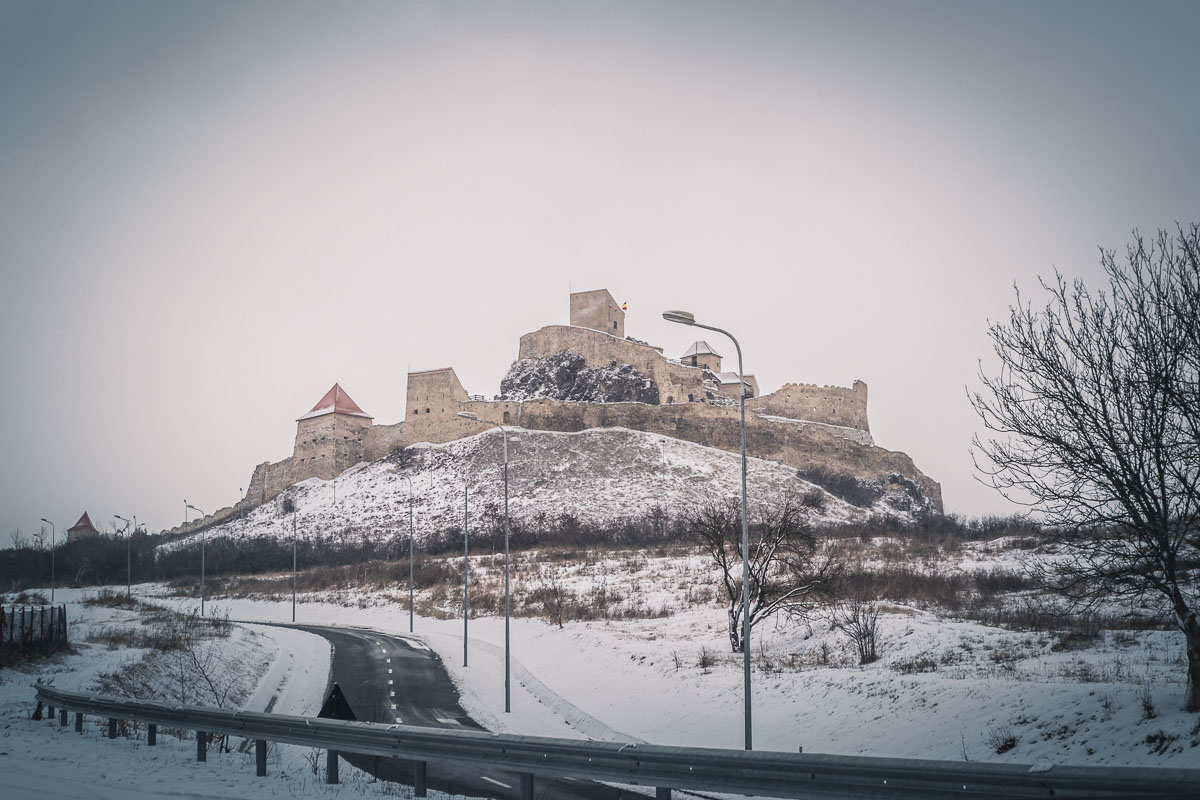
    Below you will see the fortress and the main road leading to it.

    The Rupea citadel and the main road which leads to the entrance into the citadel.
    The Rupea fortress.

    What else you can visit after Rupea

    You actually have multiple places that you can visit. Below I you will find a couple of examples:

    • Not very far Rupea, you can will find the old medieval citadel of Sighișoara which is another important landmark in the historical region of Transylvania.
    • On your way to Sighisoara, you can make a short stop in Saschiz and visit the beautiful fortified church.
    • You can explore the beautiful village of Viscri and the old fortified church.
    • Racos is another place that you definitely must visit. Here you will have the chance to visit the old volcano and the emerald lake.

  • Exploring the Ruins of Ulpia Traiana Sarmizegetusa

    Exploring the Ruins of Ulpia Traiana Sarmizegetusa

    Share this:

    On my way back from Gura Apelor which is located about 30 km from Sarmizegetusa in the Retezat Mountains, I decided to stop by the ancient Roman ruins of Ulpia Traiana Sarmizegetusa. If you’re traveling by car, there’s a large parking lot right off the main road from Hateg to Caransebes, where you can park while you explore the ruins. The main entrance is conveniently located next to the parking area.

    About Ulpia Traiana Sarmizegetusa

    The ruins of Ulpia Traiana Sarmizegetusa can be found in the Romanian commune of Sarmizegetusa, Hunedoara county. The ancient city offers a window into the grandeur and legacy of the Roman Empire. Founded in the 2nd century AD by the Emperor Trajan, Ulpia Traiana Sarmizegetusa was a significant center of commerce, culture, and military power in the region for over 300 years. Today, the ruins of this once-thriving metropolis provide a fascinating glimpse into the heart of ancient Roman civilization.

    One of the most remarkable features of Ulpia Traiana Sarmizegetusa is its strategic location. The city was situated at the intersection of several key trade routes, making it a hub of commerce and exchange for goods, ideas, and people. Its position also made it an important military stronghold, as it controlled access to the surrounding territories and provided a strategic vantage point for defending against invasions.

    The Forum

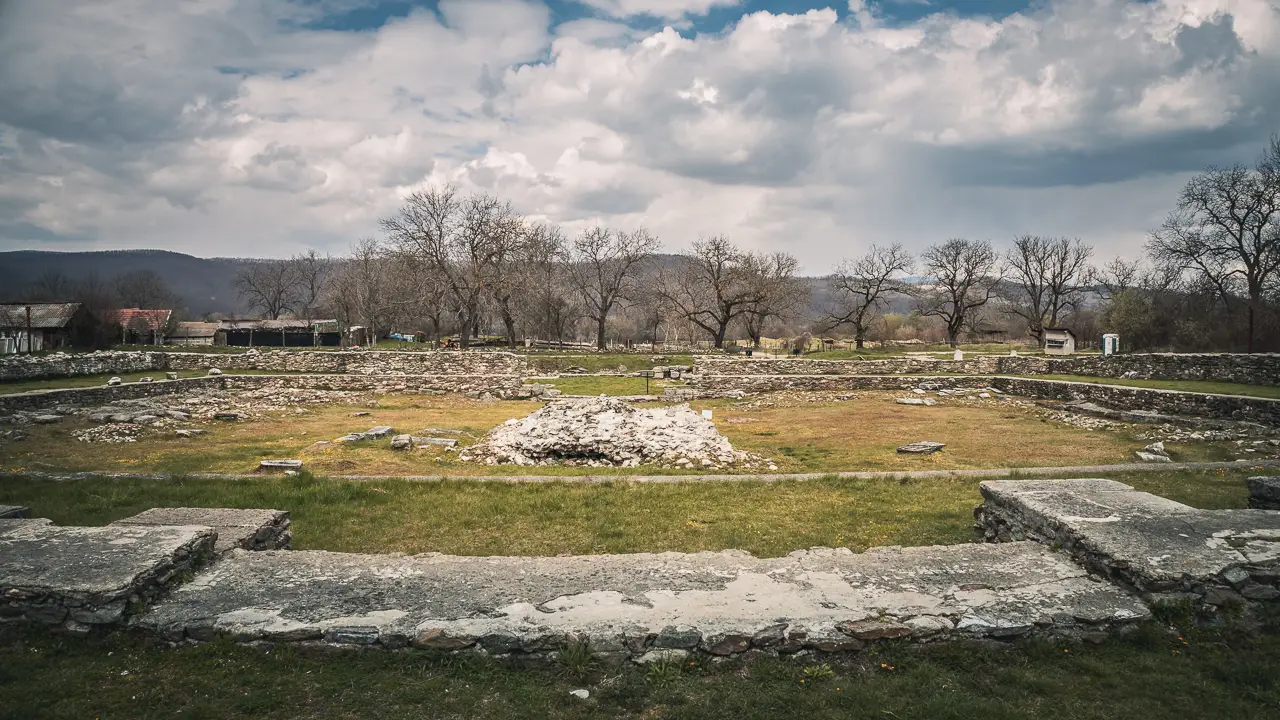
    The most prominent structure in the city was the Forum, a grand public space that served as the center of political, social, and cultural life.

    The Forum in Ulpia Traiana Sarmizegetusa.
    The Forum with the Retezat Mountains in the background.
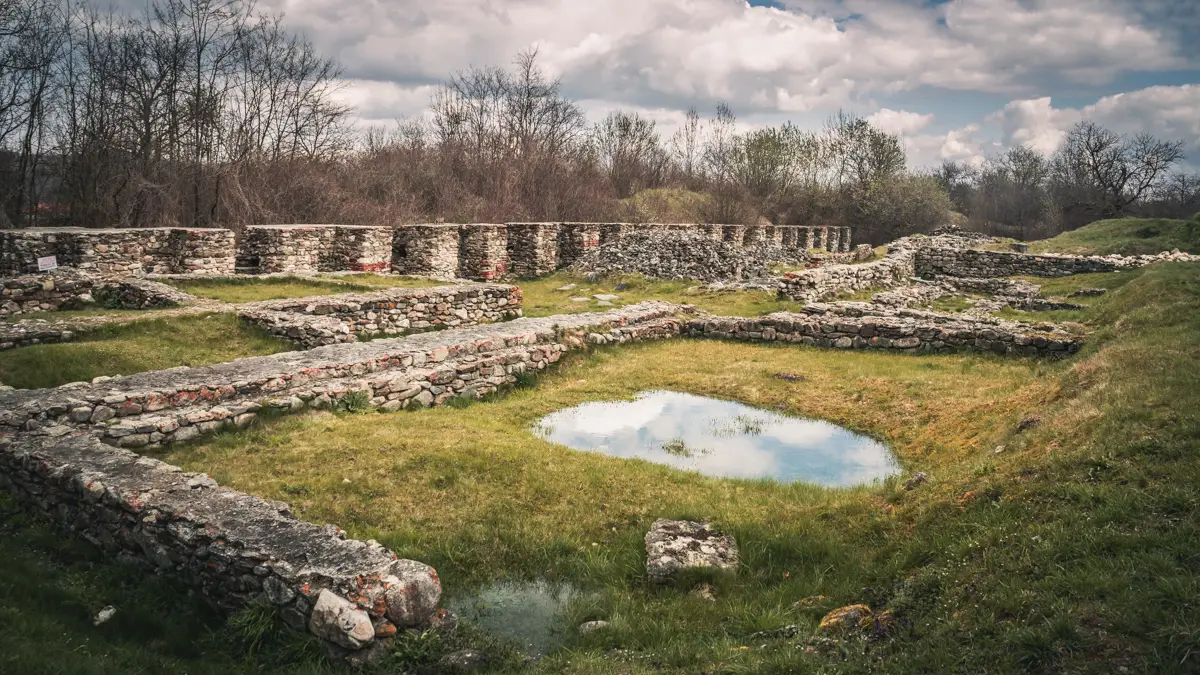
    Ruins near the Forum.

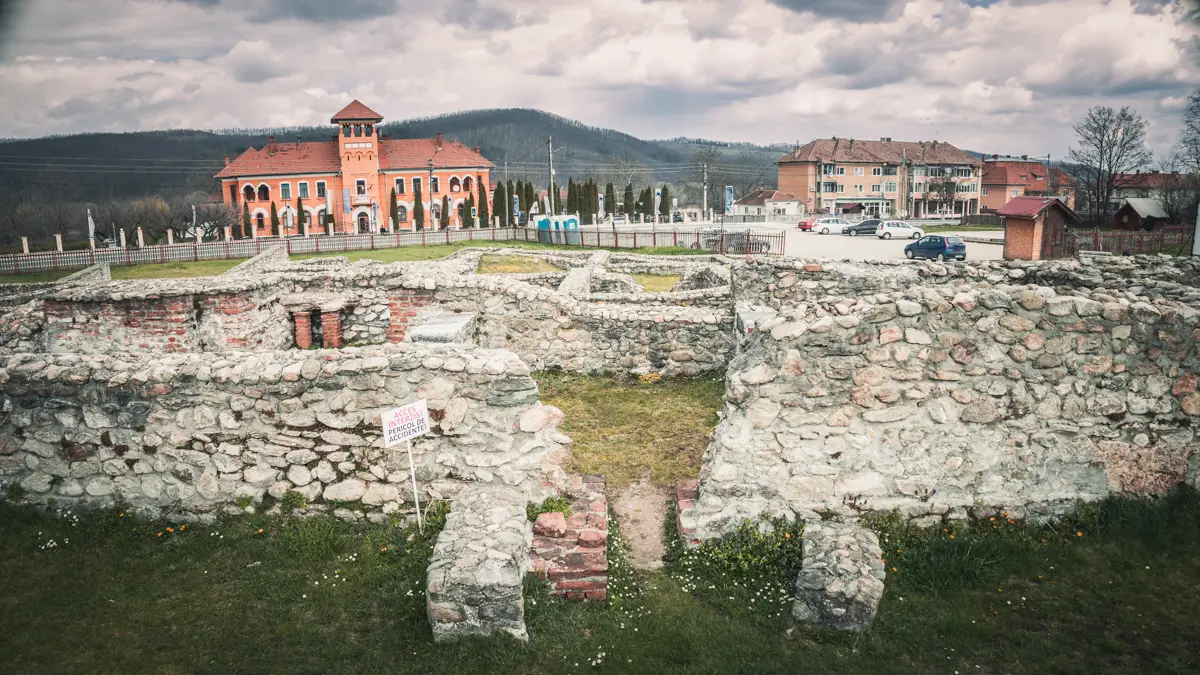
    Domus Procuratoris

    This was the palace of the Financial Procurator of the Province Dacia. You will find the former palace if you follow the main path from the entrance towards the forum.

    The Domus Procuratoris

    The Amphitheater

    Other notable structures in Ulpia Traiana Sarmizegetusa include the Amphitheater, which could seat up to 5,000 spectators for gladiatorial games and other spectacles. When I visited this place, the Amphitheater was closed to the public due constructions.

    The Amphitheater
    Ruins with the Amphitheater in the background.

    The Great Temple

    The most impressive religious structure in Roman Dacia was the Great Temple. The only structure still standing from the Roman period that I could see was a single Roman column. This column likely marked the entrance to what was once the Great Temple. Standing tall among the ruins, it gave a glimpse into the grandeur of the ancient site.

    The Great Temple

    Other archeological site

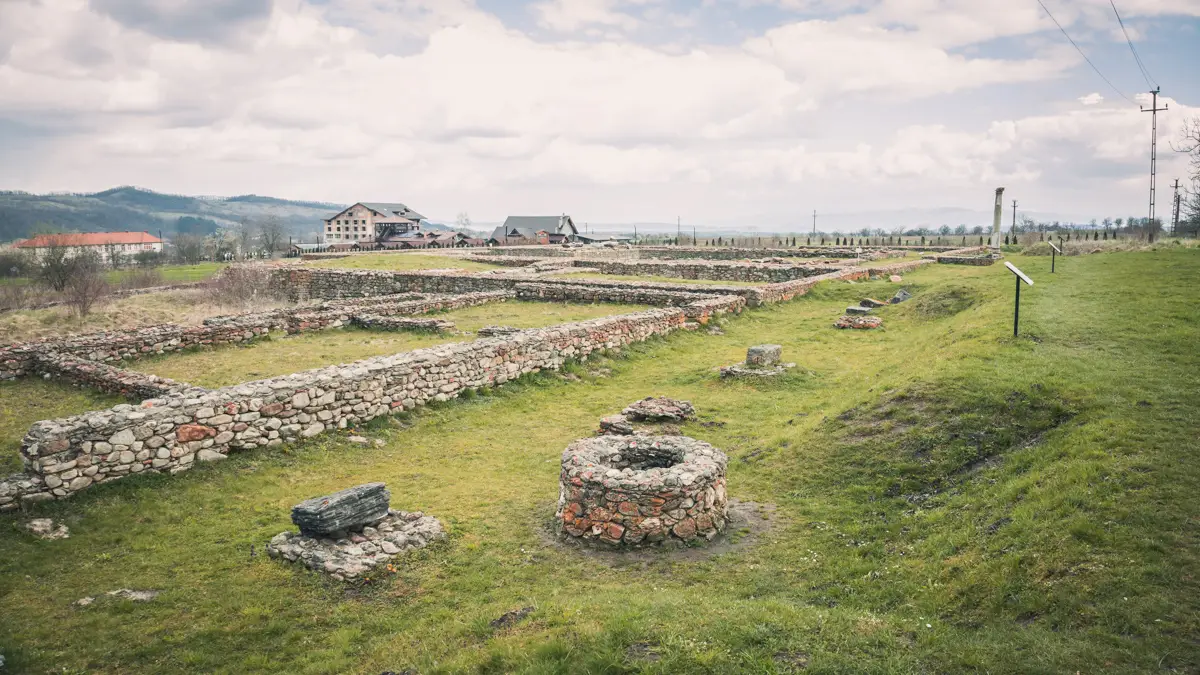
    One of the surprising discoveries in Sarmizegetusa is the presence of an ancient glass workshop, something I never expected to find here. Among the popular historical sites, this workshop stands out as unique. According to archaeologists, remains of five furnaces were uncovered in two rooms, revealing that they were once used for glass production.

    Other archeological sites.
    Ruins with the parking lot in the background.

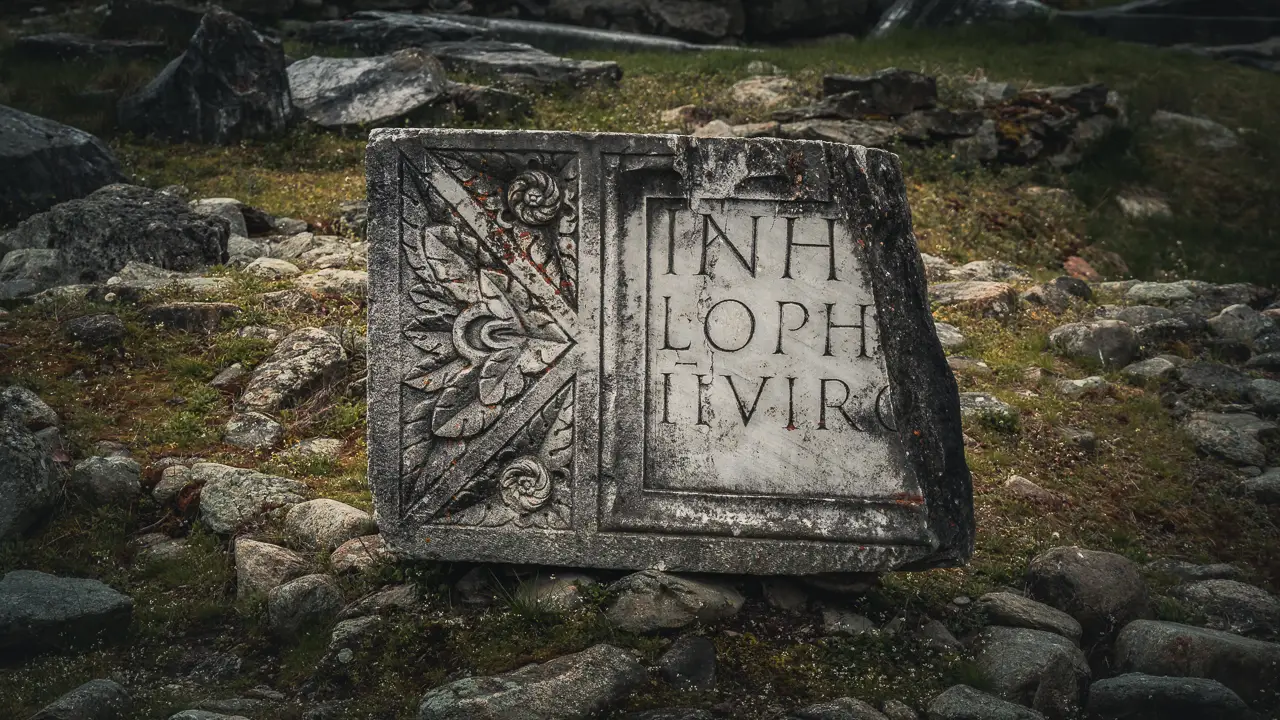
    Aside from its architectural marvels, Ulpia Traiana Sarmizegetusa was also a center of intellectual and artistic activity. Excavations have uncovered numerous sculptures, inscriptions, and other artifacts that offer insights into the daily life and beliefs of the people who lived in the city

    Despite its rich history and significance, Ulpia Traiana Sarmizegetusa was largely forgotten for centuries after its decline and eventual abandonment in the 5th century AD. It was not until the 19th century that scholars and archaeologists began to explore and excavate the ruins, uncovering the city’s fascinating past and legacy.

    Its ruins offer a unique and enriching experience for visitors who wish to explore the ancient history and culture of the Roman Empire. The site is a testament to the enduring legacy of one of the world’s greatest civilizations, and a reminder of the importance of preserving and studying our shared human heritage.

    Sarmizegetusa Regia

    Another popular spot to visit nearby is Sarmizegetusa Regia, the ancient Dacian capital during Roman times. Located about 77 km from Sarmizegetusa, the ruins of this historic site lie in the Orastie Mountains. Sarmizegetusa Regia was once the heart of Dacian culture and power, especially before the Roman conquest. The site is filled with remnants of Dacian fortifications, temples, and ancient structures, all set against the scenic mountain backdrop.