• Sighisoara Medieval Citadel: A Must-Visit Destination in Transylvania

    Sighisoara Medieval Citadel: A Must-Visit Destination in Transylvania

    Share this:

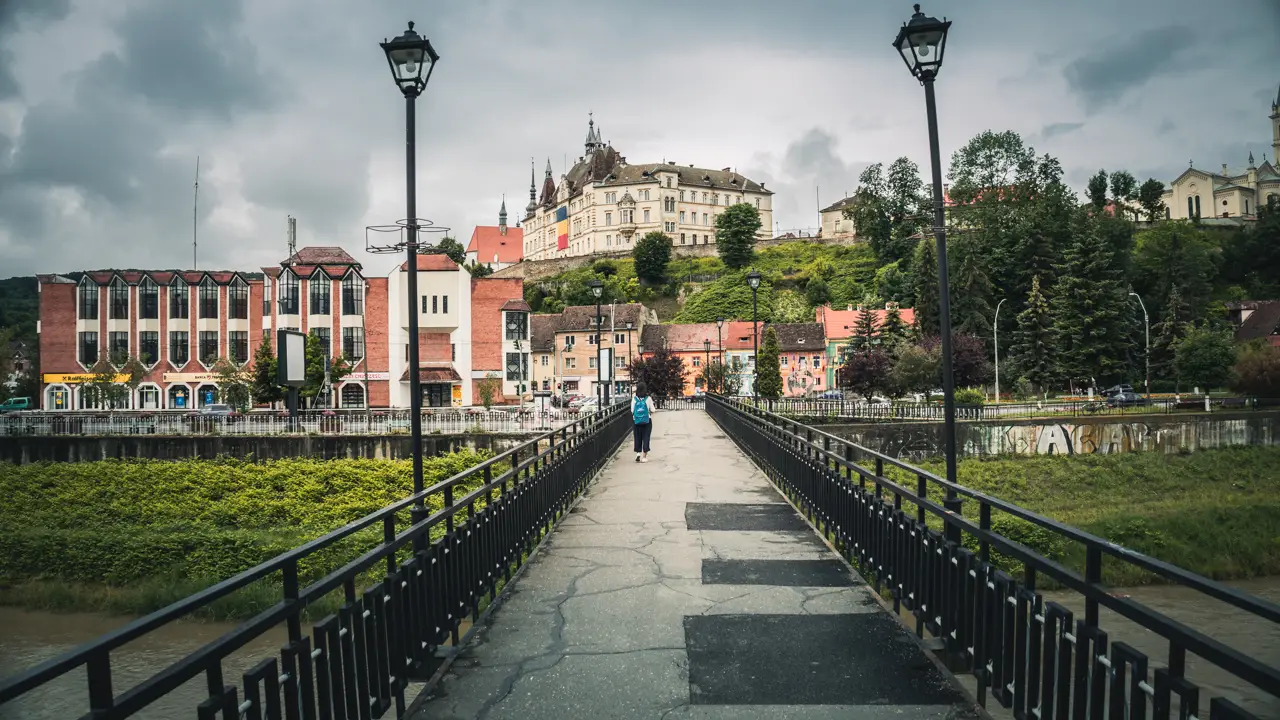
    The medieval citadel of Sighișoara is an inhabited citadel located in the historical region of Transylvania. To be more precise, it’s located almost in the center of Romania. Sighisoara is a must-visit destination for travelers seeking a unique and enchanting experience. This charming town offers a journey back in medieval times, where every corner is steeped in history and every building tells a story.

    Sighisoara was founded in the 12th century when German settlers, known as Saxons, came to this region. The city was built on a hill and it was surrounded by a fortification wall with many towers to protect the inhabitants from various dangers.

    The inhabited medieval citadel is a popular tourist attraction in the region. Tourists from all over the world visit this place.

    Let me take you through my experience exploring this charming and historical gem.

    Table on content:

    The Clock Tower (Turnul Cu Ceas)

    The Clock Tower is the landmark of the city. Inside you will find a museum where you can see many interesting items from the medieval era. Also, up in the tower, you can see the clock mechanism as well. On the top floor, you will find an open balcony from where you can admire the entire medieval citadel and the rest of the city of Sighisoara. Right under the Clock Tower, you will find the torture chamber.

    Below, you will find the visiting hours of the museum:

    Summer Schedule: May 15 – September 15

    Monday – Closed
    Tuesday to Friday – 09:00 AM – 5:30 PM
    Saturday to Sunday – 10:00 AM – 5:30 PM


    Winter Schedule: September 16 – May 14

    Monday – Closed
    Tuesday to Friday – 09:00 AM – 3:30 PM
    Saturday to Sunday – 10:00 AM – 3:30 PM


    The ticket price is 12 lei for adults and 4 lei for children.

    The Clock Tower.
    The Clock Tower; the most emblematic building in Sighisoara.
    The Clock Tower from a different angle.
    The Clock Tower from a different angle.

    Vlad the Impaler’s birthplace (Casa Dracula)

    According to the legends, the building painted in yellow was the birthplace of Vlad the Impaler aka Dracula. Today inside this building you will find a nice restaurant.
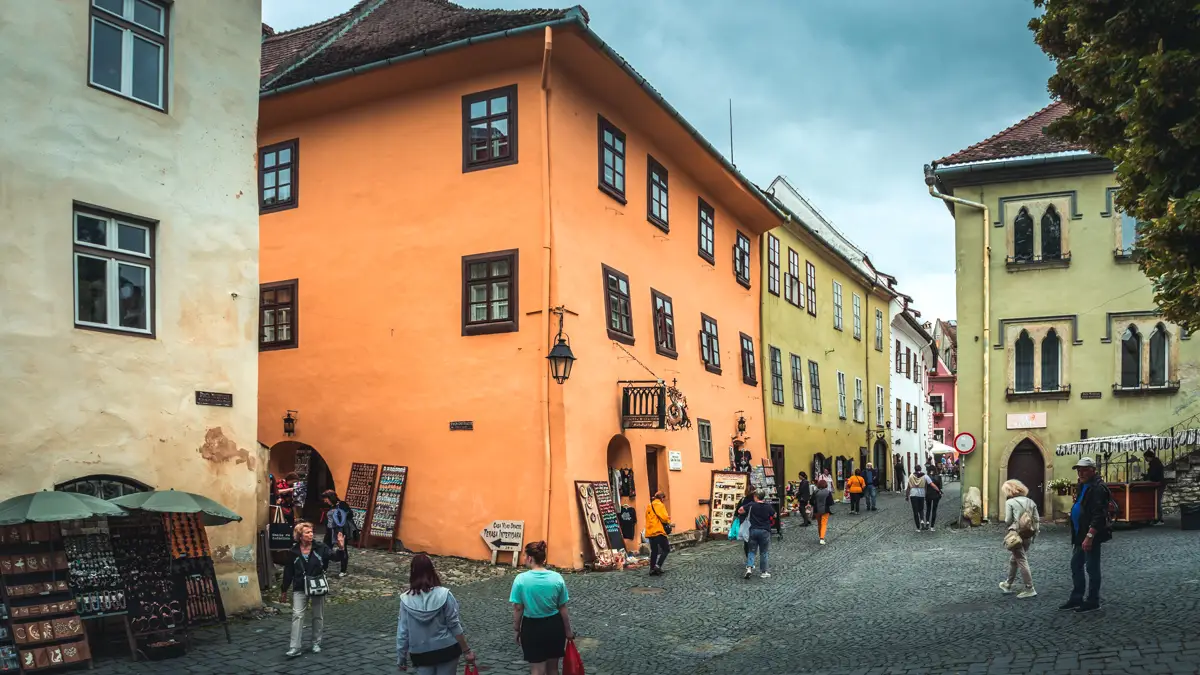
    Vlad Dracul's birthplace.
    Vlad the Impaler’s birthplace.
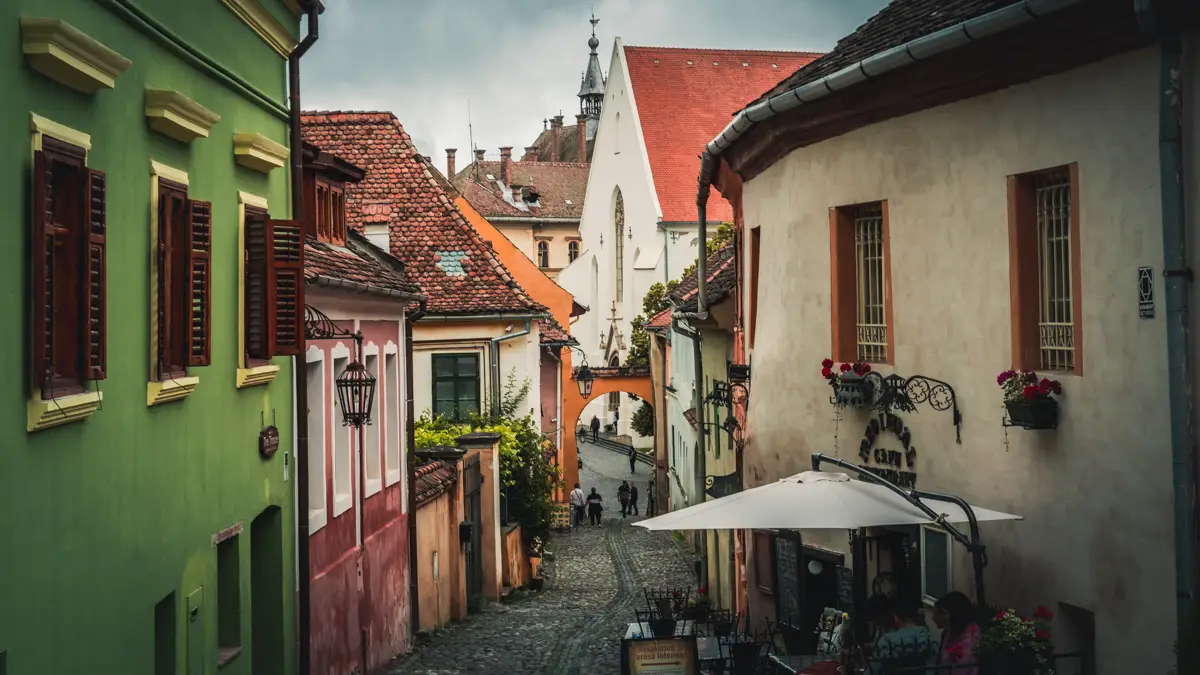
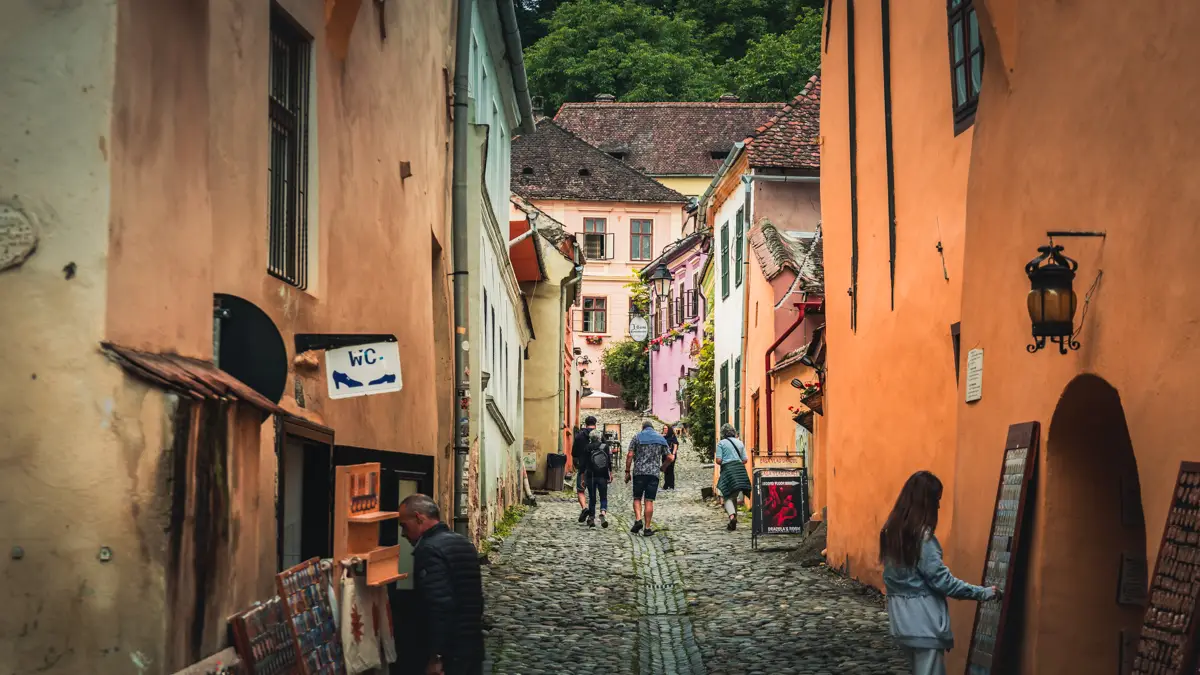
    Narrow street leading to the upper part of the citadel.
    Narrow street next to Vlad Impaler’s birthplace.

    The Monastery’s Church (Biserica Manastirii)

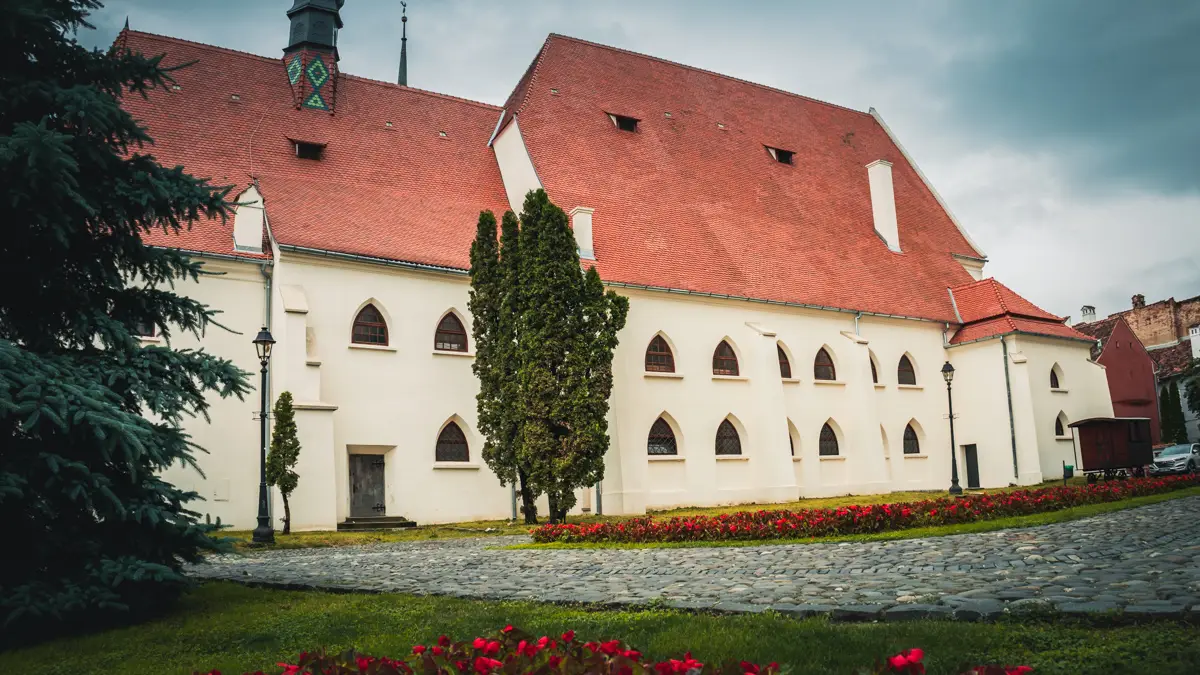
    This large Gothic church in the past was part of an old monastery destroyed in the 19th century. If you would like to visit it, then you will find it very easily because it’s located to the right side of the Clock Tower.
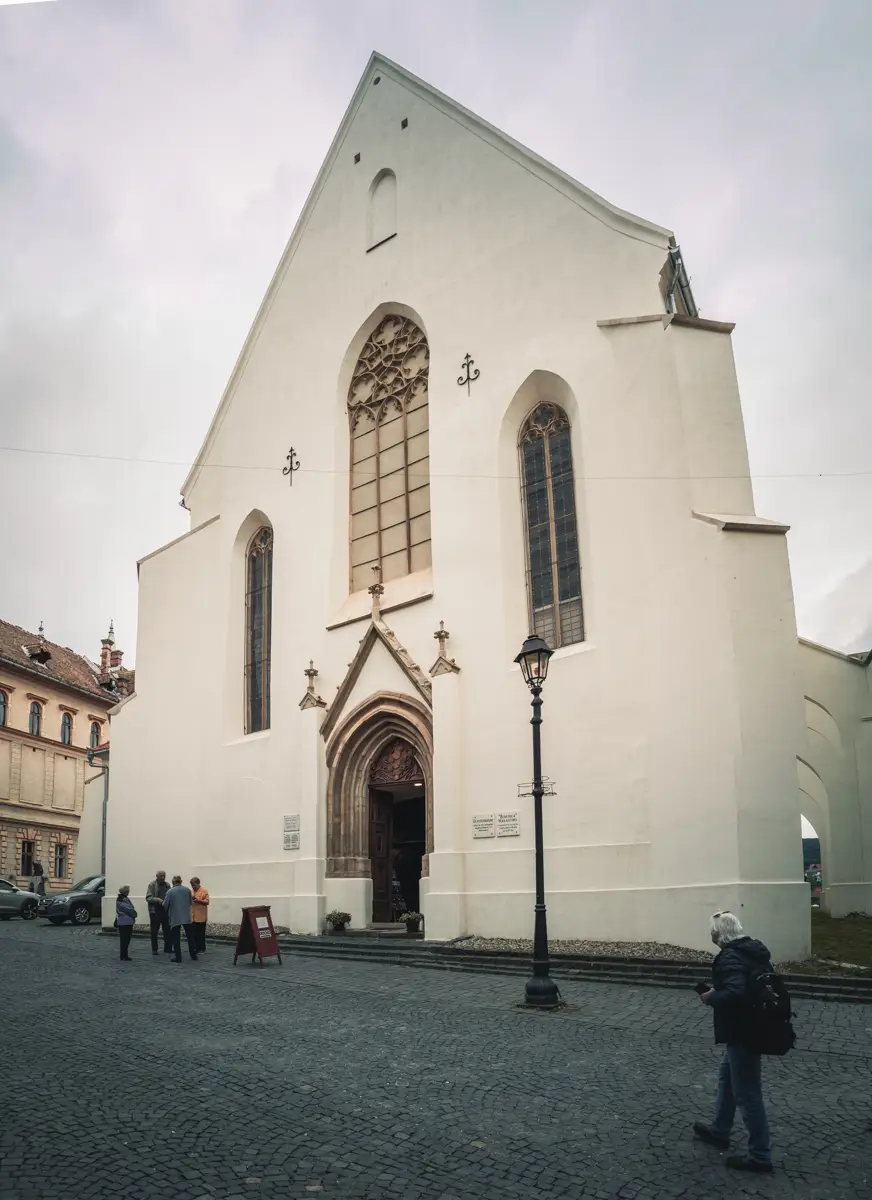
    The front side of the Monastery Church.
    The front side of the Monastery Church.
    The right side of the church.
    The right side of the old Monastery Church.

    Sighisoara Town Hall

    If you are walking from the Clock Tower towards the Roman Catholic Church on Piata Muzeului street, then after the Monastery’s Church the next big building is the Town Hall.
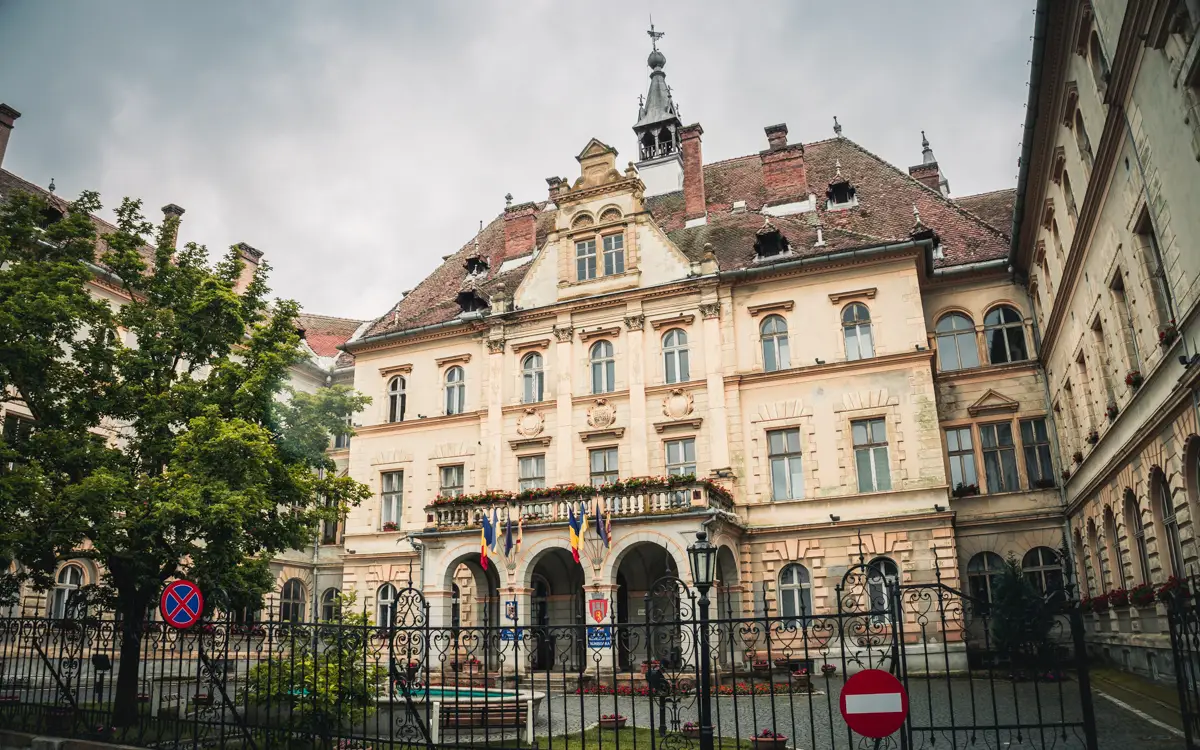
    Sighisoara Town Hall.
    Sighisoara Town Hall.

    St. Joseph’s Roman Catholic Church

    The St. Joseph’s Roman Catholic Church can be found on the northeastern side of the medieval citadel, close to Shoemaker’s Tower. This church was built between 1894 and 1896 by the Hungarians.
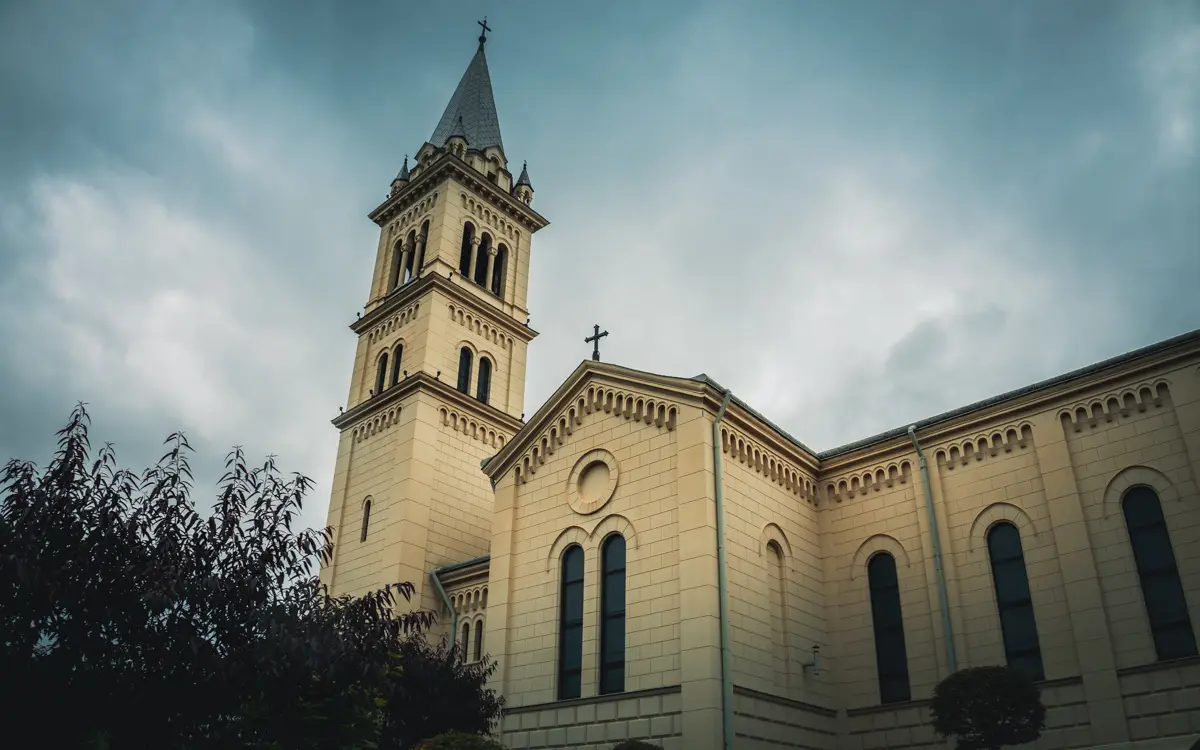
    The Roman Catholic Church.
    The Roman Catholic Church.

    Georgius Krauss Guest House

    Next to the Roman Catholic Church there you will find the Georgius Krauss guest house. This beautiful house was built in the 16th century and there the notary Gregorius Krauss lived. If you looking for an accommodation in the inhabited medieval citadel than this could be one option.
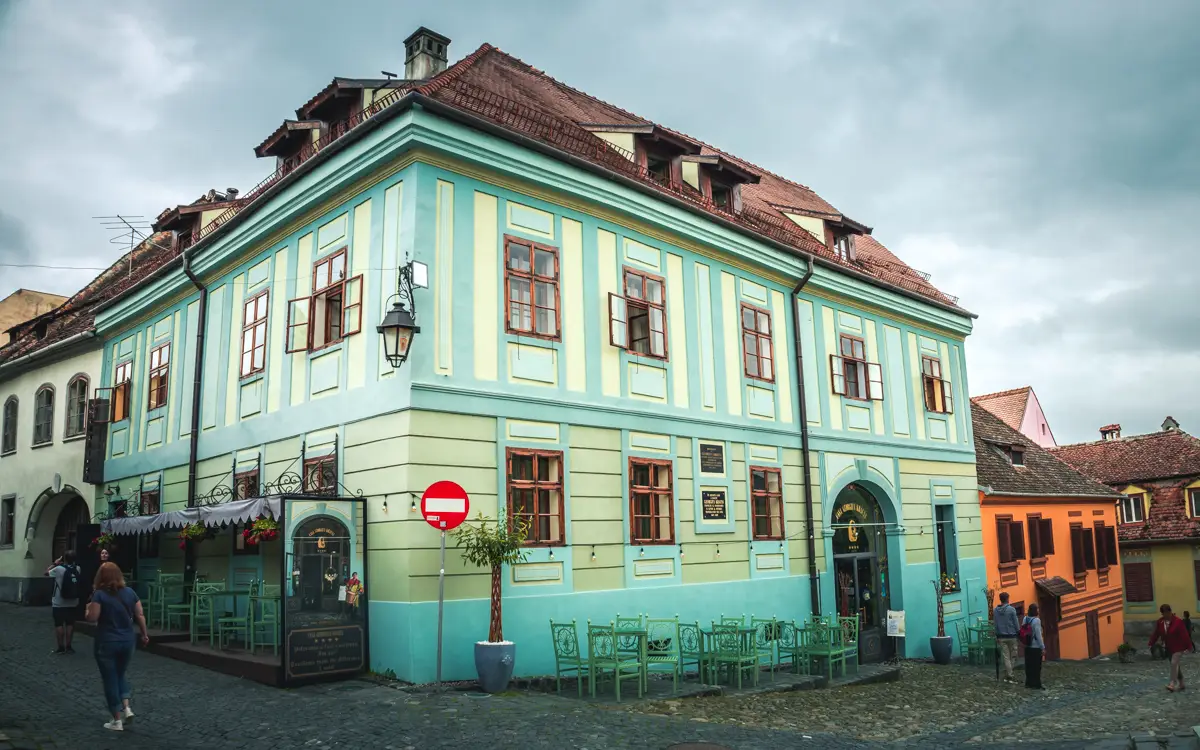
    The Georgius Krauss Guest House.
    The Georgius Krauss Guest House located next to the Roman Catholic Church.

    The Shoemaker’s Tower (Turnul Cizmarilor)

    The Shoemaker’s Tower is located very close to the Roman Catholic Church.
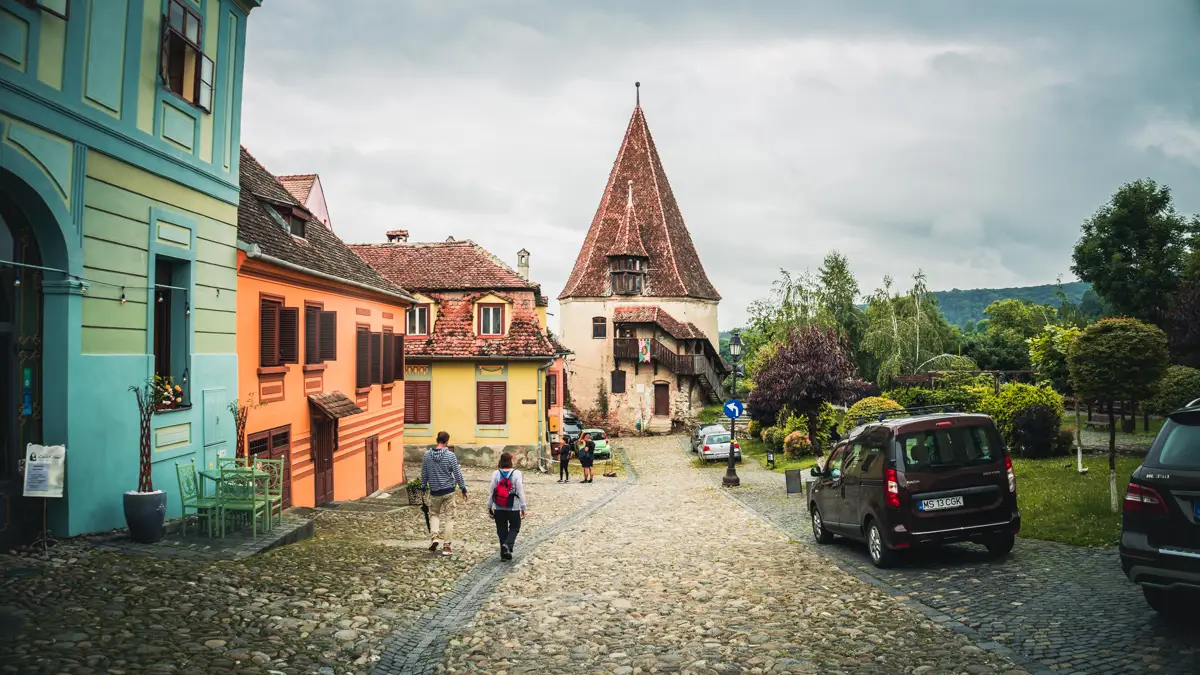
    The Shoemaker's Tower.
    The Shoemaker’s Tower.

    Colorful houses in the medieval citadel

    The cheerful hues range from warm yellows and soft pinks to rich blues and greens, creating a visually stunning panorama against the backdrop of the medieval architecture. The vibrant atmosphere of Sighisoara’s colorful houses is further accentuated by the lively street markets, artisan shops, and cozy cafes that line the winding streets. It’s a place where the past seamlessly blends with the present, offering a unique and immersive experience for those who are fortunate enough to explore its enchanting streets.

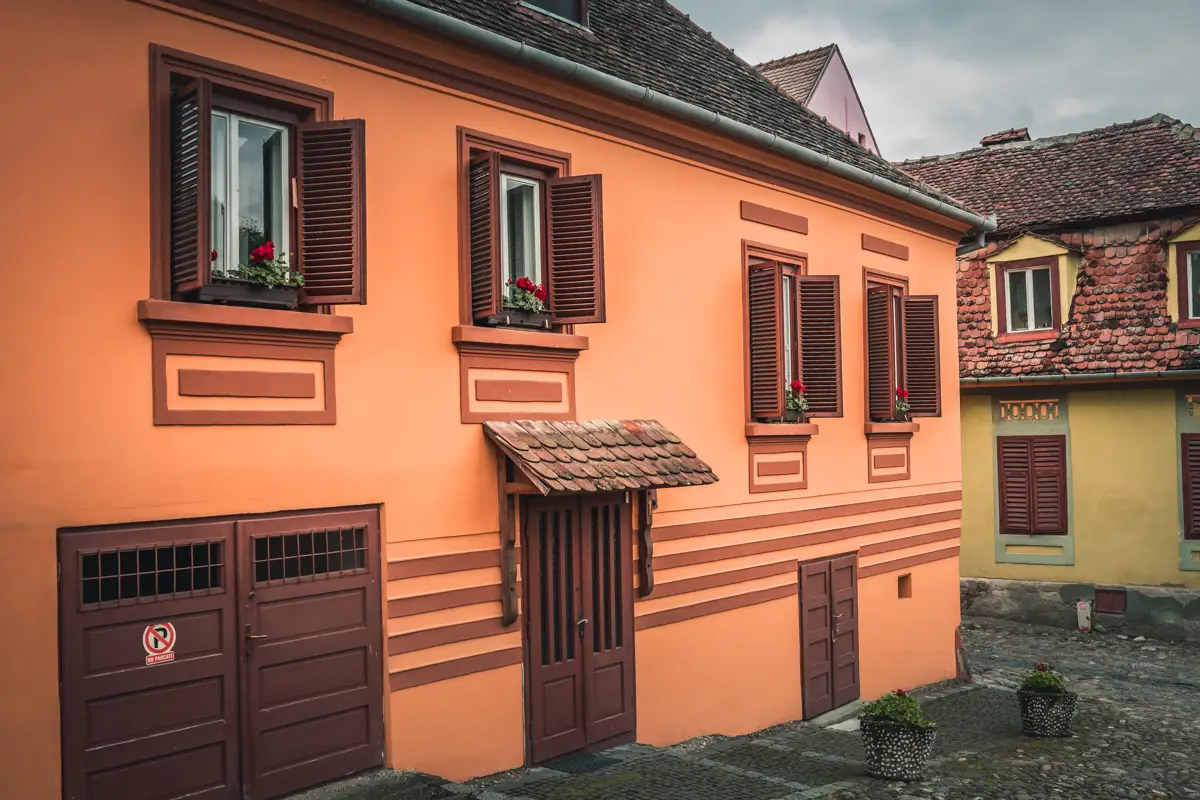
    Colorful houses in Sighisoara.
    Colorful houses in Sighisoara.
    Orange house.
    Beautiful orange house.
    Purple house.
    A purple house near the Scholars’ Stairway.
    Narrow street with the Monastery's Church in the background.
    Another narrow street leading the the Monastery’s Church.

    Tailors’ Tower (Turnul Croitorilor)

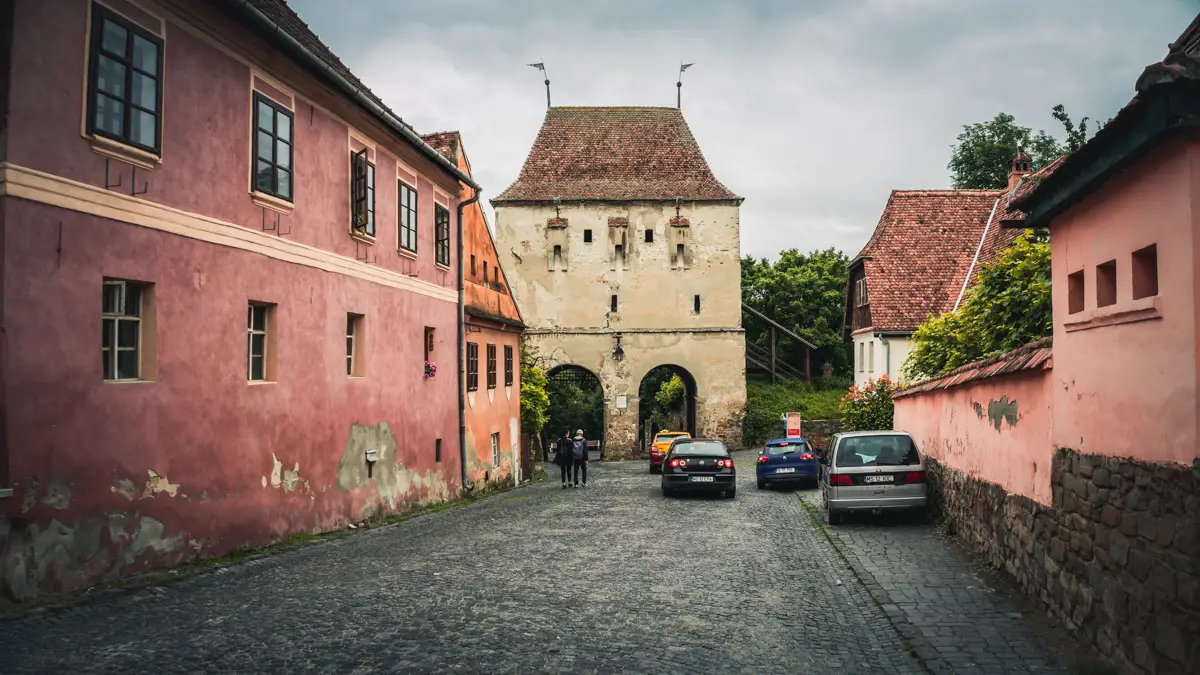
    The Tailor’s Tower is the second entrance into the medieval citadel. This is the only road on which the cars can enter or leave the citadel. Keep in mind that only the locals who are living in the citadel are allowed to drive up in the citadel. This tower is renowned for its imposing massiveness and elegant simplicity. If you are going under the tower then you will have the chance to see the ancient railings that slides vertically.
    The Citadel Square (Piata Cetatii)

    The square is an excellent place to savor local delicacies, shop for souvenirs, and soak in the lively atmosphere that characterizes this enchanting town. Surrounded by cobblestone streets and surrounded by well-preserved medieval architecture, the Citadel Square is a captivating blend of old-world charm and a lively present, making it a must-visit destination in Sighisoara.

    If you are planning to stay here for a few nights, you will find many comfortable places to stay. There are plenty of accommodations available to suit your needs, whether you want a cozy hotel, a budget-friendly option, or a more luxurious stay. Below, I’ve shared a couple of them that I found near Citadel Square during my visit to the citadel:

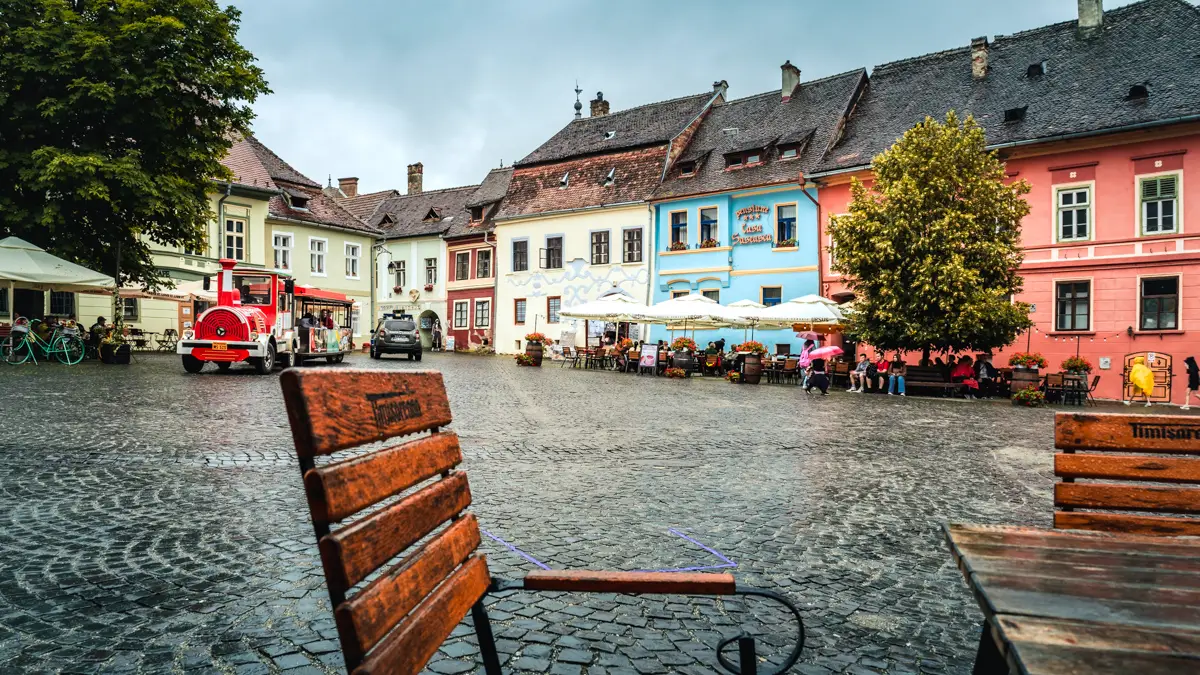
    Tourist train car.
    Train car waiting for tourists.
    Restaurant and hotels in the Citadel Square.
    A part of the Citadel Square on a rainy day.
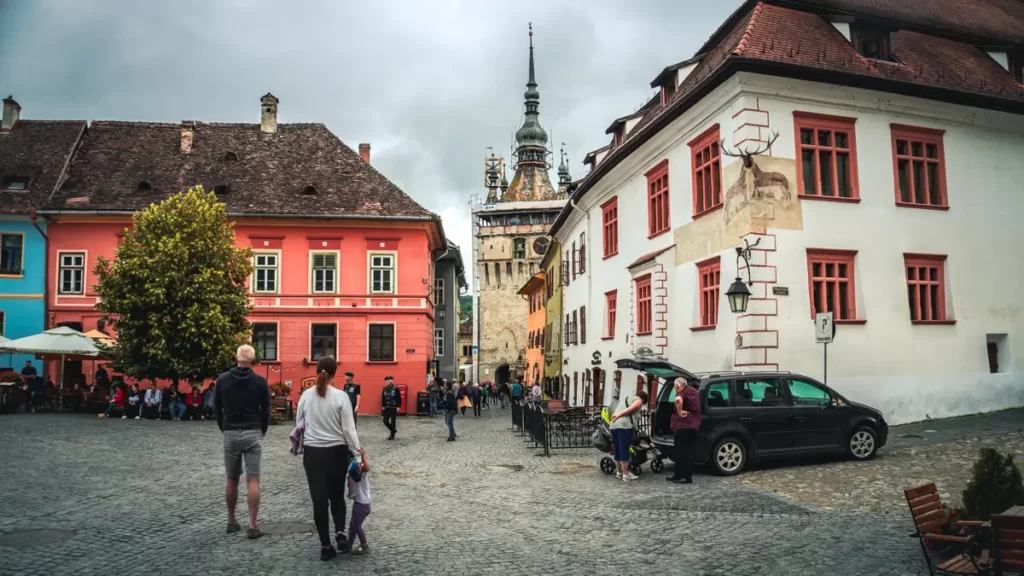
    Citadel Square with the Clock Tower and the Stag House.
    The Citadel Square with the Clock Tower in the background and the Stag House on the right side.
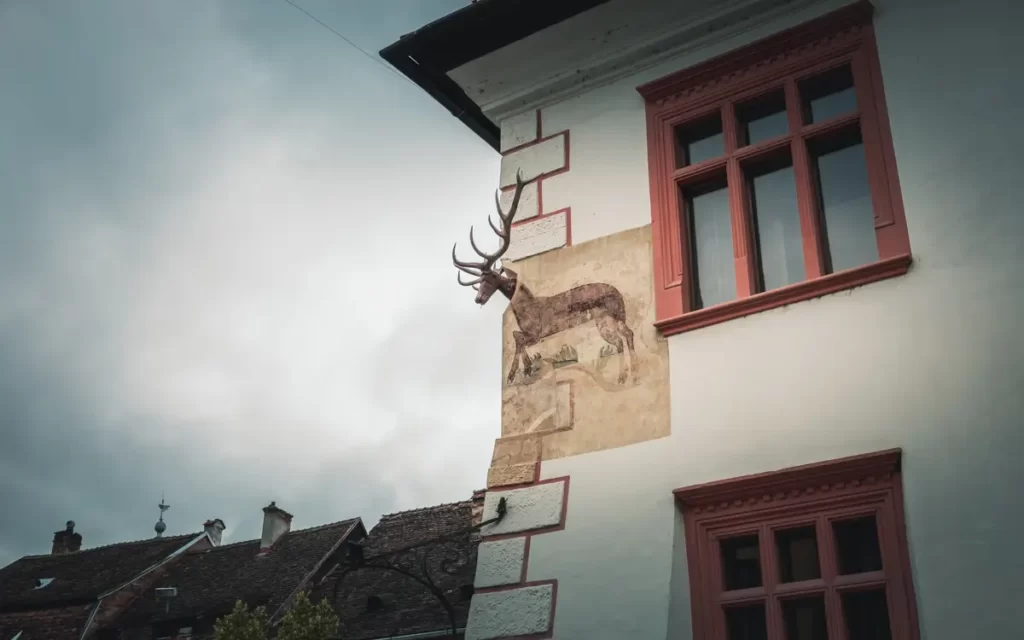
    Stag house.
    A close up photo of the stag located on the building’s corner.

    Towards the upper part of the medieval citadel

    If you would like to visit the upper part of the citadel, one option is the walk on School Street (Strada Scolii) to the Scholars’ Stairs which is a covered wooden stairway connecting the lower part of the citadel with the upper part. The second option to reach the upper part of the citadel is the continue to walk up on Stair Street (Strada Scarii). The street starts near the Scholars’ Stairs.
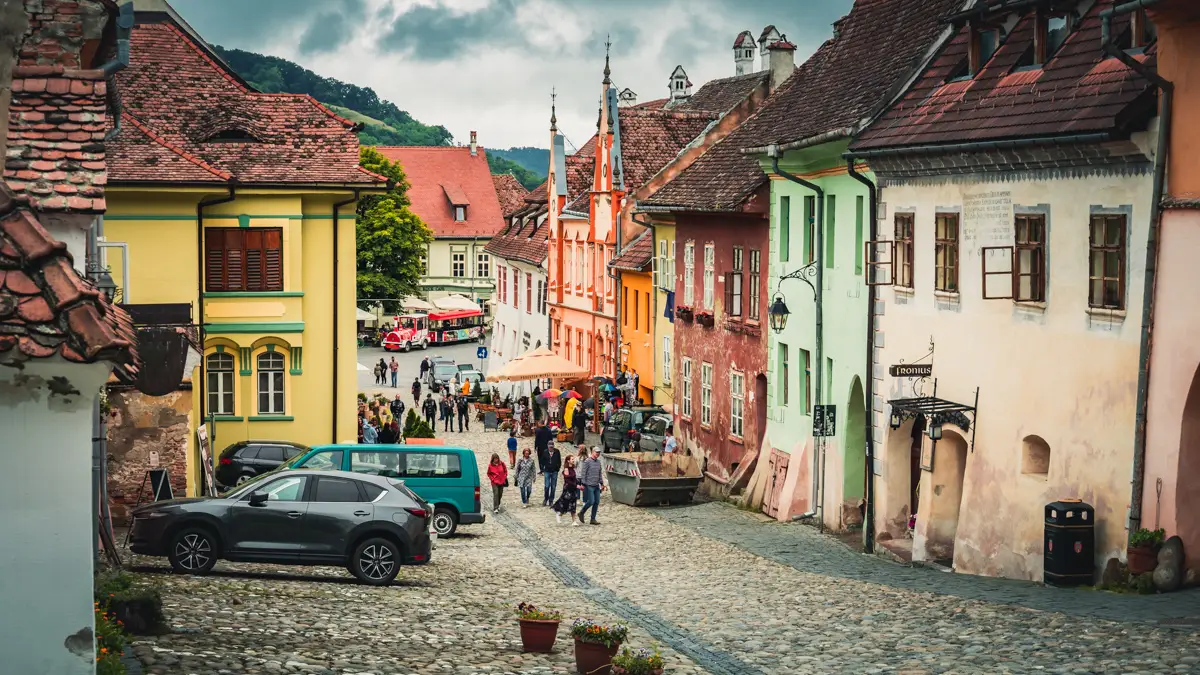
    School street in Sighisoara Medieval Citadel.
    Old buildings in the School Street.
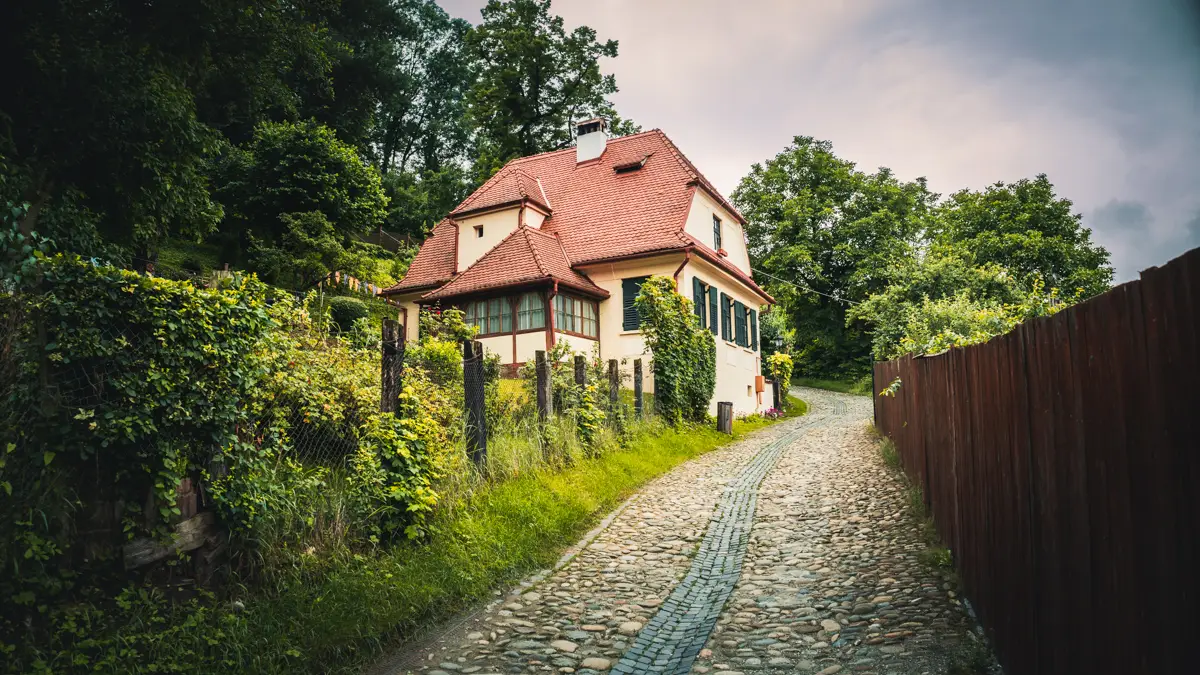
    House in the Stair Street.
    A pretty house on Stair Street.

    The upper part of the medieval citadel

    After a not-very-long walk from Citadel Square, the remaining attractions will unfold before you.

    The Scholar Stairway

    Constructed in 1654 by the initiative of Mayor Johann Both, this staircase stands as both a testament to historical foresight and a practical solution for students traversing the challenging weather of heavy winters or rain to reach the school located near the Church on the Hill.

    Originally comprised of 300 steps, the wooden stairway underwent a modification in 1849, reducing its count to 175 steps. The stairway, reminiscent of a tunnel, showcases a remarkable architectural marvel. As the sun’s rays delicately pierce through the wooden slats, it creates an enchanting play of light and shadow, guiding the way to the hill’s summit.
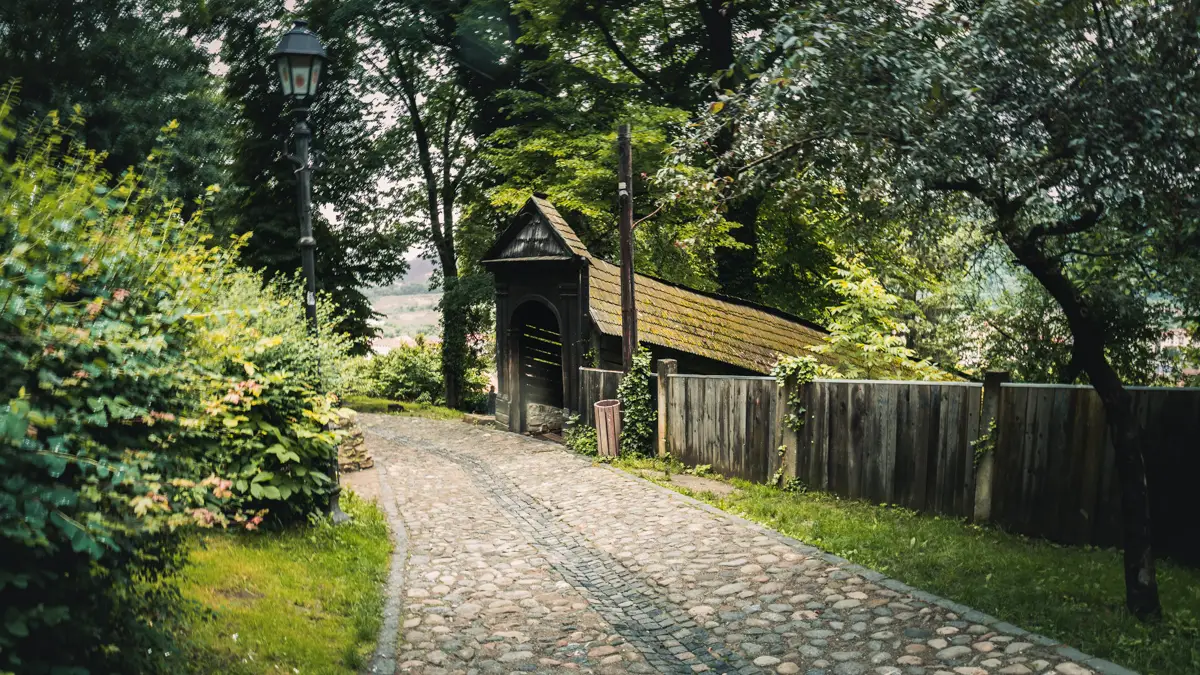
    The Scholar Stairway
    The wooden Scholar Stairway connects the lower with the upper part of the citadel.

    Joseph Haltrich High School

    Established in 1522, this high school is among the oldest educational institutions in Transylvania. During the years, the high school underwent several renovations and extensions. The school is also know as the School on the Heal because it was built on a smaller hill.
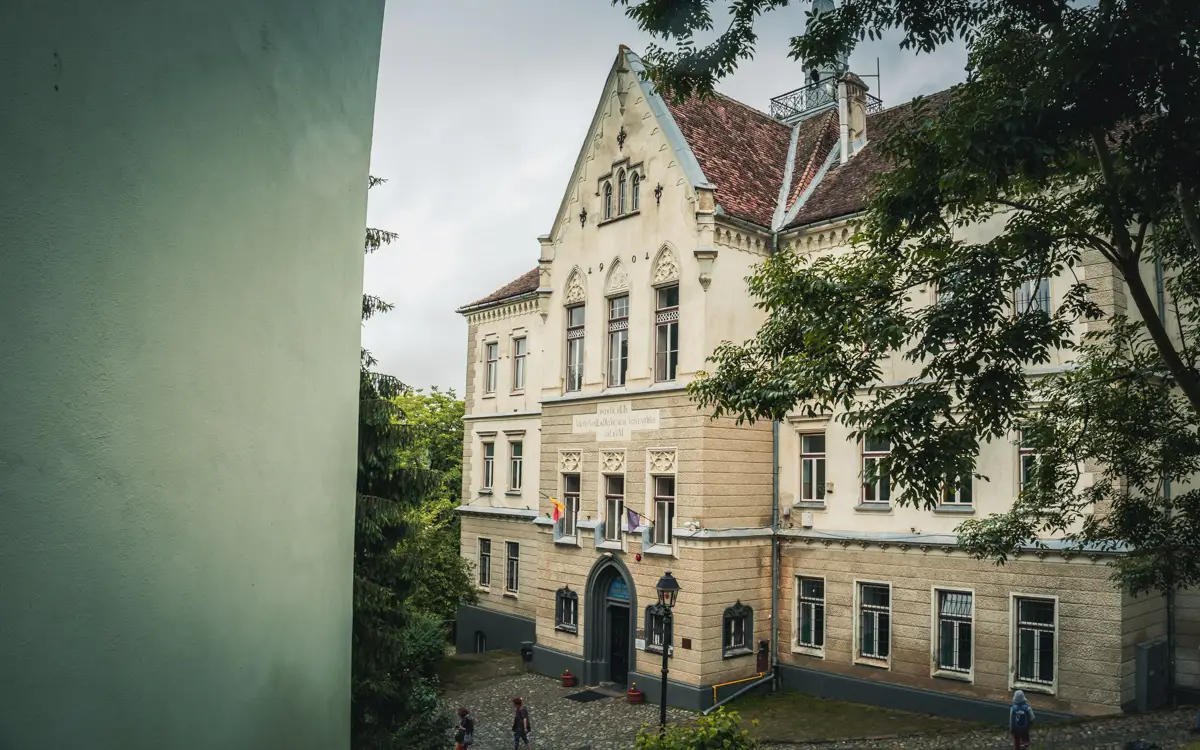
    Joseph Haltrich High School
    The Joseph Haltrich High School in Sighisoara.

    Church on the Hill (Biserica din Deal)

    The Church on the Hill in Sighisoara is a captivating testament to the town’s medieval legacy. Perched on a hill overlooking the historic center, this Lutheran church dates back to the 14th century. Ascending the stone steps to reach the church, visitors are rewarded with panoramic views of Sighisoara and its charming red-roofed houses. Today has several architectural styles, including Gothic, Renaissance and Baroque elements.

    If you visit the interior of the church then you can see many valuable sculptures, wall paintings, and old frescoes.

    Church on the Hill.
    The Church on the Hill located on the upper part of the citadel.

    The Ropemakers’ Tower (Turnul Franghierilor)

    Currently, this tower was turned into a guard house for the old cemetery which is right behind the tower.

    The Ropemakers tower.
    The Ropemakers Tower.

    The old Lutheran cemetery

    Next to the Church on the Hill and the Ropemakers’ Tower, you will find the old Lutheran cemetery.
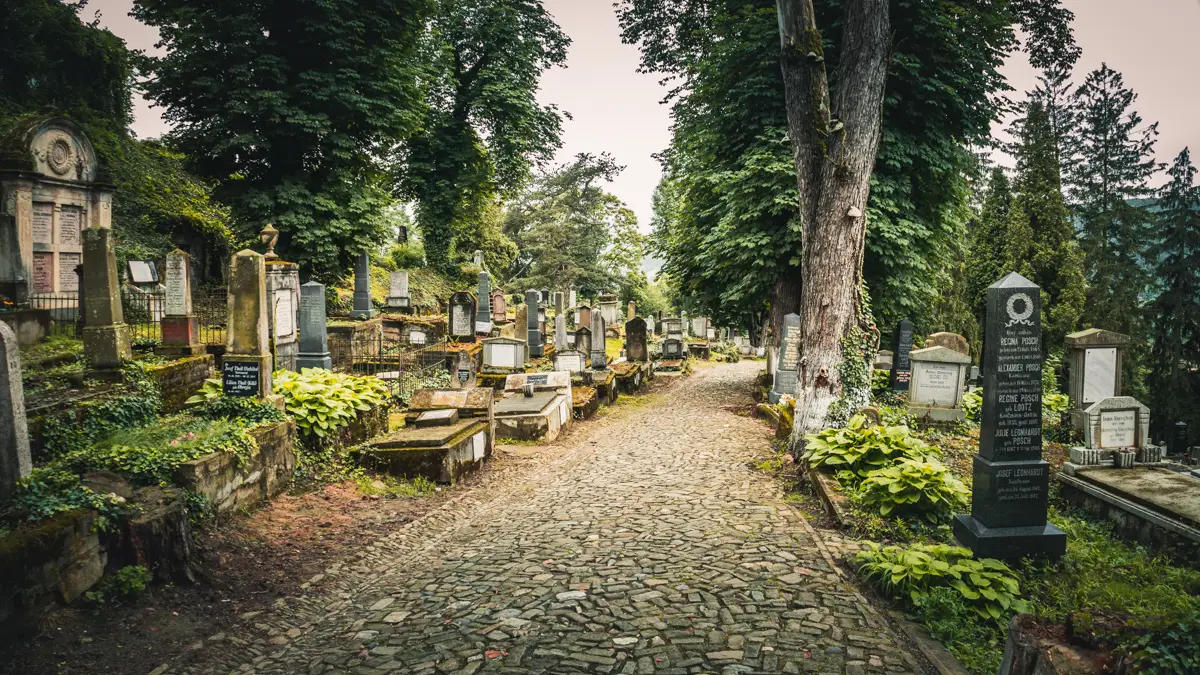
    The Lutheran cemetery
    The Lutheran cemetery.

    Umbrella Street in Sighisoara

    Perhaps after a long walk in the medieval citadel, you would like to hang out or perhaps you would like to eat or drink something. A pretty nice place is Octavian Goga Street which can be found on the foothill of the citadel.
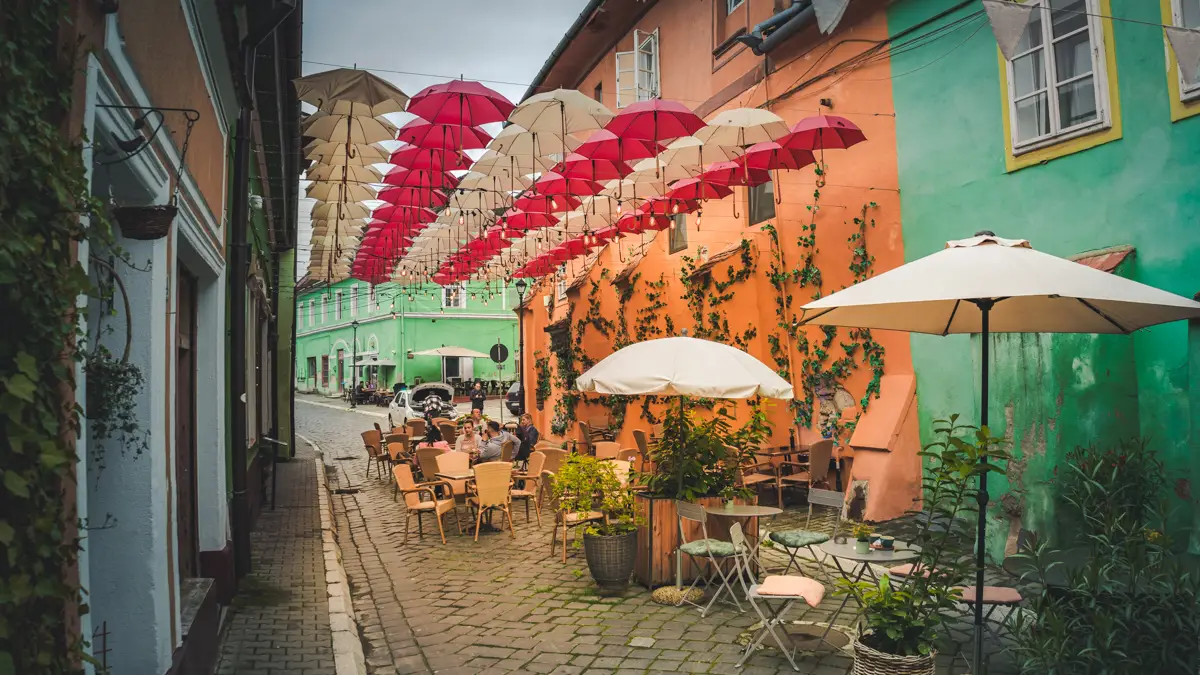
    Umbrella Street in Sighisoara.
    A part of Octavian Goga Street.

    Festivities and Events

    If you’re lucky, your visit might coincide with one of Sighisoara’s many festivals. The Medieval Festival, held every summer, brings the citadel to life with knights, street performers, and traditional music. I’ve heard it’s an incredible experience that immerses you even deeper into the town’s medieval roots.

    Final Thoughts

    Sighisoara’s medieval citadel is a place that stays with you long after you’ve left. Its rich history, vibrant culture, and enchanting atmosphere make it a must-visit destination. Whether you’re a history buff, a lover of architecture, or simply someone who enjoys exploring charming towns, Sighisoara has something for everyone. I left feeling inspired and grateful for the chance to step back in time, even if just for a little while.

    Map with the attractions in the medieval citadel

    What else you can visit near Sighisoara?

    The historical region of Transylvania is renowned for the old Traditional Saxon villages, medieval fortresses, and citadels, let’s not forget about the fortified churches as well. Not very far from Sighișoara, you will find the following destinations to visit. You can reach them very easily by car.

    • Viscri – this Romanian village was made very popular by His Royal Highness, the Prnice of Wales. In my opinion, this village is one of the best preserved traditional Transylvanian village. I highly encourage you to check out this place.
    • Rupea fortress – This fortress is not very far from the village of Viscri. So if you are in the area you can visit this place as well.
    • Saschiz – I would like to add Saschiz to the list as well, if you are driving from Sighișoara towards Brasov, then at some point, you will drive through Saschiz were you will find an interesting fortified church. The church tower is almost in the middle of the village, next to the main road.
    • Biertan – Here you will find an old fortified church that is included in UNESCO World Heritage Sites. From Sighisoara by car, you will reach this commune in approximately 30 minutes.
    • Sibiu – Another possibility is to explore the old historical center of Sibiu. The distance from Sighisoara to Sibiu is approximately 90 km.
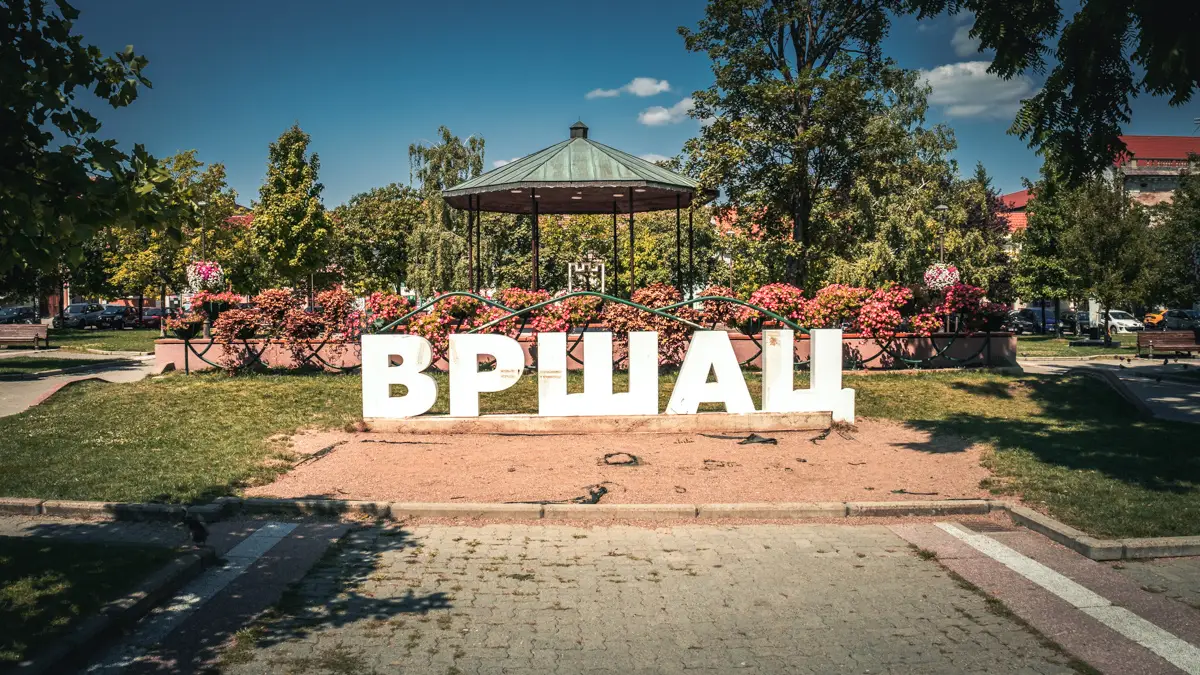
  • Vršac, Serbia: A Small Eastern European City

    Vršac, Serbia: A Small Eastern European City

    Share this:

    After a not-very-long drive from the Romanian city of Timișoara, we have finally reached the small city of Vršac located in the Autonomous Province of Vojvodina, Serbia. This small city is not very far from the border with Romania making it easily accessible for travelers seeking a delightful cross-border experience.

    Once we were in the city, we decided to visit the castle first. The only road that we found that leads up to the castle was located outside the city, as you drive towards Mesić. Right next to a larger vineyard, you will have to make a left turn when you will see a sign that points to Vršačko Brdo.

    At the Vršac Castle

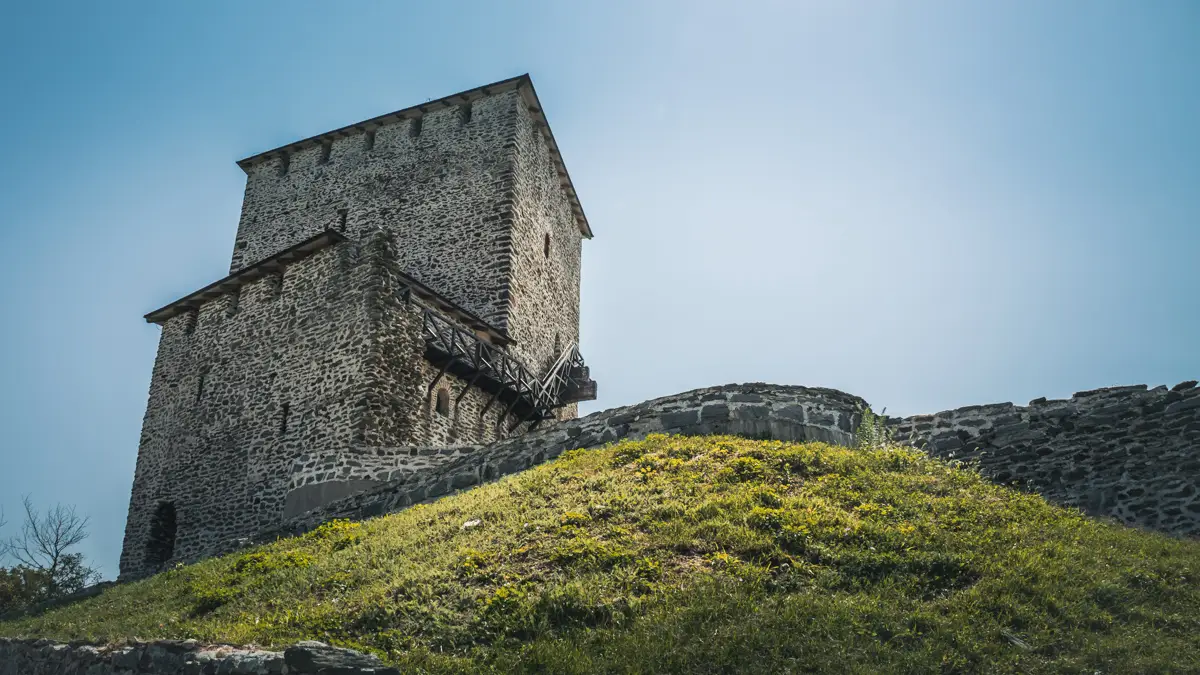
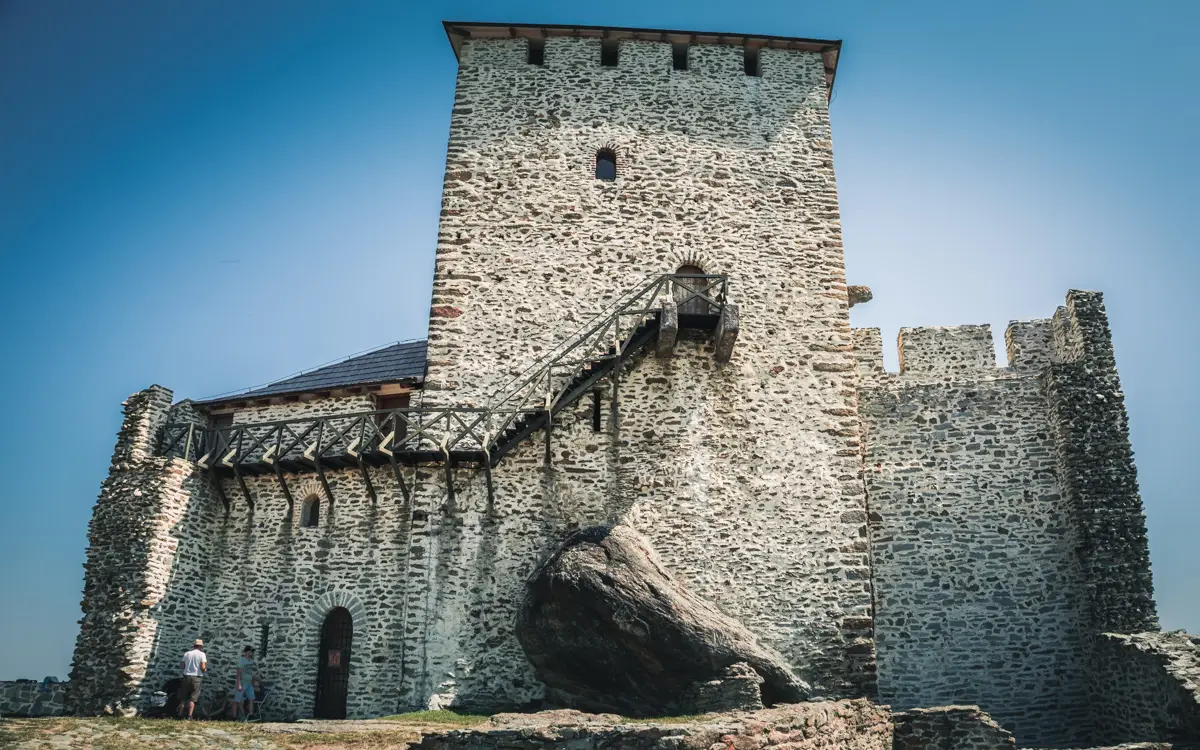
    The Vršac Castle or the Vršac Tower is a magnificent architectural marvel that has captured the imagination of locals and visitors alike for generations. This historic tower, a testament to the rich history and cultural significance of the region, serves as a timeless reminder of the town’s past while also offering a breathtaking view of the surrounding landscape and over the city as well.

    This tower, built in the 15th century, is not only a symbol of Vršac but also offers panoramic views of the surrounding landscape, including the vast vineyards that sprawl across the region. Climbing to the tower’s upper levels I’m sure that it rewards the visitors with breathtaking vistas of the surrounding landscape, including the rolling hills, vineyards, and the picturesque town itself. Unfortunately, when we were there, the castle was closed.

    The Vršac Castle.
    The small Vršac castle.
    Castle exterior with some tourists.
    A part of the castle.
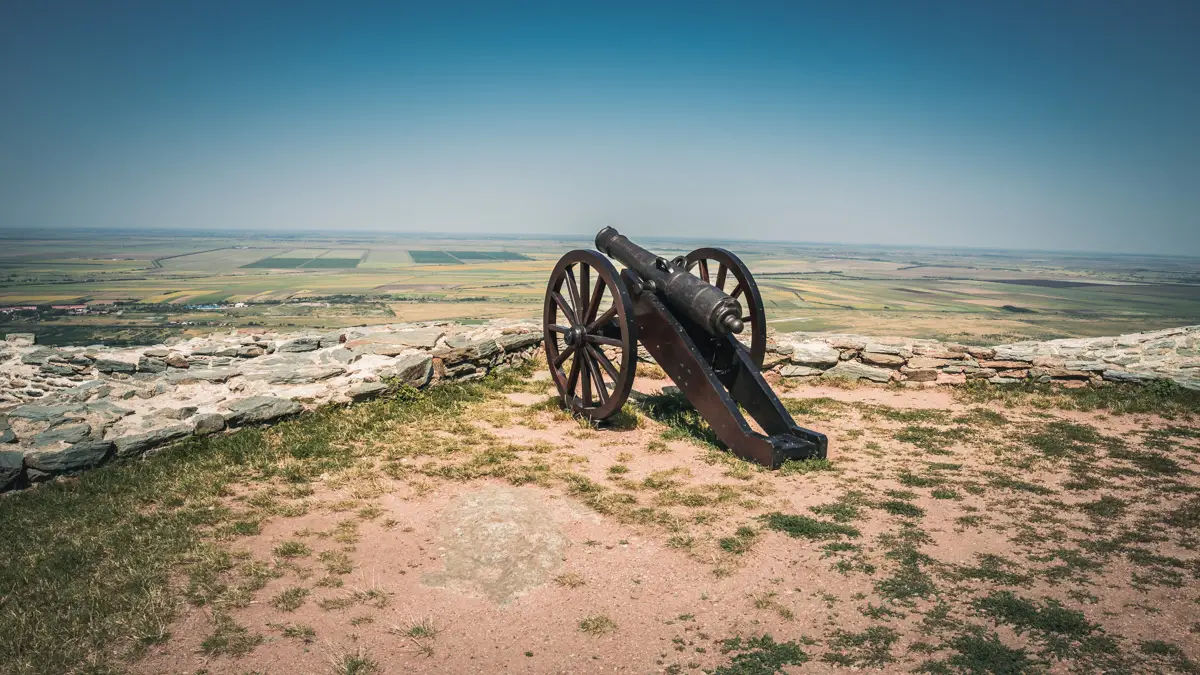
    Cannon in front of Vršac Castle.
    An old cannon in overlooking the the vast plains.
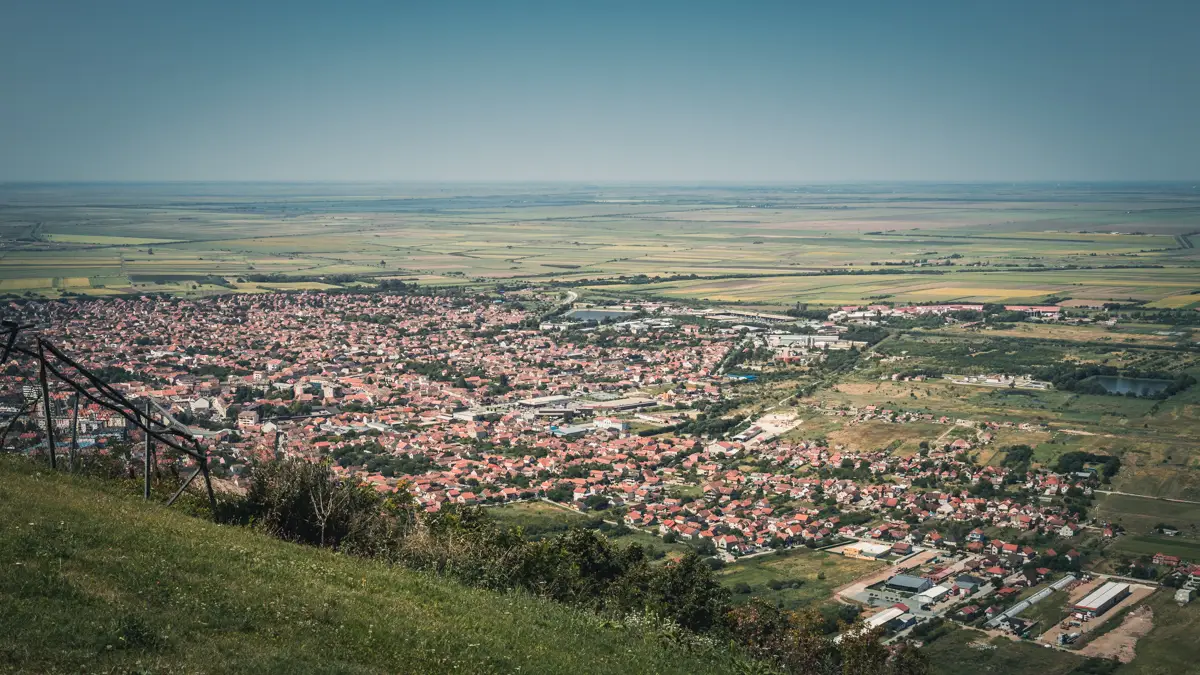
    Vršac city as seen from the castle.
    A part of the city as seen from the castle.

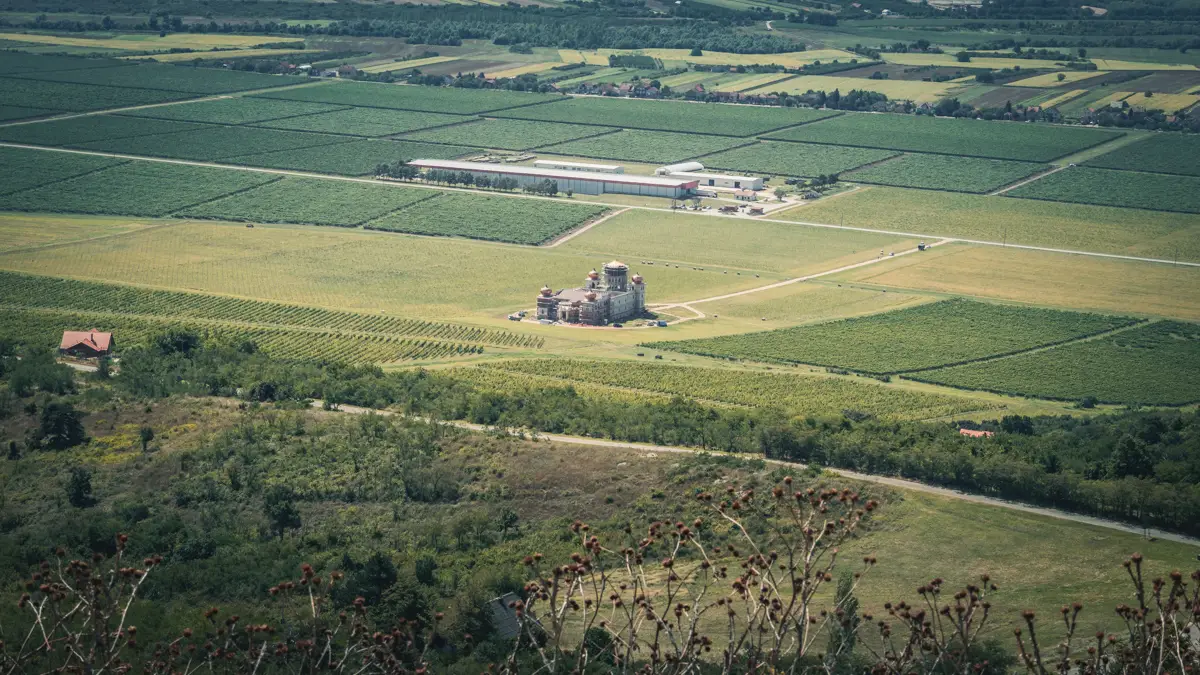
    As you leave the city behind and drive towards the castle, you’ll venture into the countryside, you’ll be treated to rolling hills, fertile plains, and quaint villages that reflect the agrarian roots of the region. The road winds through vineyards and orchards, showcasing Serbia’s rich agricultural heritage. Behind the church from the image below is the road which leads up to he castle.

    Vineyard near the city.
    A large vineyard and the road leading to the up to the castle.

    Chapel of the Holy Cross

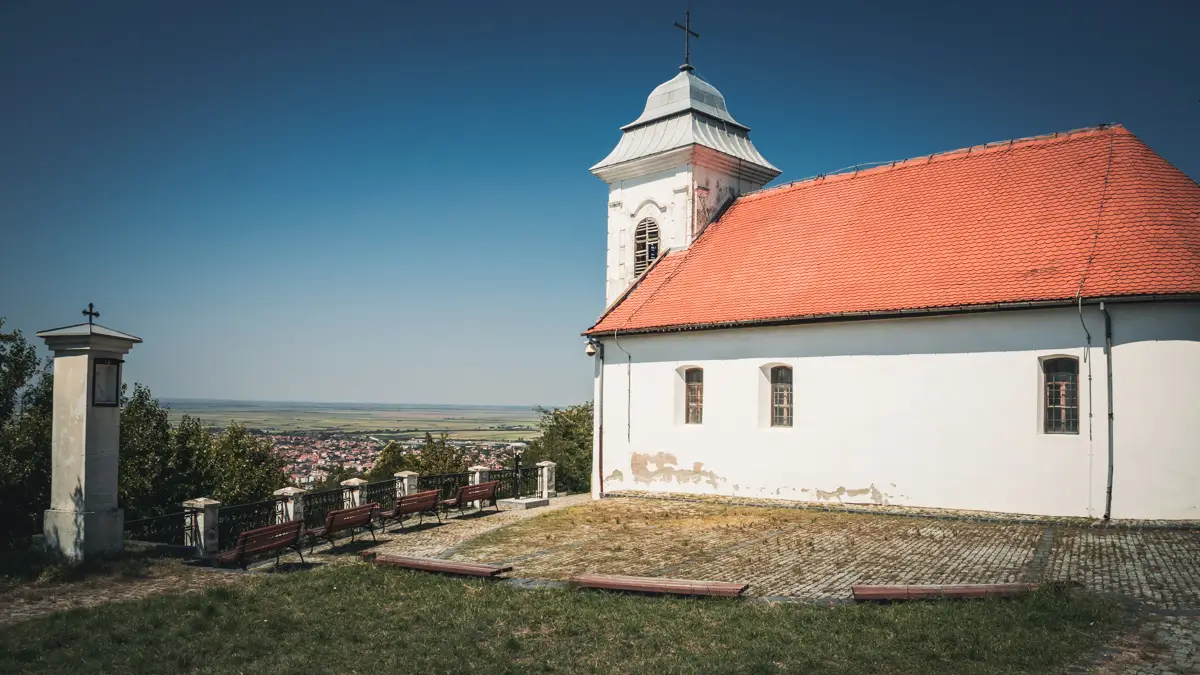
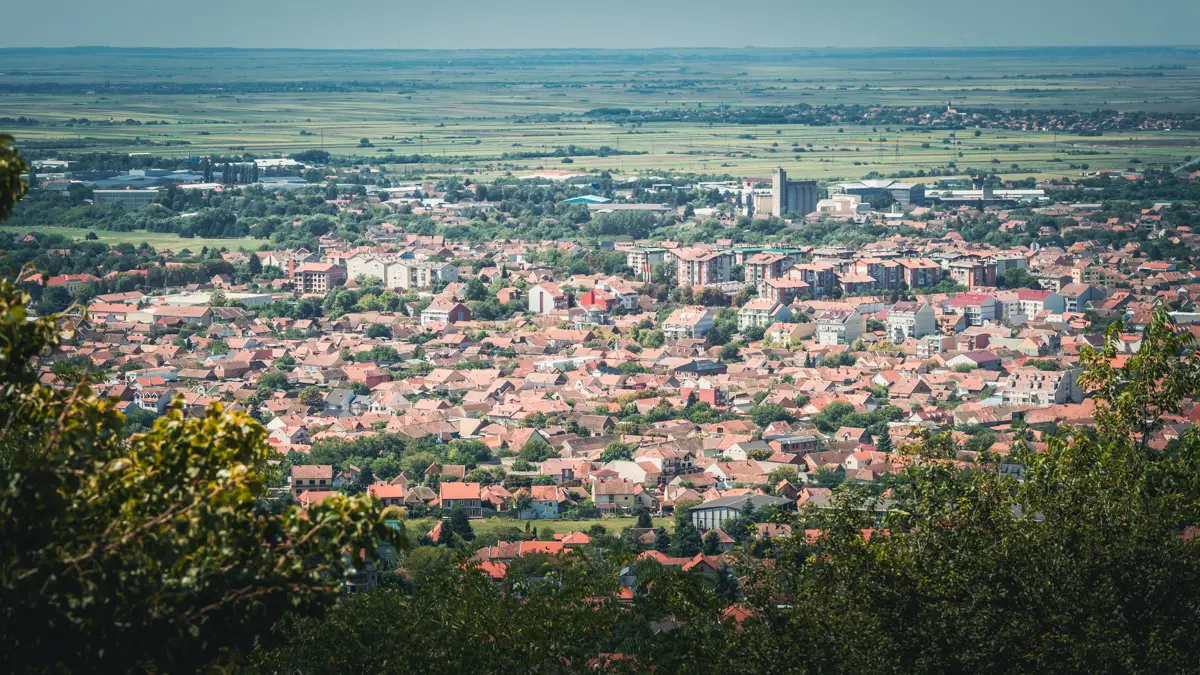
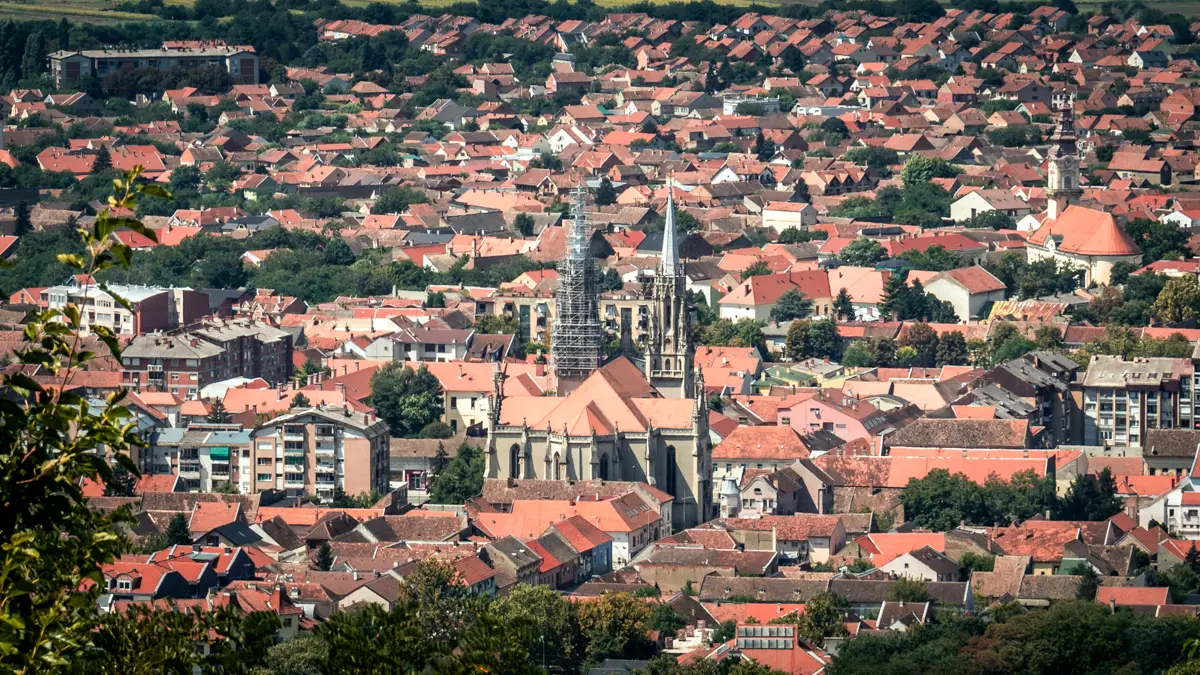
    After exploring the small castle located on top of a hill next to the city, we decided to make a short stop on our way to the city at Капела Светог Крста or Chapel of the Holy Cross. This is another place from where you will have the chance to admire the entire city of Vršac. From there, you can spot between the trees which surround the chapel the impressive Roman Catholic Cathedral of Saint Gerhard and right next to it, you can spot the Hotel Srbija.

    The Chapel of the Holy Cross
    The Chapel of the Holy Cross
    Flats and houses.
    Vršac cityscape.
    The Saint Gerhard Cathedral between the buildings.
    The Saint Gerhard Cathedral.

    Back in the city

    After exploring a part of the “upper part” of Vršac it was time to drive back to the city and visit it. We left our car near the city center and started to explore the area on foot.

    Roman Catholic Cathedral of St. Gerhard

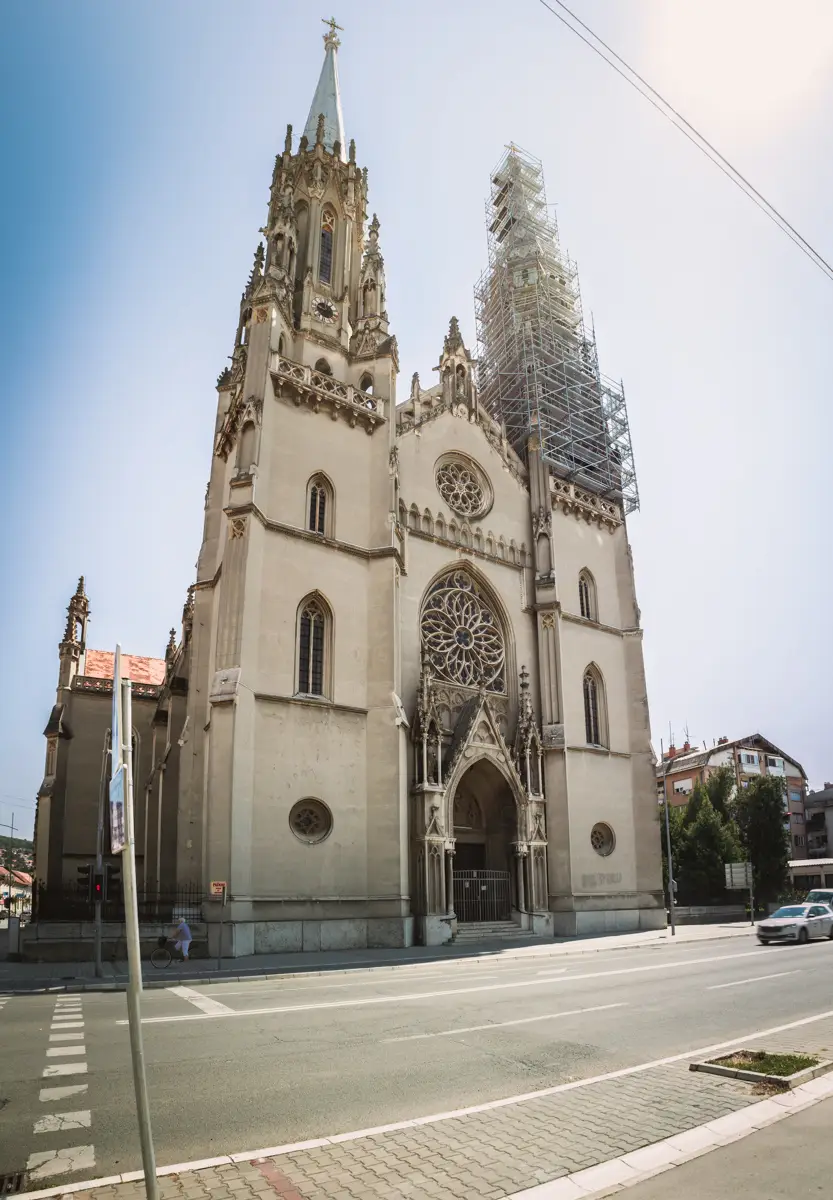
    The Roman Catholic Cathedral of St. Gerhard was built between 1860 – 1863. This is one of the tallest buildings in the city. Also, it’s important to mention that it was built in the Neo-Gothic Style.

    The Roman Catholic Cathedral of St. Gerhard in Vršac.
    The Roman Catholic Cathedral of St. Gerhard on hot summer day.

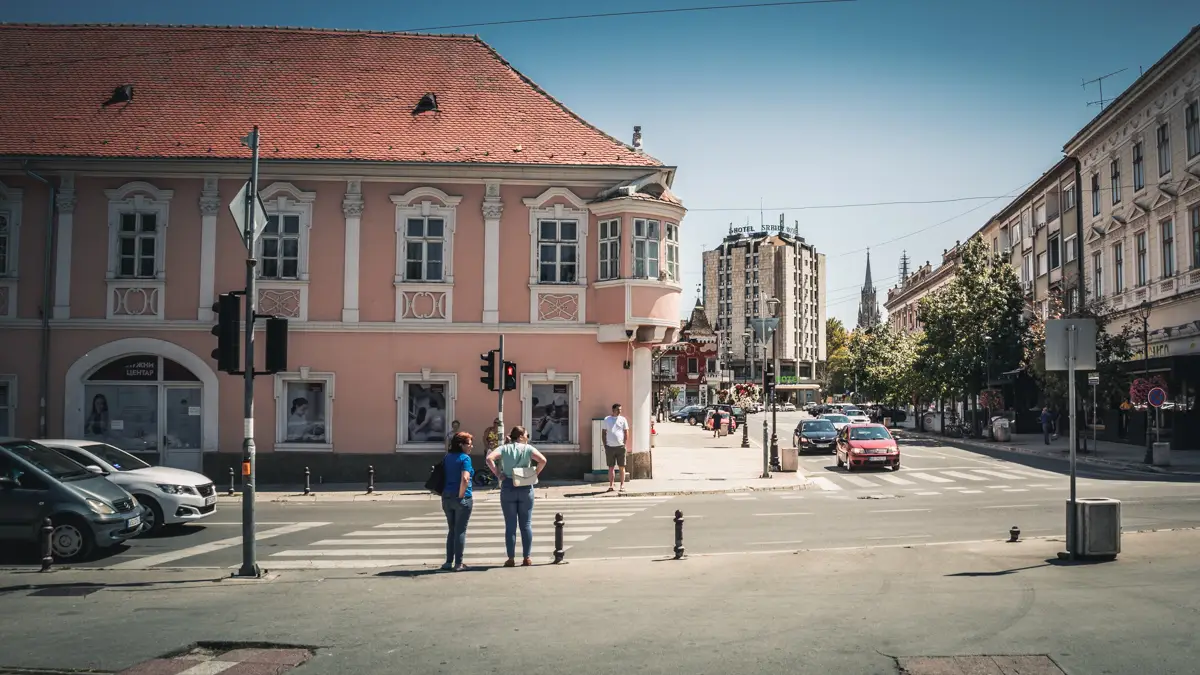
    Hotel Srbija and the city center

    As you will walk towards the city center from the Roman Catholic Cathedral, you will come across the Hotel Srbija.

    Hotel Srbija seen from the city center.
    Hotel Srbija and a part of the city center.

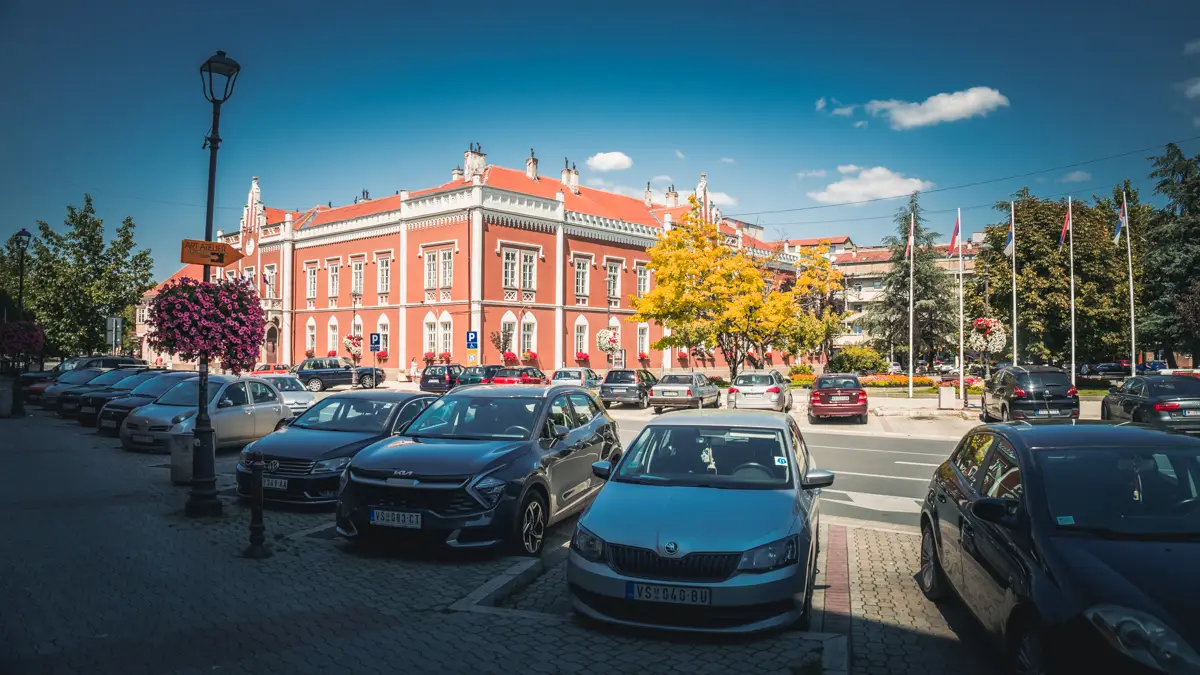
    The Town Hall

    Vršac obtained its Town Hall in 1795 when the two separate municipalities, Serbian Vršac and German Vršac, merged into a single town. This marked the culmination of their administrative union, which had been in effect since 1717.

    In 1859, the construction of a new Vršac Town Hall commenced, following a proposal by Mayor Aleksandar Stojakovic. This new edifice was constructed in the Neo-Gothic style. A commemorative tablet, inscribed in both Serbian and Latin, bearing the signatures of Vršac’s most distinguished citizens, was embedded in its foundations. During this period, Andrija Vasic authored the first History of Vršac. In the 1860s, an extension was added to the building on its northern side.

    The Town Hall.
    The Town Hall.

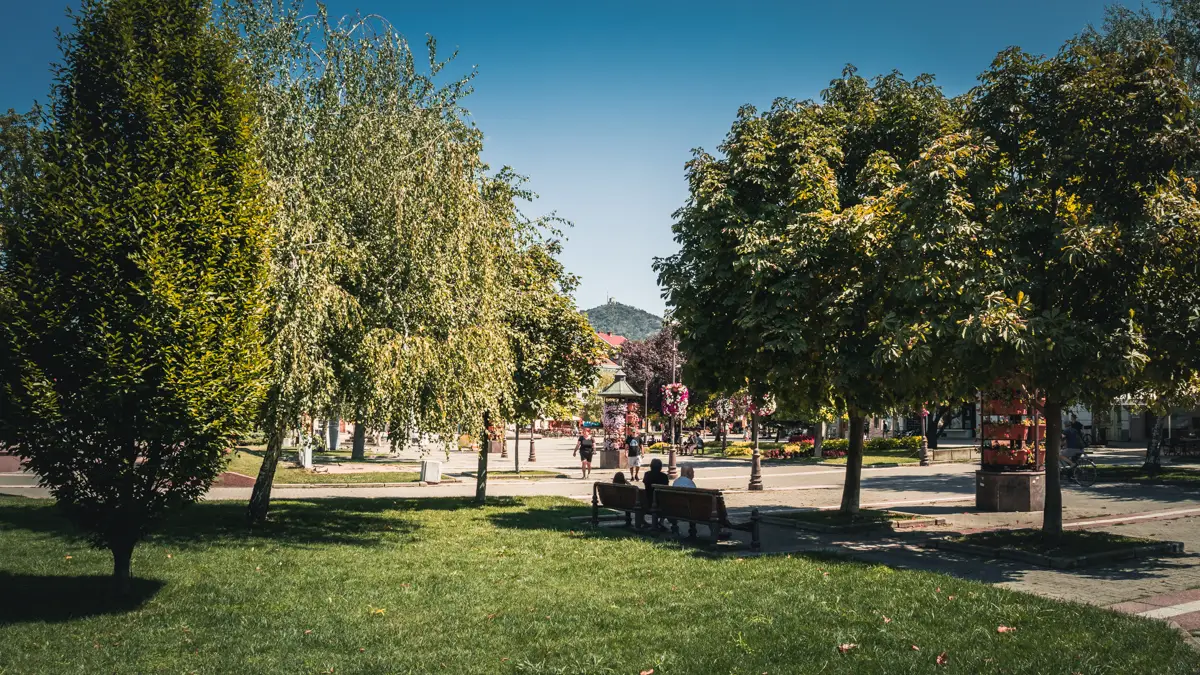
    Svetog Teodora Vršačkog Park

    This beautiful park is located in the city center. From here, between the trees and the houses, you can even spot the small castle as well. Residents of Vršac often meet in the park to catch up with friends, host birthday parties, or simply engage in conversations under the shade of the trees.

    Svetog Teodora Vršačkog Park.
    Svetog Teodora Vršačkog Park

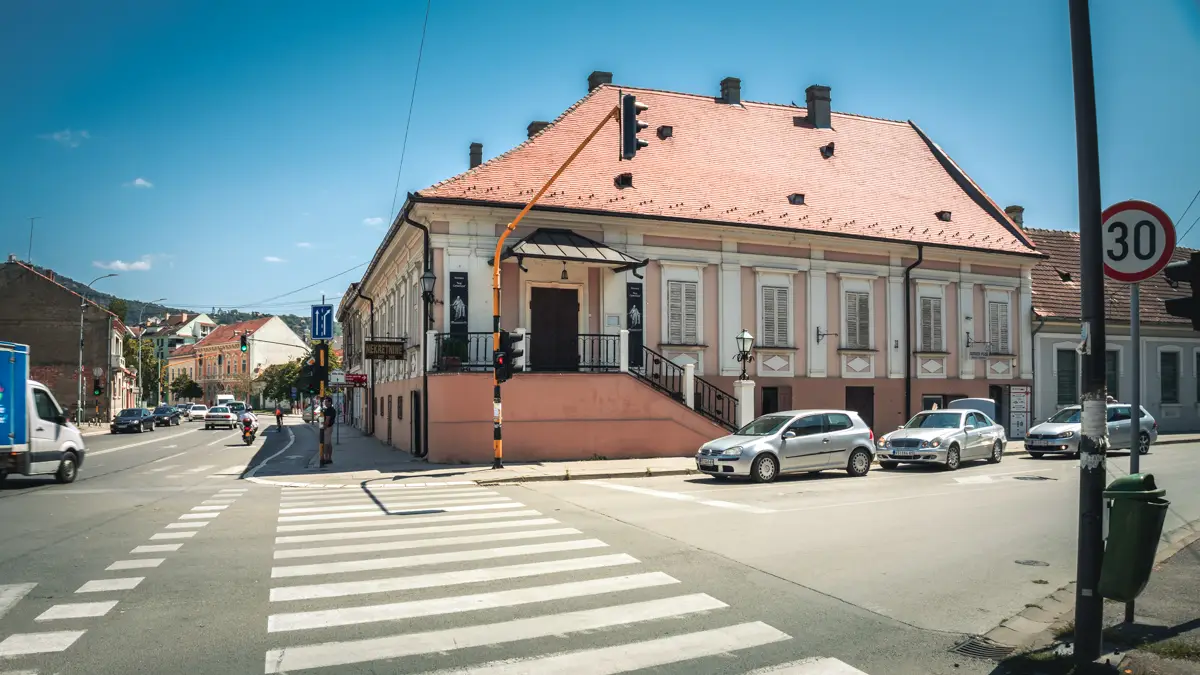
    Pharmacy on the Stairs

    This edifice is commonly referred to as the “Pharmacy on the Stairs.” It has its origins in the latter half of the 18th century, and in 1784, it became home to Vršac’s inaugural pharmacy, known as “Kod spasitelja.” If you plan to visit this place then you should know that it’s very close to the city center. It’s at the intersection between Kumanovska Street and Miloša Obilića Boulevard.

    Pharmacy on the Stairs.
    The Pharmacy on the Stairs located near the city center.

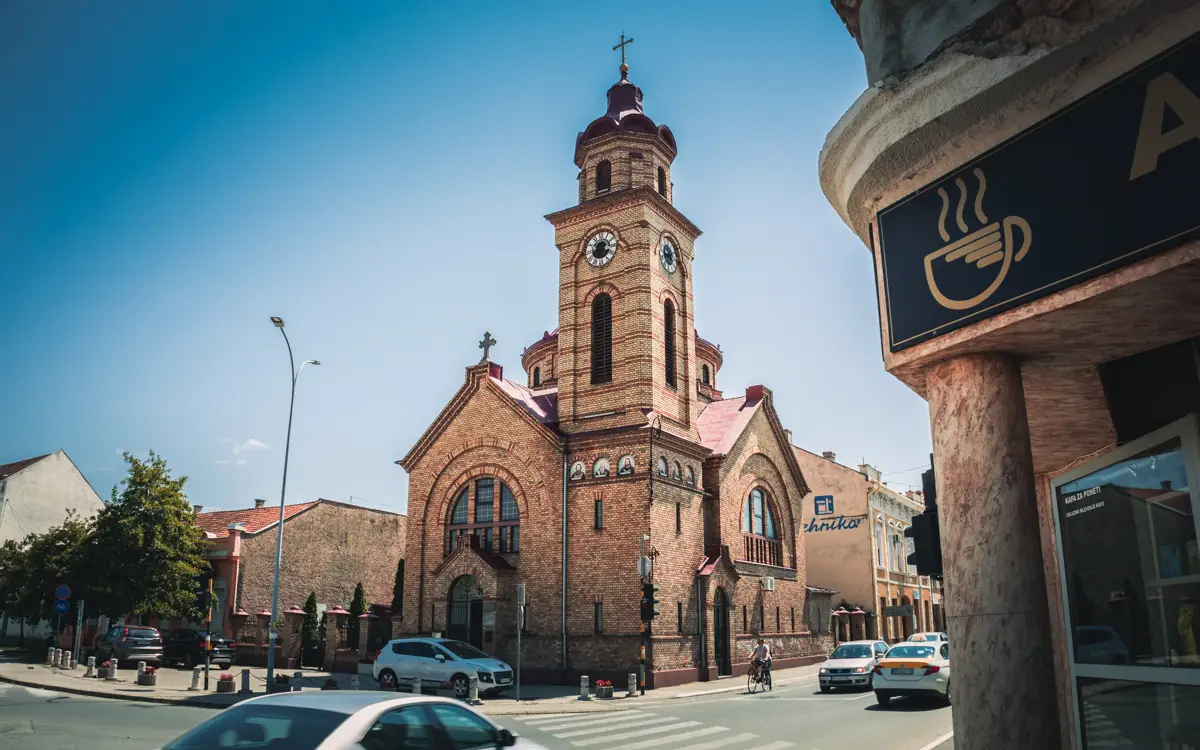
    Romanian Orthodox Church in Vršac

    The Romanian Orthodox Church in Vršac is a significant religious and cultural institution in the town of Vršac, Serbia. As the name suggests, it is part of the Romanian Orthodox Church, which has a notable presence in the region due to the historical connections between the Romanian and Serbian Orthodox Churches. From the Pharmacy on Stairs if you walk approximately 50 meters on Miloša Obilića Boulevard you will find the Orthodox church.

    Romanian Orthodox Church.
    The Romanian Orthodox Church.

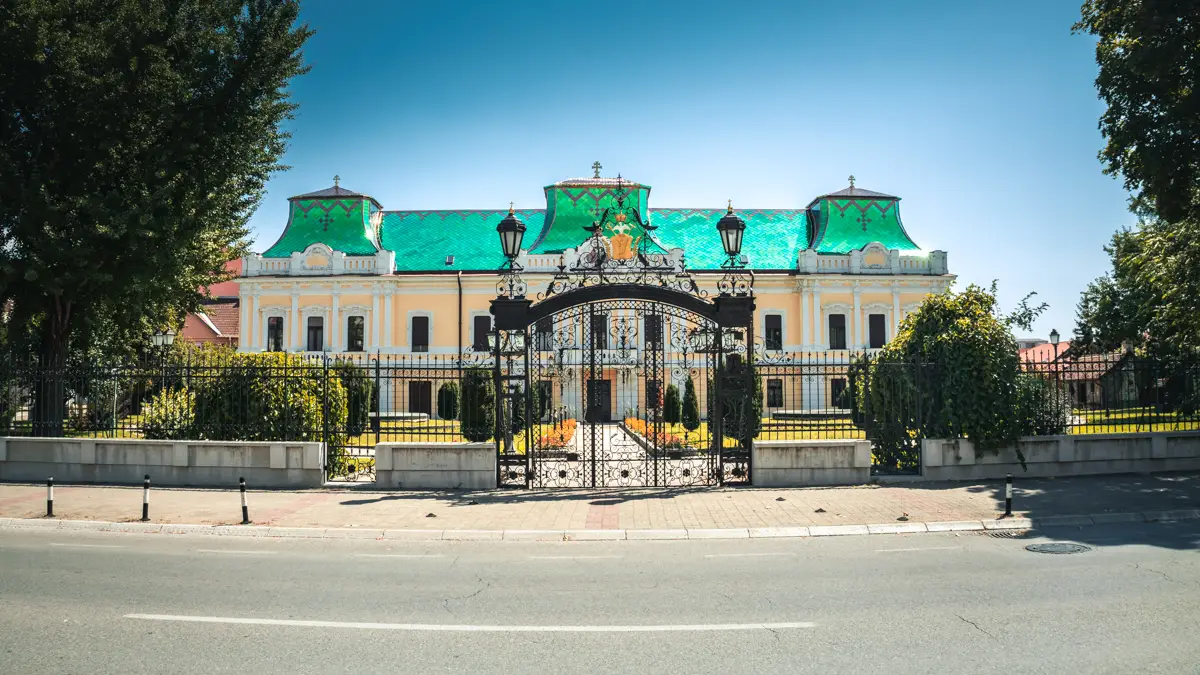
    The Bishop’s Palace

    The last objective that I wanted to visit was the Bishop’s Palace, which serves as the residence of the Serbian Orthodox Bishop in Vršac. I liked that shinny green roof of the building, it really stands out.

    Bishop's Palace Of The Banat Eparchy.
    The Bishop’s Palace.

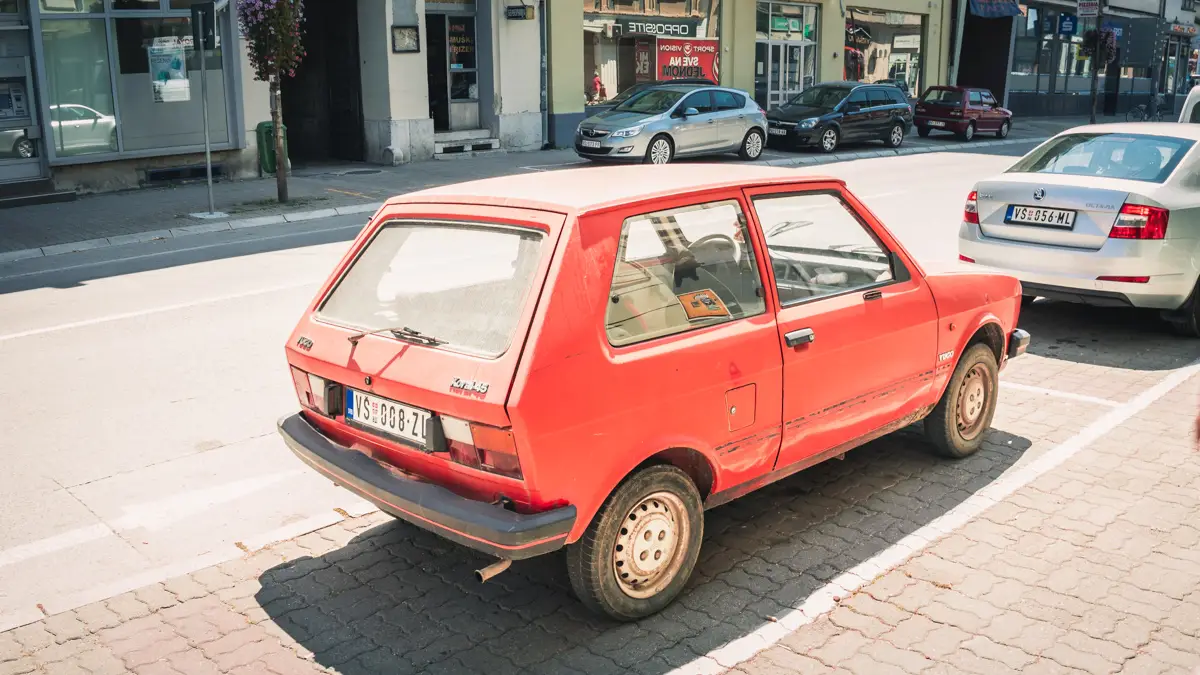
    The Yugo

    Walking around the city center, I came across a car that was made in the former Yugoslavia by automaker Zastava located in Kragujevac, hence the name Yugo. The Koral 45 model was fitted with a 45 hp engine and it was a very popular car, especially in the former Yugoslavia. Even today you will see them across Serbia.

    The Yugo car.
    The old Yugo resting in the sun.

    Some thoughts about this trip

    One of the most significant advantages of visiting Vršac is its small size, which allows you to explore the major attractions on foot, making it a pedestrian-friendly destination. Additionally, for those who enjoy hiking, there’s a dedicated path leading to the Vršac Castle, offering a rewarding and scenic hike to this historic landmark. Whether you’re a history enthusiast or a traveler looking for an escape, Vršac has something to offer for everyone who visits it.

  • The Village of Viscri, Transylvania – A Place I Visited

    The Village of Viscri, Transylvania – A Place I Visited

    Share this:

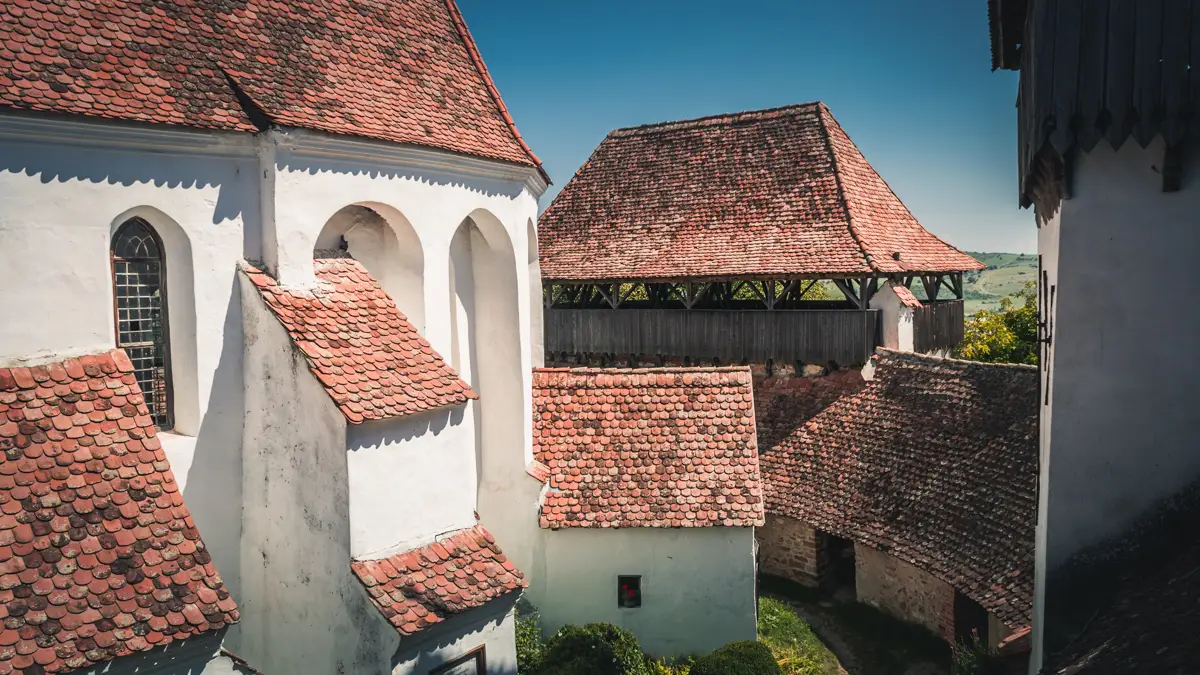
    Located in the historical region of Transylvania, not far from the inhabited medieval citadel of Sighisoara, Viscri in another important Saxon village that must be visited. One of the primary reasons for its renown is the well-preserved Lutheran fortified church located in the heart of the village. This fortified church, built by the Saxon community, is a UNESCO World Heritage Site. It is an architectural and historical gem that attracts visitors from around the world seeking an authentic Transylvanian experience.

    Did you know that King Charles III visited this place multiple times? Through his foundation, he bought an old traditional Saxon house. Ultimately the house was transformed in a beautiful guesthouse which can be rented out to the tourists.

    As a small side note, the fortified church is a UNESCO World Heritage Site.

    Getting to Viscri

    When I traveled to Viscri from Sighisoara, I made the wrong decision to make a right turn in the village of Bunesti and drive on 104L road. The road between Bunesti and Viscri although it’s the shortest route, is in a pretty bad condition. In my opinion, the best option especially if you are driving from Sighisoara, is to drive until Rupea and make there a right turn towards the village of Dacia. Once you are near Dacia you will have to make another right turn towards Viscri.

    The village

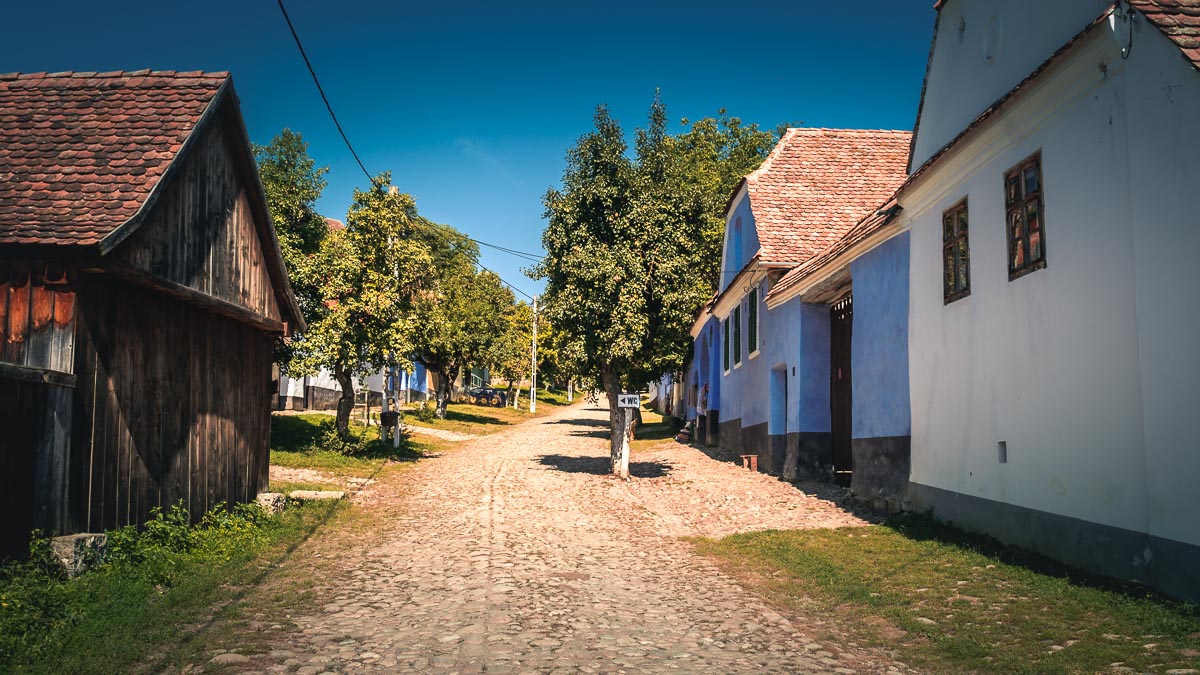
    Upon my arrival in Viscri, I felt like I had stepped back in time. The Saxon architecture and the cobblestone streets instantly transported me to a bygone era.

    Paved street which leads to the Fortified Church in Viscri.
    Paved street leading to the fortified church.
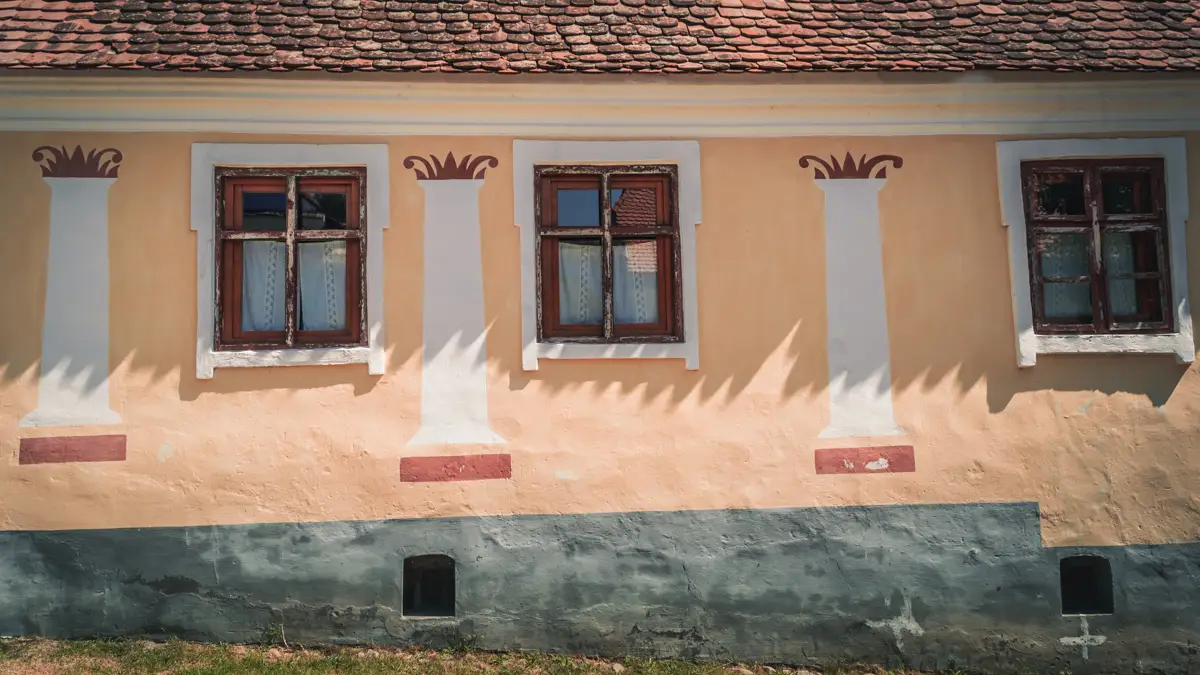
    Interesting house exterior.
    Interesting house exterior near the fortified church.

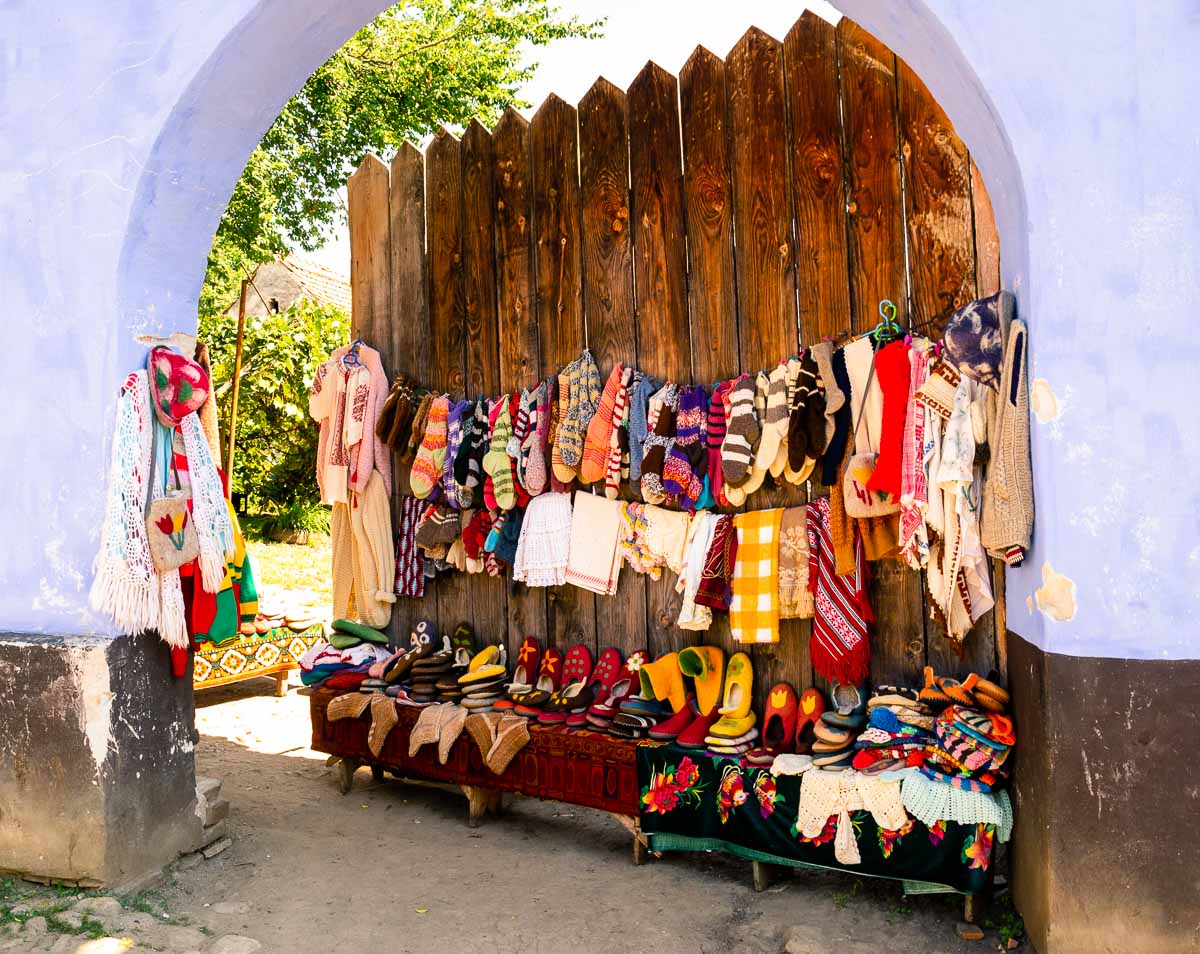
    The handmade clothes is a reminder of the enduring importance of tradition and the value of artisanal skills passed down through generations. It is a testament to the resilience of small communities in preserving their unique cultural heritage. Purchasing handmade cloth from Viscri not only allows visitors to take home a piece of Transylvanian history but also supports the artisans and ensures the survival of this exceptional craft.

    Handmade traditional clothing.
    Various handmade clothing.
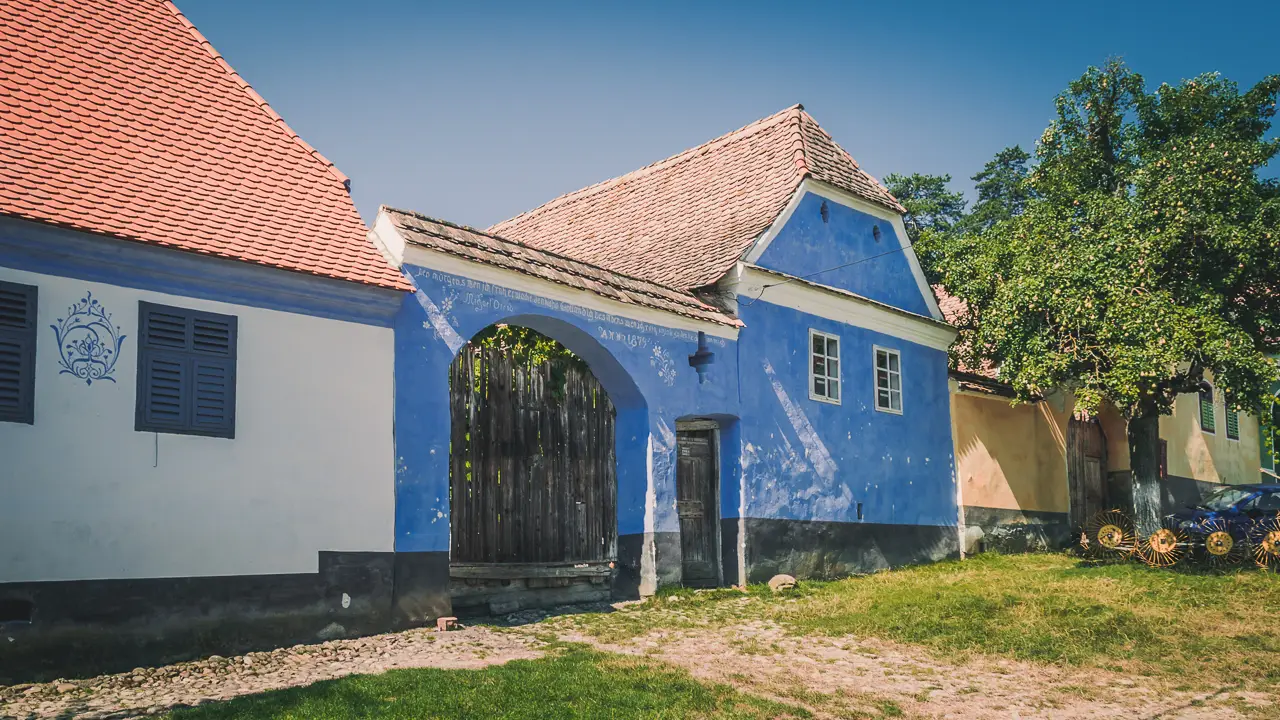
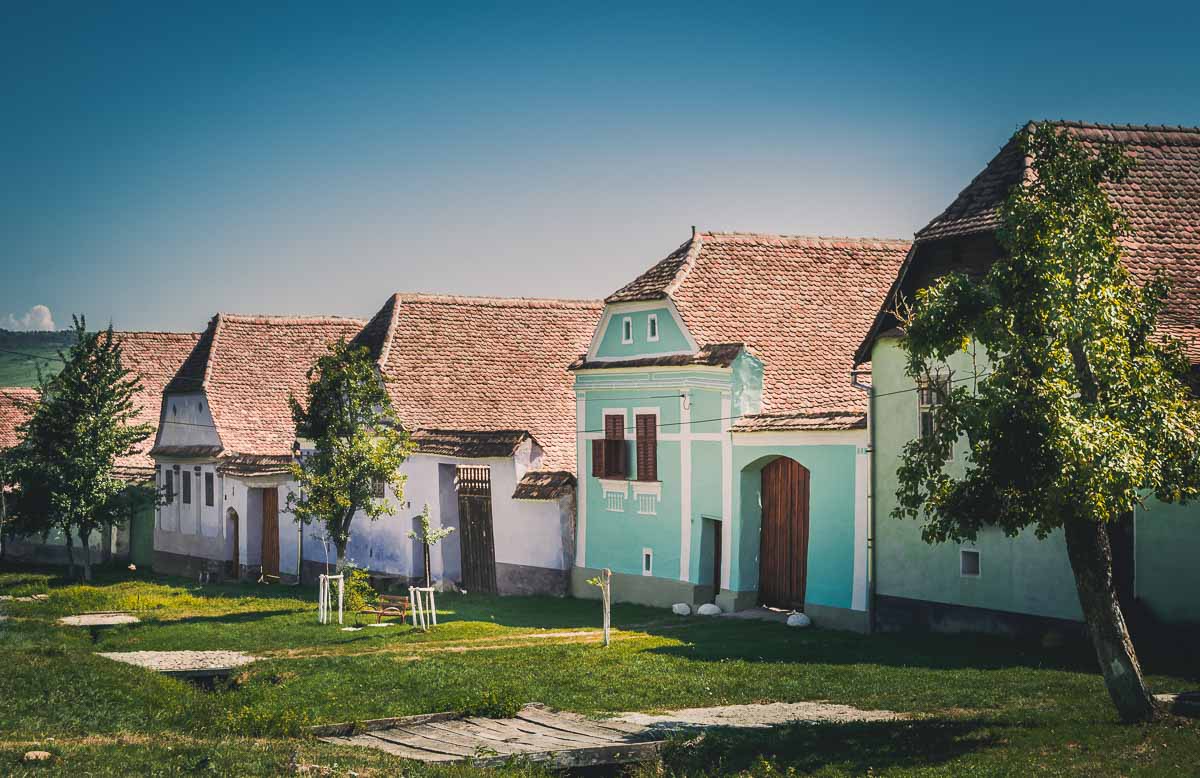
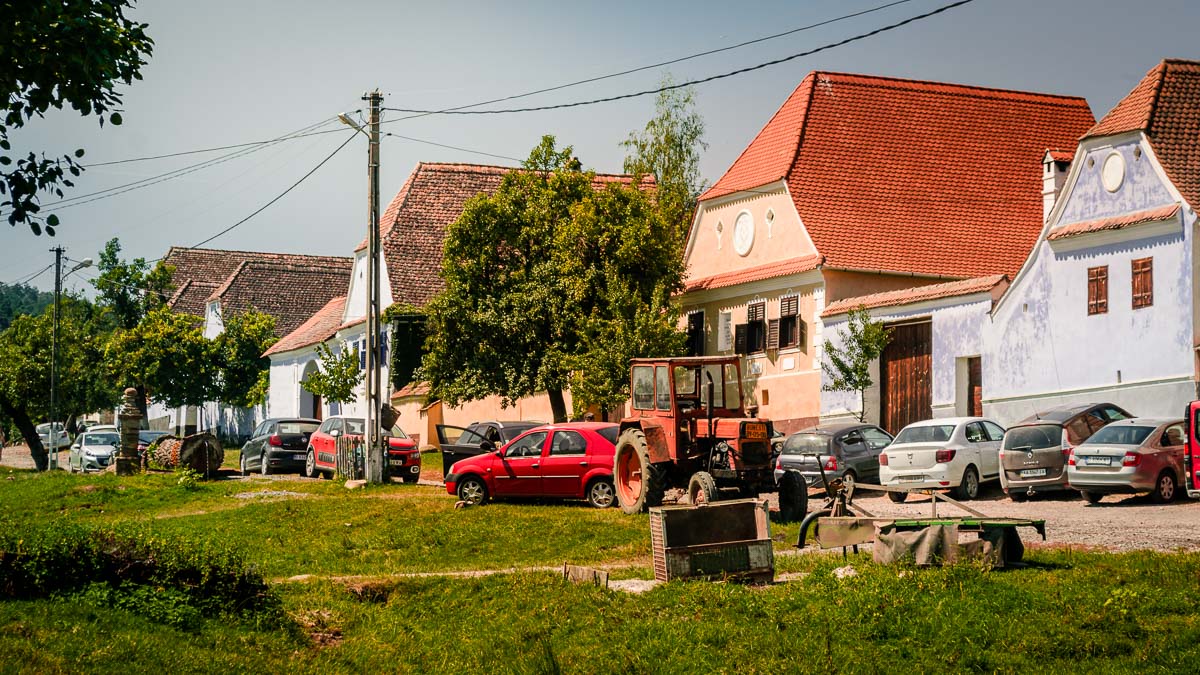
    Old traditional saxon houses in Viscri.
    Traditional Saxon houses in the village.

    Since this village is visited by many tourists therefore you will see a lot cars parked near the main road. When I visited Viscri, there were a lot of cars with foreign license plate.

    Well maintained houses with a lot of tourist cars.
    The main street in the village with many cars parked.
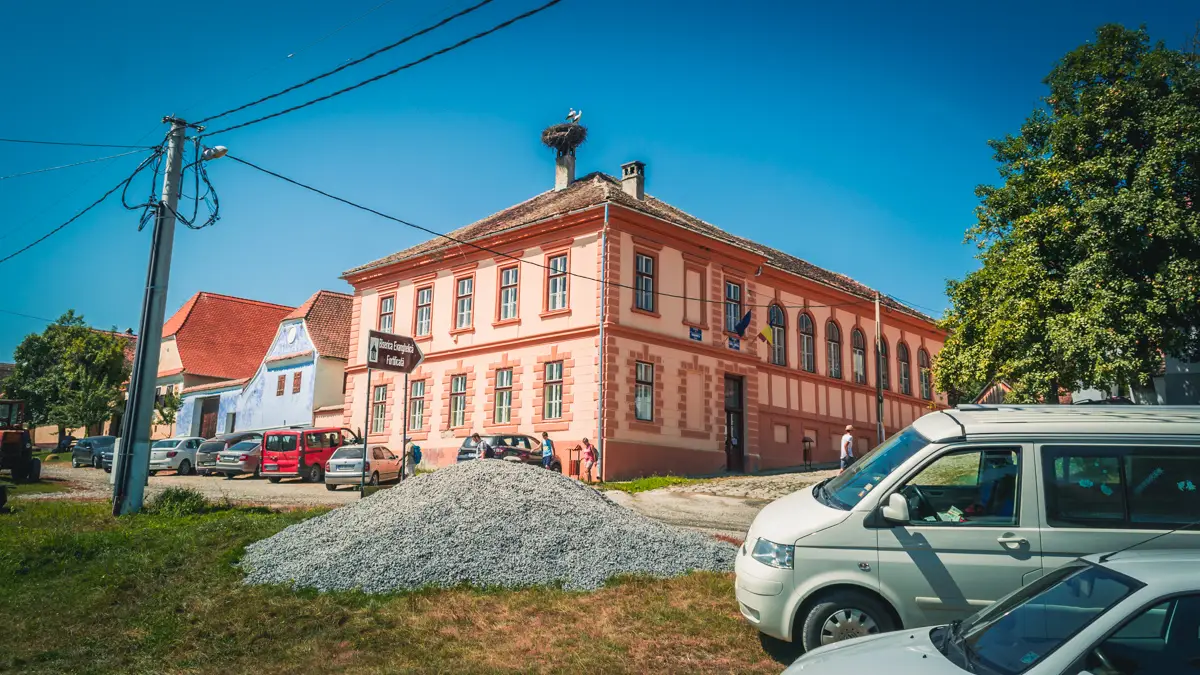
    Elementary school in Viscri.
    The elementary school in Viscri.
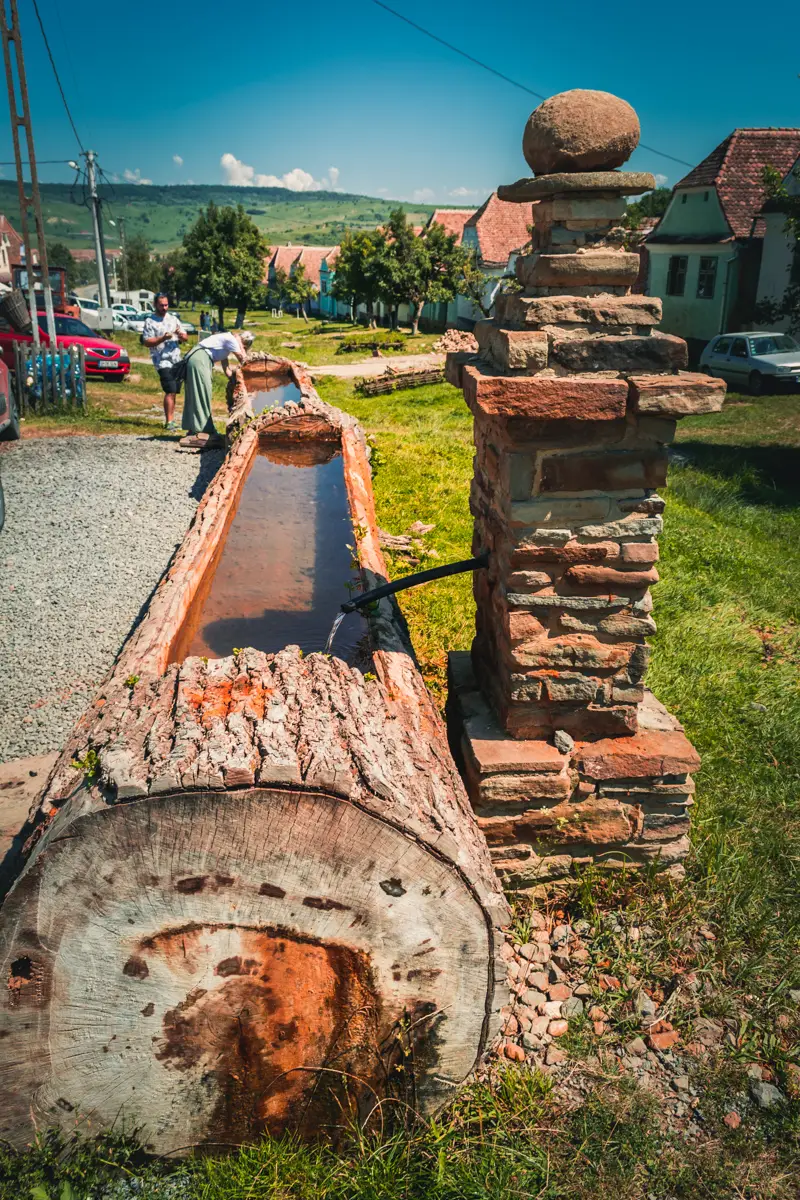
    Well near the main road.
    Interesting well near the main street.
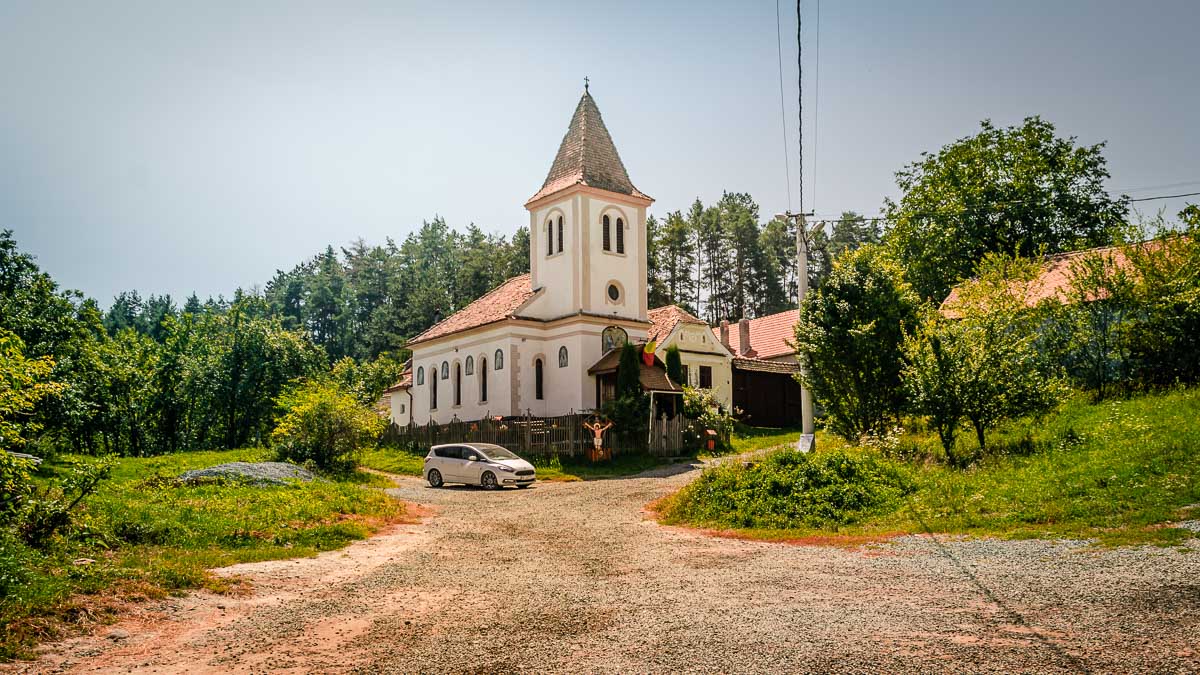
    The Orthodox church in Viscri.
    The Orthodox church located close to the outskirts of the village.

    The Lutheran Fortified Church

    The fortified church in Viscri stands as a testament to the village’s rich history, dating back to the 13th century. The formidable walls and defensive towers tell the story of a community that had to protect itself in turbulent times.

    In order to visit the fortified church, you have to pay for a ticket. Don’t worry, its not expensive at all. After you’ve entered the place, I highly recommend to climb up the main tower. Once you’ve reached the top, almost the entire village is visible from up there. Lastly, don’t forget to check out the Evangelical church’s hall, it’s right next to main tower.

    Within the fortified church, you will find a “little museum” with many interesting old items used by the Saxons.

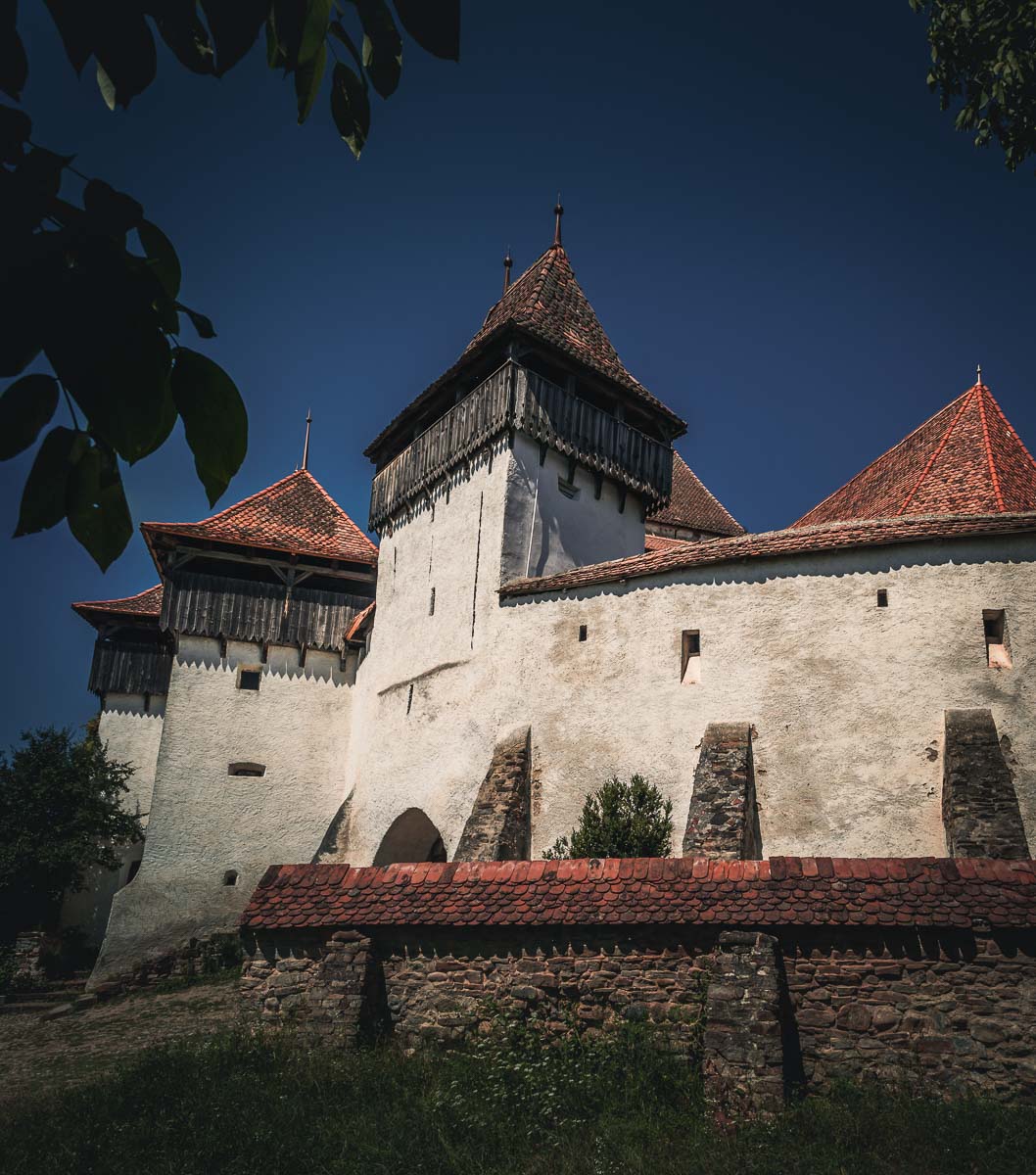
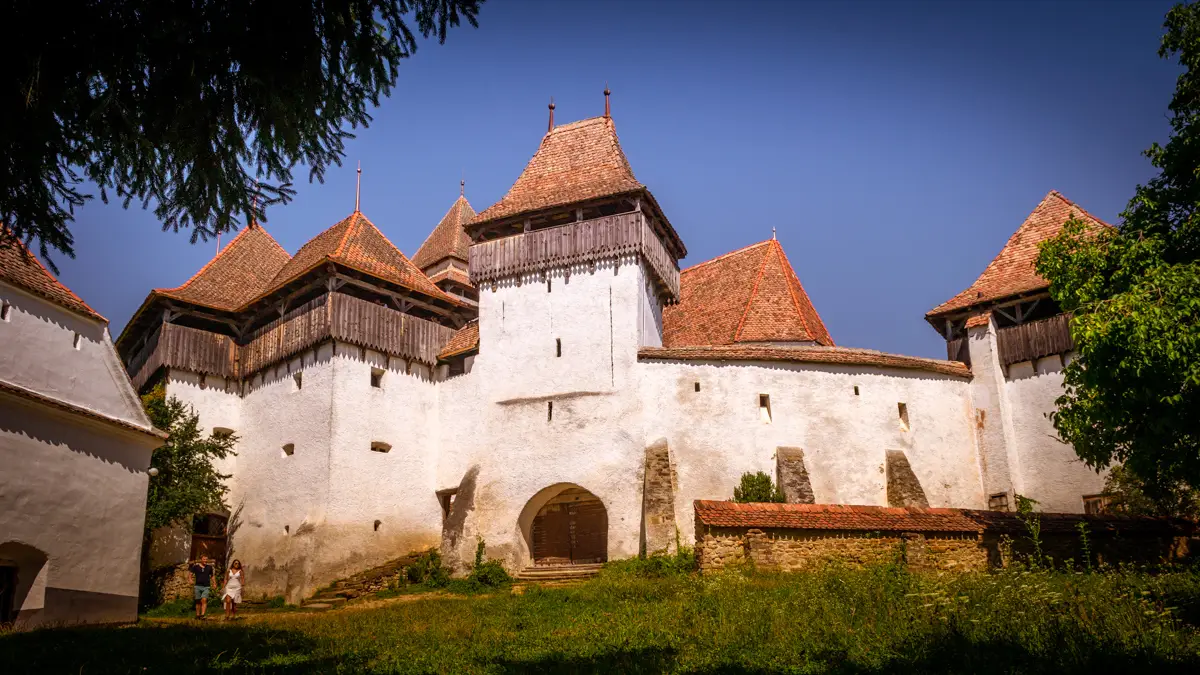
    The Fortified Church in Viscri.
    The exterior of the Lutheran Fortified Church in Viscri.
    A part of the fortifications which surrounds the old Lutheran church.
    The fortified church.

    Up in the church tower

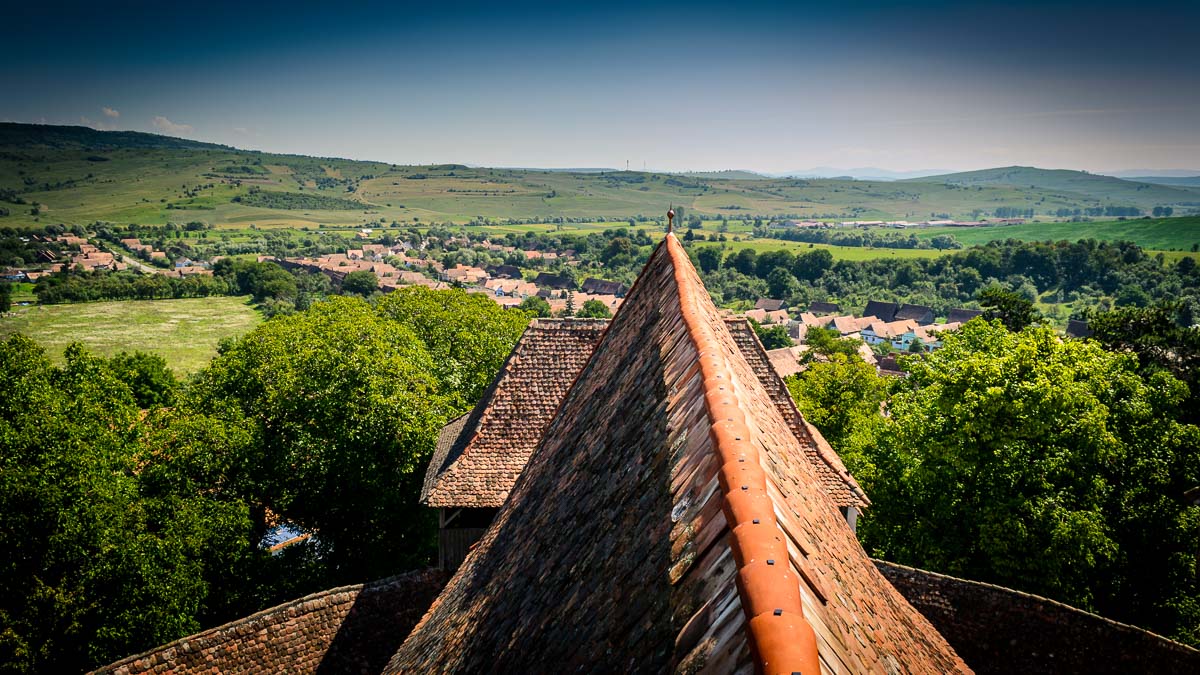
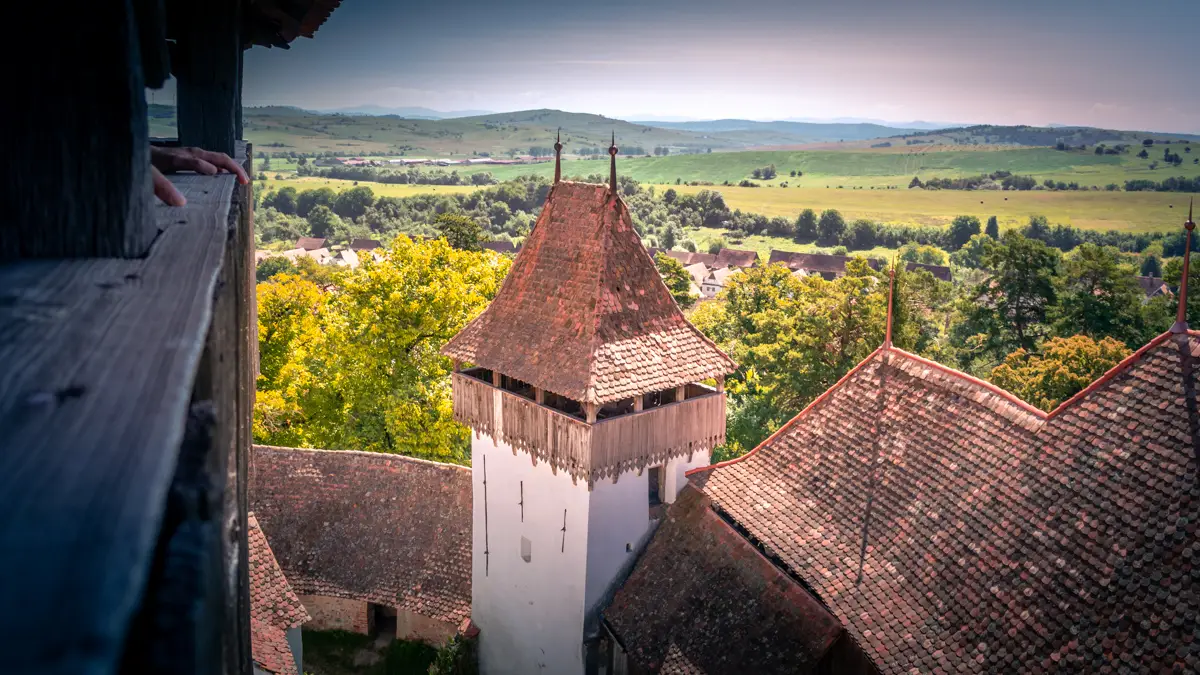
    As you can see, the view from church tower is breathtaking. You can easily spot the village of Viscri including the beautiful Transylvanian scenery.

    The village seen from the church's tower.
    The scenery as seen from the church tower.
    Another shot of the defense tower with the Transylvanian landscape in the background.
    One of the defense towers and the beautiful Transylvanian scenery.
    A part of the church and the old towers.
    A part of the old Lutheran church and the fortifications.

    Other important places to visit in the area:

    If you’ve decided to explore other interesting places that are not very far from Viscri, then you must add to your list the medieval citadel of Sighisoara and the old Rupea citadel.

    Another place to visit that is not far from this Transylvanian village is the old volcano and the emerald lake in the village of Racos.