Uncover the region’s rich history, legendary folklore, stunning landscapes, and vibrant culture. Whether you’re seeking travel tips, historical insights, or a taste of Dracula’s legacy, Transylvania awaits your virtual exploration.
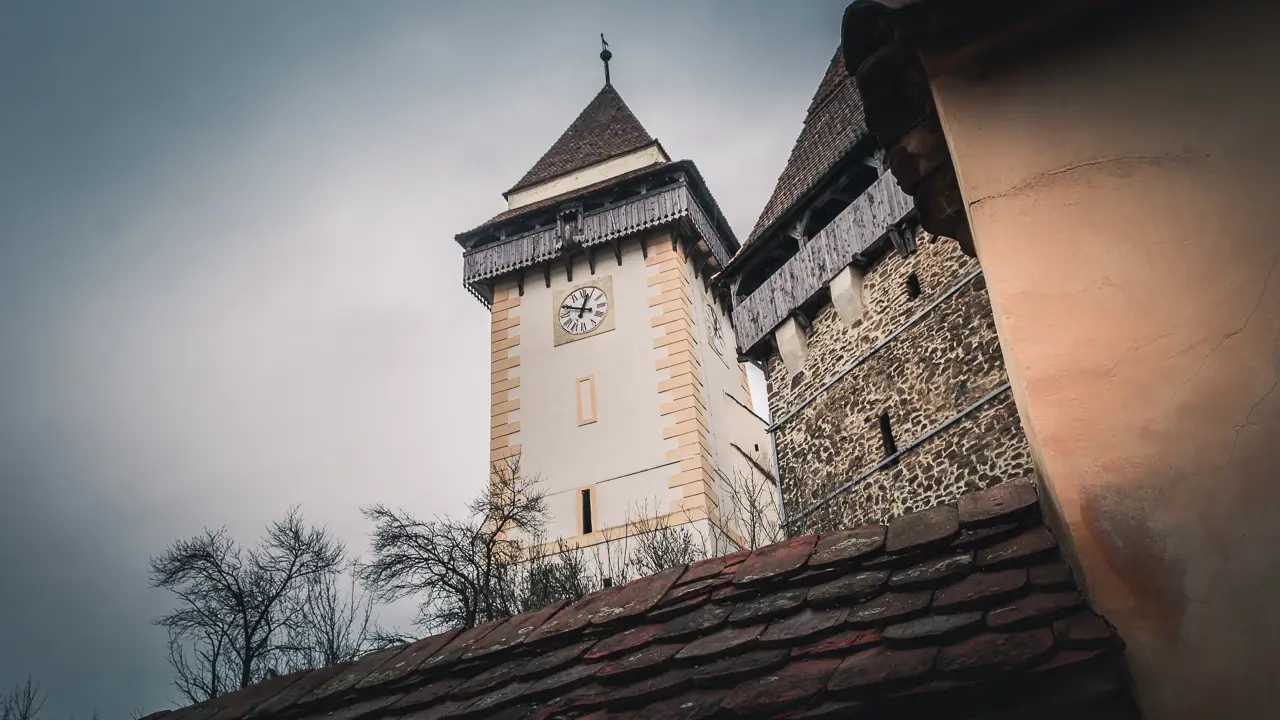
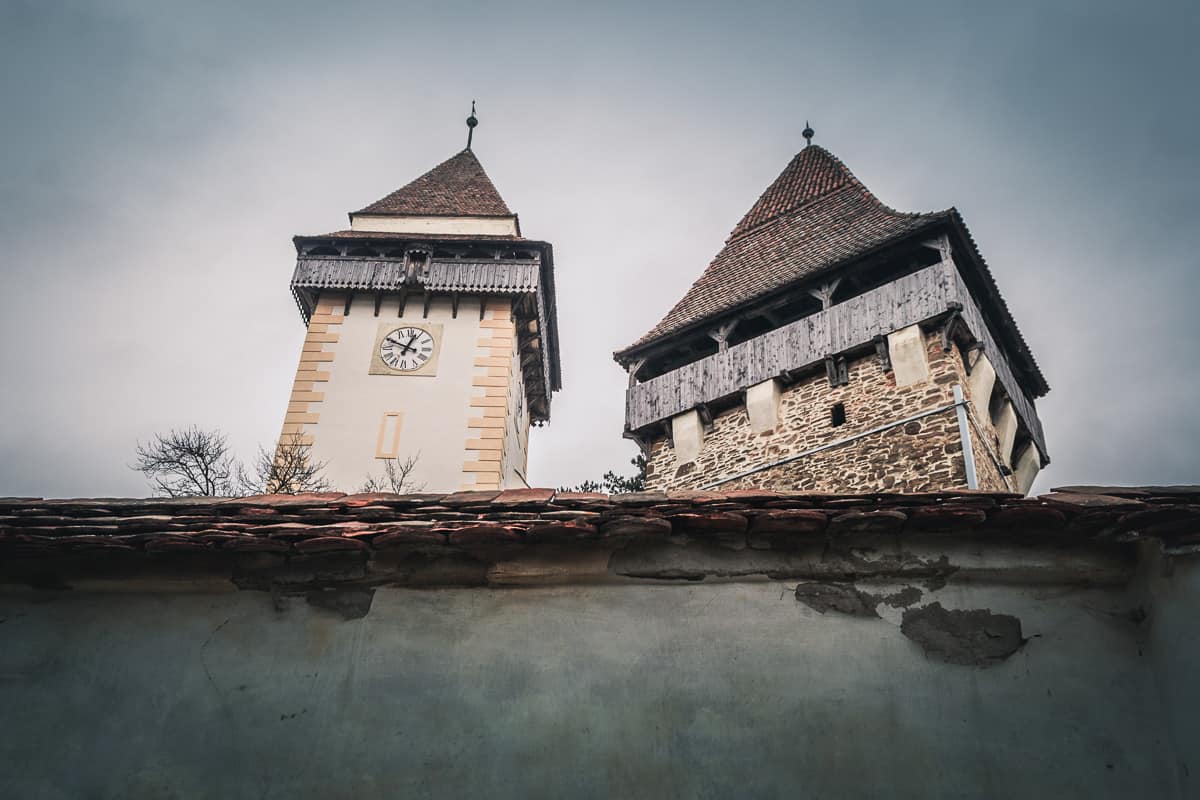
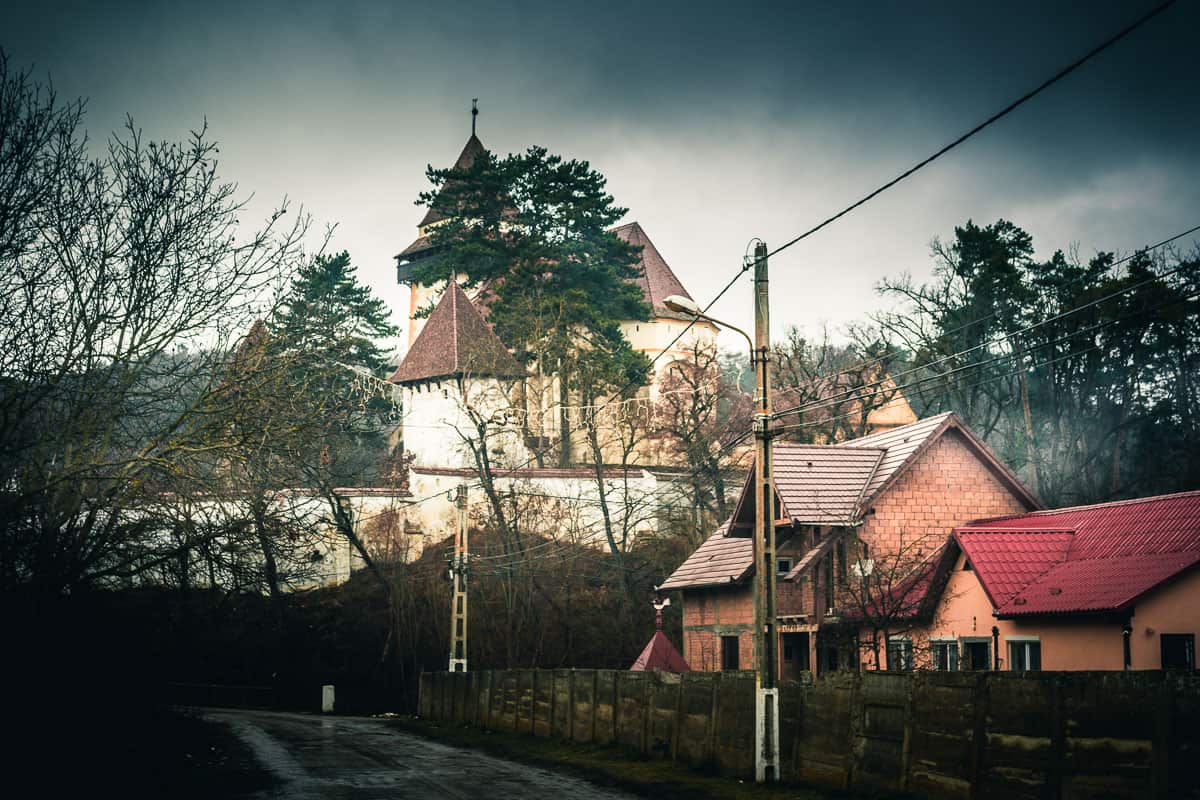
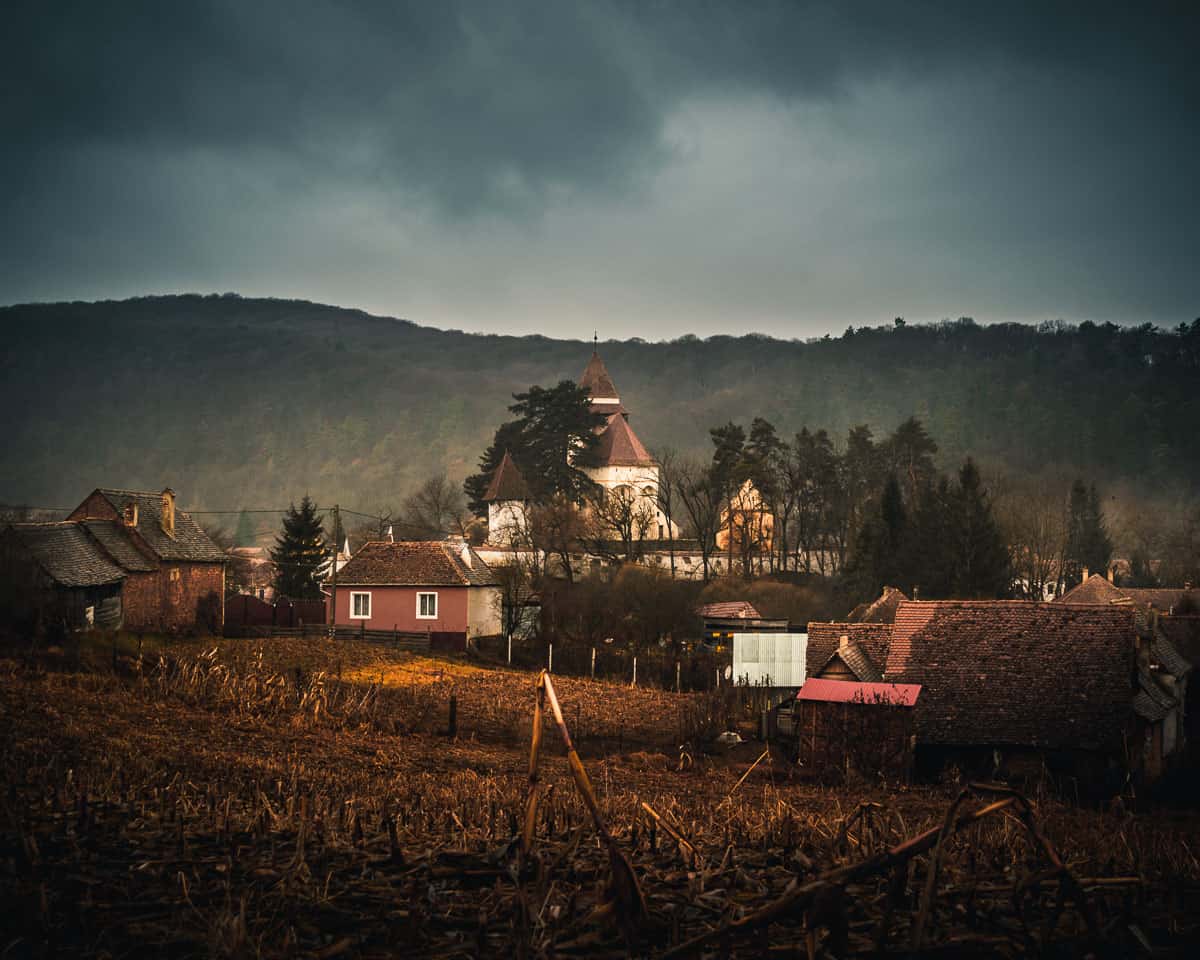
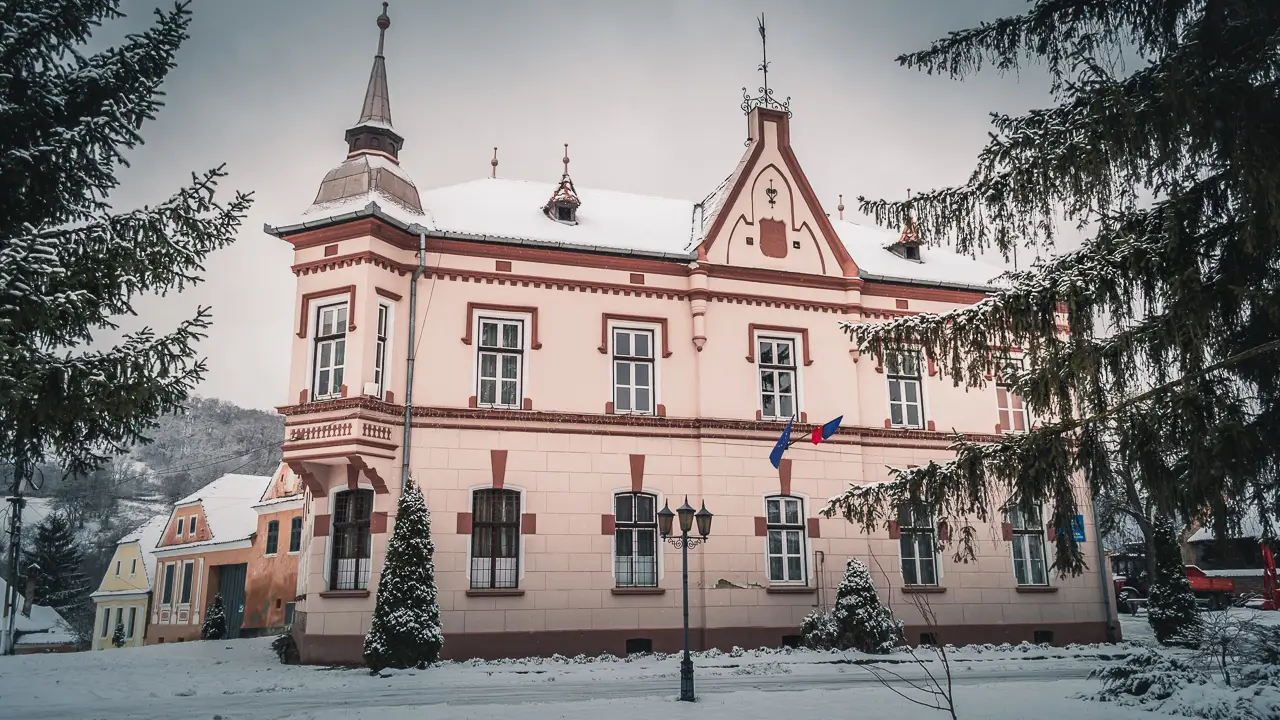
The Transylvanian commune of Apold is located in Mureș county, Romania. By car, you can actually reach it in almost 20 minutes of driving from the city of Sighișoara. The first thing that you should visit is the Fortified Saxon church. You will find this church almost in the center of the commune right next to the commune’s hall.
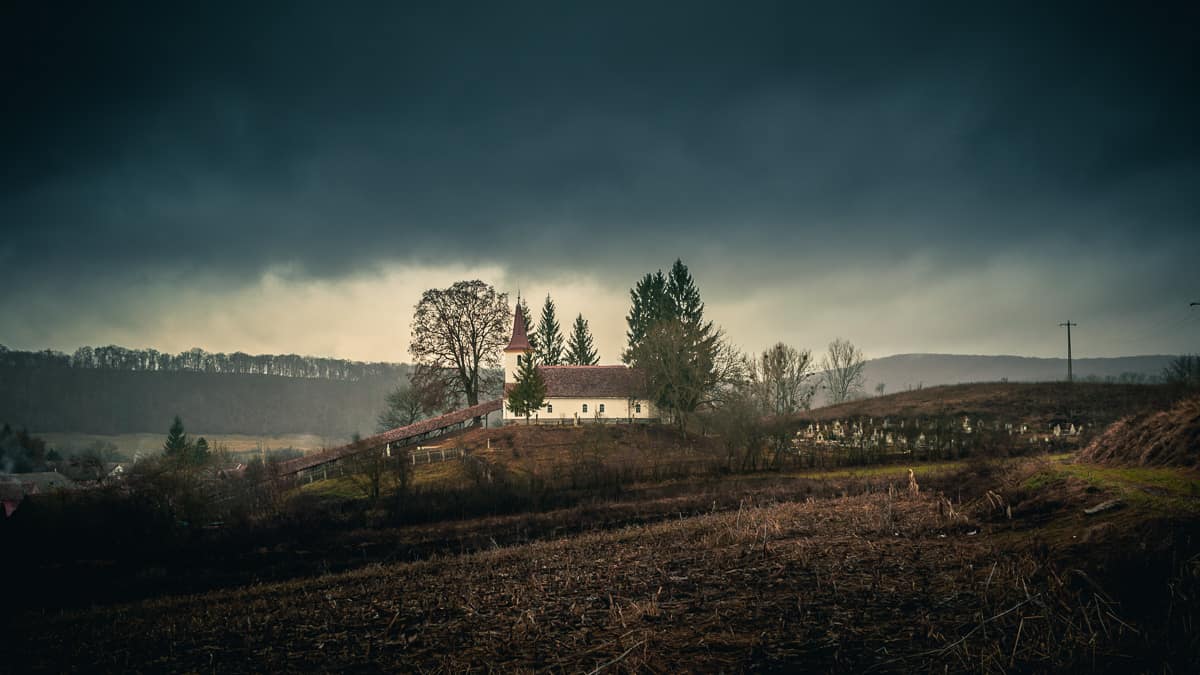
Another historical monument in Apold, besides the fortified church, is St. George’s church with its long covered stairway. This smaller church is actually a couple of streets away from the old Fortified Saxon church.
Is there something else to explore in the area?
Not far from the commune of Apold, you will find the village of Daia. Over there you will have the chance to discover another interesting old Saxon church. This one is truly unique compared to the rest of the fortified churches in the historical region of Transylvanian because the church’s tower was not built inside the fortification walls surrounding the church.
Also I have to mention the medieval citadel of Sighisoara which is only about 15 km away from Apold.
After visiting some old fortified churches in the area, like the one form the Transylvanian village of Mălâncrav, on our way back, I’ve decided to capture some photos of the Sighișoara medieval citadel as well.
The Clock Tower
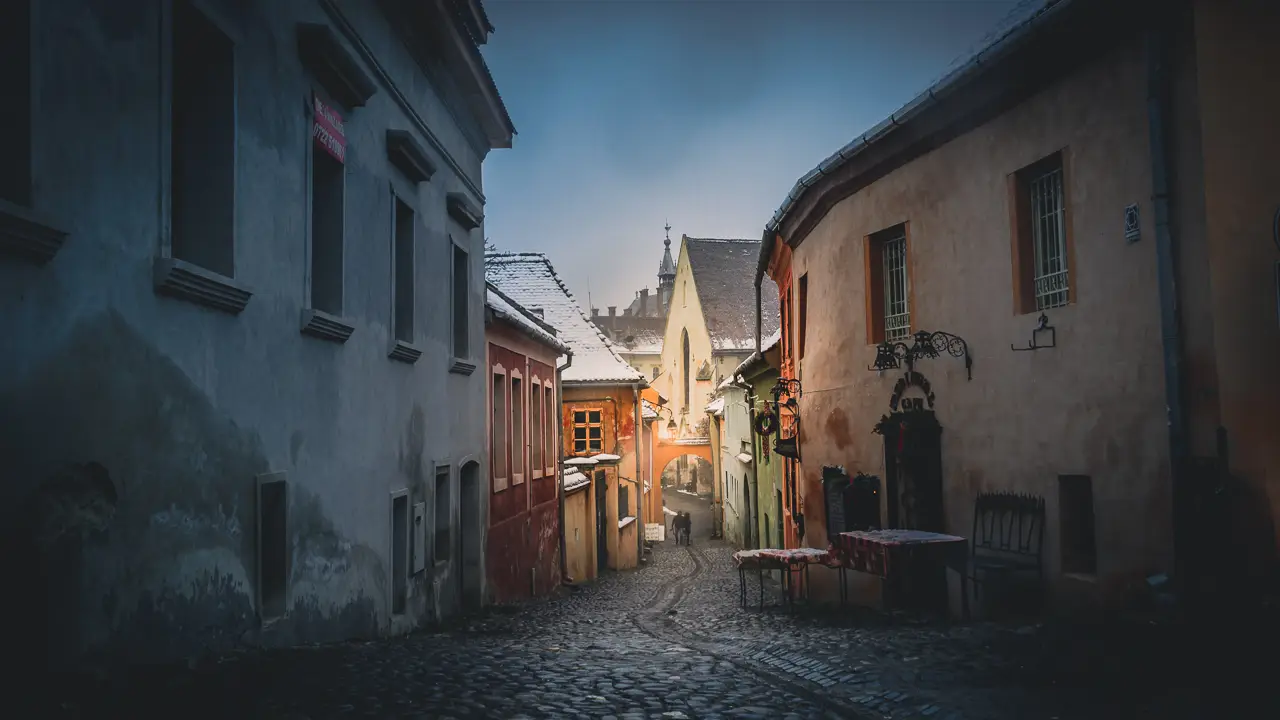
The starting point of this photo shoot was at the Clock Tower because this buildings is one of the most important in Sighișoara. That day despite that outside was very cold, in the citadel I saw a lot of tourists wondering around and admiring the old buildings.
Dracula’s house and the Stag House
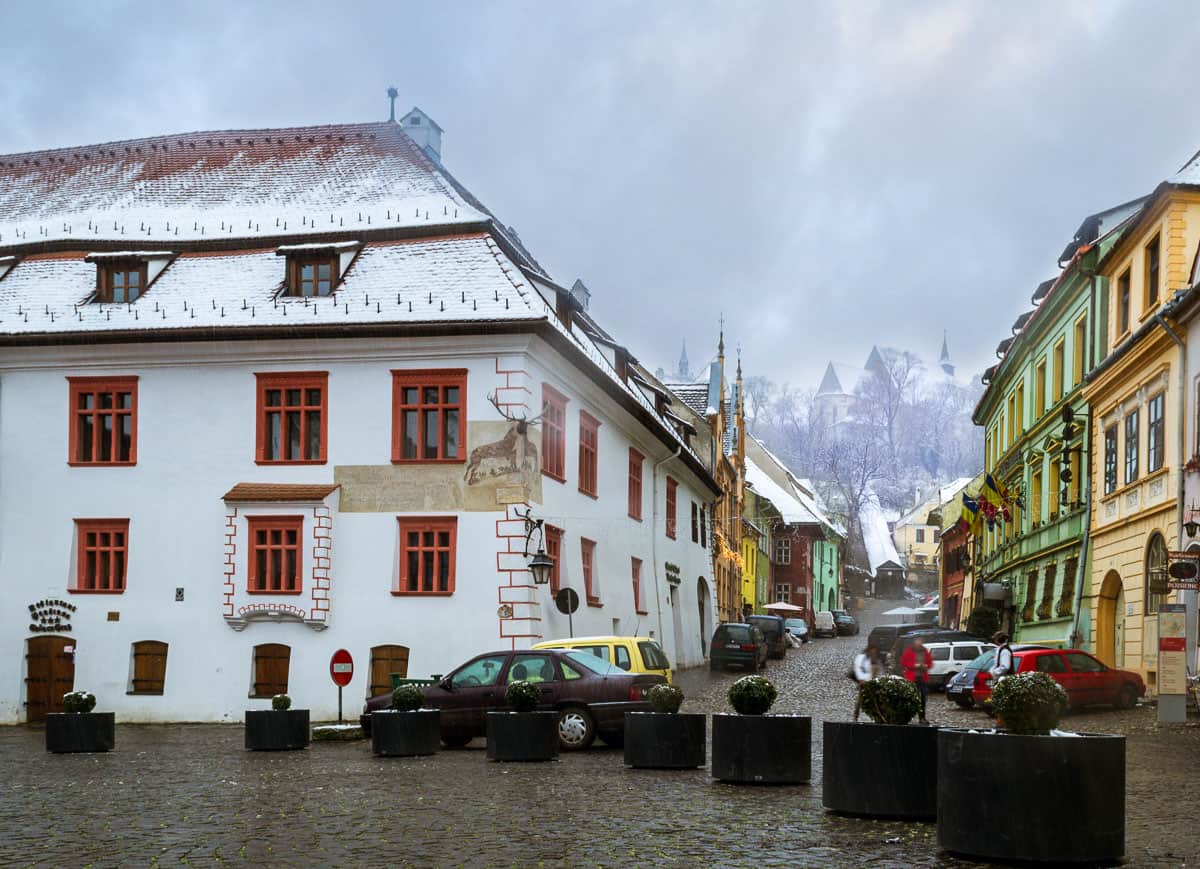
According to the legends, the building painted in yellow was the birthplace of Vlad the Impaler aka Dracula. If you take a closer look, you can even see in the background of the photo the Church on the Hill.
Not far from Dracula’s birthplace you will find another interesting building which is called the Stag House. The reason for its name is that you will find a stag head right on the corner of the building.
The Covered Stairway in the citadel
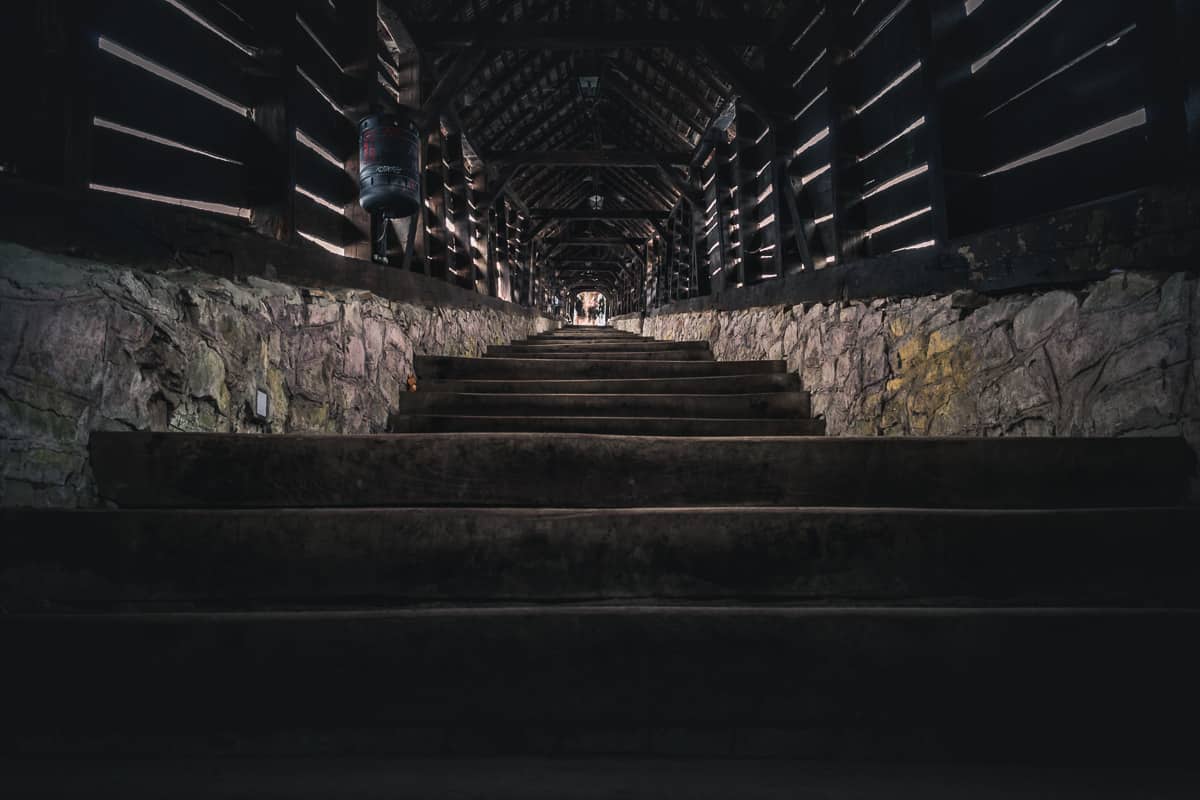
The covered stairway was built 1642 and it offered a safe climb to the Lutheran church and to the school especially in the winter season. The stairway is also know as the Scholar’s stairs.
Exploring the upper part of Sighișoara medieval citadel
Once you climb all the stairs of the old Covered Stairway you will end up in the upper part of the medieval citadel. Over there you will find the Church on the Hill which originally was a catholic church and after the 1547 Reform, the majority of the inhabitants of Sighișoara shifted to Lutheranism so after that, the Church on the Hill was turned into a Lutheran church. Near the church is the old Saxon cemetery and the Ropemaker’s tower.
More photos about Sighișoara
If you would like to see more amazing hidden gems in the inhabited medieval citadel then I highly recommend to check out my other post about Sighișoara.
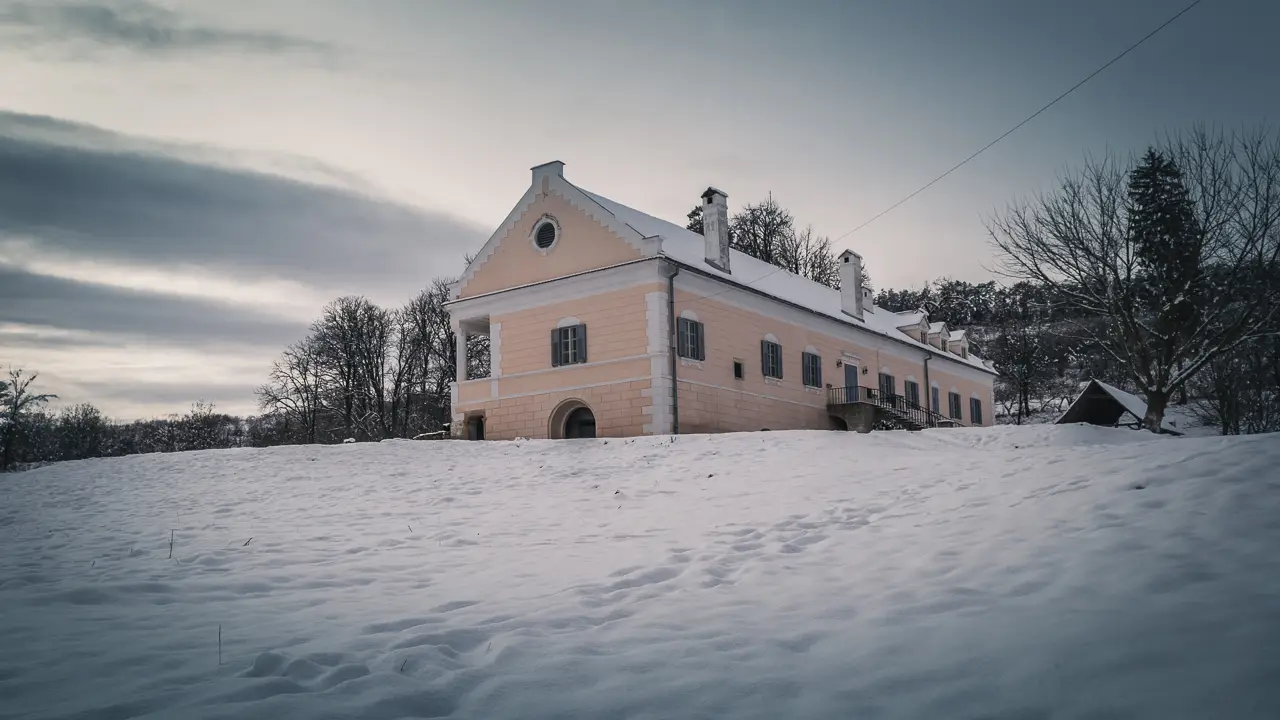
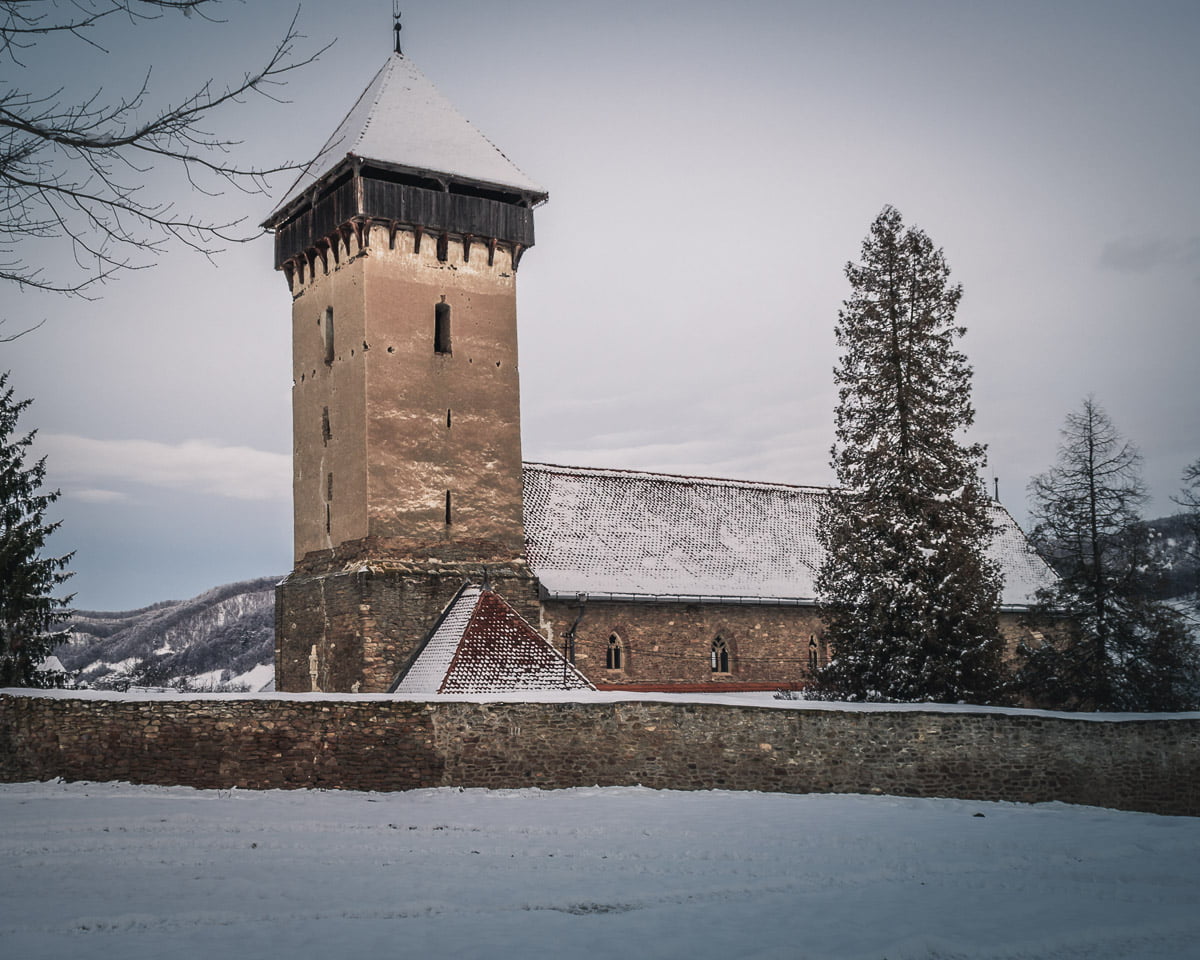
The Transylvanian village of Mălâncrav is located about 25 km away from the city of Sighișoara. You can find two important highlights in this village which are very close to each other. Those two highlights are the Apafi manor and the fortified Evangelical church.
The Apafi manor
The first important landmark to visit is the old Apafi manor which is located on the top of a smaller hill. This manor belonged to the famous Apafi noble family. We visited this place in winter when the entire place was covered by a thick layer of snow but you can easily reach it from the main road.
The Mălâncrav fortified church
Right next to the Apafi manor, you will find the old Evangelical fortified church. When we visited this place, the interior of the church was closed.
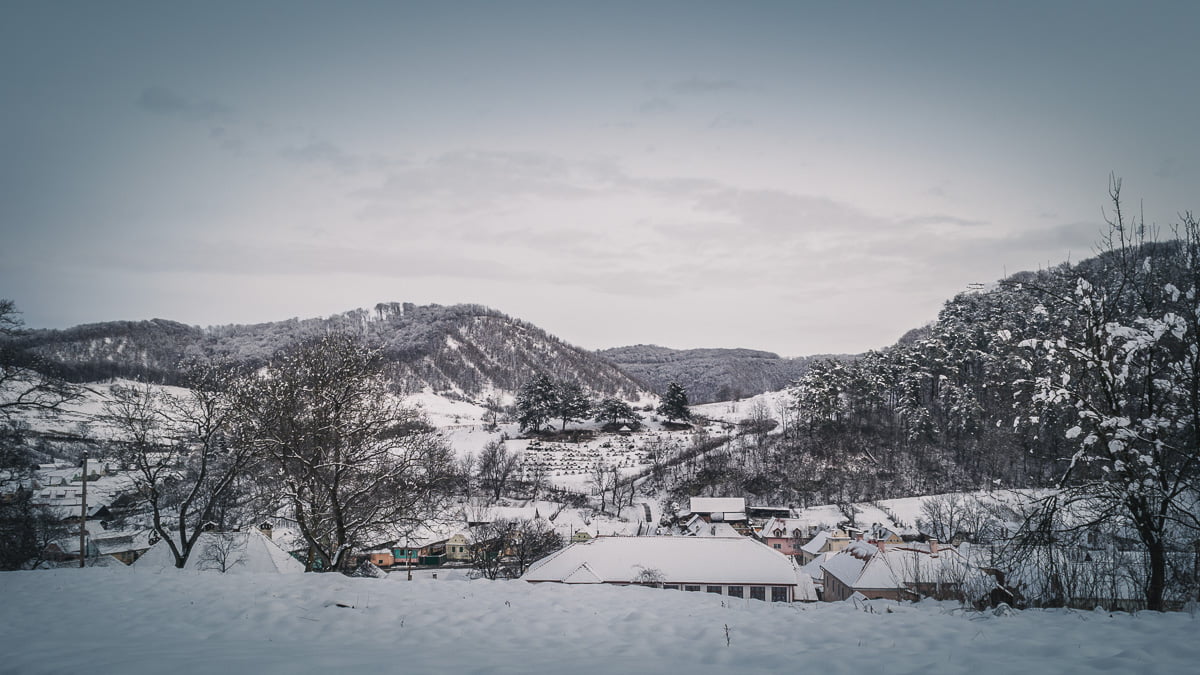
As you can see in the photo below, almost the entire village is surrounded by forested hills. Since the Apafi manor was built on a smaller hill, you can spot from up there the entire Transylvanian village and the beautiful scenery.
Other attractions to visit in the area:
The first one would be the beautiful Transylvanian medieval citadel of Sighisoara. As I mentioned above, this objective is only 25 km away from Mălâncrav.
The second attraction is the Biertan fortified church, located in the commune which bears the name of the fortified church. This church is much larger and more impressive than the one from Mălâncrav.
About 20 km away from the small city of Rupea you will find the village of Racos which is popular destination because of its captivating natural marvels waiting to be explored. Here, located within close proximity, you’ll encounter an ancient volcanic crater, an enchanting emerald lake, and striking basaltic columns. With their proximity, you can effortlessly explore these wonders within just a few hours, making for a memorable and fulfilling excursion.
The old volcano (Vulcanul Racos)
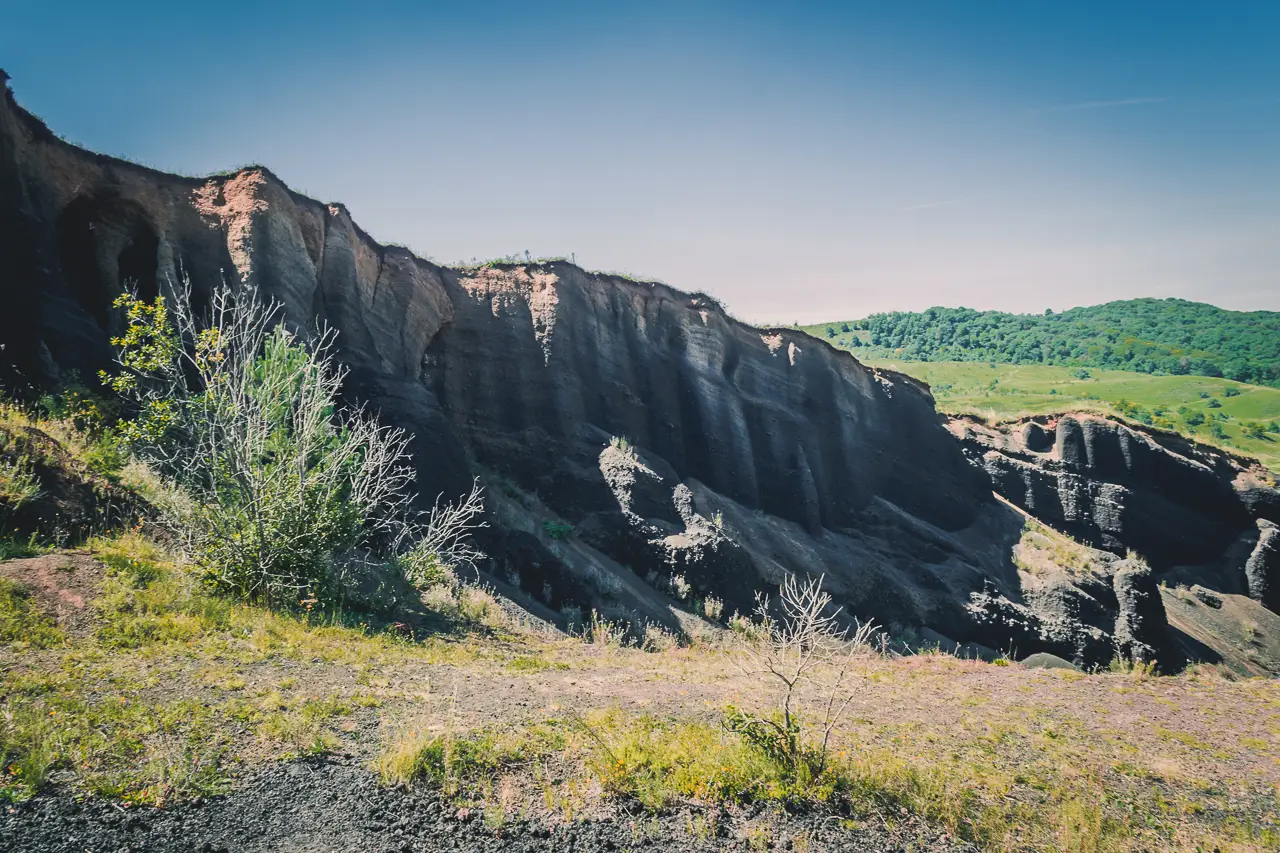
Located in close proximity to the charming village of Racos lies the remarkable remnants of a once-active volcano or vulcanul Racos in Romanian, serving as the nearest attraction to the area.
Our journey began with a visit to this geological site, situated on the outskirts of the commune. Accessible by vehicle, you can conveniently drive right up to the base of the volcano, providing an excellent starting point for your exploration of the region’s natural wonders.
As we approached, the imposing presence of the volcano’s crater became increasingly apparent, evoking a sense of awe and curiosity within us.
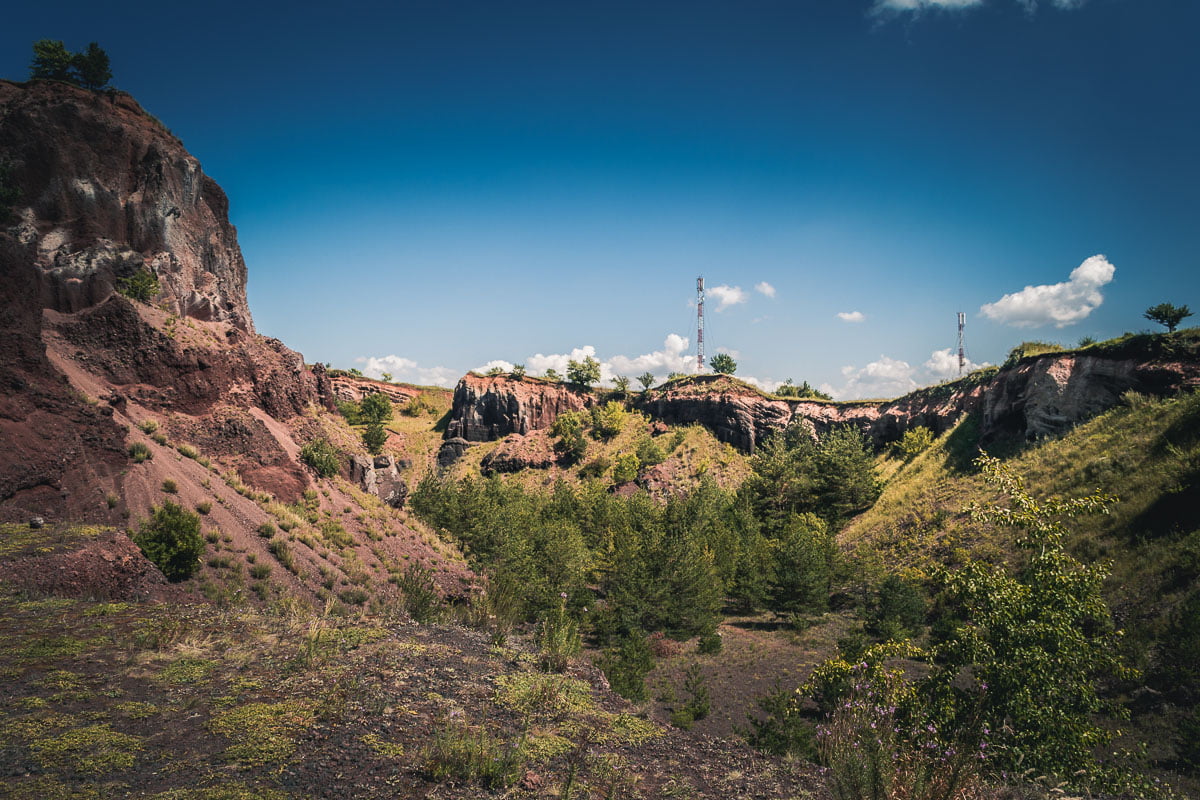
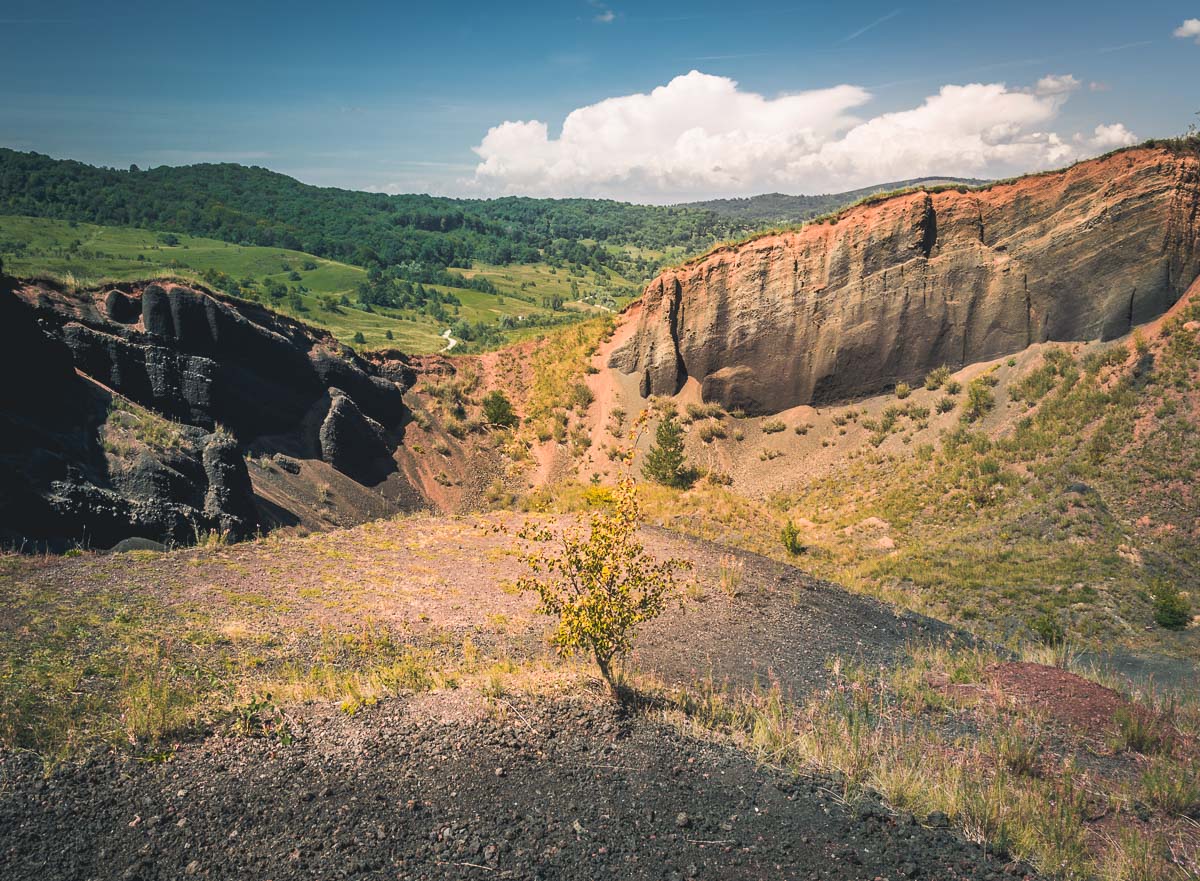
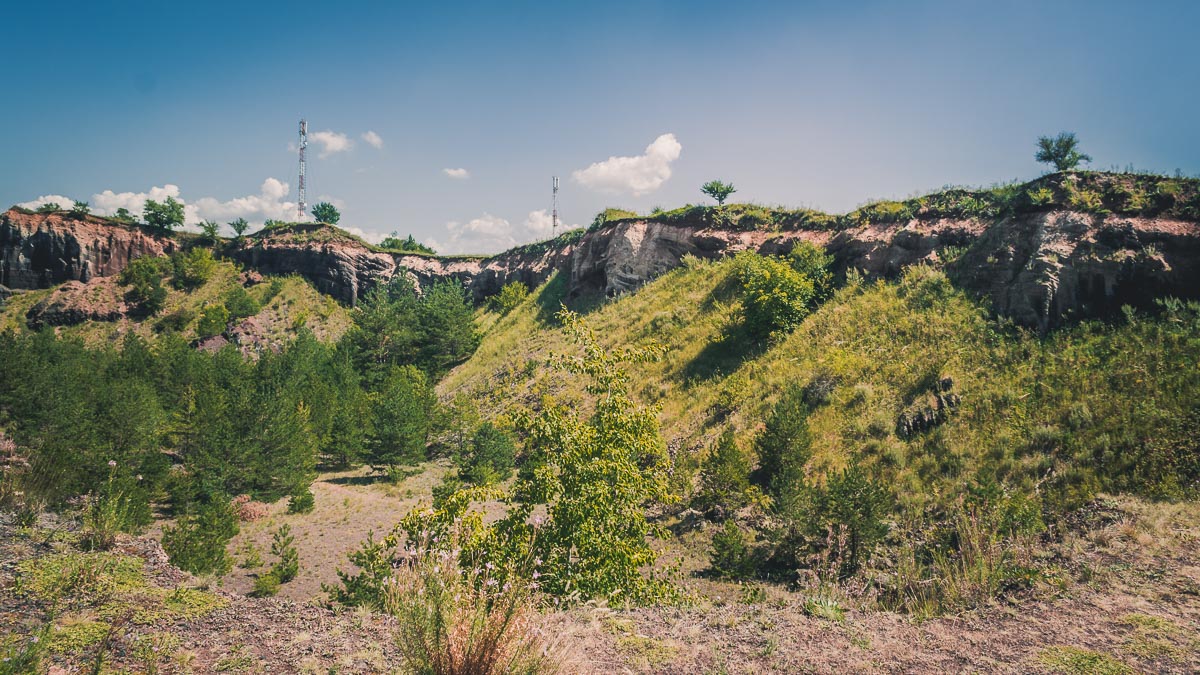
Exploring the crater of the former volcano offers a unique chance to see many signs of its active past. As you explore this special place, you’ll find various elements that vividly show its fiery history. One of the most noticeable features is the volcanic ash scattered around, reminding us of the intense geological activity that once happened here.
Important tip: Stick to the marked paths for visitors to stay safe
Perched on top of a big hill, the crater gives visitors an amazing view of the wide landscape surrounding the former volcano. From here, you can see stunning views that spread out in all directions, showing the varied geography of the area. The view includes green valleys, rolling hills, and faraway peaks, creating a beautiful scene that goes on as far as you can see. This special perspective lets you see how the volcano fits into the larger natural environment, giving clues about how the land formed over thousands of years. Standing at the edge of the crater, surrounded by peaceful surroundings, you can’t help but feel amazed and respectful of the grand landscape in front of you.
Inside the volcano’s crater.Path in the volcano.Black ash and green vegetation.A part of the large crater.Interesting shapes in the crater.
The emerald lake (Lacul de Smarald)
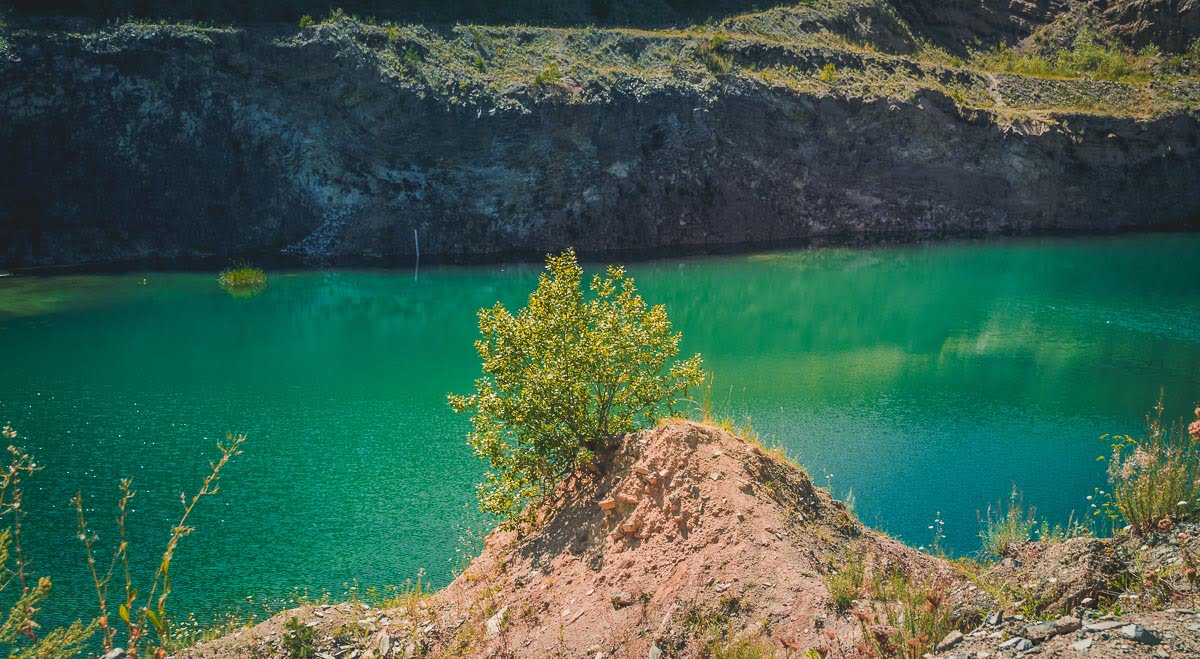
Once a busy quarry where basalt was mined, this place has now turned into a beautiful lake with a unique and striking character. Surrounded by tall rock walls that tell the story of its transformation, the lake feels calm and mysterious. Walking down the pathways that lead to the water’s edge, visitors get a close look at the mesmerizing scene.
What really catches your eye, though, is the amazing green color of the lake’s water—it’s like the most beautiful emeralds hence its name, the emerald lake or lacul de smarald in Romanian. This stunning color makes the landscape even more magical, shining brightly on everything around it. When the sunlight hits the water, it sparkles and shines, making it even more enchanting.
In this amazing place, you can’t help but get lost in thought, thinking about the wonders of nature and the incredible beauty all around. Whether you’re standing by the water or looking at it from up high, the emerald green lake fills you with wonder and amazement, inviting you to explore and think deeply. This is truly a place where the line between natural and magical blurs, leaving a lasting impression on everyone lucky enough to see it.
Small tree next to the emerald lake.The lake and some carvings on the steep cliff next to the lake.Road leading to the lake.
Other must-see attractions nearby:
In addition to exploring the wonders of Racos itself, there are several captivating attractions in the surrounding area waiting to be discovered. Here are some notable destinations worth visiting:
The Rupea Fortress – Just 20 km away, this well-preserved medieval fortress sits atop a hill and offers incredible views of the surrounding countryside. It’s a must-see for history enthusiasts!
The Transylvanian village of Viscri – explore this wonderful and unique traditional Transylvanian village, including the famous Fortified Church located in the village.
The Fortified Church in Saschiz – as you drive towards Sighisoara, right next to the main road, almost in the middle of the village, you will find the old Fortified Church.
The historic and charming commune of Saschiz is located in the heart of the historical region of Transylvania, Romania. This place is surrounded by rolling hills and picturesque landscapes. Whether you are interested in history, architecture, or simply want to escape the hustle and bustle of city life, Saschiz is a perfect destination for anyone looking for a unique and authentic experience in Romania.
Where is Saschiz located?
The commune is located approximately 20 kilometers from the city of Sighisoara. In order to reach Saschiz, from Sighisoara you will have to drive on the E60 road towards Brasov.
The Evangelical Fortified Church
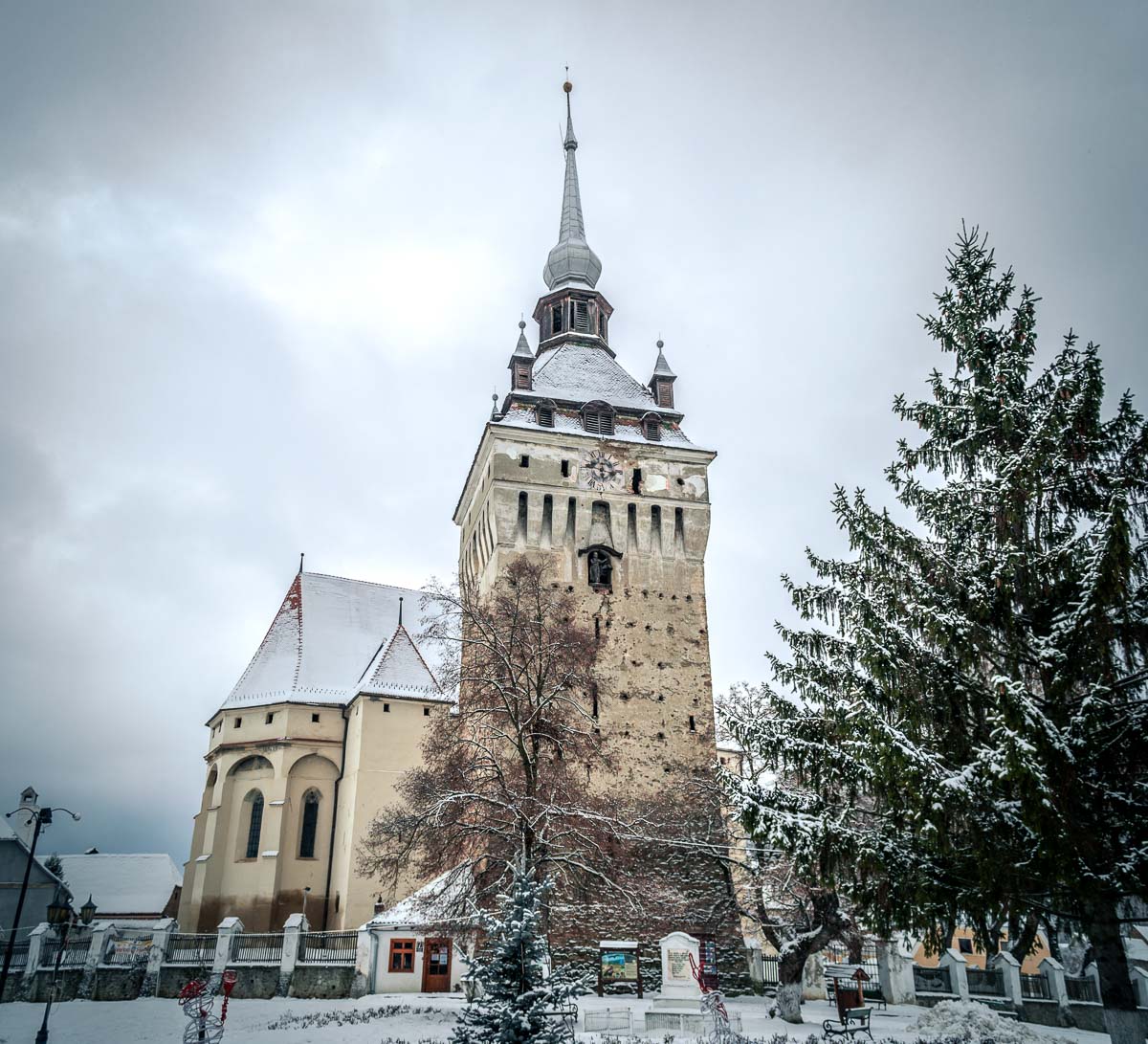
The village of Saschiz dates back to the Middle Ages and has a rich cultural heritage that is evident in its well-preserved architecture. The most notable of these is the old Evangelical Fortified Church, which was built in the late 14th century. One interesting thing about the Evangelical church tower, it looks almost the same as the famous Clock Tower from Sighisoara.
Today, the fortified church is well-preserved and is a popular tourist destination, attracting visitors from all over the world who are fascinated by its rich history and stunning medieval architecture.
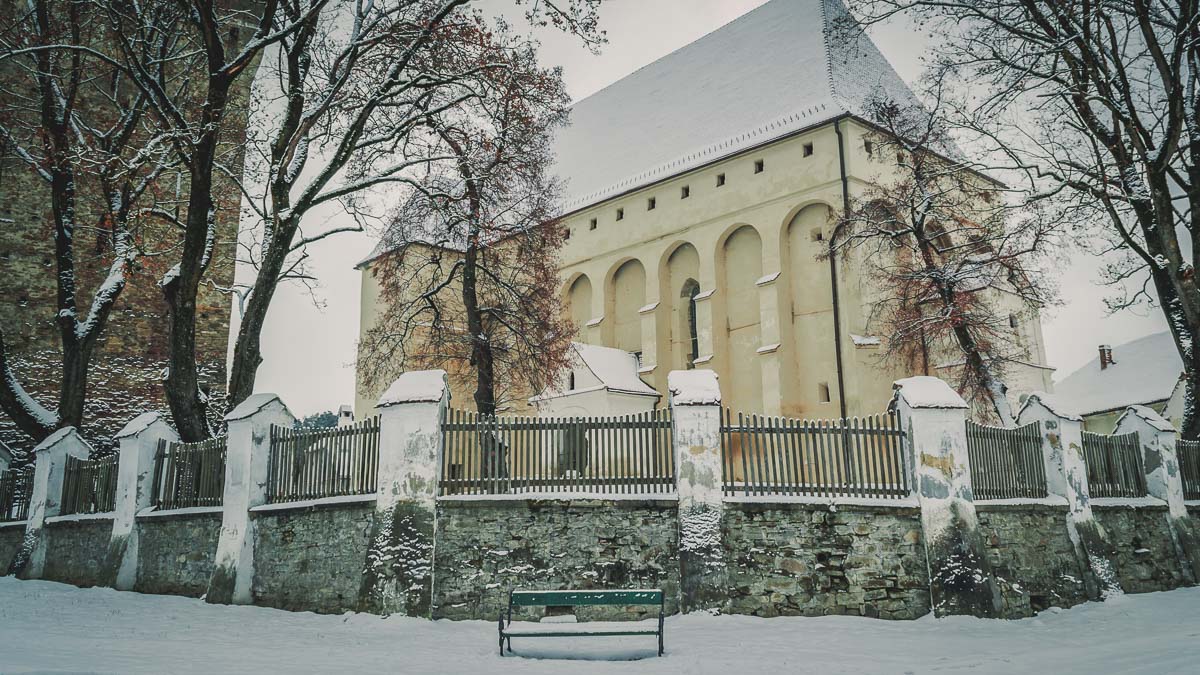
The Clock Tower in Saschiz.The church next to the Clock Tower.
Traditional Transylvanian houses
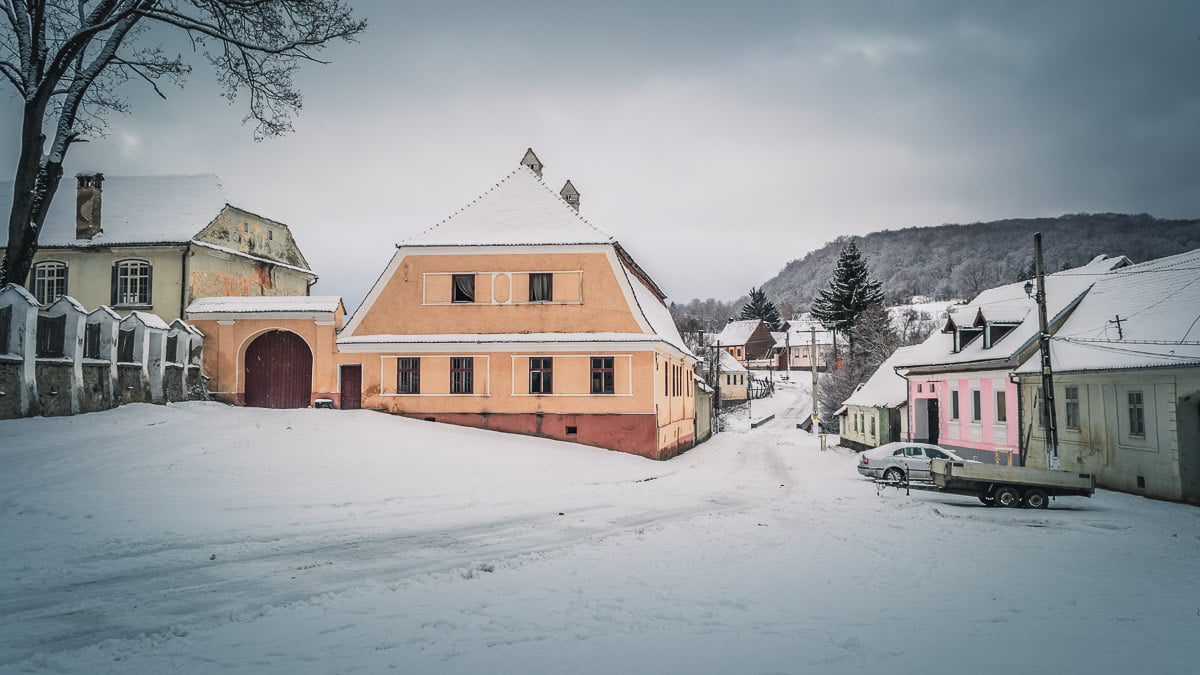
Traditional Transylvanian houses are a unique and charming architectural representation of the region’s rich history and cultural diversity. Transylvania, a historical region in central Romania, is famous for its picturesque landscapes and a heritage deeply influenced by various ethnic groups, including Romanians, Hungarians, Saxons, and Romani communities
A street in the village with traditional houses.
The Peasant Fortress
Beside the Evangelical fortified church, you will find another hidden gem is this commune. That is actually the ruins of the Peasant Fortress which was built by the Saxons in the 13th century. The fortress was built on the top of a larger hill and its about 2 km away from the Evangelical Fortified Church.
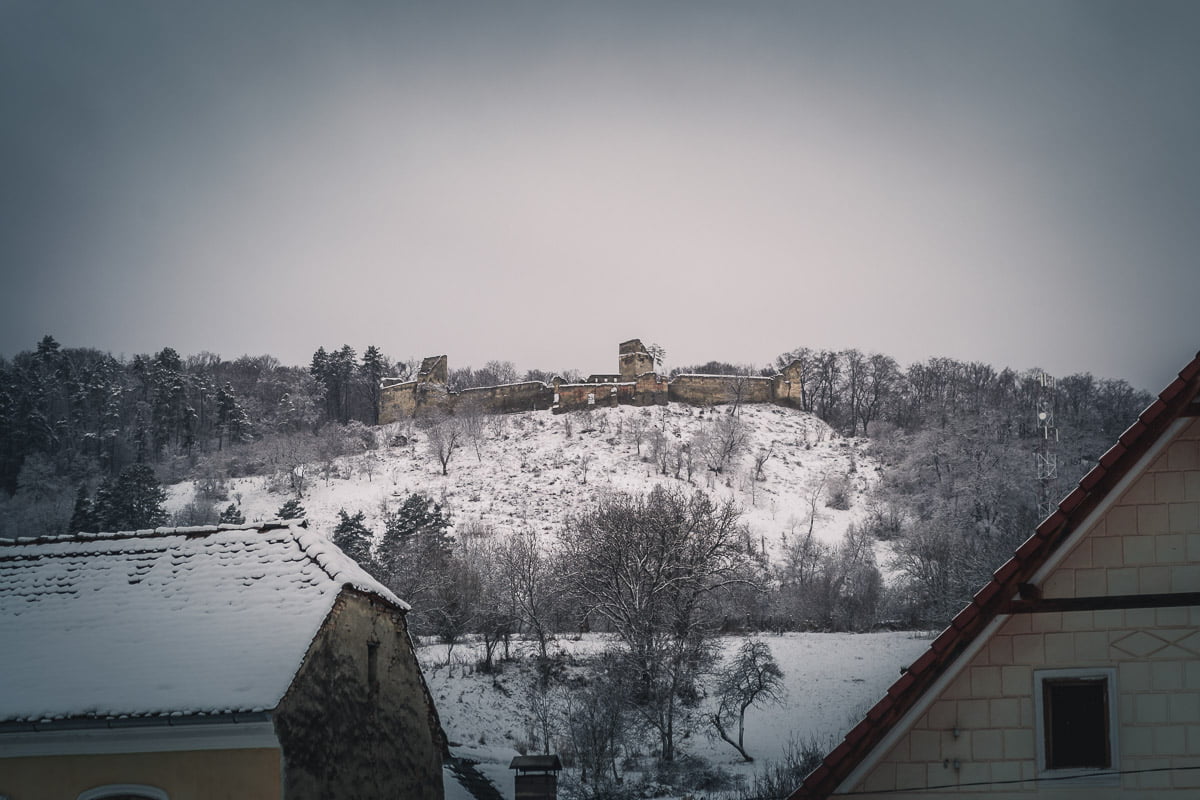
The Peasant Fortress located on a hill next to the village.
In conclusion, the village of Saschiz is a hidden gem in the heart of Transylvania that offers visitors a unique glimpse into the region’s rich cultural heritage and history. With its stunning architecture, breathtaking scenery, and traditional way of life, Saschiz is a must-visit destination for anyone interested in exploring the beauty and charm of Romania.
Top sights near Saschiz
The closest attraction to Saschiz is of course the medieval citadel of Sighisoara.
Another important sight near Saschiz is the old village of Viscri.
Close to the village of Viscri you will find the Rupea fortress.
We use cookies on our website to give you the most relevant experience by remembering your preferences and repeat visits. By clicking “Accept All”, you consent to the use of ALL the cookies. However, you may visit "Cookie Settings" to provide a controlled consent.
This website uses cookies to improve your experience while you navigate through the website. Out of these, the cookies that are categorized as necessary are stored on your browser as they are essential for the working of basic functionalities of the website. We also use third-party cookies that help us analyze and understand how you use this website. These cookies will be stored in your browser only with your consent. You also have the option to opt-out of these cookies. But opting out of some of these cookies may affect your browsing experience.
Necessary cookies are absolutely essential for the website to function properly. These cookies ensure basic functionalities and security features of the website, anonymously.
Cookie
Duration
Description
cookielawinfo-checkbox-analytics
11 months
This cookie is set by GDPR Cookie Consent plugin. The cookie is used to store the user consent for the cookies in the category "Analytics".
cookielawinfo-checkbox-functional
11 months
The cookie is set by GDPR cookie consent to record the user consent for the cookies in the category "Functional".
cookielawinfo-checkbox-necessary
11 months
This cookie is set by GDPR Cookie Consent plugin. The cookies is used to store the user consent for the cookies in the category "Necessary".
cookielawinfo-checkbox-others
11 months
This cookie is set by GDPR Cookie Consent plugin. The cookie is used to store the user consent for the cookies in the category "Other.
cookielawinfo-checkbox-performance
11 months
This cookie is set by GDPR Cookie Consent plugin. The cookie is used to store the user consent for the cookies in the category "Performance".
viewed_cookie_policy
11 months
The cookie is set by the GDPR Cookie Consent plugin and is used to store whether or not user has consented to the use of cookies. It does not store any personal data.
Functional cookies help to perform certain functionalities like sharing the content of the website on social media platforms, collect feedbacks, and other third-party features.
Performance cookies are used to understand and analyze the key performance indexes of the website which helps in delivering a better user experience for the visitors.
Analytical cookies are used to understand how visitors interact with the website. These cookies help provide information on metrics the number of visitors, bounce rate, traffic source, etc.
Advertisement cookies are used to provide visitors with relevant ads and marketing campaigns. These cookies track visitors across websites and collect information to provide customized ads.