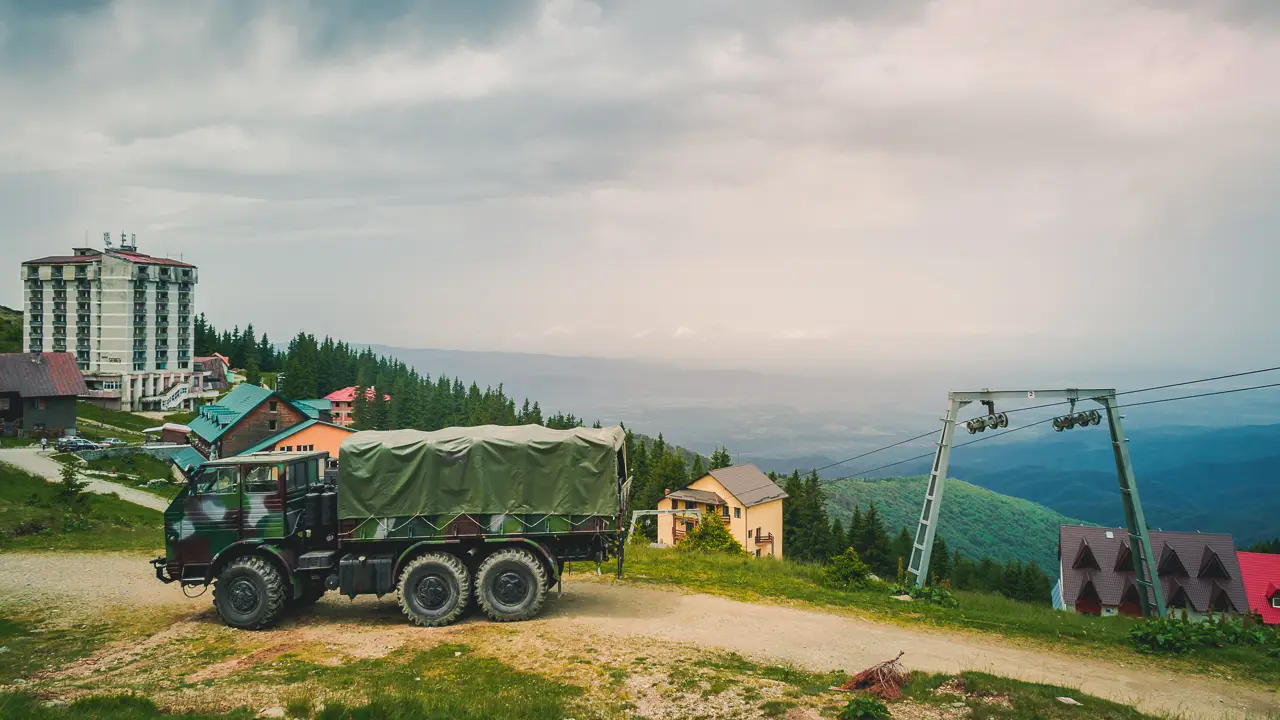
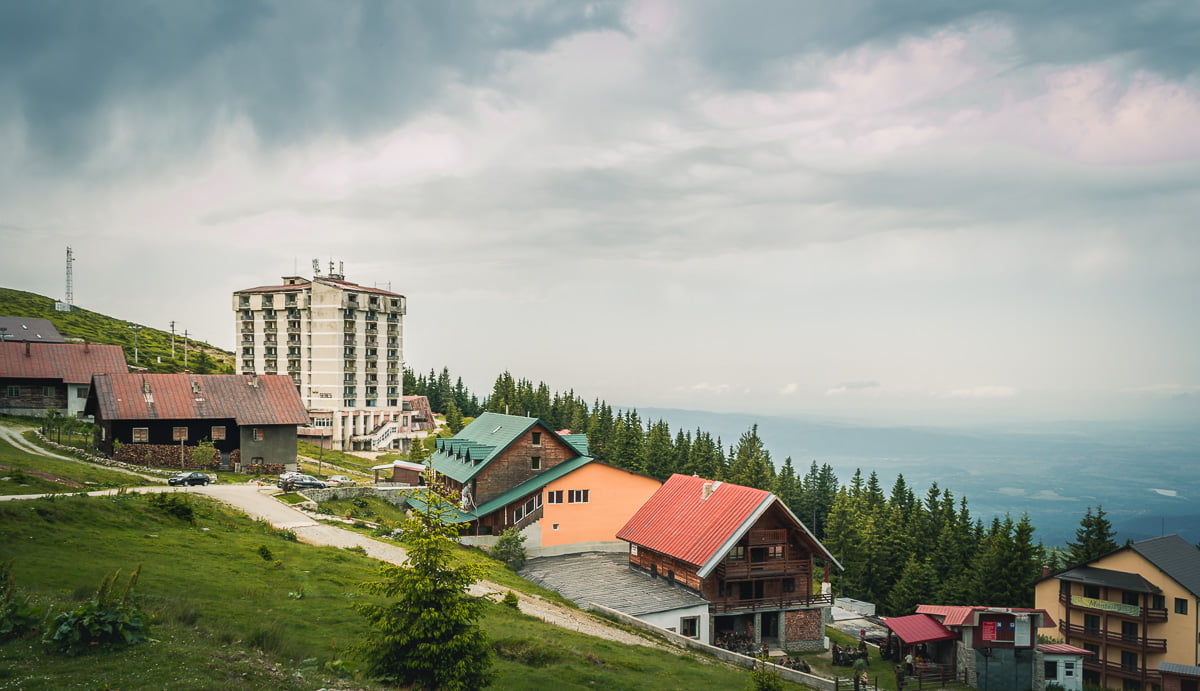
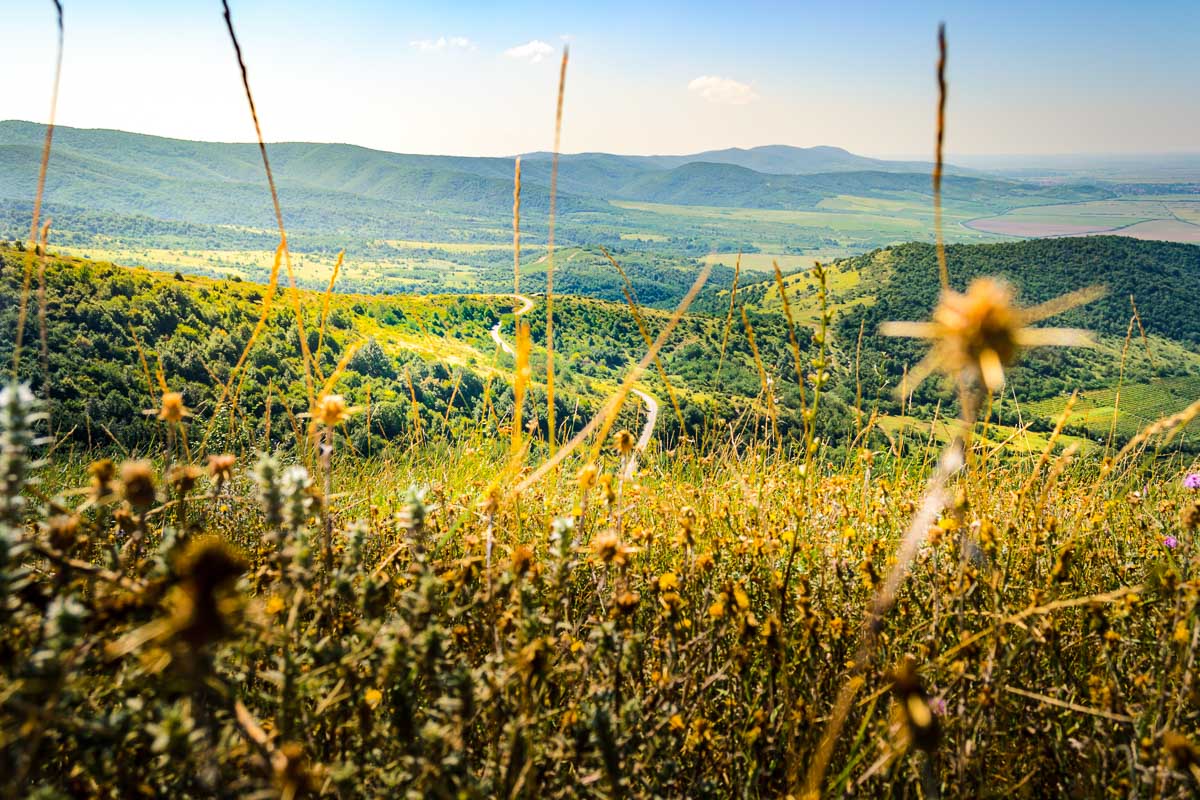
Muntele Mic is a mountain resort located in the Retezat-Godeanu Mountains. The highest peak is 1,802 meters, and it is a popular destination for skiing and hiking. After we arrived at the resort, which shares the same name as the mountain, we decided to eat something before we started exploring the area. Close to where we parked our car, we found a nice wooden cabin with a restaurant. Also nearby is the abandoned Sebeș Hotel, which was the most modern building in the resort during the ’90s.
Things to visit in the resort:
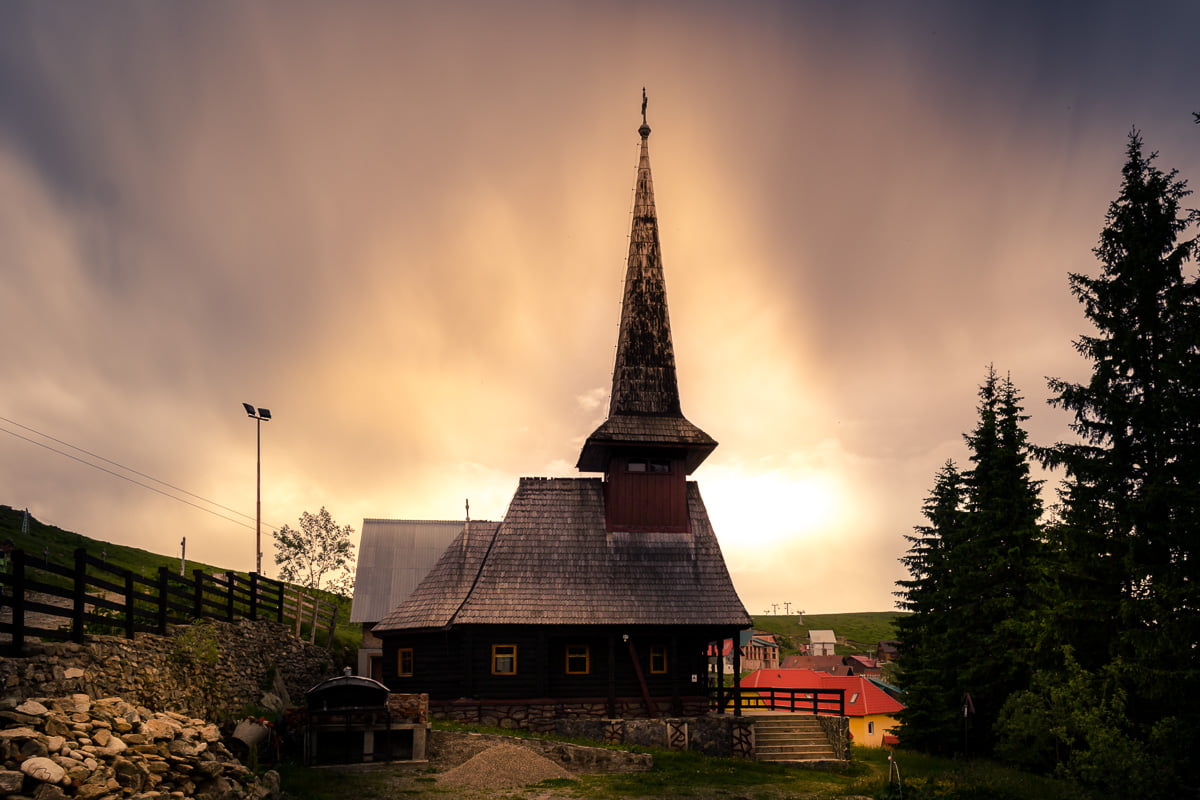
Not far from Hotel Sebeș, you can find a small wooden church. It’s actually close to the winter resort and the ski lifts. Below the church, there is a larger pine forest.
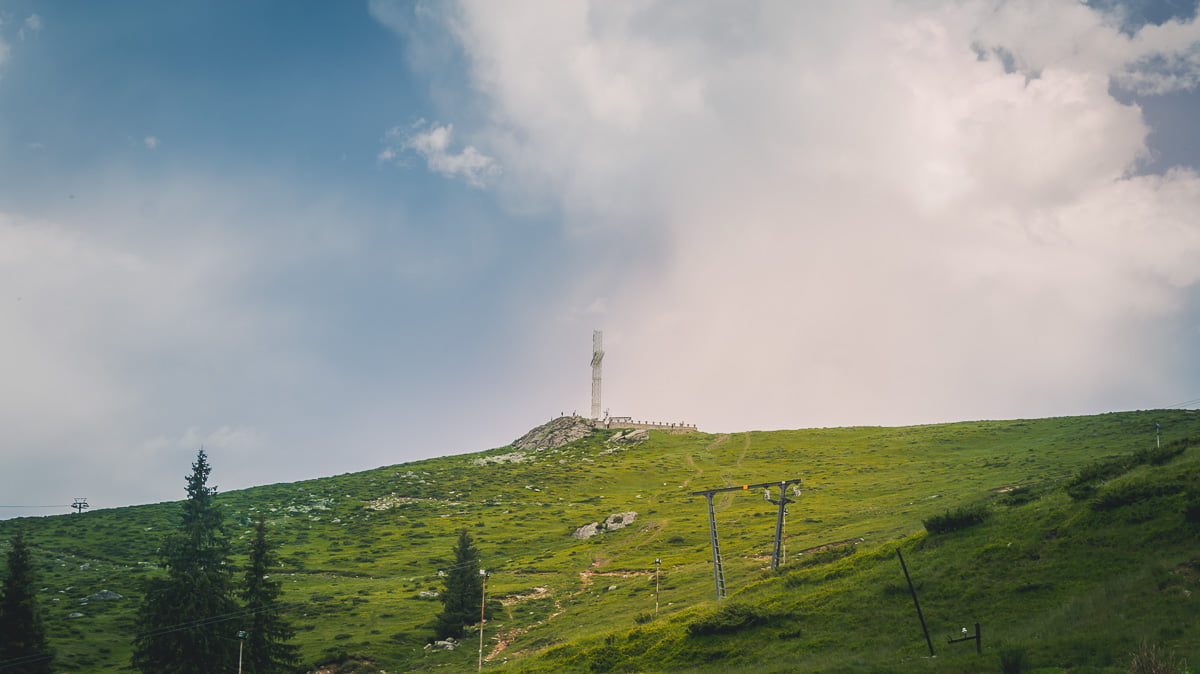
If you plan to visit Muntele Mic, you’ll have the chance to see a large cross on top of the mountain once you reach the resort. There is also a road that leads to the cross. Unfortunately, when we were there, some storm clouds were approaching the resort, and we decided not to drive up to the cross. The view is probably much nicer from up there.
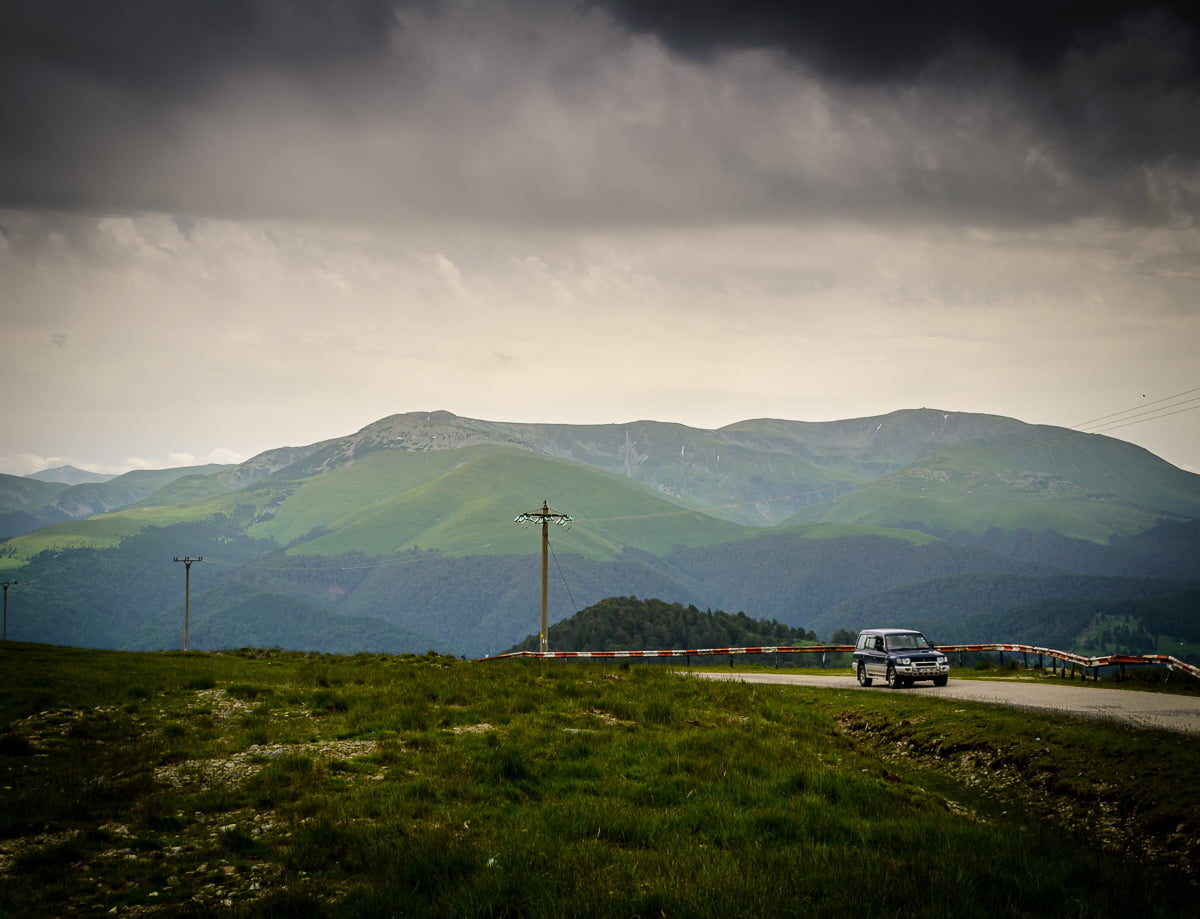
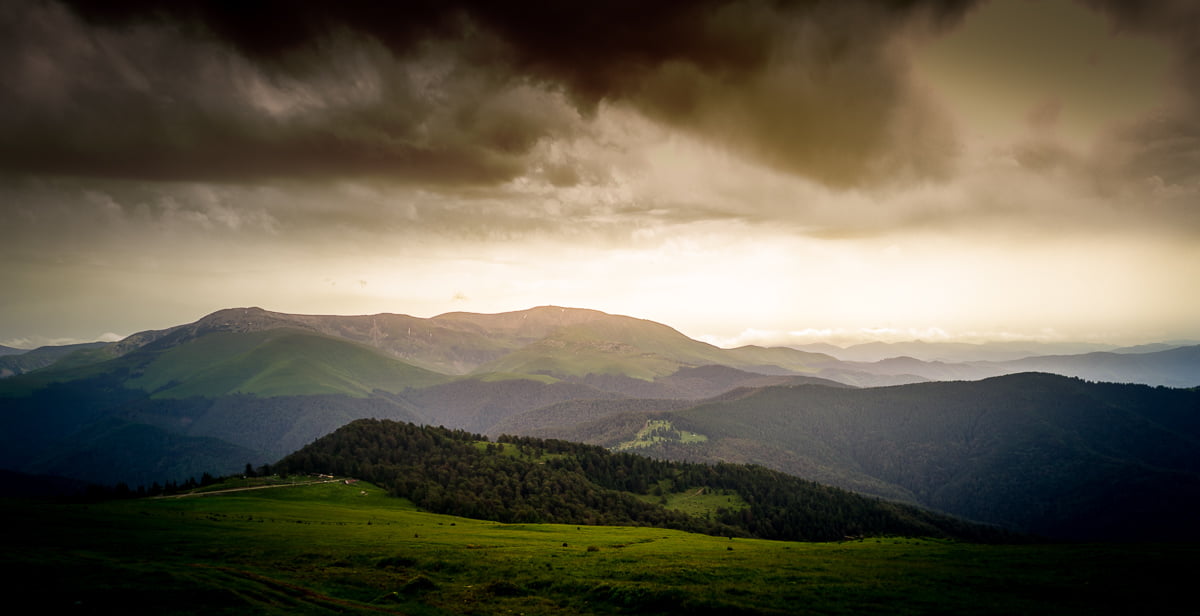
After we explored the Muntele Mic resort for more than an hour, we decided to leave. From the resort, we drove toward the plateau, where I took some landscape photos of the Țarcu Mountains, which were visible from there. Since the weather was warm, I managed to spot a few patches of snow near the peaks. I heard that the highest peak is over 2,000 meters. Overall, the scenery is breathtaking from the plateau. It’s also the perfect place to capture some amazing landscape photos.
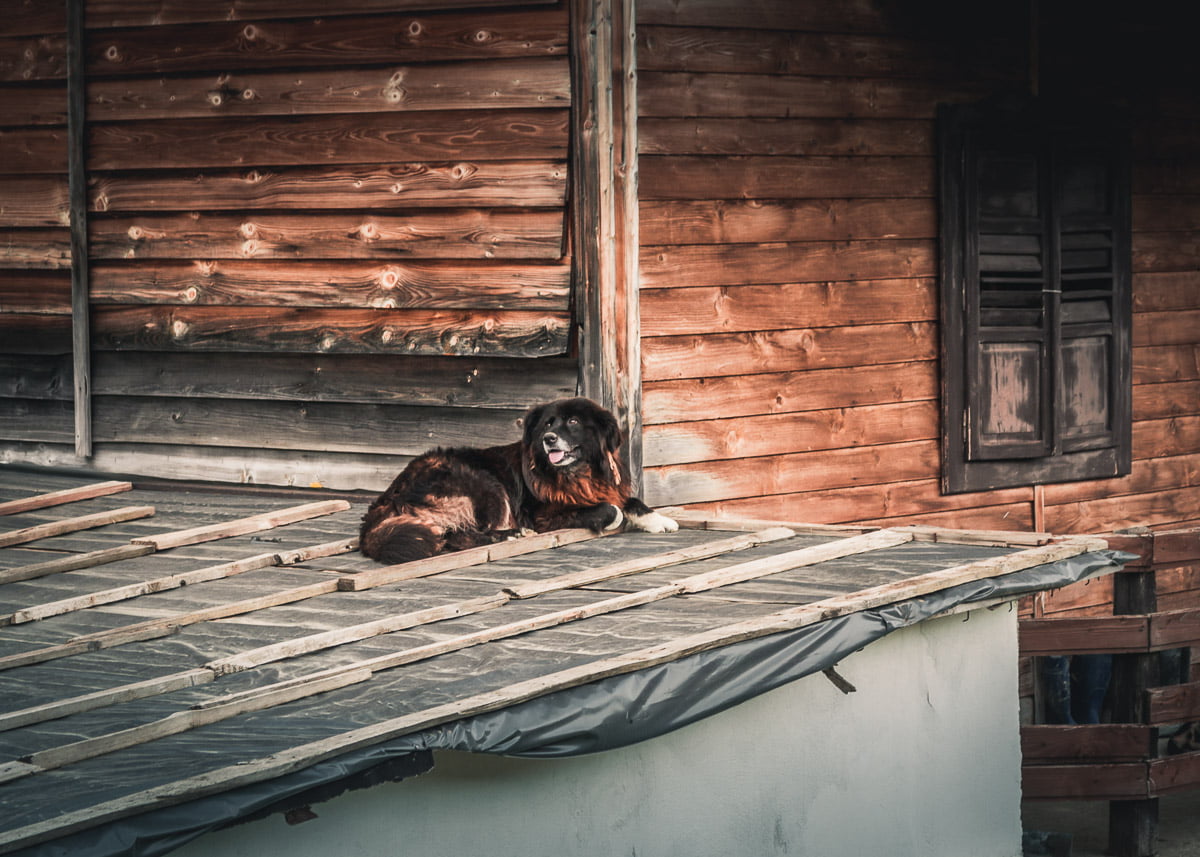
Muntele Mic resort in the summer.Large cross next to the ski slopesA small wooden church in the resort.A dog resting on the roof of a shack.The Țarcu Mountains in the background.The beautiful landscape as seen from Muntele Mic resort.
What else can you visit in the area near Muntele Mic?
Not far from here, you’ll find Poiana Mărului, located down in the valley, not too far from Muntele Mic. The shortest route is a dirt road that starts a bit lower in the valley. Keep in mind that this road is recommended only for 4×4 vehicles.
About 20 km away from the small city of Rupea you will find the village of Racos which is popular destination because of its captivating natural marvels waiting to be explored. Here, located within close proximity, you’ll encounter an ancient volcanic crater, an enchanting emerald lake, and striking basaltic columns. With their proximity, you can effortlessly explore these wonders within just a few hours, making for a memorable and fulfilling excursion.
The old volcano (Vulcanul Racos)
Located in close proximity to the charming village of Racos lies the remarkable remnants of a once-active volcano or vulcanul Racos in Romanian, serving as the nearest attraction to the area.
Our journey began with a visit to this geological site, situated on the outskirts of the commune. Accessible by vehicle, you can conveniently drive right up to the base of the volcano, providing an excellent starting point for your exploration of the region’s natural wonders.
As we approached, the imposing presence of the volcano’s crater became increasingly apparent, evoking a sense of awe and curiosity within us.
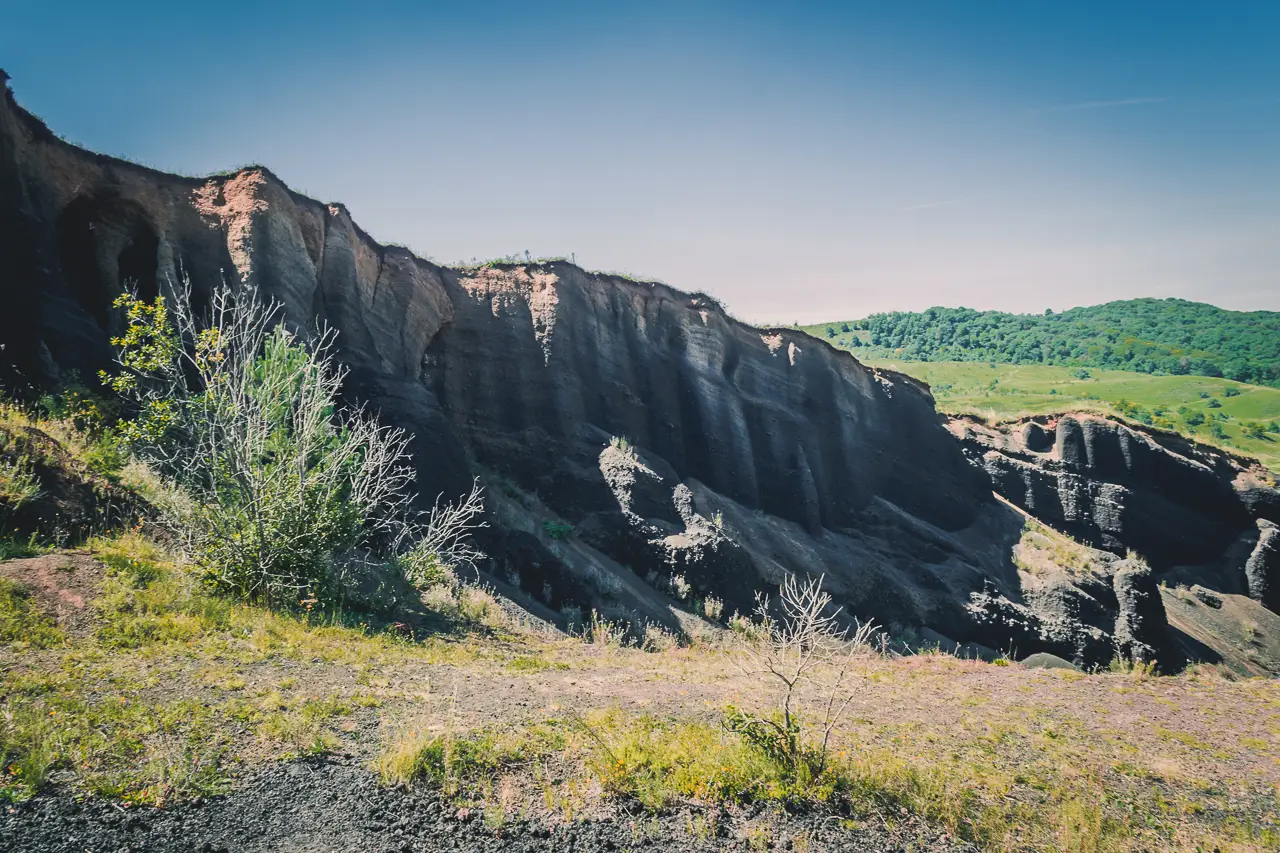
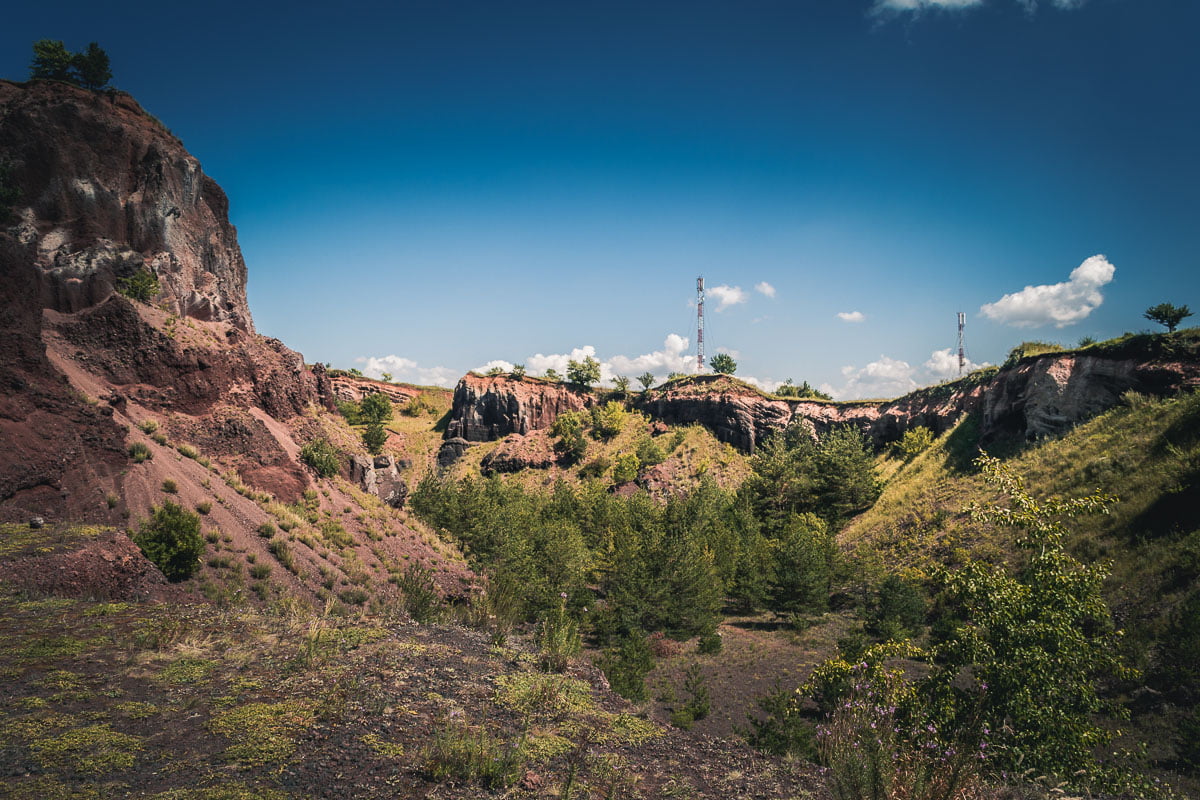
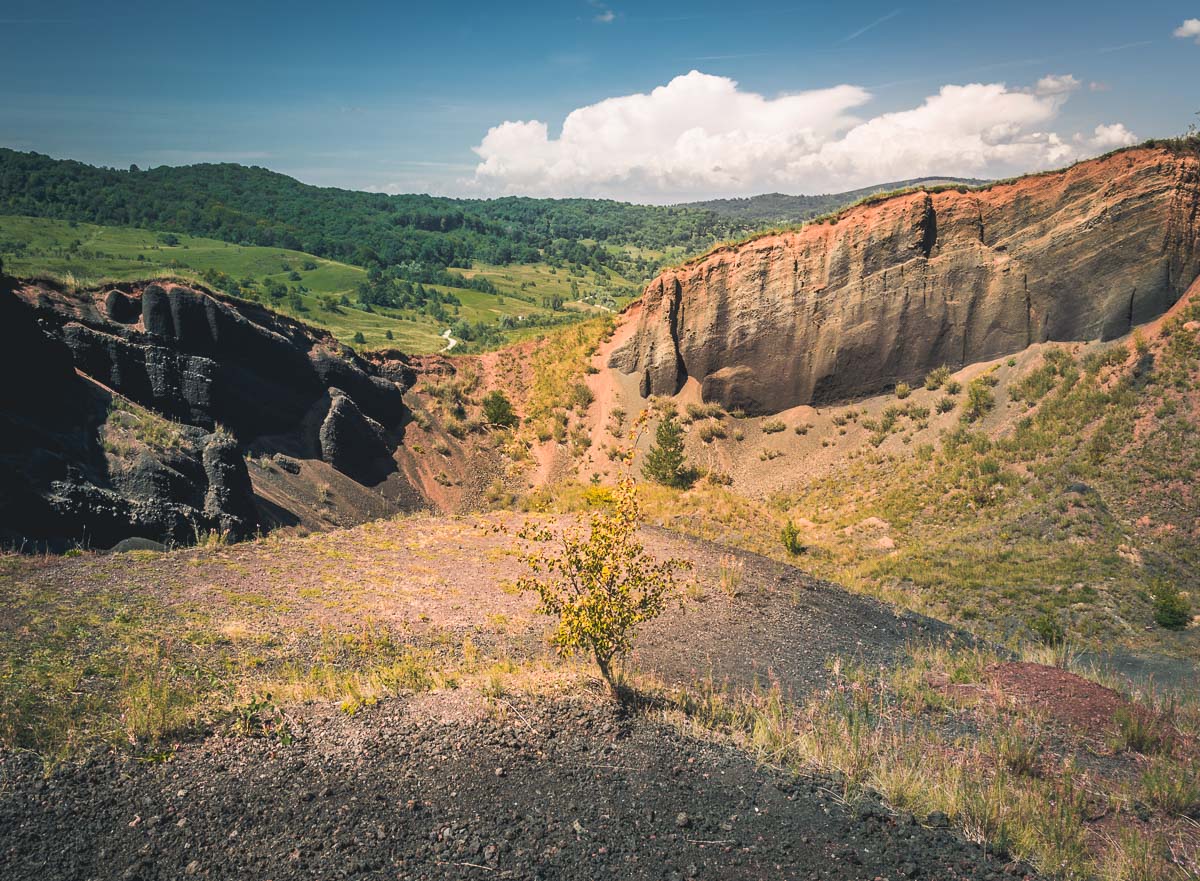
Exploring the crater of the former volcano offers a unique chance to see many signs of its active past. As you explore this special place, you’ll find various elements that vividly show its fiery history. One of the most noticeable features is the volcanic ash scattered around, reminding us of the intense geological activity that once happened here.
Important tip: Stick to the marked paths for visitors to stay safe
Perched on top of a big hill, the crater gives visitors an amazing view of the wide landscape surrounding the former volcano. From here, you can see stunning views that spread out in all directions, showing the varied geography of the area. The view includes green valleys, rolling hills, and faraway peaks, creating a beautiful scene that goes on as far as you can see. This special perspective lets you see how the volcano fits into the larger natural environment, giving clues about how the land formed over thousands of years. Standing at the edge of the crater, surrounded by peaceful surroundings, you can’t help but feel amazed and respectful of the grand landscape in front of you.
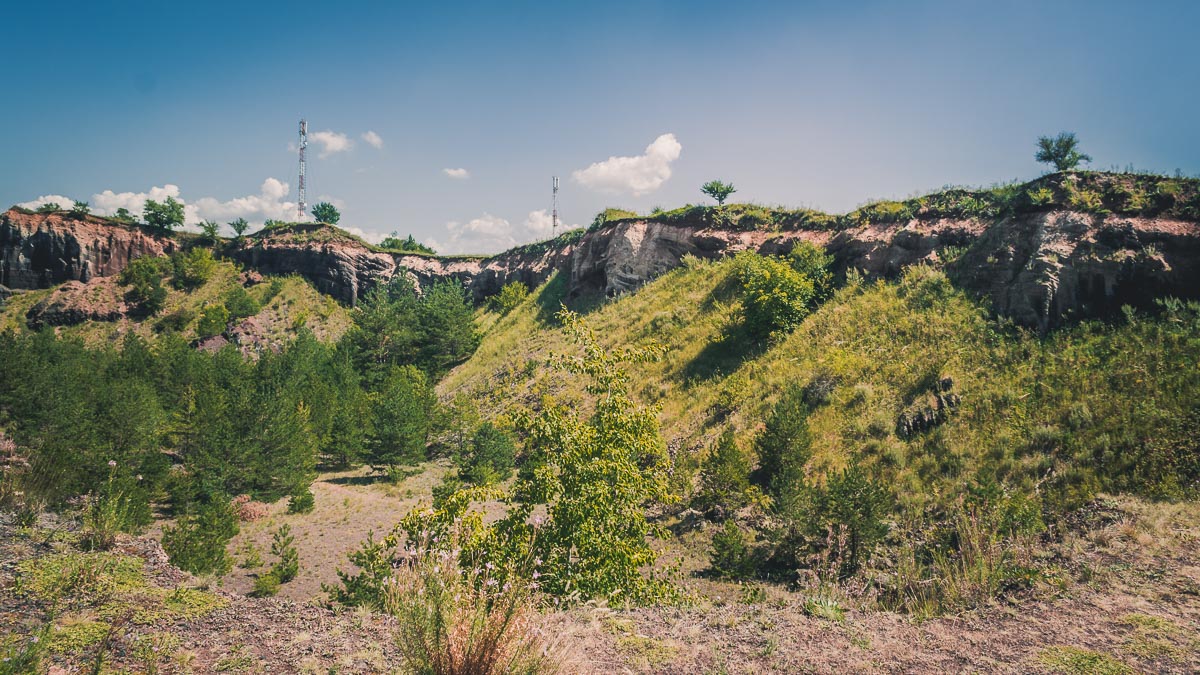
Inside the volcano’s crater.Path in the volcano.Black ash and green vegetation.A part of the large crater.Interesting shapes in the crater.
The emerald lake (Lacul de Smarald)
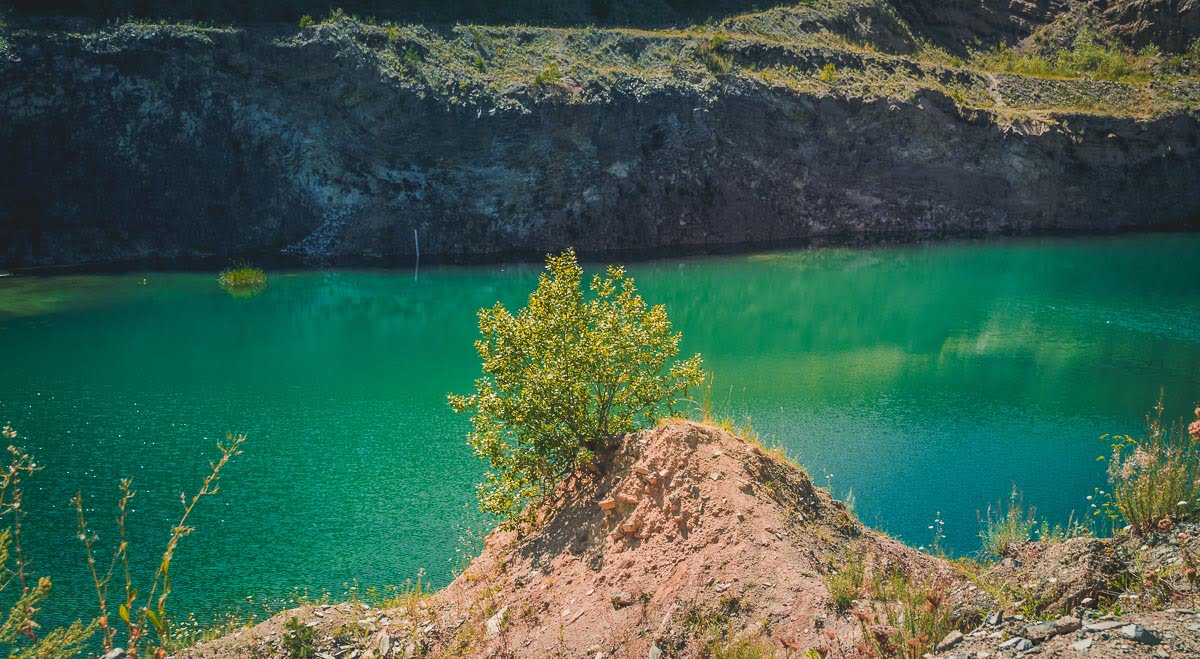
Once a busy quarry where basalt was mined, this place has now turned into a beautiful lake with a unique and striking character. Surrounded by tall rock walls that tell the story of its transformation, the lake feels calm and mysterious. Walking down the pathways that lead to the water’s edge, visitors get a close look at the mesmerizing scene.
What really catches your eye, though, is the amazing green color of the lake’s water—it’s like the most beautiful emeralds hence its name, the emerald lake or lacul de smarald in Romanian. This stunning color makes the landscape even more magical, shining brightly on everything around it. When the sunlight hits the water, it sparkles and shines, making it even more enchanting.
In this amazing place, you can’t help but get lost in thought, thinking about the wonders of nature and the incredible beauty all around. Whether you’re standing by the water or looking at it from up high, the emerald green lake fills you with wonder and amazement, inviting you to explore and think deeply. This is truly a place where the line between natural and magical blurs, leaving a lasting impression on everyone lucky enough to see it.
Small tree next to the emerald lake.The lake and some carvings on the steep cliff next to the lake.Road leading to the lake.
Other must-see attractions nearby:
In addition to exploring the wonders of Racos itself, there are several captivating attractions in the surrounding area waiting to be discovered. Here are some notable destinations worth visiting:
The Rupea Fortress – Just 20 km away, this well-preserved medieval fortress sits atop a hill and offers incredible views of the surrounding countryside. It’s a must-see for history enthusiasts!
The Transylvanian village of Viscri – explore this wonderful and unique traditional Transylvanian village, including the famous Fortified Church located in the village.
The Fortified Church in Saschiz – as you drive towards Sighisoara, right next to the main road, almost in the middle of the village, you will find the old Fortified Church.
The historic and charming commune of Saschiz is located in the heart of the historical region of Transylvania, Romania. This place is surrounded by rolling hills and picturesque landscapes. Whether you are interested in history, architecture, or simply want to escape the hustle and bustle of city life, Saschiz is a perfect destination for anyone looking for a unique and authentic experience in Romania.
Where is Saschiz located?
The commune is located approximately 20 kilometers from the city of Sighisoara. In order to reach Saschiz, from Sighisoara you will have to drive on the E60 road towards Brasov.
The Evangelical Fortified Church
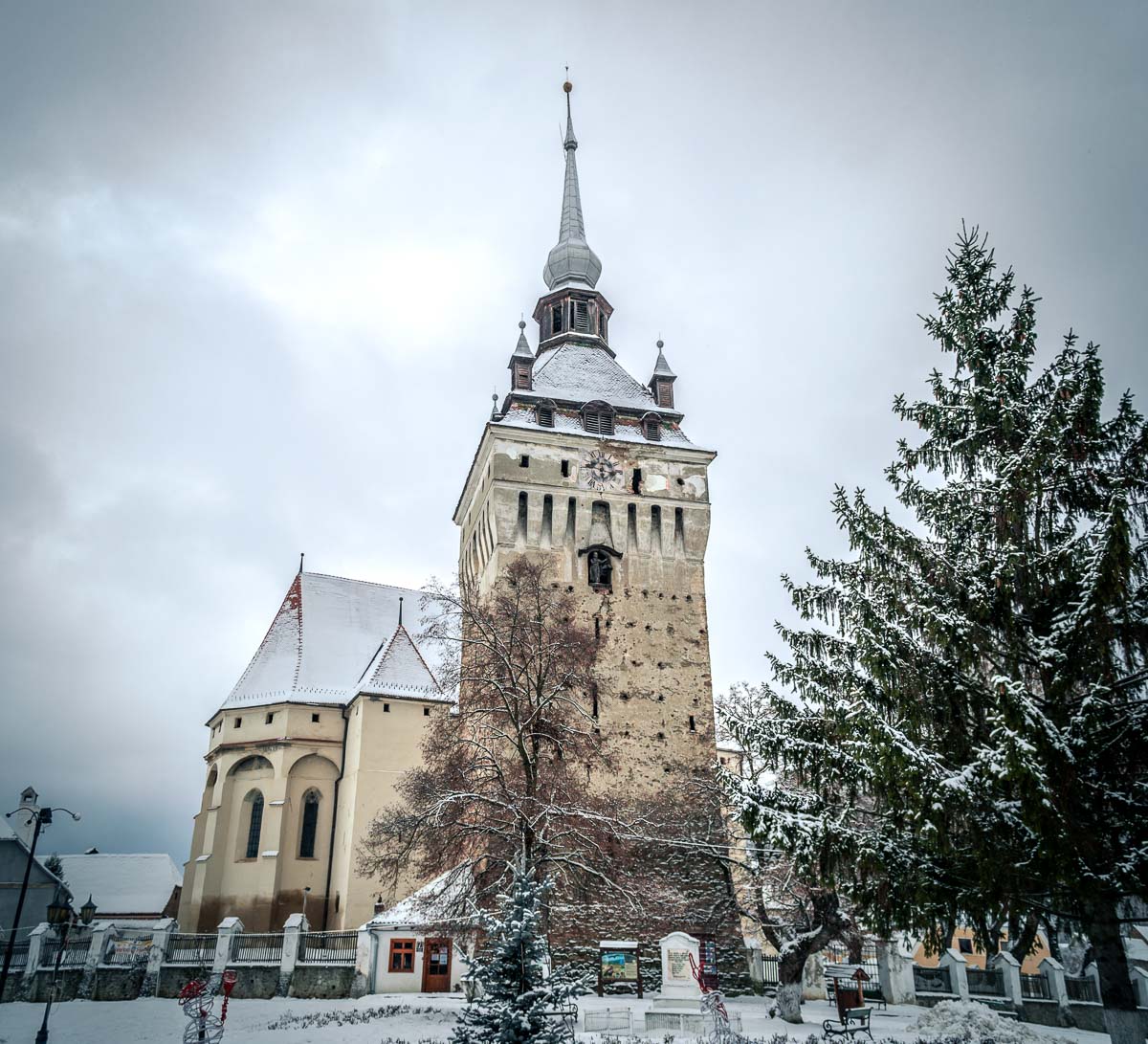
The village of Saschiz dates back to the Middle Ages and has a rich cultural heritage that is evident in its well-preserved architecture. The most notable of these is the old Evangelical Fortified Church, which was built in the late 14th century. One interesting thing about the Evangelical church tower, it looks almost the same as the famous Clock Tower from Sighisoara.
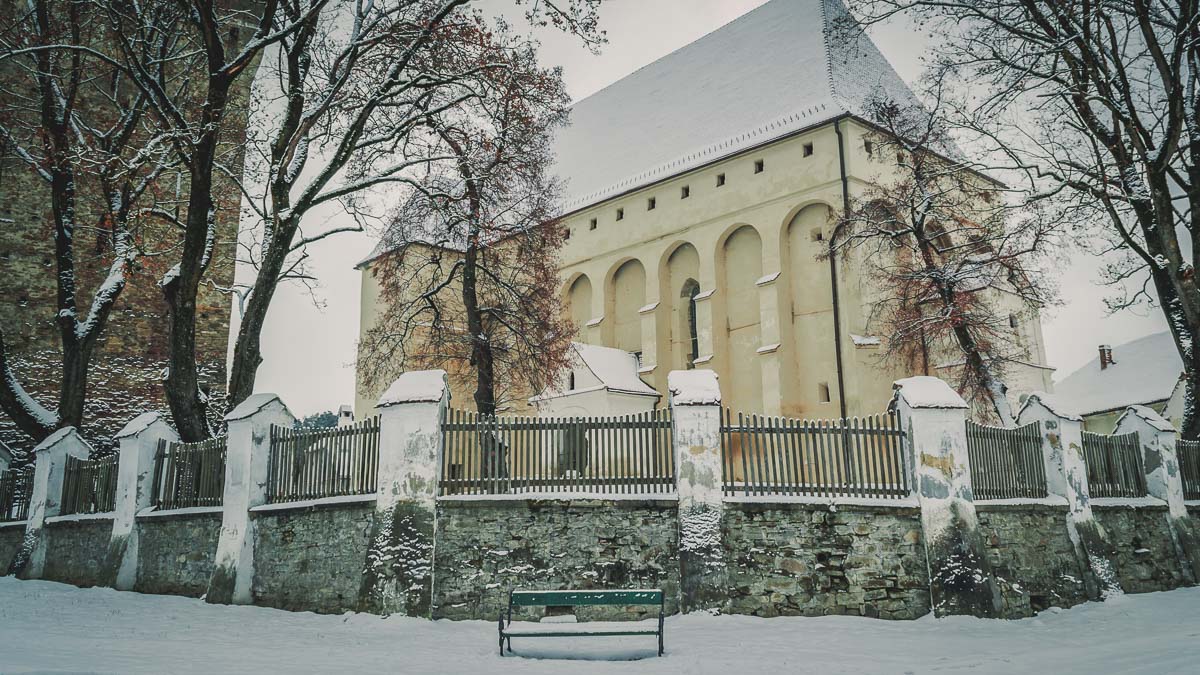
Today, the fortified church is well-preserved and is a popular tourist destination, attracting visitors from all over the world who are fascinated by its rich history and stunning medieval architecture.
The Clock Tower in Saschiz.The church next to the Clock Tower.
Traditional Transylvanian houses
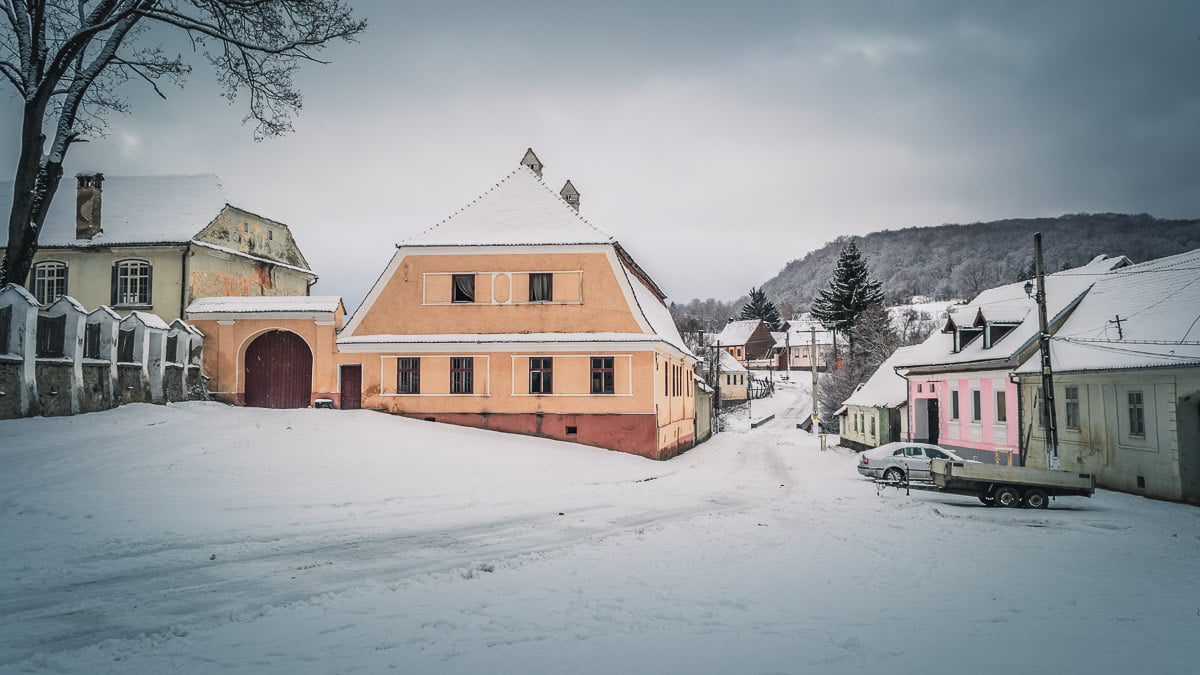
Traditional Transylvanian houses are a unique and charming architectural representation of the region’s rich history and cultural diversity. Transylvania, a historical region in central Romania, is famous for its picturesque landscapes and a heritage deeply influenced by various ethnic groups, including Romanians, Hungarians, Saxons, and Romani communities
A street in the village with traditional houses.
The Peasant Fortress
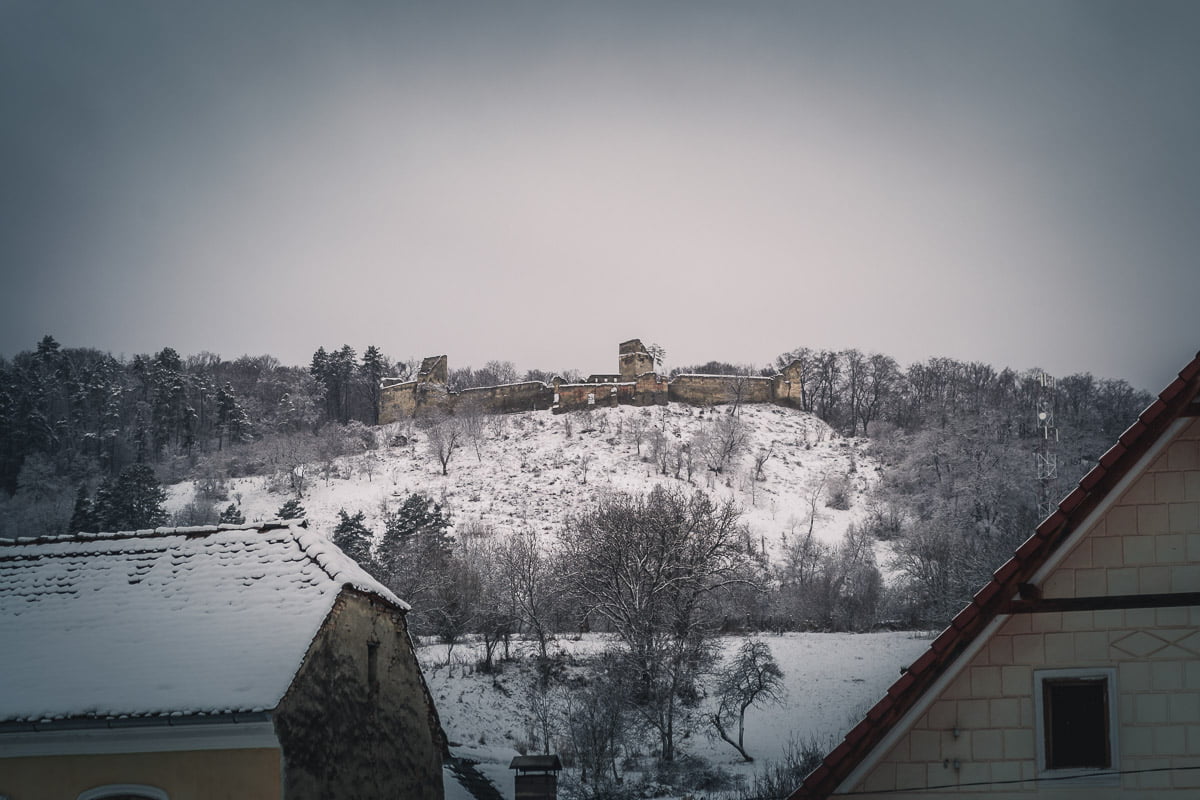
Beside the Evangelical fortified church, you will find another hidden gem is this commune. That is actually the ruins of the Peasant Fortress which was built by the Saxons in the 13th century. The fortress was built on the top of a larger hill and its about 2 km away from the Evangelical Fortified Church.
The Peasant Fortress located on a hill next to the village.
In conclusion, the village of Saschiz is a hidden gem in the heart of Transylvania that offers visitors a unique glimpse into the region’s rich cultural heritage and history. With its stunning architecture, breathtaking scenery, and traditional way of life, Saschiz is a must-visit destination for anyone interested in exploring the beauty and charm of Romania.
Top sights near Saschiz
The closest attraction to Saschiz is of course the medieval citadel of Sighisoara.
Another important sight near Saschiz is the old village of Viscri.
Close to the village of Viscri you will find the Rupea fortress.
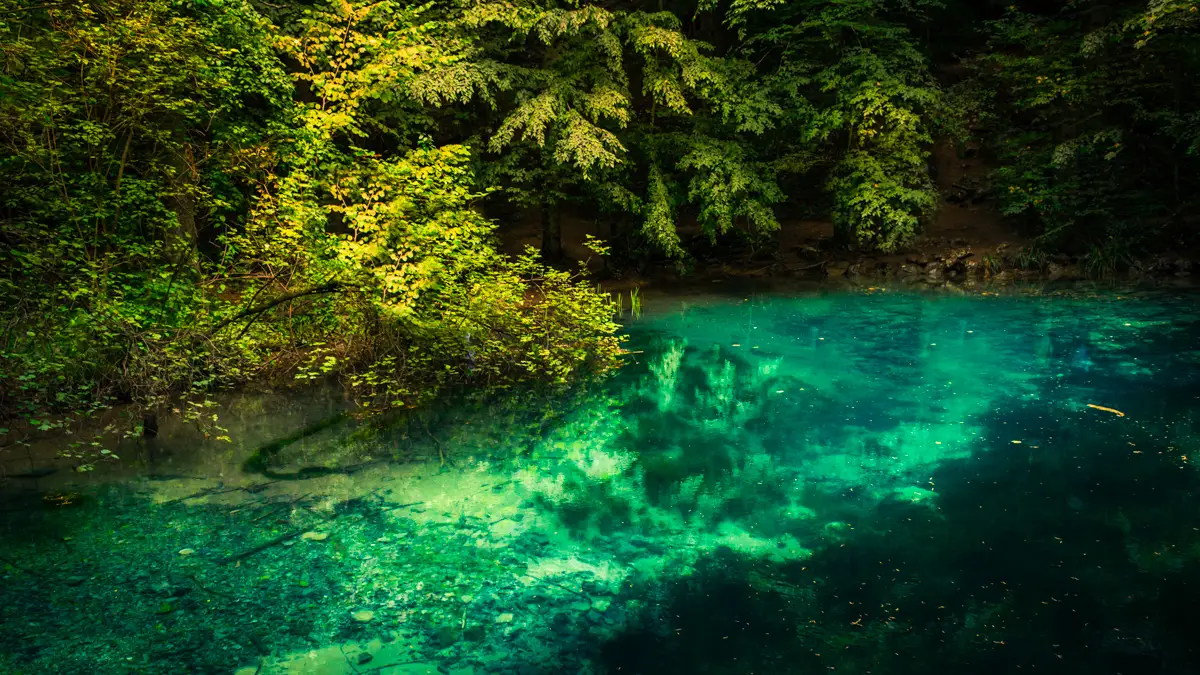
If you are wondering where is Ochiul Beiului located, well, it’s situated in the southwestern part of Romania, near the village of Potoc, in the Caraș-Severin County. The lake is part of the Cheile Nerei-Beusnita National Park, a protected area encompassing diverse ecosystems, rare flora, and fauna. To reach Ochiul Beiului, visitors must embark on a scenic trek through the forest, immersing themselves in the untouched beauty of the Carpathian mountains. If you plan to eat something before or after your journey to Ochiul Beiului, you can find a small restaurant near the trout farm where you can eat some fresh mountain trout and not just.
The road from Potoc to the trout farm
Please be mindful that the approximately 4.7 km road from the village of Potoc to the place called Podul Beiului is narrow with many curves so be sure not to drive very fast there. Unfortunately, the next segment of the road, from Podul Beiului to the Beiului trout farm is not asphalted anymore, therefore you will have to drive even slower. The second part of the journey has a length of 4.4 km.
From the trout farm to the lake
Once you arrive at the trout farm, you will find many places where you will have to leave your car while you visit the beautiful lake. From this point starts the most beautiful part of the journey, a long walk in the forest to Ochiul Beiului,
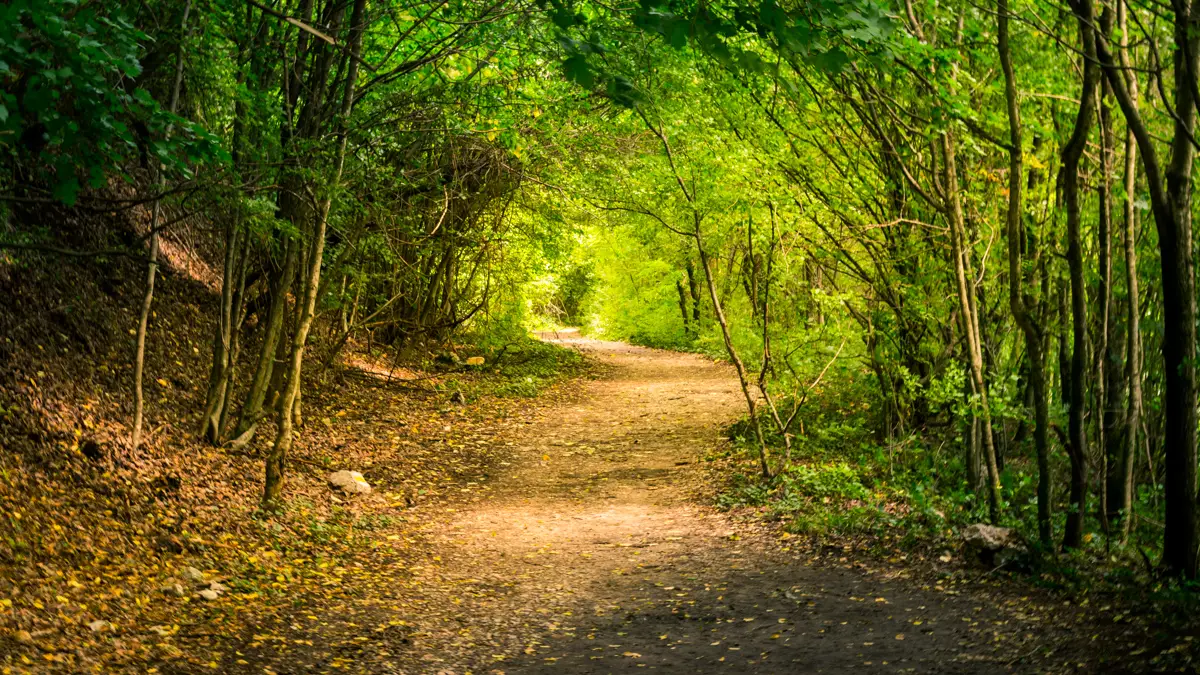
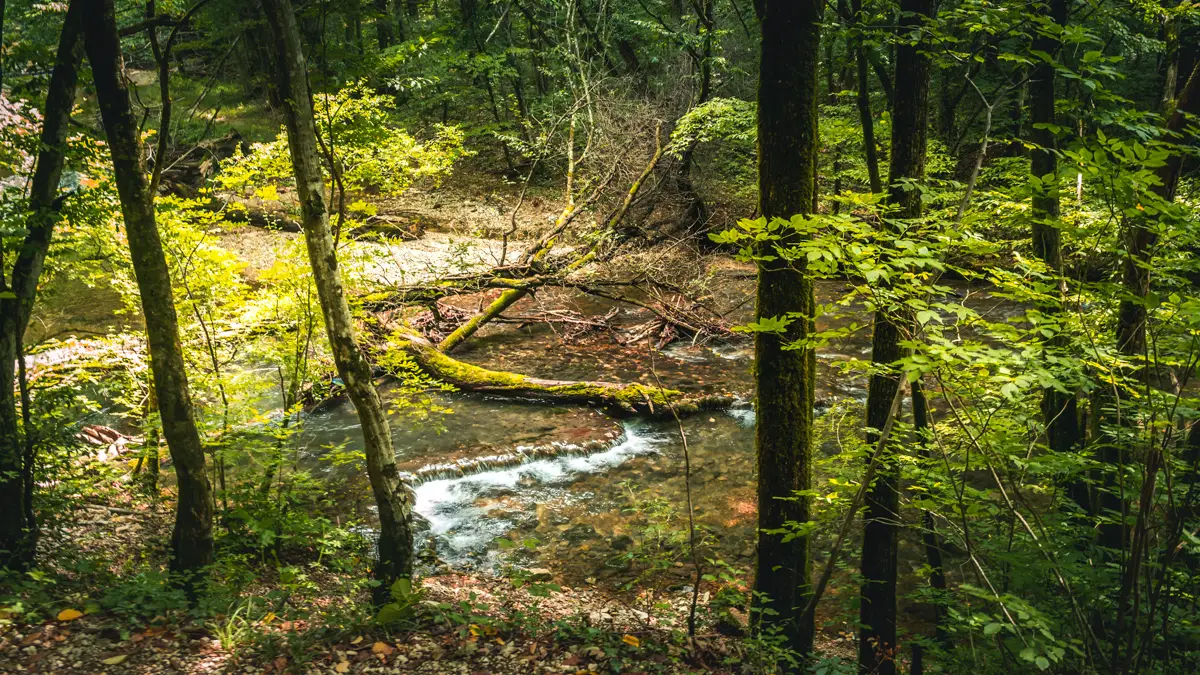
Right before the entrance into the trout farm, you will find a marked path that will take you through the forest to Ochiul Beiului. After about 45 minutes of walking through the forest, next to a mountain stream, you will reach the small lake with turquoise water.
Path in the forest close to the trout farm.A stream near the path.Fallen trees in the stream.
Ochiul Beiului
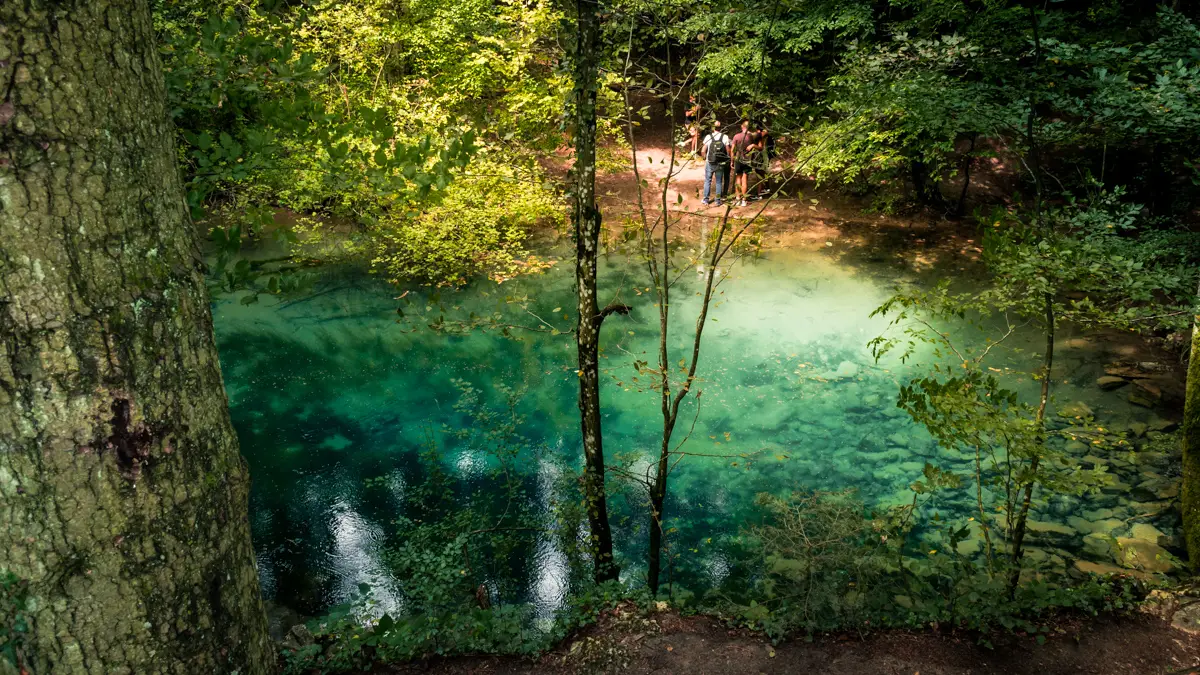
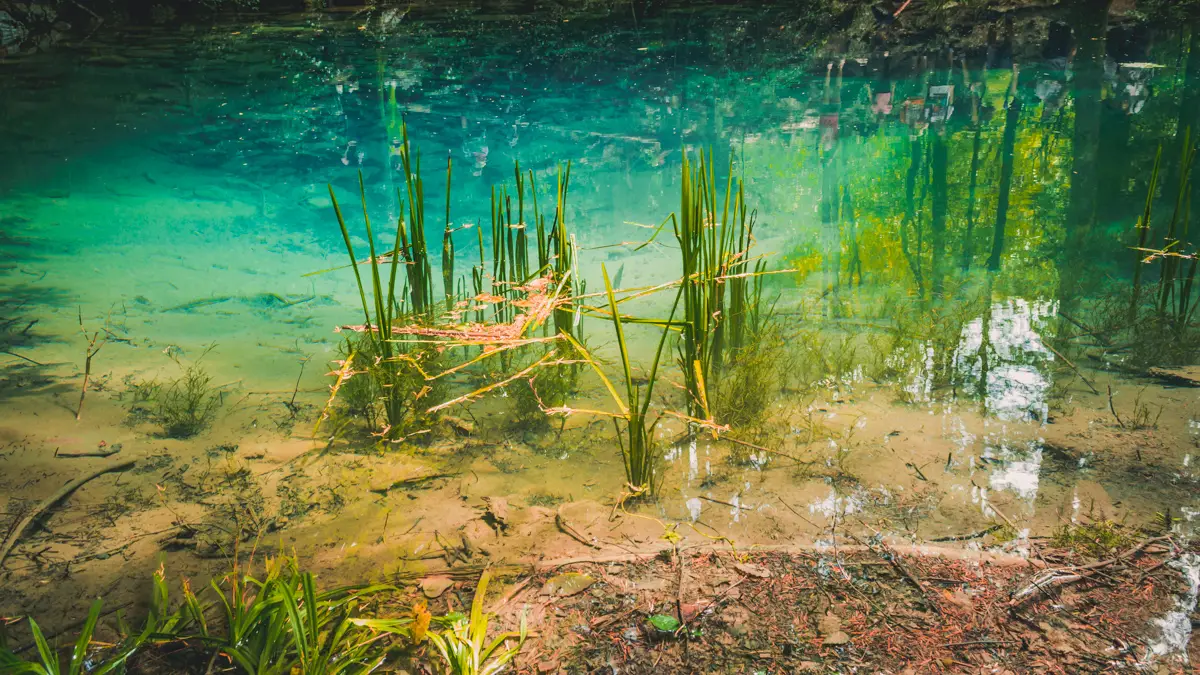
After a long and beautiful walk in the forest, the magnificent lake with its amazing turquoise water came into sight. Since we visited this place in the summer, there were a lot of tourists near the lake admiring and of course, photograph it from various angles.
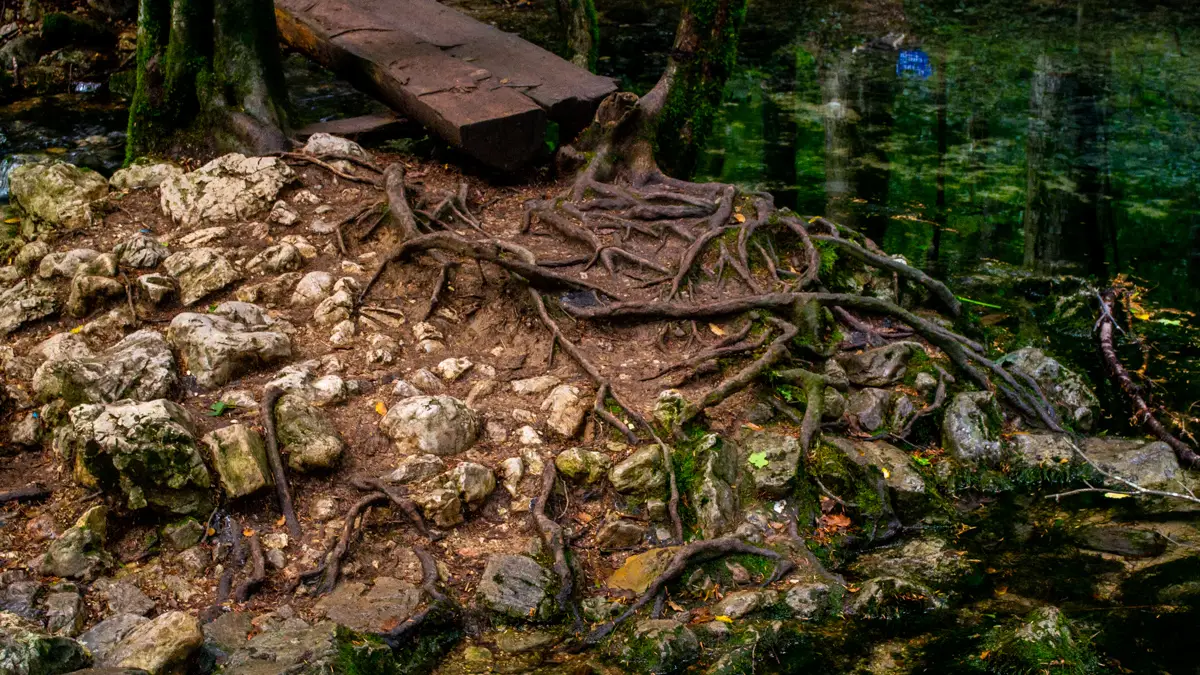
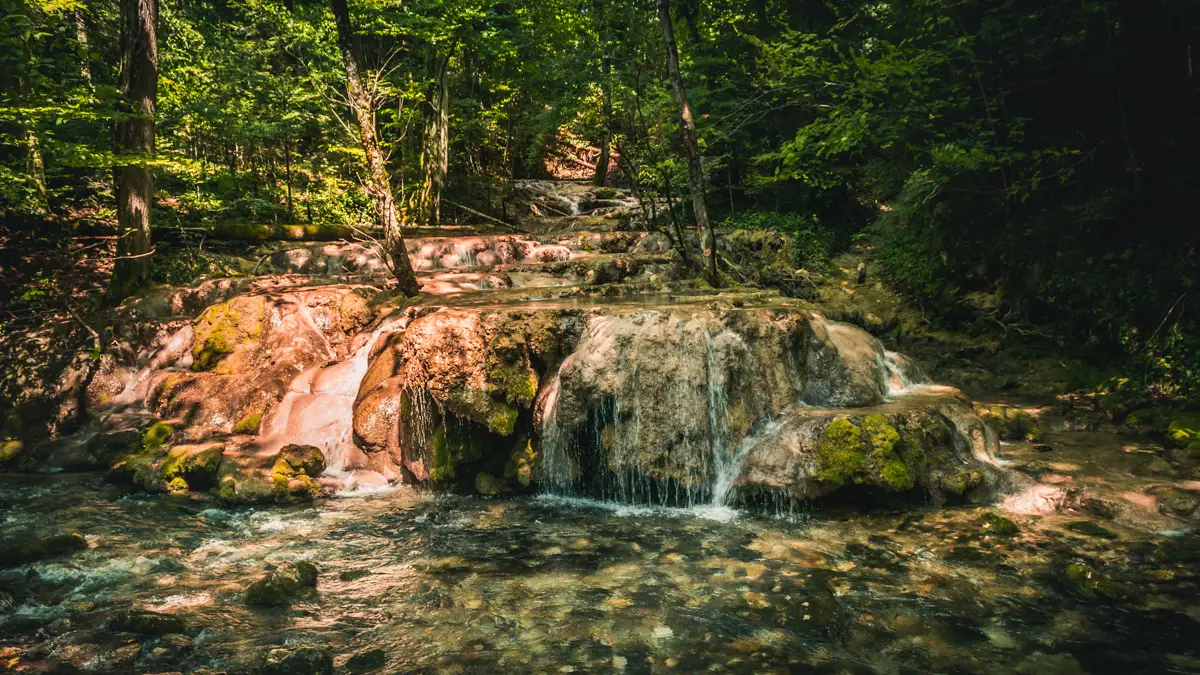
Ochiul Beiului.Turquoise water.A tree with exposed roots near the lake.A stream near the lake.Mountain steam.Small waterfalls.
Camping options near Ochiul Beiului
Right next to the restaurant, you will also find two camping places if you wish to stay here for a longer period. Those two option are Camping Pastravaria Bei and Camping Valea Beiului.
In the map below you will find the exact location of the two camping places:
What else can you visit in Cheile Nerei-Beusnita National Park?
If you plan to visit other natural beauties in this National Park then you should visit the Bigar Waterfall.
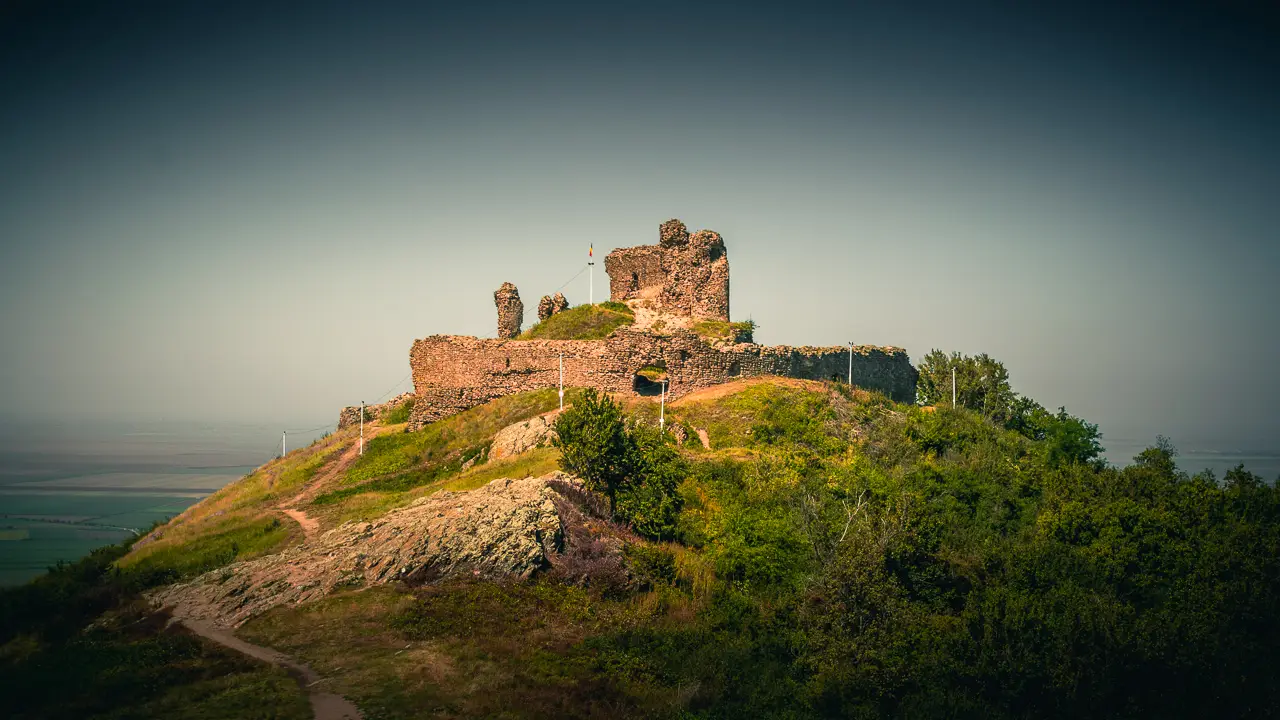
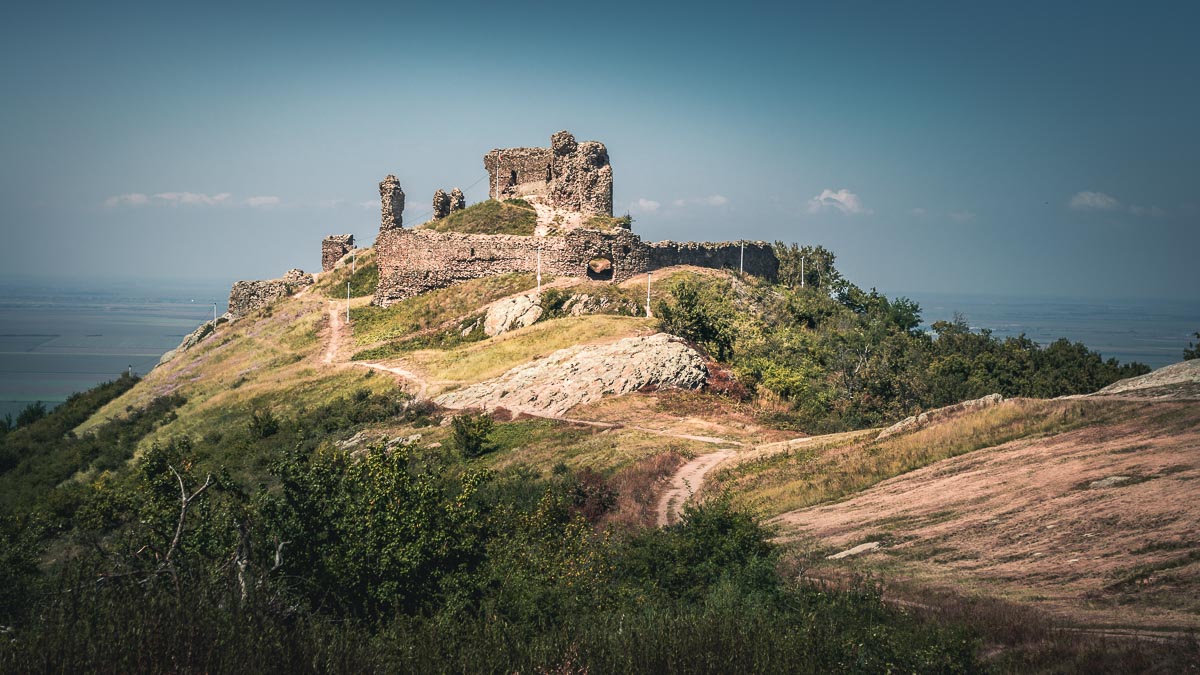
Located atop a hill in the scenic Zarand Mountains, the Șiria Fortress is a fascinating historical landmark not far from the Romanian city of Arad. Perched above the commune of Șiria, the fortress offers breathtaking views of the surrounding landscape and a glimpse into centuries of history.
Since this fortress is not a very well-known tourist spot, it might be a bit tricky to find on your own. To make your visit easier, here is the exact location of the Șiria Fortress on Google Maps: https://maps.app.goo.gl/xXj9DVb3u3fZb4KW9. This will help you navigate directly to the site without any hassle, ensuring you can easily explore this hidden gem.
About the Șiria fortress
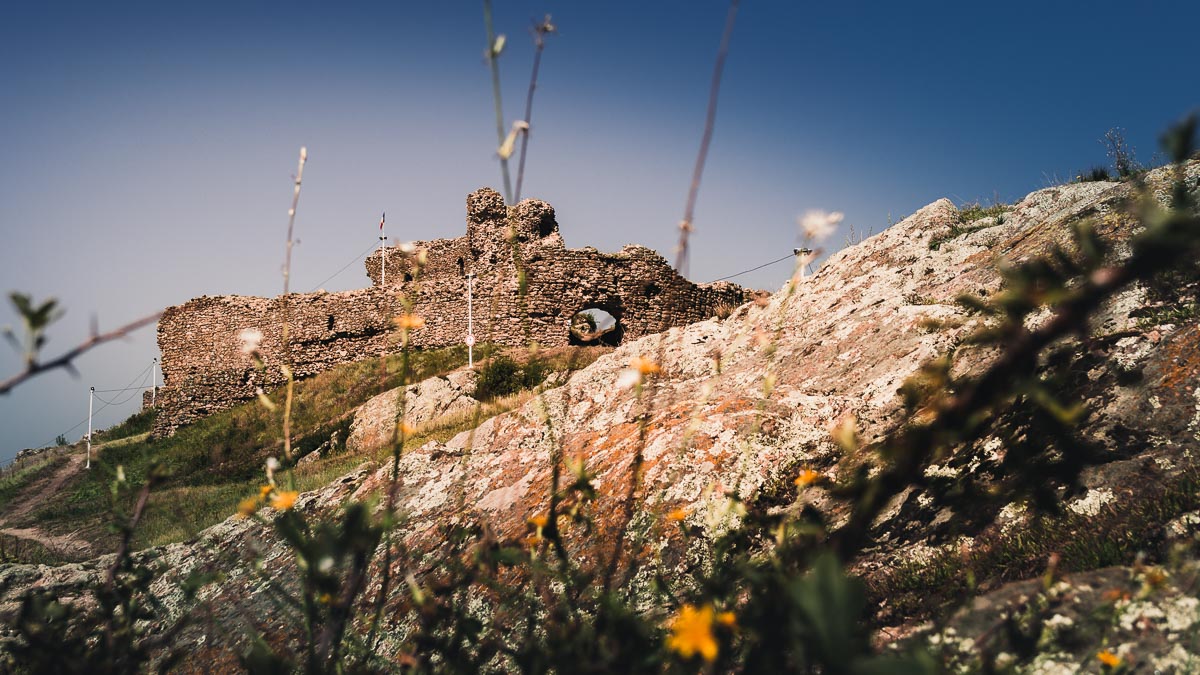
The fortress was built in the 13th century with construction materials from the nearby area. It had an important strategic role for 5 centuries. Back in the 16th century, it was occupied by the Ottomans for the second time. Unfortunately, in 1784 the entire fortress was destroyed by the Habsburgs. Today only some ruins remained here.
How to get to the Șiria Fortress
If you’re driving, a paved road leads up the hill to an area near tall antennas, where you’ll find a parking lot. From there, it’s just a short and easy walk through the forest to reach the fortress ruins, making it a convenient option for visitors.
For a more active experience, you can choose from several hiking trails starting in the commune of Șiria that lead to the fortress. These trails vary in length and difficulty, allowing you to pick one that matches your fitness level.
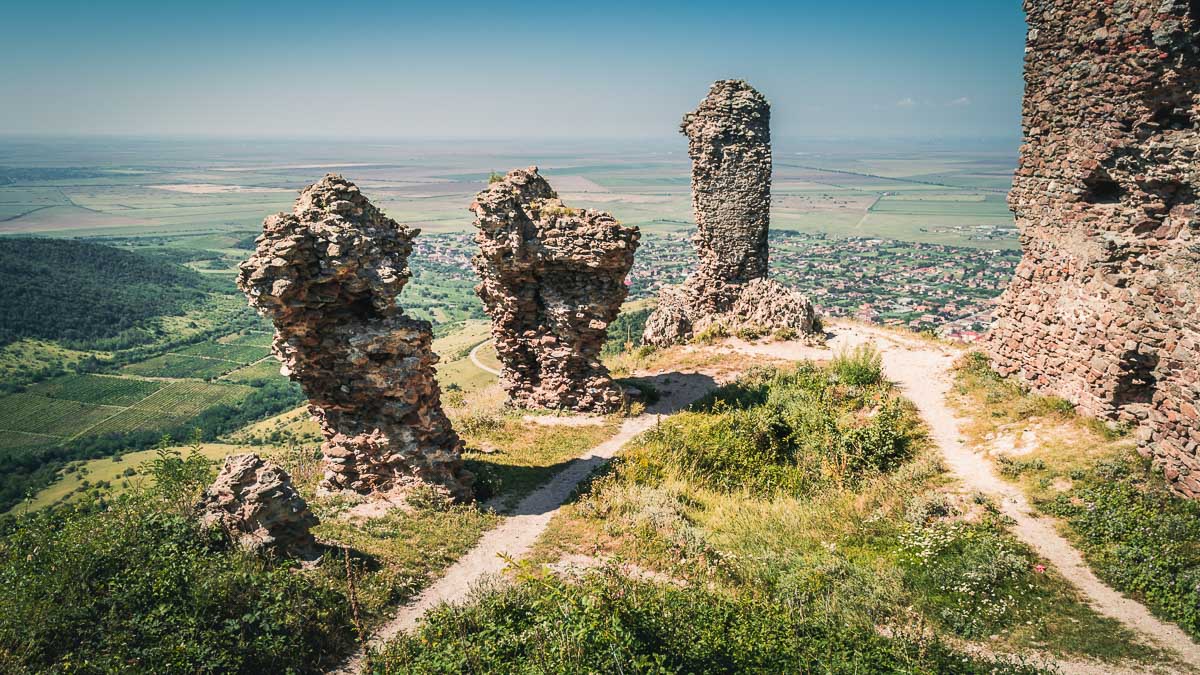
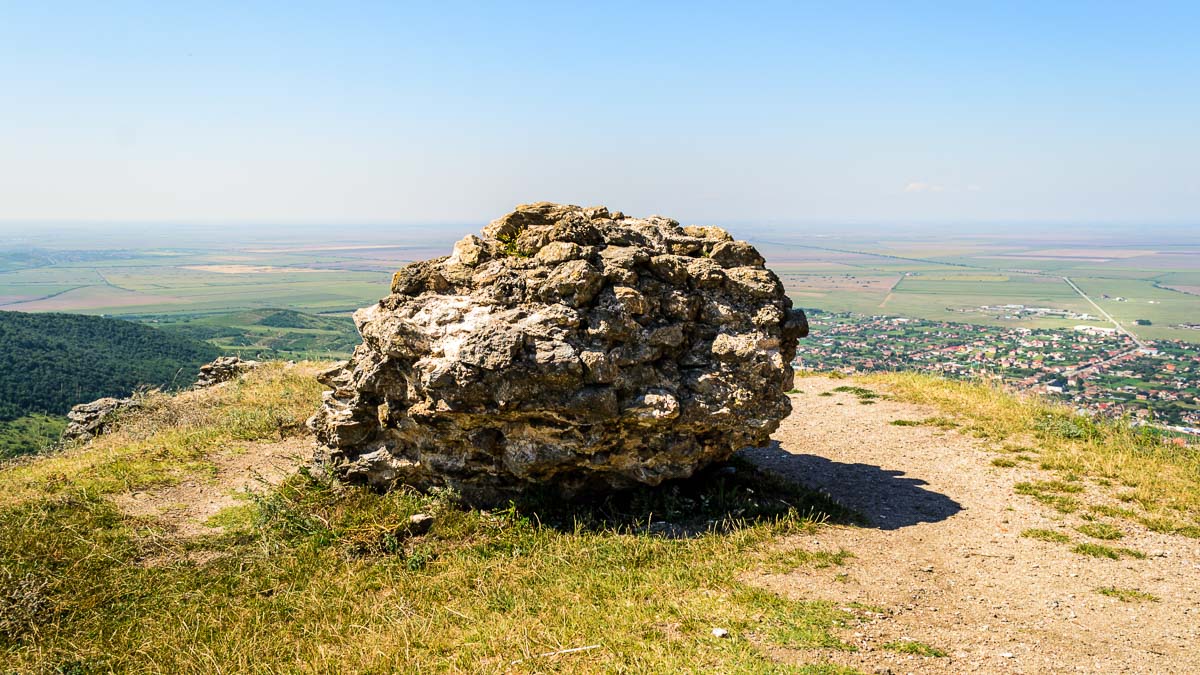
The old ruins on a beautiful and warm summer day.Other ruins in the fortress.A part of the former fortress with the vast plains in the background.The road which leads form the Șiria up to the parking lot.Path towards the fortress.
What to Expect at the Șiria Fortress
When you arrive at the fortress, you’ll be greeted by:
Panoramic Views: From the hilltop, you can enjoy stunning views of the expansive plains, agricultural fields, and the nearby mountains.
A Sense of History: Walking among the ruins, you can imagine the fortress in its heyday, bustling with activity and brimming with strategic importance.
Other things to visit in the area:
If you drive towards Deva in the Mureș valley, you will find the ruins of the Șoimoș Fortress which was built on the outskirts of the village of Șoimoș.
Another objective to visit in the area is the Săvârșin Castle.
We use cookies on our website to give you the most relevant experience by remembering your preferences and repeat visits. By clicking “Accept All”, you consent to the use of ALL the cookies. However, you may visit "Cookie Settings" to provide a controlled consent.
This website uses cookies to improve your experience while you navigate through the website. Out of these, the cookies that are categorized as necessary are stored on your browser as they are essential for the working of basic functionalities of the website. We also use third-party cookies that help us analyze and understand how you use this website. These cookies will be stored in your browser only with your consent. You also have the option to opt-out of these cookies. But opting out of some of these cookies may affect your browsing experience.
Necessary cookies are absolutely essential for the website to function properly. These cookies ensure basic functionalities and security features of the website, anonymously.
Cookie
Duration
Description
cookielawinfo-checkbox-analytics
11 months
This cookie is set by GDPR Cookie Consent plugin. The cookie is used to store the user consent for the cookies in the category "Analytics".
cookielawinfo-checkbox-functional
11 months
The cookie is set by GDPR cookie consent to record the user consent for the cookies in the category "Functional".
cookielawinfo-checkbox-necessary
11 months
This cookie is set by GDPR Cookie Consent plugin. The cookies is used to store the user consent for the cookies in the category "Necessary".
cookielawinfo-checkbox-others
11 months
This cookie is set by GDPR Cookie Consent plugin. The cookie is used to store the user consent for the cookies in the category "Other.
cookielawinfo-checkbox-performance
11 months
This cookie is set by GDPR Cookie Consent plugin. The cookie is used to store the user consent for the cookies in the category "Performance".
viewed_cookie_policy
11 months
The cookie is set by the GDPR Cookie Consent plugin and is used to store whether or not user has consented to the use of cookies. It does not store any personal data.
Functional cookies help to perform certain functionalities like sharing the content of the website on social media platforms, collect feedbacks, and other third-party features.
Performance cookies are used to understand and analyze the key performance indexes of the website which helps in delivering a better user experience for the visitors.
Analytical cookies are used to understand how visitors interact with the website. These cookies help provide information on metrics the number of visitors, bounce rate, traffic source, etc.
Advertisement cookies are used to provide visitors with relevant ads and marketing campaigns. These cookies track visitors across websites and collect information to provide customized ads.